Mineral
Sphalerite
(Zn,Fe)SSfalerit
The main ore of zinc: with colours from honey-yellow to coal-black, one of the hardest common minerals to recognise.
Also known as: Zinc blende · Blende · Black jack (miners’ name for dark sphalerite)
- Ore
- Important in Türkiye

In short
Sphalerite is a mineral made of zinc and sulfur, usually with some iron as well. Most of the world’s zinc comes from it. Iron-poor sphalerite is honey-yellow, red or green and see-through; as the iron content rises it darkens to black and becomes opaque.
How does it form?
Sphalerite forms in the same settings as galena: in hydrothermal veins left in rock cracks by hot, metal-laden waters, in large lead–zinc deposits that built up in cavities in limestone and dolomite, and in massive sulfide deposits formed on ancient sea floors. The main factor controlling its colour is the amount of iron in its structure.
In Türkiye
Zinc deposits in Türkiye are spread over a wide area, especially the Eastern Black Sea region, north-western Anatolia and the Taurus Mountains. According to MTA, the Çayeli copper–zinc deposit in Rize, Balya in Balıkesir and the Yahyalı area in Kayseri are among the country’s main zinc-ore producing sites. In the massive sulfide deposits of the Eastern Black Sea, sphalerite occurs together with chalcopyrite, galena and pyrite.
What is it used for?
- Galvanising: The largest use of zinc worldwide is coating steel with zinc to protect it from rust.
- Alloys: Together with copper it is used to make brass, and in die-casting alloys.
- By-products: A large share of rare metals such as cadmium, indium and germanium is recovered as a by-product of zinc ores.
How to recognise it
- 1
It shines like resin or honey; even dark specimens look more resinous than metallic.
- 2
It has perfect cleavage in six directions, so a broken surface shows many small flat faces glinting at different angles.
- 3
Its streak is pale brown, yellowish or white, clearly lighter than the mineral itself. This is the easiest way to tell black sphalerite from similar-looking metallic minerals.
- 4
A knife scratches it (hardness 3.5–4). It is usually found together with galena.
Fakes and imitations
What shops usually don’t tell you:
- Its name comes from the Greek word for “treacherous”: old miners mistook it for galena but could get no lead from it.
- The old name “ruby blende”, used for red sphalerite, is misleading; it has nothing to do with ruby.
- Faceted sphalerite is a rare collector’s stone and can be confused with other gems. Only a gemmological laboratory can identify a cut stone with certainty.
Safety
Sphalerite is generally harmless to handle. However, it is often found together with the lead mineral galena, so wash your hands after working with specimens. Heating it releases irritating sulfur dioxide gas.
Did you know?
Sphalerite splits white light into colours (dispersion) far more strongly than diamond, so cut stones flash with vivid colours. Its softness and easy cleavage, however, make it unsuitable for jewellery.
Some sphalerite gives off brief flashes of light when scratched or struck (triboluminescence).
Where is it found?
Loading map…
- Áliva mine, Picos de Europa, Cantabria, Spain · Major depositTransparent honey-coloured and red crystals; the classic source of faceted sphalerite
- Red Dog, Alaska, USA · Major depositOne of the world’s largest zinc mines
- Tri-State district (Joplin), Missouri, USA · Historic sourceWith galena in carbonate rocks; a former zinc–lead mining district
- Çayeli, Rize, Türkiye · Known localityCopper–zinc massive sulfide deposit; one of Türkiye’s zinc-ore producers
Locations are approximate to protect sites. Red dots mark places in Türkiye. Open in the big map →
Sources
- Handbook of Mineralogy: Sphalerite · Mineralogical Society of America
- Dünyada ve Türkiye’de Çinko · MTA Genel Müdürlüğü, Fizibilite Etütleri Dairesi Başkanlığı, 2023
External links
Draft: awaiting expert reviewReport an error ↗
On the same step
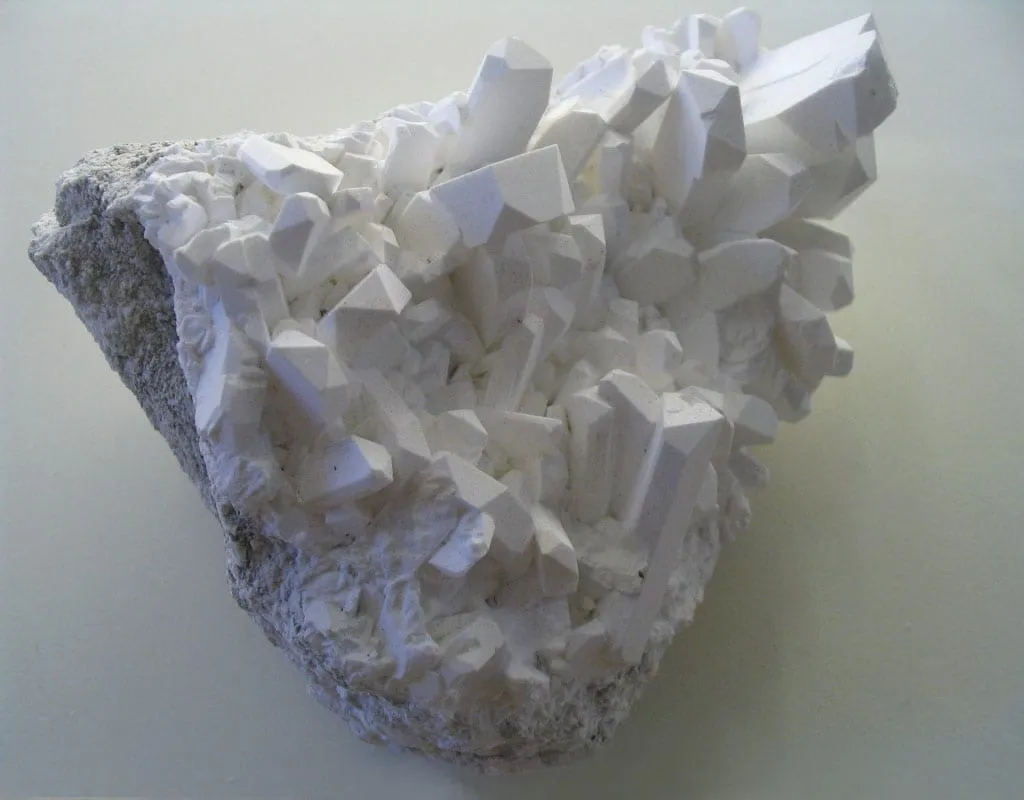
Borax (tincal)
A sodium borate that dissolves in water and crumbles to white powder in dry air; one of the world’s key tincal deposits is at Kırka in Eskişehir.
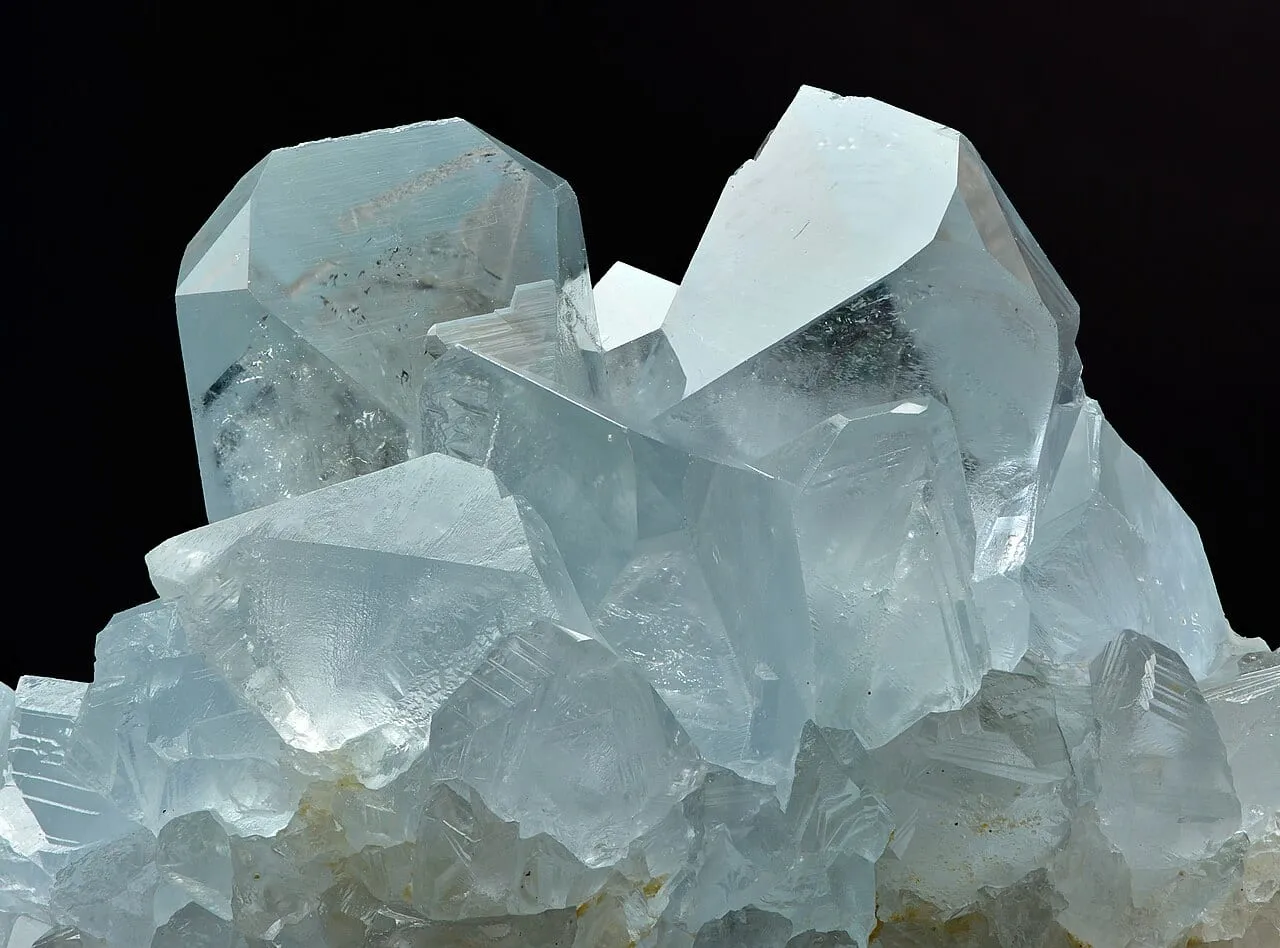
Celestine
A strontium mineral named after the sky, often forming pale blue crystals; the source of the red in fireworks.
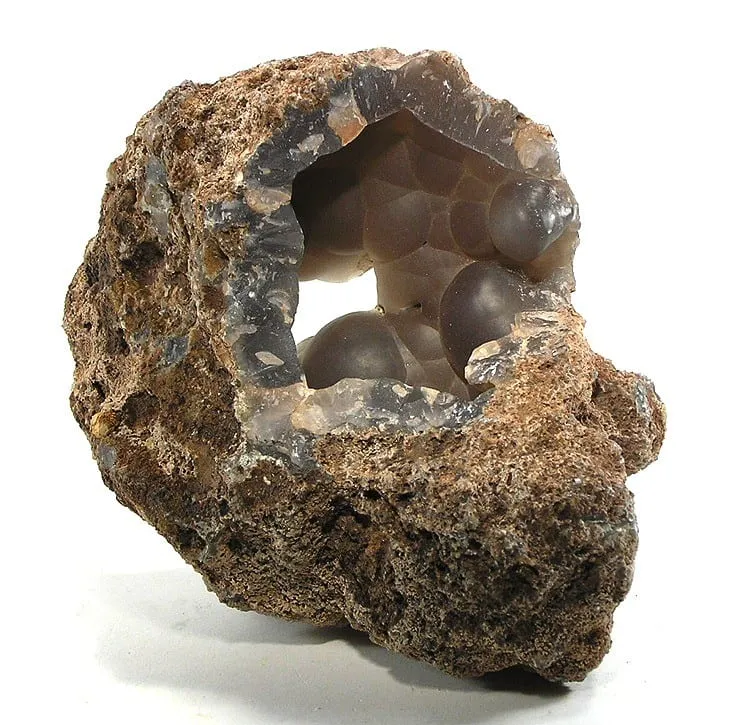
Chalcedony
A waxy-lustred stone made of quartz crystals far too small to see: the family name for agate, onyx and many other ornamental stones.