Rock
Skarn
Skarn
Born where granite meets limestone: a hard rock of garnet and pyroxene, and one of the key deposit types for copper, iron and tungsten.
Also known as: Tactite
- Popularly: Ore and raw material
- Ore
.jpg)
In short
Skarn is a hard, coarse-grained rock formed when fluids escaping from a hot granite intrusion react with carbonate rocks such as limestone or dolomite. It is dotted with coloured minerals such as reddish-brown garnet, green pyroxene and white wollastonite. It matters greatly to mining because it is one of the main deposit types for metals such as copper, tungsten, iron, zinc–lead, tin, molybdenum and gold.
Photos
_(GeoDIL_number_-_511).jpg)
How does it form?
Skarn forms by contact metamorphism and metasomatism (chemical replacement). When an igneous body such as granite pushes into layers of limestone or dolomite in the crust, hot, mineral-rich water and gas separate from the magma late in its cooling. These fluids react with the carbonate rock: calcite and dolomite turn into calcium, magnesium, iron and aluminium silicates, that is, garnet, pyroxene, wollastonite, epidote and vesuvianite. The reaction mostly takes place outside the intrusion, on the limestone side (exoskarn); skarn that forms inside the intrusion is called endoskarn and is rarer.
Skarn from limestone is called calcic skarn, and from dolomite magnesian skarn. The metal-bearing fluids may also leave ore in the rock.
What is it used for?
- Metal ore: A large share of the world’s copper, tungsten, iron, tin, molybdenum, zinc–lead and gold comes from skarn deposits. Bingham Canyon (copper, USA) and Sangdong (tungsten, South Korea) are examples.
- Mineral collecting: Skarns yield fine collector crystals of garnet, vesuvianite (idocrase), wollastonite and diopside.
- Science: Skarn zones help show how hot fluids move around magma intrusions and how metals are concentrated; they are a guide in mineral exploration.
In Türkiye
Türkiye’s most important skarn deposit is at Uludağ, Bursa. There the Oligocene Uludağ granodiorite meets Palaeozoic marbles, and along this contact a skarn has developed, with andradite and diopside zones. The deposit is known for scheelite (CaWO₄), the ore of tungsten; magnetite, pyrite, sphalerite, chalcopyrite and molybdenite have also been found in the skarn. A tungsten (wolfram) mine and processing plant was built near the summit of Uludağ; the mine closed in 1989.
What determines its value?
As a stone, skarn is of little value; the real value lies in the ore it holds or lies next to. As ore, its value depends on the size of the deposit, the proportion of metal (grade), the cost of mining and processing, and demand for the metal. Collectors look for skarn specimens that yield fine crystals of garnet, vesuvianite and wollastonite.
This information is educational, not buying, selling or investment advice. Value varies enormously with quality and treatment.
How to recognise it
- 1
It is a coarse-grained, heavy stone made of green, brown and reddish minerals; the garnet grains are reddish brown and the pyroxenes green.
- 2
It is hard: a steel knife scratches it only with difficulty.
- 3
It usually lies along the contact where an intrusion such as granite meets marble or limestone, so its setting is the best clue for recognising it.
- 4
It does not fizz in vinegar or dilute acid; only leftover pieces of marble within it may fizz.
- 5
Magnetite-bearing skarns attract a magnet, and those with metal minerals such as chalcopyrite show brassy or metallic glints.
Fakes and imitations
What shops usually don’t tell you:
- It can be confused with dark green rocks such as greenstone, greenschist, harzburgite and lherzolite; the locality and the minerals found with it often decide it.
Myths and misconceptions
MythSkarn forms when magma melts limestone.
FactSkarn forms not by melting but when hot fluids from the intrusion replace the minerals of the limestone with new ones (metasomatism). The limestone is transformed without melting.
MythSkarn is a metal ore in itself.
FactSkarn is a rock type; metal is won only from the ore minerals within or beside it (for example scheelite, magnetite, chalcopyrite). Not every skarn contains ore of economic value.
Did you know?
“Skarn” is an old Swedish mining term: in the Persberg mining district of Sweden it named the silicate waste rock that occurred beside iron ore.
Skarn deposits are among the world's largest sources of tungsten; large tungsten mines such as Sangdong in South Korea are skarn-type deposits.
Where is it found?
Loading map…
- Persberg, Filipstad, Värmland, Sweden · Type locality“Skarn” is an old Swedish mining term for the silicate waste rock that occurred with iron ore in the Persberg mining district.
- Bingham Canyon, Utah, USA · Major depositIn this giant copper mine, copper and molybdenum sulfides are spread through the intruded stock and the skarns of the adjoining carbonate sedimentary rocks.
- Sangdong, Yeongwol, South Korea · Major depositOne of the world's largest tungsten mines; the deposit is a skarn-type body in altered horizons of the Cambrian Myobong Formation.
- Antamina, Ancash, Peru · Major depositOne of the world's largest copper–zinc mines; counted among the large skarn deposits.
- Dashkesan, Azerbaijan · Known localityHome of a skarn-type iron deposit; after the Second World War Dashkesan became an industrial town through iron mining.
- Mount Uludağ, Bursa, Türkiye · Major depositThe skarn that developed along the contact of the Uludağ granodiorite and marble hosts Türkiye's most important scheelite (tungsten) deposit. The abandoned mine near the summit closed in 1989.
Locations are approximate to protect sites. Red dots mark places in Türkiye. Open in the big map →
Frequently asked questions
What is skarn?
Skarn is a hard, coarse-grained rock formed when fluids escaping from a hot granite intrusion react with carbonate rocks such as limestone or dolomite. It is dotted with coloured minerals such as reddish-brown garnet, green pyroxene and white wollastonite. It matters greatly to mining because it is one of the main deposit types for metals such as copper, tungsten, iron, zinc–lead, tin, molybdenum and gold.
What is skarn used for?
Metal ore: A large share of the world's copper, tungsten, iron, tin, molybdenum, zinc–lead and gold comes from skarn deposits. Bingham Canyon (copper, USA) and Sangdong (tungsten, South Korea) are examples. Mineral collecting: Skarns yield fine collector crystals of garnet, vesuvianite (idocrase), wollastonite and diopside. Science: Skarn zones help show how hot fluids move around magma intrusions and how metals are concentrated; they are a guide in mineral exploration.
How hard is skarn?
It has a hardness of 5–7 on the Mohs scale. It can scratch glass; a steel knife scratches it only with difficulty. Its specific gravity is 3–3.7 g/cm³.
Where is skarn found?
Its best-known localities: Persberg, Filipstad, Värmland, Sweden; Bingham Canyon, Utah, USA; Sangdong, Yeongwol, South Korea; Antamina, Ancash, Peru; Mount Uludağ, Bursa, Türkiye.
Where is skarn found in Türkiye?
Known localities in Türkiye: Mount Uludağ, Bursa, Türkiye.
How can you tell if skarn is real?
It is a coarse-grained, heavy stone made of green, brown and reddish minerals; the garnet grains are reddish brown and the pyroxenes green. It is hard: a steel knife scratches it only with difficulty. It usually lies along the contact where an intrusion such as granite meets marble or limestone, so its setting is the best clue for recognising it. It can be confused with dark green rocks such as greenstone, greenschist, harzburgite and lherzolite; the locality and the minerals found with it often decide it.
Is skarn valuable?
On the “street to diamond” value ladder it sits on step 4 of nine: Fine dimension stone and ore. As a stone, skarn is of little value; the real value lies in the ore it holds or lies next to. As ore, its value depends on the size of the deposit, the proportion of metal (grade), the cost of mining and processing, and demand for the metal. Collectors look for skarn specimens that yield fine crystals of garnet, vesuvianite and wollastonite.
Sources
- Skarn · Wikipedia
- Skarn: Identification, Properties & Lookalikes · Rockhounding.org
- World skarn deposits (Meinert, Dipple & Nicolescu), in Economic Geology 100th Anniversary Volume, pp. 299–336 · Society of Economic Geologists, 2005
- Physical properties of skarns (Emerson) · Exploration Geophysics 17, 1986
- Persberg · Wikipedia
- Bingham Canyon Mine · Wikipedia
- Sangdong mine · Wikipedia
- Antamina · Wikipedia
- Dashkasan · Wikipedia
- Uludağ · Wikipedia
- Uludağ Şelit Yatağında Kosalit Oluşumu (Kumbasar & Ateşok) · Türkiye Jeoloji Kurumu Bülteni 22, 1979
- Preliminary microthermometric data on the Uludağ W-skarn deposit, Bursa, NW Turkey (Hanilçi, Aysal, Ceyhan & Şenkaya) · 11th Pan-American Current Research on Fluid Inclusions Conference, 2012
External links
Draft: awaiting expert reviewReport an error ↗
On the same step
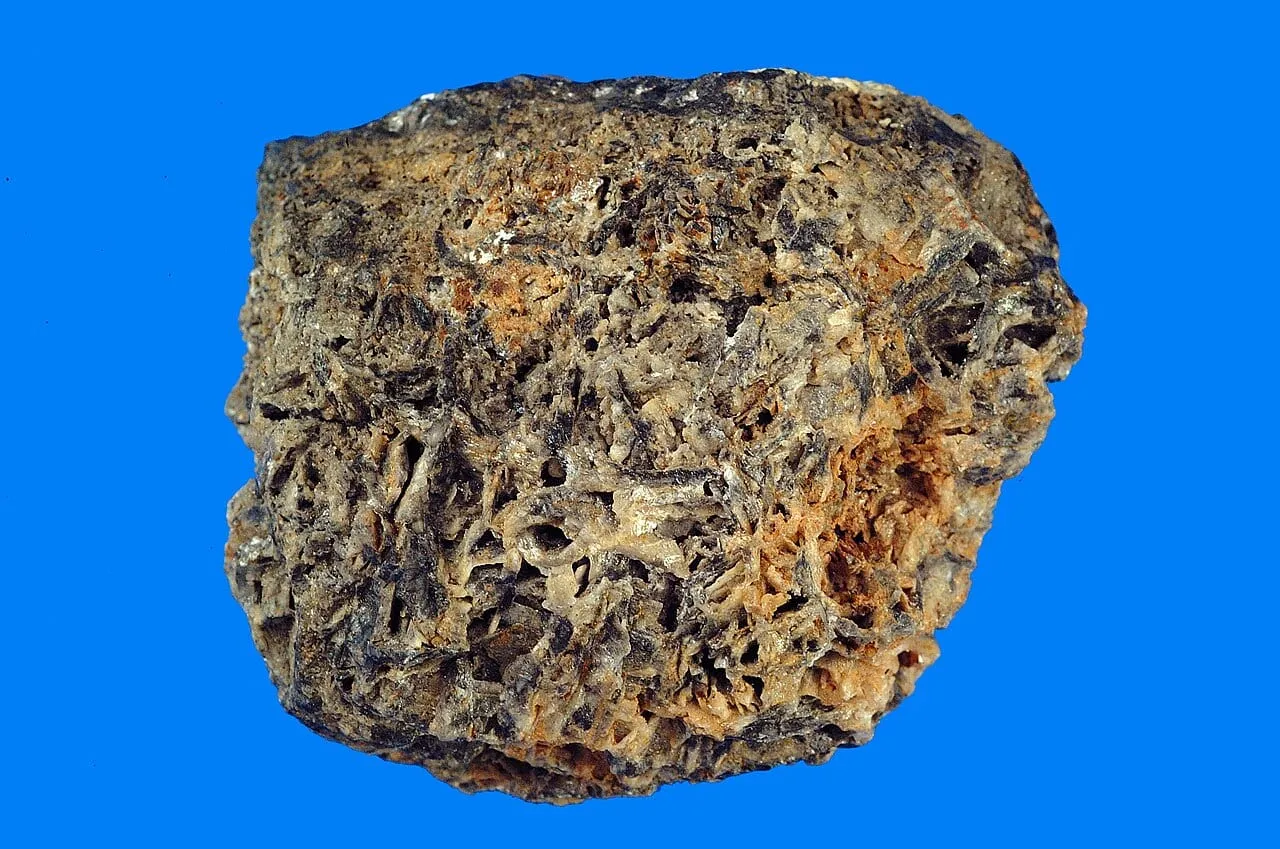
Anglesite
A heavy lead sulfate mineral with a diamond-like shine that grows as a crust around galena; it is named after the island of Anglesey in Wales.
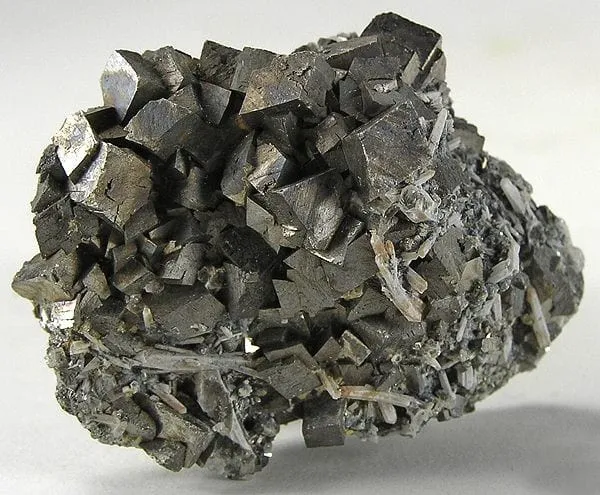
Arsenopyrite
A widespread silvery-grey sulfide containing arsenic: it smells of garlic when struck and is poisonous.
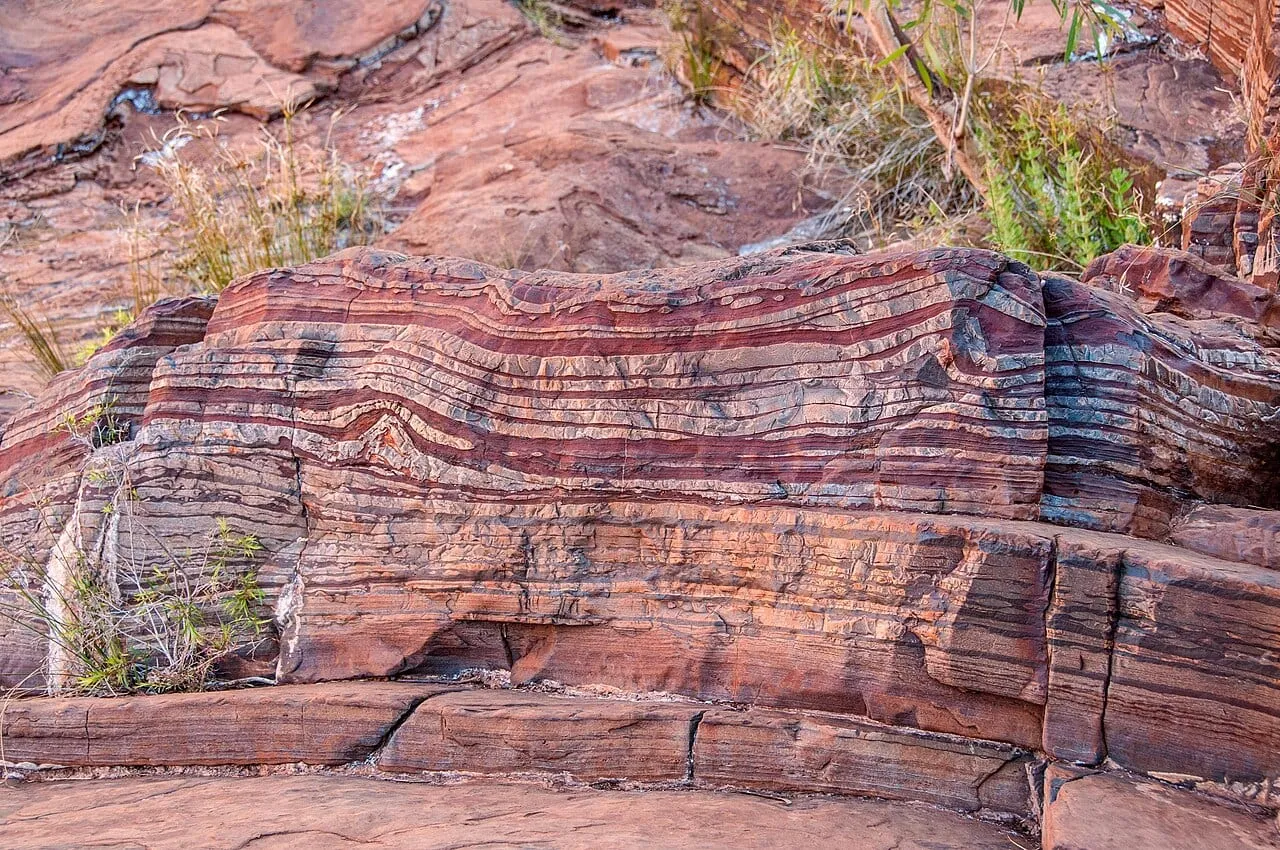
Banded iron formation
An ancient rock of alternating iron-oxide and chert bands: the record of oxygen beginning to build up on Earth, and the main source of iron ore.