VarietyA variety of Labradorite
Rainbow moonstone
NaAlSi₃O₈ – CaAl₂Si₂O₈Gökkuşağı aytaşı
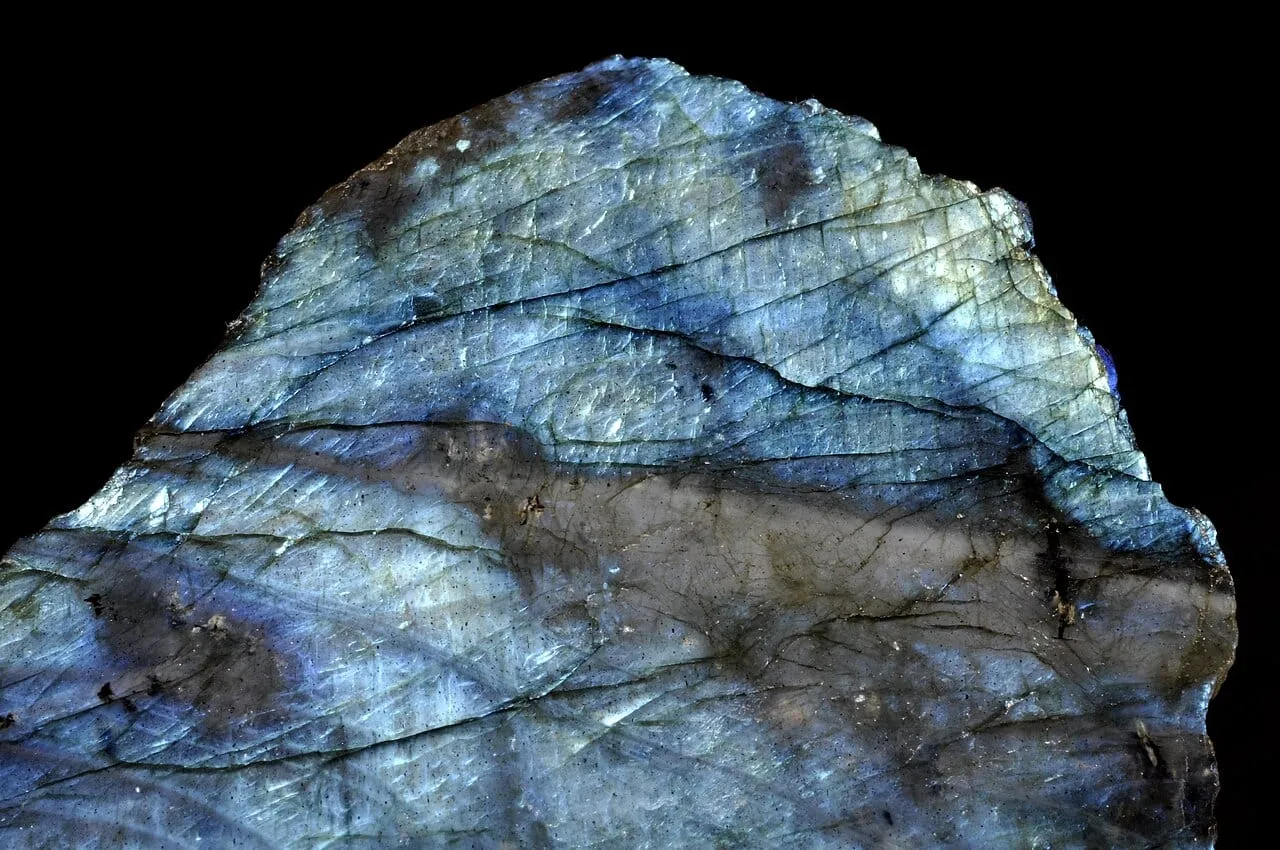
Despite its name, not a moonstone but labradorite: a feldspar that flashes blue and rainbow colours over a pale, transparent body.
Also known as: Rainbow labradorite · Labradorite moonstone
- Popularly: Semi-precious stone
In short
Rainbow moonstone is the trade name for pale, transparent to translucent labradorite. Over a colourless or white body it shows a floating sheen that is blue and often many-coloured as the stone is turned. According to GIA the name is misleading: true moonstone is a variety of orthoclase feldspar, whereas rainbow moonstone is labradorite, a member of the plagioclase group. Even so, the trade has accepted it as a gem in its own right. Its main sources are southern India and Madagascar.
How does it form?
Rainbow moonstone forms in rocks in which plagioclase feldspar such as labradorite crystallised as magma cooled and solidified. When magma cools very slowly deep in the crust, two feldspars of slightly different composition separate inside the labradorite crystal into extremely thin, regular layers. According to Wikipedia, the colours become visible when these layers are roughly 128–252 nanometres apart.
As light reflects from the layers, its waves reinforce or cancel one another; this is called interference, and the colours of a soap bubble form the same way. The thickness of the layers decides which colour is seen. Ordinary labradorite has a dark grey or black body; in rainbow moonstone the body is pale and transparent, so the colours seem to float inside a white stone.
What is it used for?
- Jewellery: Its main use is in jewellery. The sheen shows best in dome-shaped (cabochon) stones, so it is mostly cut that way, and it is also made into beads. The very transparent Madagascan material is also faceted, in shapes such as rounds, hearts and hexagons.
- An alternative to moonstone: According to GIA the trade has accepted the stone as a gem in its own right, and today some buyers prefer it to traditional moonstone.
Why is it called a “moonstone”?
In true moonstone the soft sheen comes from light scattered in parallel layers of orthoclase and albite. In rainbow moonstone the colours come from interference of light reflected from labradorite’s twin planes and thin layers. When this stone reached the market in the last quarter of the 20th century from a small working among rice fields in southern India, stones with a blue sheen were called “royal blue” and multicoloured ones “rainbow”, and they were sold as moonstone. According to Hänni, its composition, identification values and the cause of its sheen all differ from moonstone, so there is no reason other than a commercial one to call it a moonstone. For moonstone itself, see the moonstone page.
What determines its value?
What matters most is how transparent the body is and how strong the sheen is: a bright sheen spreading across the whole face of a colourless, clean stone, showing orange and other colours as well as blue, is the most sought after. Cloudiness, black inclusions and cracks lower the value, and the stone must be cut so that the sheen shows from above. Only a small share of the mined material is good enough for fine gems and most stones are small, so large, transparent stones with a lively sheen are rare.
This information is educational, not buying, selling or investment advice. Value varies enormously with quality and treatment.
How to recognise it
- 1
The body is colourless, white or milky white; the sheen is seen only from certain angles and, besides blue, can show violet, green, yellow or orange.
- 2
The sheen of true moonstone is mostly white or blue, while rainbow moonstone shows several colours together. That difference is the first clue for telling the two apart.
- 3
Its refractive index and specific gravity are higher than those of orthoclase moonstone; a gem laboratory makes the final call with these measurements or with Raman spectroscopy.
- 4
Its hardness is 6–6.5 and it has cleavage in two directions; a knock can crack it, so it needs care when worn as a ring stone.
Fakes and imitations
What shops usually don’t tell you:
- GIA has examined assembled stones made to imitate rainbow moonstone: a colourless rock crystal (quartz) base, an iridescent coating on top of it, a fibrous piece of gypsum above that and colourless plastic over the whole thing. Gas bubbles in the plastic layer and a blue glow under ultraviolet light give the imitation away.
Myths and misconceptions
MythRainbow moonstone is a kind of moonstone.
FactRainbow moonstone is actually labradorite, a plagioclase feldspar, while true moonstone is a variety of orthoclase feldspar. According to GIA the name is technically wrong, but it has become established in the trade.
MythAny stone with a white body and a rainbow sheen is natural rainbow moonstone.
FactGIA has documented imitations made of quartz, an iridescent coating, gypsum and plastic that look very like rainbow moonstone from above. Only a gem laboratory can say for certain what a doubtful stone is.
What is it believed to be good for?
This section reports beliefs; it is not health information. There is no scientific evidence for these claims and no stone replaces medical treatment.
The meanings people give this stone, and who holds them:
- Today crystal-therapy websites link rainbow moonstone to the “third eye chakra” and claim that it strengthens intuition and spiritual awareness.
- The same sources claim that the stone soothes stress, evens out emotional ups and downs and is a protective talisman for travellers and new ventures.
What science says
The colours of rainbow moonstone are a physical effect of light interfering in extremely thin feldspar layers inside labradorite; there is no scientific evidence that it strengthens intuition, calms or protects. The lunar and “feminine energy” meanings attached to it were carried over from moonstone purely because of its trade name, although it is not a moonstone at all.
Did you know?
The first to publish the chemistry and identification of this stone was Dr Henry Hänni of the Swiss Gemmological Institute (SSEF); he showed that it is labradorite, not orthoclase, and criticised calling it a moonstone.
Material mined from 2023 at Andilamena in Madagascar is so transparent that it has been faceted instead of being given the usual dome shape of moonstones; it shows an orange flash as well as the blue sheen.
The extremely thin layers that create the colours in labradorite are about 128 to 252 nanometres apart, far less than a thousandth of a millimetre.
Where is it found?
Loading map…
- Andilamena, Alaotra-Mangoro Region, Madagascar · Major depositVery transparent material mined from 2023; it shows an orange flash as well as the blue sheen and is faceted rather than cut as cabochons
- Southern India · Major depositThe source through which the stone first reached the trade: a small working among rice fields; no exact site is given
- Sri Lanka · Known localityListed among the deposits of rainbow moonstone; no exact site is given
- Tanzania · Known localityListed among the deposits of rainbow moonstone; no exact site is given
Locations are approximate to protect sites. Red dots mark places in Türkiye. Open in the big map →
Frequently asked questions
What is rainbow moonstone?
Rainbow moonstone is the trade name for pale, transparent to translucent labradorite. Over a colourless or white body it shows a floating sheen that is blue and often many-coloured as the stone is turned. According to GIA the name is misleading: true moonstone is a variety of orthoclase feldspar, whereas rainbow moonstone is labradorite, a member of the plagioclase group. Even so, the trade has accepted it as a gem in its own right. Its main sources are southern India and Madagascar.
What is rainbow moonstone used for?
Jewellery: Its main use is in jewellery. The sheen shows best in dome-shaped (cabochon) stones, so it is mostly cut that way, and it is also made into beads. The very transparent Madagascan material is also faceted, in shapes such as rounds, hearts and hexagons. An alternative to moonstone: According to GIA the trade has accepted the stone as a gem in its own right, and today some buyers prefer it to traditional moonstone.
How hard is rainbow moonstone?
It has a hardness of 6–6.5 on the Mohs scale. It can scratch glass; a steel knife scratches it only with difficulty. Its specific gravity is 2.68–2.72 g/cm³.
Where is rainbow moonstone found?
Its best-known localities: Andilamena, Alaotra-Mangoro Region, Madagascar; Southern India; Sri Lanka; Tanzania.
How can you tell if rainbow moonstone is real?
The body is colourless, white or milky white; the sheen is seen only from certain angles and, besides blue, can show violet, green, yellow or orange. The sheen of true moonstone is mostly white or blue, while rainbow moonstone shows several colours together. That difference is the first clue for telling the two apart. Its refractive index and specific gravity are higher than those of orthoclase moonstone; a gem laboratory makes the final call with these measurements or with Raman spectroscopy. GIA has examined assembled stones made to imitate rainbow moonstone: a colourless rock crystal (quartz) base, an iridescent coating on top of it, a fibrous piece of gypsum above that and colourless plastic over the whole thing. Gas bubbles in the plastic layer and a blue glow under ultraviolet light give the imitation away.
Is rainbow moonstone valuable?
On the “street to diamond” value ladder it sits on step 5 of nine: Ornamental stone. What matters most is how transparent the body is and how strong the sheen is: a bright sheen spreading across the whole face of a colourless, clean stone, showing orange and other colours as well as blue, is the most sought after. Cloudiness, black inclusions and cracks lower the value, and the stone must be cut so that the sheen shows from above. Only a small share of the mined material is good enough for fine gems and most stones are small, so large, transparent stones with a lively sheen are rare.
What is rainbow moonstone good for?
Today crystal-therapy websites link rainbow moonstone to the “third eye chakra” and claim that it strengthens intuition and spiritual awareness. The same sources claim that the stone soothes stress, evens out emotional ups and downs and is a protective talisman for travellers and new ventures. The colours of rainbow moonstone are a physical effect of light interfering in extremely thin feldspar layers inside labradorite; there is no scientific evidence that it strengthens intuition, calms or protects. The lunar and “feminine energy” meanings attached to it were carried over from moonstone purely because of its trade name, although it is not a moonstone at all. This section reports beliefs; it is not health information. There is no scientific evidence for these claims and no stone replaces medical treatment.
Family
Sources
- Moonstone Description (Gem Encyclopedia) · GIA
- Is rainbow moonstone really moonstone? (FAQ) · GIA
- New High-Quality Rainbow Moonstone from Madagascar (J. Stone-Sundberg), Gems & Gemology 60(1) · GIA, 2024
- Gem News International (phenomenal gems), Gems & Gemology 61(1) · GIA, 2025
- Imitation Rainbow Moonstone Assemblage (Lab Notes), Gems & Gemology 49(3) · GIA, 2013
- Labradorite’s ‘Blue Rainbow Moonstone’ (G. Roskin) · JCK Magazine, 2001
- Rainbow Labradorite (D. Federman, Gem Profiles) · Modern Jeweler, 1992
- Designers Are Getting Their Glow On with Moonstones (I. Yan) · Rapaport Magazine, 2025
- Moonstone (gemstone) · Wikipedia
- Labradorite · Wikipedia
- Andilamena · Wikipedia
Draft: awaiting expert reviewReport an error
On the same step
Agate
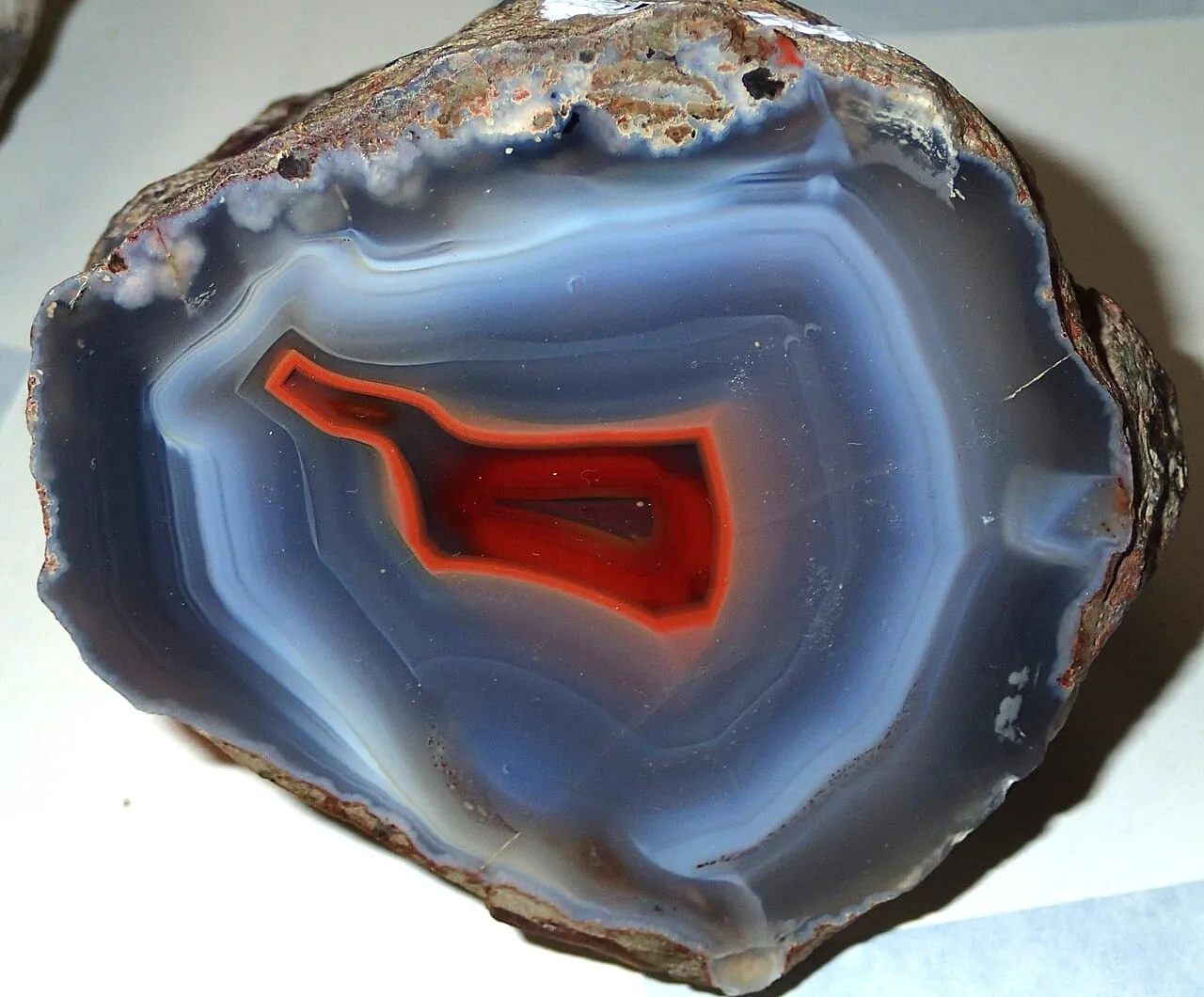
The banded variety of chalcedony: it grows layer by layer in hollows in volcanic rock and shows a new pattern every time it is cut.
Almandine
The commonest garnet: a deep red, iron-rich stone named after the ancient city of Alabanda in Anatolia, used in jewellery and in sandpaper alike.
Amazonite
A turquoise-like green-blue feldspar: a variety of microcline worn as jewellery for more than three thousand years, but it can release lead.