Meteorite
Pallasite
Pallasit
A rare stony-iron meteorite with golden-green olivine crystals set in shining iron–nickel metal, counted among the most beautiful meteorites.
- Ornamental

In short
Pallasites are rare meteorites that are roughly half metal and half stone. Their shiny iron–nickel metal holds green crystals of olivine, the mineral known as peridot when it is a gem. Thin slices held up to the light glow like stained glass.
How does it form?
Pallasites are thought to have formed at the boundary between the iron–nickel core and the olivine-rich mantle of an asteroid that had once melted. Another view is that they are mixtures of core metal and mantle rock produced during large collisions; scientists have not yet settled the question. Olivine is a silicate mineral containing magnesium and iron; its gem form is called peridot, and some pallasites contain gem-quality olivine.
How rare are they?
Pallasites make up far less than one per cent of known meteorites, and only a handful have been seen to fall. Famous examples include Krasnojarsk in Russia, Brenham in Kansas (USA), Imilac in Chile and Fukang in China. Because of their beauty, thin slices are highly prized by museums and collectors.
A place in the history of science
The Krasnojarsk mass was found in Siberia in 1749 and shown to Peter Simon Pallas in 1772. In 1794 the German physicist Ernst Chladni argued that this iron mass had come from space; at the time few people believed that stones could fall from the sky, and Chladni’s work is regarded as the beginning of meteorite science. In 1804 a piece of this mass became the first meteorite to be etched with acid, and the Widmanstätten pattern was seen on it for the first time.
How to recognise it
- 1
A cut surface shows glassy, yellowish-green or amber-coloured olivine crystals in a silvery metal network; thin slices let light through.
- 2
Because of its metal, it is very heavy and strongly attracts a magnet; the outside may be covered with brown rust or a black fusion crust.
- 3
When the metal is etched with acid, a Widmanstätten pattern may appear.
- 4
Only a meteorite laboratory, or the records of the Meteoritical Society, can confirm that a piece really is a pallasite and which meteorite it comes from.
Fakes and imitations
What shops usually don’t tell you:
- Mesosiderites: another kind of stony-iron meteorite, made of metal mixed with broken, irregular silicate fragments; they lack the large, clear olivine crystals of pallasites. They are genuine meteorites, but not pallasites.
- Olivine-bearing Earth rocks: peridotite nodules in basalt consist of green olivine crystals, but they contain no metal and do not attract a magnet.
- “Meteorite peridot”: peridots cut from pallasites do exist, but they are extremely rare and small. Only a laboratory capable of trace-element and isotope analysis can show that a stone sold under this name really came from space.
Did you know?
Pallasites are named not after the asteroid 2 Pallas but after the naturalist Peter Simon Pallas, who studied the Krasnojarsk mass.
The olivine crystals in the Marjalahti pallasite are so pure and uniform in composition that they have been used as a scientific standard for olivine analysis.
Where is it found?
Loading map…
- Krasnoyarsk Krai, Russia · Historic sourceFound in 1749, the Krasnojarsk mass is the first known pallasite; it was shown to Peter Simon Pallas in 1772. Its main mass is in the Fersman Mineralogical Museum in Moscow.
- Brenham, Kiowa County, Kansas, USA · Major depositOne of the best-known pallasites, with a total known mass of more than 4 tonnes.
- Imilac, Atacama Desert, Chile · Known localityThought to be pieces of a much larger meteoroid that exploded over the Atacama Desert.
- Fukang, Xinjiang, China · Known localityA pallasite found in 2000 with a main mass of about one tonne, famous for its large, clear olivine crystals.
Locations are approximate to protect sites. Red dots mark places in Türkiye. Open in the big map →
Sources
- Pallasites · Buseck Center for Meteorite Studies, Arizona State University
- Types of meteorites · Natural History Museum, London
- Meteorite · Encyclopaedia Britannica
External links
Draft: awaiting expert reviewReport an error ↗
On the same step
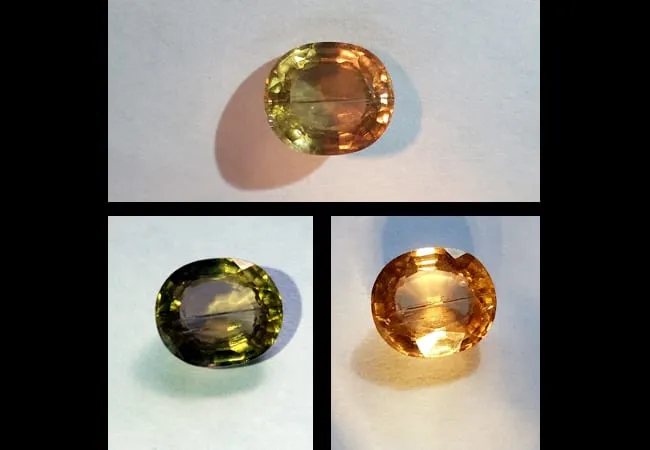
Diaspore
A rare mineral that looks greenish in daylight and pinkish under incandescent light; gem-quality material comes almost only from Muğla.
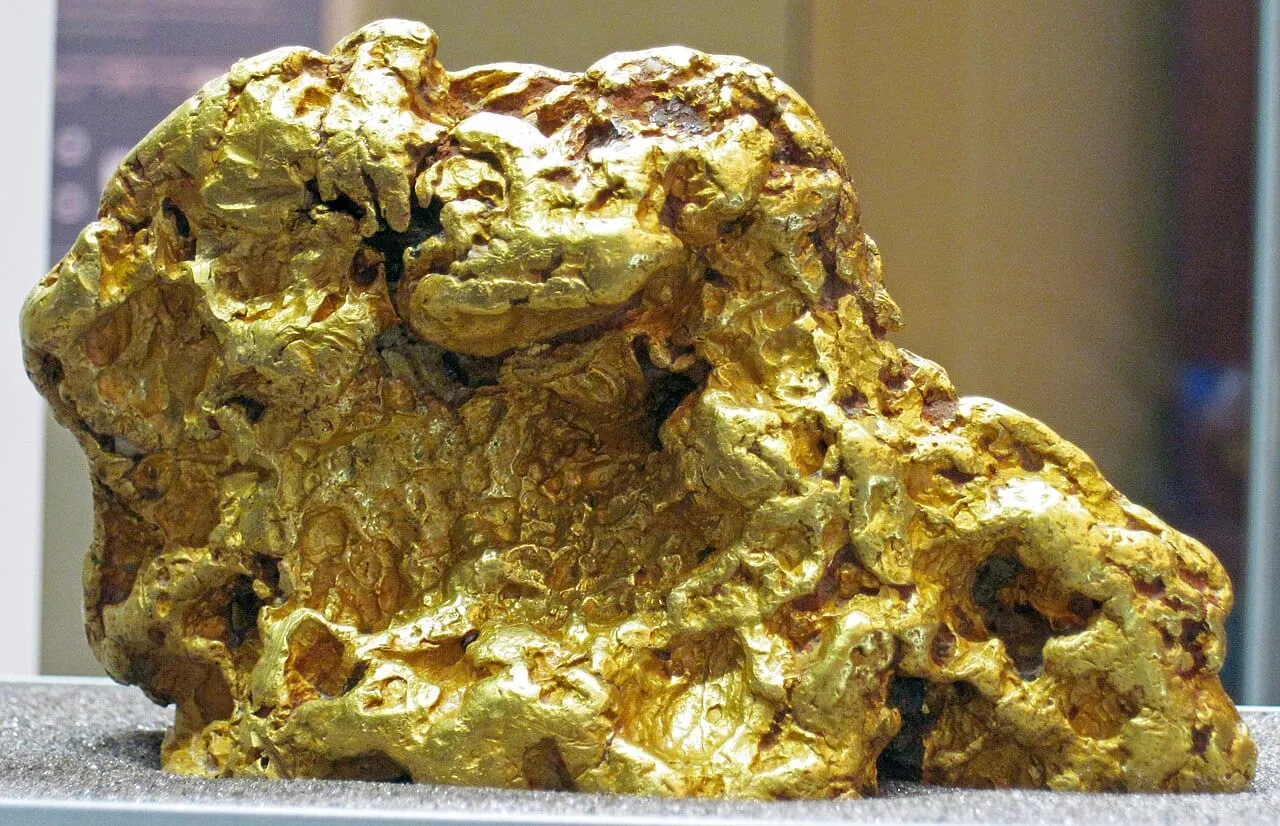
Gold
A heavy, bright yellow metal that occurs pure in nature, never tarnishes and can be hammered into sheets or drawn into wire.
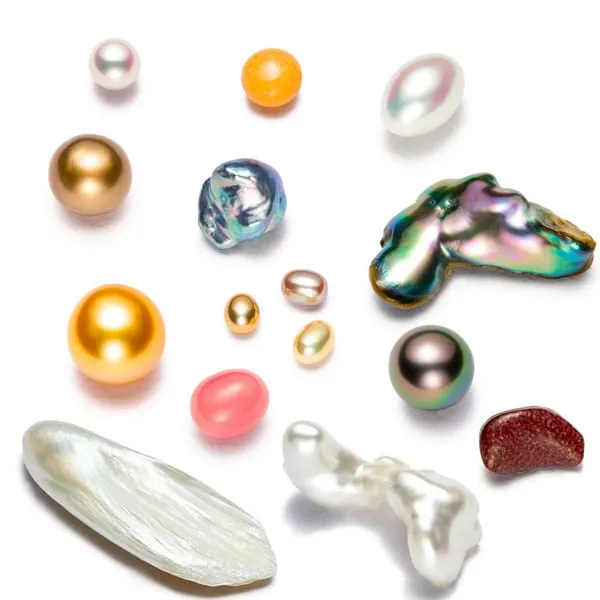
Pearl
An organic gem that grows layer by layer inside oysters and mussels and glows without any cutting or polishing.