Rock
Pegmatite
Pegmatit
The rock where crystals grow gigantic: 12-metre spodumenes, an 18-metre beryl, and an important source of the lithium in phone batteries.
Also known as: Granite pegmatite · Graphic granite (quartz–feldspar intergrowth)
- Popularly: Ore and raw material
_2_(8290567239).jpg)
In short
Pegmatite is a very coarse-grained igneous rock in which most crystals are larger than 1 centimetre. Most pegmatites resemble granite, made of plenty of quartz, feldspar and mica. It forms from the last liquid left as a body of magma cools, rich in water and rare elements. That is why it is an important source of elements such as lithium, beryllium, tantalum and tin, as well as of gems such as tourmaline, aquamarine and topaz.
Photos
_(8291627446).jpg)
How does it form?
As a large body of magma cools in the crust and turns into granite, the last liquid left becomes enriched in water, volatile substances and rare elements. This liquid seeps into cracks and pockets along the edges of the granite body; there atoms can move easily, so crystals can grow very large. That is why pegmatites are usually found as veins and dykes around granites. Its name comes from the Homeric Greek pēgnymi, “to bind together”, a reference to its interlocking quartz and feldspar crystals. The mineralogist René Just Haüy first used the term in 1822.
What is it used for?
- Lithium: Pegmatites containing spodumene and lepidolite are important sources of the lithium used in batteries.
- Beryllium and other metals: Most of the world’s beryllium comes from non-gem beryl in pegmatites; pegmatites are also mined for tantalum, niobium, tin and rare earth elements.
- Feldspar and mica: Feldspar is used in making glass and ceramics, and large sheets of mica in electronics.
- Gemstones: Many gems such as tourmaline, aquamarine, emerald and topaz come from pockets in pegmatites.
What determines its value?
Pegmatite gains its value not as a rock but from the minerals it holds. Pegmatites carrying lithium (spodumene, lepidolite), beryllium (beryl), tantalum, niobium and tin are mined as ores; feldspar and mica are also extracted for glass, ceramics and electronics. Pockets containing gems are worth as much as the quality of their stones. Attractively patterned pegmatites are sometimes cut and polished into worktops and facing stone.
This information is educational, not buying, selling or investment advice. Value varies enormously with quality and treatment.
How to recognise it
- 1
Its crystals are very large: most are bigger than 1 centimetre, and some can be bigger than a hand, or even a person.
- 2
It is mostly white or pink feldspar, grey quartz and shiny sheets of mica that peel apart in layers.
- 3
Quartz and feldspar sometimes grow into each other in a pattern that looks like ancient writing (graphic granite).
- 4
It usually occurs as veins and dykes along the edges of large granite bodies.
Fakes and imitations
What shops usually don’t tell you:
- Coarse-grained granite can be confused with pegmatite; in pegmatite the crystals are much larger and vary greatly in size from place to place.
Myths and misconceptions
MythThe giant crystals in pegmatite took millions of years to grow.
FactHow pegmatites form is still debated, but some studies show their crystals can grow very fast, at 1 to 10 metres per day. The large size of the crystals is linked to the liquid feeding them being rich in water and volatile substances.
Did you know?
The largest beryl crystal known came from a pegmatite in Madagascar: about 380 tonnes, 18 metres long and 3.5 metres across.
Spodumene crystals more than 12 metres long have been found in the pegmatites of South Dakota’s Black Hills.
Some studies suggest pegmatite crystals can grow at an astonishing 1 to 10 metres per day.
Where is it found?
Loading map…
- Black Hills (Etta mine, Keystone), South Dakota, USA · Major depositIts pegmatites have yielded spodumene crystals more than 12 metres long; the Etta mine is the most famous.
- Tanco mine, Bernic Lake, Manitoba, Canada · Known localityA rare-element pegmatite where spodumene is mined.
- Pala, San Diego County, California, USA · Known localityA pegmatite district famous for its tourmaline and kunzite.
- Araçuaí–Itinga–Salinas, Minas Gerais, Brazil · Major depositA large district of gem tourmaline in pegmatites; the Minas Gerais pegmatite belt is a source of aquamarine, tourmaline and many other gems.
- Bumpus Quarry, Albany, Maine, USA · Historic sourceA pegmatite quarry that yielded some of the largest beryl crystals known, up to 8 metres long and 26 tonnes.
- Spruce Pine, North Carolina, USA · Major depositA pegmatite district mined for mica, feldspar and high-purity quartz.
Locations are approximate to protect sites. Red dots mark places in Türkiye. Open in the big map →
Frequently asked questions
What is pegmatite?
Pegmatite is a very coarse-grained igneous rock in which most crystals are larger than 1 centimetre. Most pegmatites resemble granite, made of plenty of quartz, feldspar and mica. It forms from the last liquid left as a body of magma cools, rich in water and rare elements. That is why it is an important source of elements such as lithium, beryllium, tantalum and tin, as well as of gems such as tourmaline, aquamarine and topaz.
What is pegmatite used for?
Lithium: Pegmatites containing spodumene and lepidolite are important sources of the lithium used in batteries. Beryllium and other metals: Most of the world’s beryllium comes from non-gem beryl in pegmatites; pegmatites are also mined for tantalum, niobium, tin and rare earth elements. Feldspar and mica: Feldspar is used in making glass and ceramics, and large sheets of mica in electronics. Gemstones: Many gems such as tourmaline, aquamarine, emerald and topaz come from pockets in pegmatites.
How hard is pegmatite?
It has a hardness of 6–7 on the Mohs scale. It can scratch glass; a steel knife scratches it only with difficulty. Its specific gravity is 2.6–2.8 g/cm³.
Where is pegmatite found?
Its best-known localities: Black Hills (Etta mine, Keystone), South Dakota, USA; Araçuaí–Itinga–Salinas, Minas Gerais, Brazil; Spruce Pine, North Carolina, USA; Bumpus Quarry, Albany, Maine, USA; Tanco mine, Bernic Lake, Manitoba, Canada.
How can you tell if pegmatite is real?
Its crystals are very large: most are bigger than 1 centimetre, and some can be bigger than a hand, or even a person. It is mostly white or pink feldspar, grey quartz and shiny sheets of mica that peel apart in layers. Quartz and feldspar sometimes grow into each other in a pattern that looks like ancient writing (graphic granite). Coarse-grained granite can be confused with pegmatite; in pegmatite the crystals are much larger and vary greatly in size from place to place.
Is pegmatite valuable?
On the “street to diamond” value ladder it sits on step 3 of nine: Building and industrial stone. Pegmatite gains its value not as a rock but from the minerals it holds. Pegmatites carrying lithium (spodumene, lepidolite), beryllium (beryl), tantalum, niobium and tin are mined as ores; feldspar and mica are also extracted for glass, ceramics and electronics. Pockets containing gems are worth as much as the quality of their stones. Attractively patterned pegmatites are sometimes cut and polished into worktops and facing stone.
Sources
- Pegmatite · Wikipedia
- Pegmatite (H. M. King) · Geology.com
- Handbook of Mineralogy: Spodumene · Mineralogical Society of America
- Spodumene · Wikipedia
- Pala, California · Wikipedia
- Tourmaline · Wikipedia
- Bumpus Quarry · Wikipedia
- Spruce Pine, North Carolina · Wikipedia
External links
Draft: awaiting expert reviewReport an error ↗
On the same step
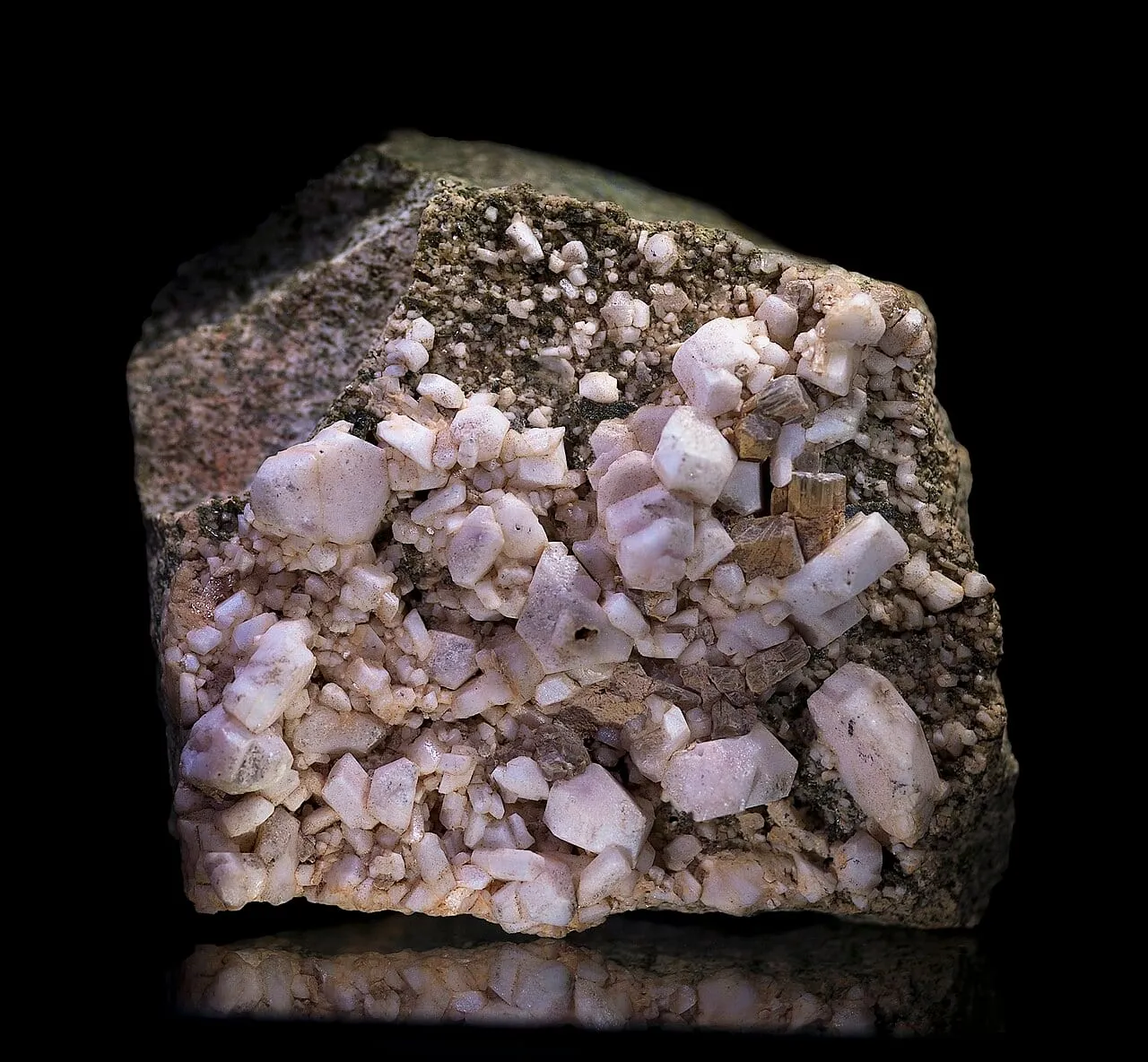
Albite
The white, sodium end of the feldspars: with its deposits at Çine–Milas, a glass and ceramics raw material that makes Türkiye one of the world’s main feldspar producers.
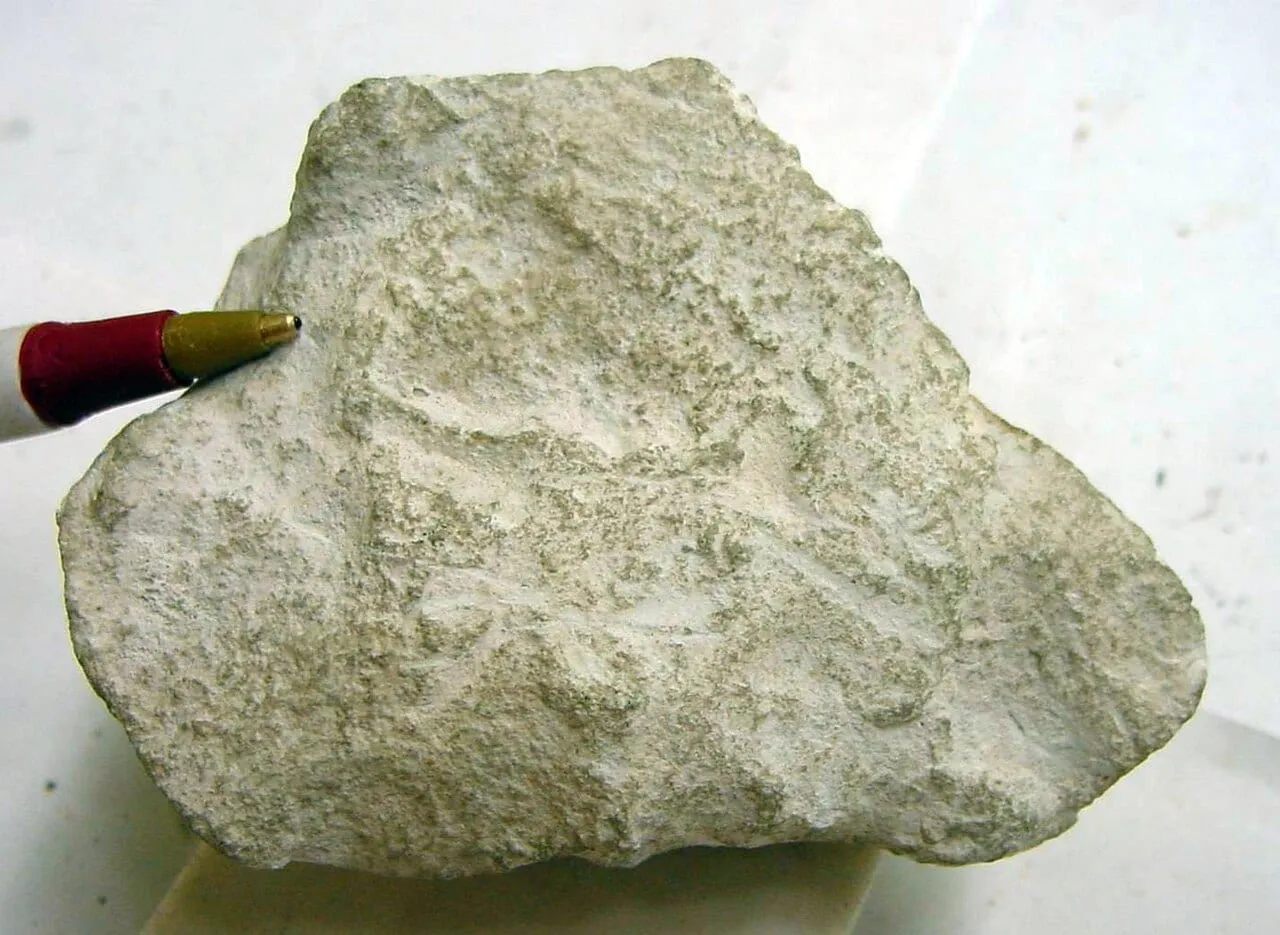
Alunite
The “alum stone” from which alum was made for centuries. Foça, Şaphane in Kütahya and Şebinkarahisar are Türkiye's old alum homelands.
Anhydrite
Gypsum without its water: a calcium sulfate mineral, whose blue-grey Peruvian form is sold as “angelite”.