Meteorite
Micrometeorite
Mikrometeorit
Grains of space dust, mostly under a millimetre, that reached the ground; most magnetic spherules picked up in cities are man-made, not cosmic.
Also known as: Cosmic spherule (melted micrometeorite)
- Popularly: Meteorite

In short
Micrometeorites are grains of space dust, generally smaller than a millimetre, that entered Earth’s atmosphere and reached the ground. Those that melt completely in the atmosphere freeze into round “cosmic spherules”. About 2,700 tonnes of space dust a year are estimated to reach the surface as particles, but they are very hard to recognise. Most of the round magnetic spherules gathered from roofs and street dust with a magnet are man-made material such as welding debris, ash or industrial by-products.
Photos

How does it form?
Dust grains travelling in space (micrometeoroids) enter the atmosphere at at least 11 km/s and heat up through friction and compression. Those that enter slowly do not melt and keep their properties. Faster ones partly melt and become porous, “scoriaceous” grains; the fastest melt completely and freeze into round droplets: cosmic spherules. When a grain melts completely its pores close (porosity falls to about 1%) and its density settles at about 3.2–3.3 g/cm³.
What is it used for?
Micrometeorites have no everyday use; their value is scientific:
- What rains onto Earth: Large collections give information on the size and composition of the material accumulating on Earth and on how much it is heated in the atmosphere.
- The history of the dust flux: In a study published in 2017, the ratio of barred-olivine to cryptocrystalline spherules among new spherules collected from rooftops was 1.45, against an average of about 0.9 in the geological record. The researchers suggested that the dust flux reaching Earth may have varied over time.
- A link to carbonaceous chondrites: Most micrometeorites resemble carbonaceous chondrites; those resembling achondrites are fewer than 1%.
- Museums and collections: Mounts and photographs seen under a microscope are used in teaching and in collections because they show the crystal textures inside cosmic spherules.
Main types
- Unmelted micrometeorites: Fine- or coarse-grained, porous grains; they entered the atmosphere slowly and never melted.
- Partly melted (scoriaceous) ones: More porous, partly melted grains.
- Cosmic spherules: Completely melted, round droplets. Stony (silicate) ones (S-type) show porphyritic-olivine, barred-olivine or cryptocrystalline textures in section; iron-rich ones are called I-type and glassy ones V-type.
For chondrule-bearing stones, see the chondrite page.
Where are they collected?
Micrometeorites are collected from Antarctic blue ice and snow, from Greenland snow and cryoconite, from deep-sea sediments, from the water well at the South Pole station and, since 2016, from flat roofs in cities. Diverse micrometeorites were picked out of 100 tonnes of Antarctic blue ice (1991); ice and snow give the least weathered specimens.
Why are most of the spherules collected in cities not cosmic?
A magnet pulls most of the round, shiny, magnetic spherules out of roof or street dust, but most of them are man-made material such as welding debris, ash or industrial by-products. Micrometeorite researchers long thought that collecting in cities was impossible: artificial particles were abundant and the flux of particles from space was small. The work of Larsen and Genge showed that it can be done; but about 1,000 searches were made, about 300 kg of roof sediment was processed by magnetic separation, washing and sieving, and the candidates were examined under an optical microscope and then an electron microscope. So there are micrometeorites in cities, but not every sphere that sticks to a magnet is one. To be sure about a spherule you have, you need a laboratory. The general screening steps that also apply to meteorites are in the Is my stone valuable? guide.
What determines its value?
Micrometeorites are not gems or ornamental stones; they are looked at one by one under a microscope and are usually shared as mounts or in small vials. What determines their value is whether a laboratory has confirmed that they are really cosmic (most spherules collected in cities and from roofs are man-made), whether it is documented where and how they were collected (Antarctic ice, deep-sea sediment, a roof), the type and texture of the spherule, how well its surface is preserved, and its size. A spherule whose composition has not been confirmed cannot be valued as a “micrometeorite”.
This information is educational, not buying, selling or investment advice. Value varies enormously with quality and treatment.
How to recognise it
- 1
You cannot see one with the naked eye: a micrometeorite is generally smaller than a millimetre (150–600 micrometres in urban rooftop samples), so a magnifier or microscope is needed. The grains sought are round or nearly round; they look black and glassy, grey-black and metallic, or translucent and glassy, and may show fine crystal outgrowths (dendrites) or metallic protrusions on the surface.
- 2
A section and a chemical analysis give the proof: in completely melted stony spherules you see barred-olivine, porphyritic-olivine or cryptocrystalline textures. The abundances of the main elements usually stay within a factor of about 3 of those in CI chondrites; a magnetite rim on the outer surface and beads of nickel-rich metal inside support the identification.
- 3
A magnet is only a first screen: most of the round particles a magnet picks out of city dust are man-made. Even researchers examine candidates under an electron microscope and with a microprobe; a spherule cannot count as a micrometeorite until it has passed that examination.
- 4
Colour photographs that show the whole surface texture of the grain help a great deal in identification, but the decision must still rest on a laboratory analysis.
Fakes and imitations
What shops usually don’t tell you:
- Welding debris, ash and industrial by-products: man-made materials easily pass as micrometeorites, and most round magnetic spherules in city dust are of this kind.
- Iron-rich artificial spheres: because they are so abundant, they are easily confused with iron-oxide-dominated (I-type) micrometeorites.
- Glassy artificial spheres: there are so many that they make it hard to pick out glassy (V-type) cosmic spherules.
- Biological and Earth-derived particles: roof and street dust holds biological and Earth-derived particles as well as artificial ones, and these too have to be sorted out.
Safety
Climbing onto a roof to collect roof or gutter sediment risks a fall; do not climb up, and collect only from safe places and with the building owner’s permission. Roof dust contains fine particles; wear gloves and a dust mask so you do not breathe it in.
Myths and misconceptions
MythRound, shiny spherules picked up with a magnet are micrometeorites.
FactExperts long thought collecting micrometeorites in cities was impossible, because the magnetic spherules found in cities had been shown to be largely man-made. Jon Larsen picked more than 40,000 particles out under a microscope and examined nearly 1,000 candidates under an electron microscope. A spherule a magnet picks up is only a candidate.
MythYou cannot find micrometeorites in a city.
FactStudies published in 2016–2017 reported more than 500 micrometeorites picked from roof sediments in Norway and France, and a randomly chosen 47 particles were confirmed as cosmic spherules. But this took about 300 kg of sediment and years of sieving, microscope work and chemical analysis.
MythA micrometeorite is just a small meteorite.
FactMicrometeorites differ from meteorites in their small size, their far greater numbers and their different composition. Most resemble carbonaceous chondrites, and the mass of particles reaching the surface is roughly 50 times the mass of meteorites.
Did you know?
Cosmic spherules were first collected from deep-sea sediments of the Pacific during the HMS Challenger expedition of 1873–1876; Murray and Renard described two groups of spherules in 1891.
Jon Larsen of Project Stardust searched roof and road dust with a magnet, bags, a sieve and a microscope from 2009, and recognised his first micrometeorite six years later, in February 2015. The particles collected from rooftops fell within roughly the past six years, making them the youngest large micrometeorites known.
About 40,000 ± 20,000 tonnes of space dust enter the atmosphere every year, but less than 10% of it (about 2,700 ± 1,400 tonnes) reaches the surface as particles. That is roughly 50 times the mass of meteorites that fall (about 50 tonnes a year).
Where is it found?
Loading map…
- Water well at Amundsen–Scott South Pole Station, Antarctica · Major depositMicrometeorites have been collected from the bottom of the station’s drinking-water well; in 1998 Taylor, Lever and Harvey used measurements here to work out the rate at which cosmic spherules accumulate at the South Pole.
- Oslo, Norway · Known localityWhere Jon Larsen (Project Stardust) picked more than 500 micrometeorites out of about 300 kg of sediment from flat roofs and roof gutters; in the study published in 2017, a randomly chosen 47 particles were confirmed as cosmic spherules.
- Paris, France · Known localityThe second European city in which micrometeorites have been picked from urban roof sediment; one of the rooftop specimens came from France.
- Transantarctic Mountains, Antarctica · Known localityMicrometeorites have been collected from this mountain range, about 3,500 km long; Antarctic ice, snow and sediments give the least weathered specimens.
- Greenland Ice Sheet, Greenland · Known localityMicrometeorites have also been collected from Greenland’s snow and from cryoconite, the dark dust that collects on its ice.
Locations are approximate to protect sites. Red dots mark places in Türkiye. Open in the big map →
Frequently asked questions
What is micrometeorite?
Micrometeorites are grains of space dust, generally smaller than a millimetre, that entered Earth’s atmosphere and reached the ground. Those that melt completely in the atmosphere freeze into round “cosmic spherules”. About 2,700 tonnes of space dust a year are estimated to reach the surface as particles, but they are very hard to recognise. Most of the round magnetic spherules gathered from roofs and street dust with a magnet are man-made material such as welding debris, ash or industrial by-products.
What is micrometeorite used for?
Micrometeorites have no everyday use; their value is scientific: What rains onto Earth: Large collections give information on the size and composition of the material accumulating on Earth and on how much it is heated in the atmosphere. The history of the dust flux: In a study published in 2017, the ratio of barred-olivine to cryptocrystalline spherules among new spherules collected from rooftops was 1.45, against an average of about 0.9 in the geological record. The researchers suggested that the dust flux reaching Earth may have varied over time.
How hard is micrometeorite?
It has a hardness of 5–7 on the Mohs scale. It can scratch glass; a steel knife scratches it only with difficulty. Its specific gravity is 2.7–3.7 g/cm³.
Where is micrometeorite found?
Its best-known localities: Water well at Amundsen–Scott South Pole Station, Antarctica; Oslo, Norway; Paris, France; Transantarctic Mountains, Antarctica; Greenland Ice Sheet, Greenland.
How can you tell if micrometeorite is real?
You cannot see one with the naked eye: a micrometeorite is generally smaller than a millimetre (150–600 micrometres in urban rooftop samples), so a magnifier or microscope is needed. The grains sought are round or nearly round; they look black and glassy, grey-black and metallic, or translucent and glassy, and may show fine crystal outgrowths (dendrites) or metallic protrusions on the surface. A section and a chemical analysis give the proof: in completely melted stony spherules you see barred-olivine, porphyritic-olivine or cryptocrystalline textures. The abundances of the main elements usually stay within a factor of about 3 of those in CI chondrites; a magnetite rim on the outer surface and beads of nickel-rich metal inside support the identification. A magnet is only a first screen: most of the round particles a magnet picks out of city dust are man-made. Even researchers examine candidates under an electron microscope and with a microprobe; a spherule cannot count as a micrometeorite until it has passed that examination. Welding debris, ash and industrial by-products: man-made materials easily pass as micrometeorites, and most round magnetic spherules in city dust are of this kind.
Is micrometeorite valuable?
On the “street to diamond” value ladder it sits on step 5 of nine: Ornamental stone. Micrometeorites are not gems or ornamental stones; they are looked at one by one under a microscope and are usually shared as mounts or in small vials. What determines their value is whether a laboratory has confirmed that they are really cosmic (most spherules collected in cities and from roofs are man-made), whether it is documented where and how they were collected (Antarctic ice, deep-sea sediment, a roof), the type and texture of the spherule, how well its surface is preserved, and its size. A spherule whose composition has not been confirmed cannot be valued as a “micrometeorite”.
Is micrometeorite dangerous?
Climbing onto a roof to collect roof or gutter sediment risks a fall; do not climb up, and collect only from safe places and with the building owner’s permission. Roof dust contains fine particles; wear gloves and a dust mask so you do not breathe it in.
Sources
- Micrometeorite · Wikipedia
- Mikrometeorit · Vikipedi
- Cosmic dust · Wikipedia
- The collection of urban MMs – not an urban myth (J. Larsen & M. J. Genge), 79th Annual Meeting of the Meteoritical Society, abstract 6341 · Lunar and Planetary Institute, 2016
- An urban collection of modern-day large micrometeorites: evidence for variations in the extraterrestrial dust flux through the Quaternary (Genge, Larsen, Van Ginneken & Suttle), Geology 45(2): 119–122 · Geological Society of America, 2017
- Urban micrometeorites no longer a myth (J. Wendel) · Eos, American Geophysical Union, 2016
- Urban micrometeorites: A myth? · Deposits Magazine, 2018
- Density, porosity, mineralogy, and internal structure of cosmic dust and alteration of its properties during high velocity atmospheric entry (Kohout et al.), Meteoritics & Planetary Science 49: 1157–1170 · Wiley, 2014
- A collection of diverse micrometeorites recovered from 100 tonnes of Antarctic blue ice (Maurette, Olinger & Michel-Levy), Nature 351: 44–47 · Nature, 1991
- Transantarctic Mountains · Wikipedia
- Greenland ice sheet · Wikipedia
- Amundsen–Scott South Pole Station · Wikipedia
External links
Draft: awaiting expert reviewReport an error ↗
On the same step
Agate
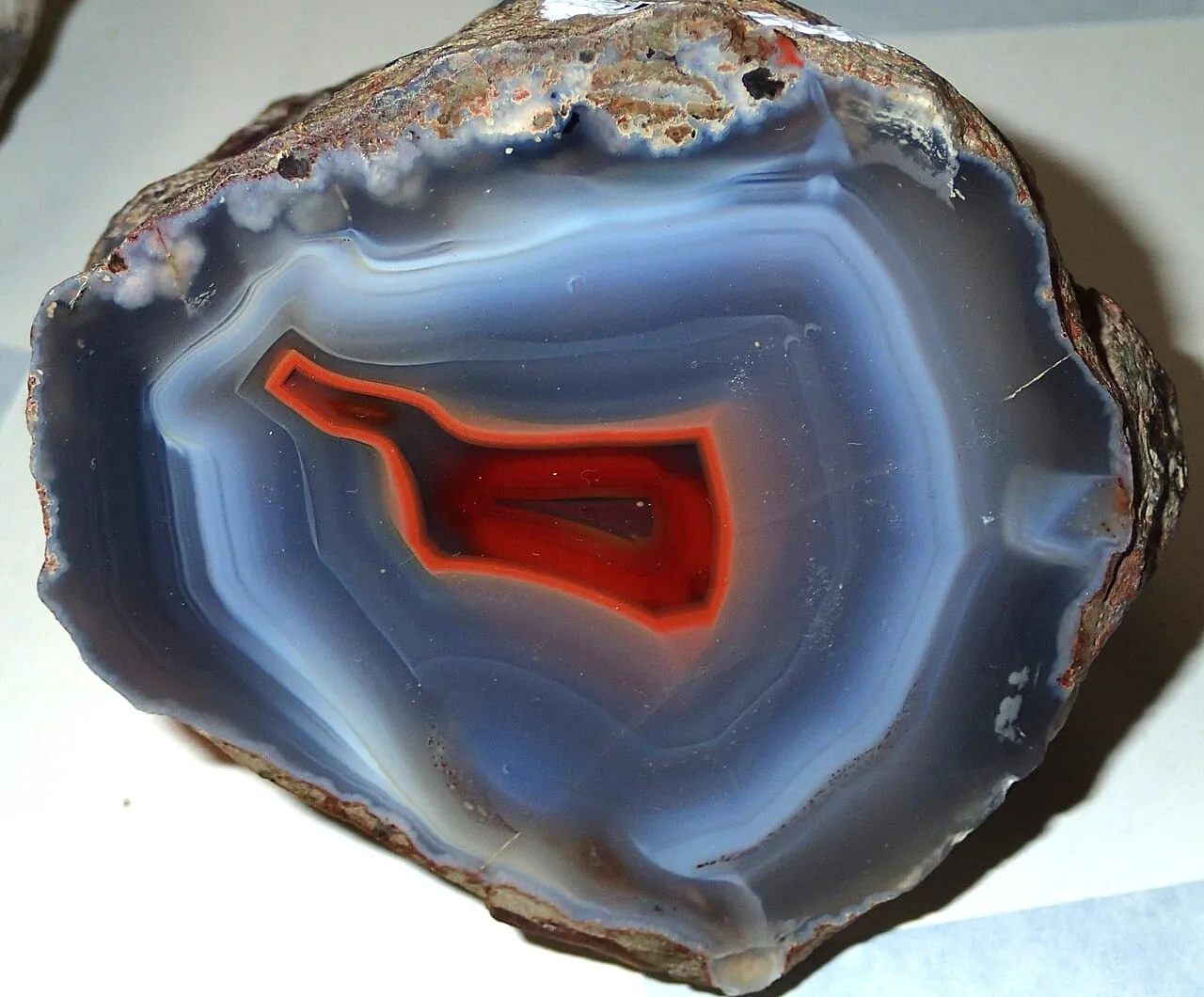
The banded variety of chalcedony: it grows layer by layer in hollows in volcanic rock and shows a new pattern every time it is cut.

Almandine
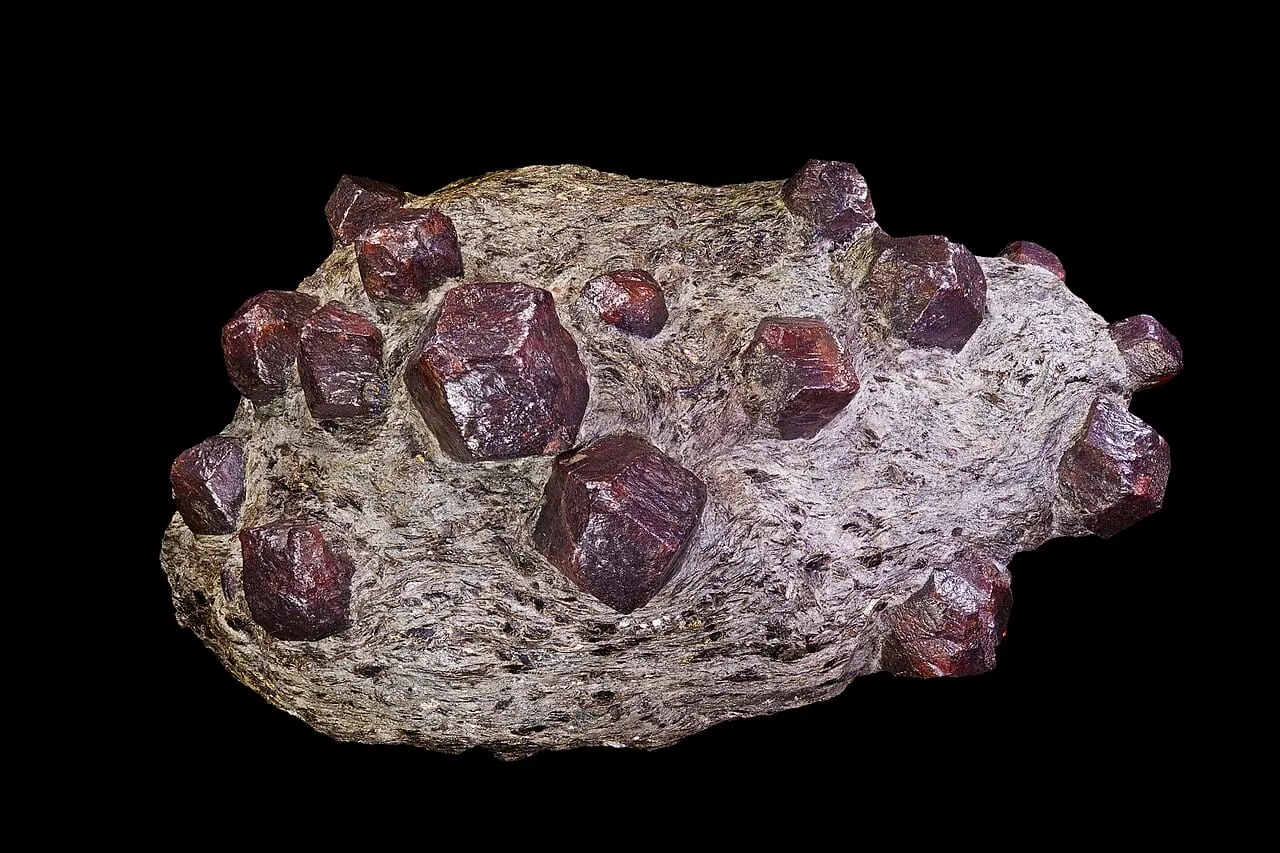
The commonest garnet: a deep red, iron-rich stone named after the ancient city of Alabanda in Anatolia, used in jewellery and in sandpaper alike.
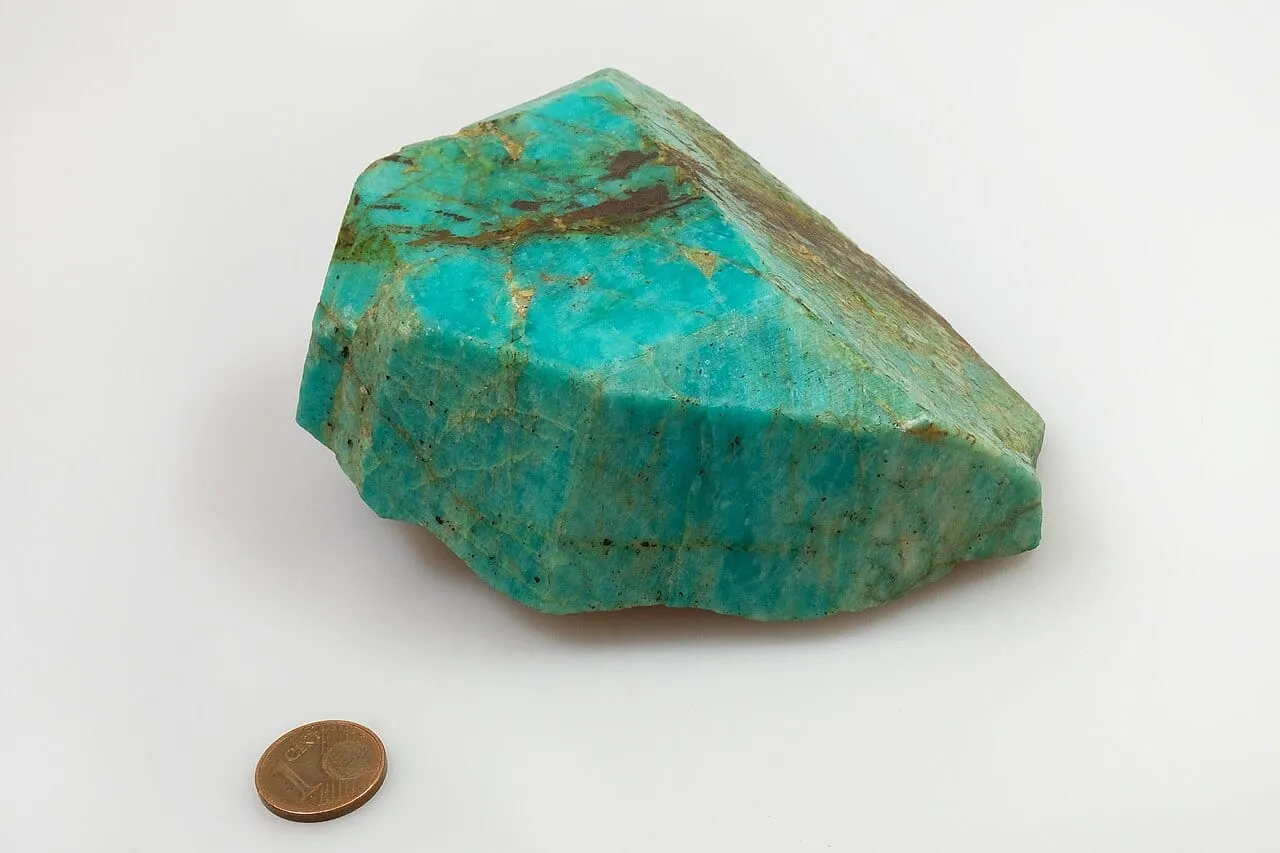
Amazonite
A turquoise-like green-blue feldspar: a variety of microcline worn as jewellery for more than three thousand years, but it can release lead.