Mineral
Hemimorphite
Zn₄Si₂O₇(OH)₂·H₂OHemimorfit
A zinc silicate whose crystals end differently at the two ends; for centuries it was lumped with smithsonite as “calamine”.
Also known as: Calamine (old name shared with smithsonite)
- Popularly: Semi-precious stone
- Gemstone
- Ornamental
- Ore

In short
Hemimorphite is a silicate mineral containing zinc, silicon, oxygen and water. Its name comes from its crystals ending in different faces at the two ends (hemimorphism). It forms near the surface of zinc deposits, about 54 % of its weight is zinc, and it is a minor ore of zinc. Its blue and blue-green translucent masses are cut as cabochons and beads.
How does it form?
Hemimorphite is a secondary mineral: it forms near the surface of ore deposits containing zinc sulfides (especially sphalerite), as the sulfides oxidise. Other secondary minerals such as smithsonite, galena, cerussite, calcite and malachite occur beside it. In the deposits on the Belgian-German border it is reported to have formed by zinc replacing the surrounding rocks (metasomatism).
What is it used for?
- Zinc ore: Up to 54 % of its weight is zinc. For centuries it was part of the “calamine” that was mined, together with smithsonite, from the upper parts of zinc and lead ores.
- Ornamental stone: Blue and blue-green translucent masses are cut as cabochons and beads; because it is soft, it needs care in jewellery.
- Collecting: Bright crystals whose two ends differ, and fan-shaped clusters, are sought by mineral collectors.
In Türkiye
In Türkiye hemimorphite is known, together with smithsonite, from the zinc-lead deposits of the Aladağlar in the Central Taurus (the Zamantı metal district; the area around Yahyalı in Kayseri). According to the study by Çevrim, Echle and Friedrich (1986), these deposits formed in old karst cavities in Permian and Jurassic limestones and the sulfide ore has been almost entirely broken down in places; the main components of the oxidised ore are limonite, smithsonite, hemimorphite, hydrozincite and zinc-aluminium silicates.
What determines its value?
As an ornamental stone its value depends on the vividness of the colour (bright blue and blue-green tones), translucency and texture; colourless or pale stones are less sought after. In collecting, large, bright, well-formed crystals and specimens from famous places such as Ojuela or Santa Eulalia are valued. Being of medium hardness (4.5–5) and cleavable, it needs care in jewellery. As a zinc ore it is a minor ore; its value depends on its grade and on mining conditions.
This information is educational, not buying, selling or investment advice. Value varies enormously with quality and treatment.
How to recognise it
- 1
It does not fizz in acid; the very similar smithsonite does.
- 2
Its hardness is 4.5–5. Its specific gravity is about 3.4–3.5, distinctly lighter than smithsonite (about 4.3–4.5).
- 3
Its crystals are thin and plate-like and often form fans or cockscomb-like clusters; the two ends of a crystal terminate differently. As masses it is grape-like, stalactitic or crusty.
- 4
It becomes electrically charged when heated (it is pyroelectric); some specimens fluoresce under ultraviolet light.
Fakes and imitations
What shops usually don’t tell you:
- Smithsonite: it looks very much like hemimorphite and occurs in the same deposits; for centuries both were called “calamine”. It is told apart by fizzing in acid and by being heavier.
- Turquoise: George F. Kunz writes that a blue calamine (hemimorphite) coloured by an admixture of copper, found in Mexico, was cut and sold as a “cheap gem”, but that it does not resemble turquoise, which is more opaque and a different shade of blue.
Myths and misconceptions
MythHemimorphite and smithsonite (calamine) are the same stone.
FactFor a long time the two minerals were treated as one ore and called “calamine”; that they are different was worked out later. Hemimorphite is a zinc silicate, smithsonite a zinc carbonate; hemimorphite does not fizz in acid, smithsonite does.
MythBlue hemimorphite is a kind of turquoise.
FactBlue hemimorphite is a zinc silicate, while turquoise is a copper-bearing aluminium phosphate. Hemimorphite's blue is told from turquoise by its more translucent look and its very different specific gravity.
What is it believed to be good for?
This section reports beliefs; it is not health information. There is no scientific evidence for these claims and no stone replaces medical treatment.
The meanings people give this stone, and who holds them:
- Kunz reports that Mexican Indian workers in the mines of Sonora and western Chihuahua placed a piece of blue calamine (hemimorphite) beside the small cross and candle shrine they set up where they worked; he suggests it may be because of the stone's beautiful colour or because they take it for turquoise.
- Today crystal-therapy practitioners claim that hemimorphite is linked to the throat chakra and makes it easier to communicate and express feelings.
- The same circles say the stone helps to process sadness, increases confidence and joy, and makes it easier to connect with angels and spirit guides.
What science says
There is no scientific evidence that hemimorphite affects communication, confidence or mood, or puts anyone in touch with spiritual beings. The practice Kunz describes is a religious act and does not show that the stone itself has a power. Hemimorphite contains zinc: the stone should not be put in water to make a drinkable “elixir”, and its dust should not be breathed in.
Did you know?
The Belgian town of Kelmis is called La Calamine in French, after its zinc mine, and this is the source of the word “calamine”.
Because the two ends of a hemimorphite crystal terminate differently, the ends take on opposite electric charges when the crystal is heated.
Where is it found?
Loading map…
- Ojuela mine, Mapimí, Durango, Mexico · Major depositFamous for large, well-formed hemimorphite crystals
- Santa Eulalia, Chihuahua, Mexico · Known localityYields large crystals
- Kelmis (La Calamine, Moresnet), Belgium · Historic sourceThe French name of Kelmis, La Calamine, comes from its zinc mine and is the source of the name calamine
- Tarnowskie Góry, Silesia, Poland · Historic sourceAn old zinc-lead district of Upper Silesia
- Padaeng, Mae Sot, Tak, Thailand · Known localityThe Padaeng deposit near Mae Sot
- Nerchinsk, Zabaykalsky Krai, Russia · Known localityLarge crystals from Siberia
- Cave del Predil, Friuli-Venezia Giulia, Italy · Known locality
- Leadville, Colorado, USA · Known locality
- Aladağlar (Yahyalı area), Kayseri, Türkiye · Known localityThe oxidised ore of the zinc-lead deposits of the Aladağlar consists mainly of smithsonite and hemimorphite
Locations are approximate to protect sites. Red dots mark places in Türkiye. Open in the big map →
Frequently asked questions
What is hemimorphite?
Hemimorphite is a silicate mineral containing zinc, silicon, oxygen and water. Its name comes from its crystals ending in different faces at the two ends (hemimorphism). It forms near the surface of zinc deposits, about 54 % of its weight is zinc, and it is a minor ore of zinc. Its blue and blue-green translucent masses are cut as cabochons and beads.
What is hemimorphite used for?
Zinc ore: Up to 54 % of its weight is zinc. For centuries it was part of the “calamine” that was mined, together with smithsonite, from the upper parts of zinc and lead ores. Ornamental stone: Blue and blue-green translucent masses are cut as cabochons and beads; because it is soft, it needs care in jewellery. Collecting: Bright crystals whose two ends differ, and fan-shaped clusters, are sought by mineral collectors.
How hard is hemimorphite?
It has a hardness of 4.5–5 on the Mohs scale. A fingernail cannot scratch it, but a steel knife can. Its specific gravity is 3.4–3.53 g/cm³.
Where is hemimorphite found?
Its best-known localities: Ojuela mine, Mapimí, Durango, Mexico; Kelmis (La Calamine, Moresnet), Belgium; Tarnowskie Góry, Silesia, Poland; Santa Eulalia, Chihuahua, Mexico; Padaeng, Mae Sot, Tak, Thailand.
Where is hemimorphite found in Türkiye?
Known localities in Türkiye: Aladağlar (Yahyalı area), Kayseri, Türkiye.
How can you tell if hemimorphite is real?
It does not fizz in acid; the very similar smithsonite does. Its hardness is 4.5–5. Its specific gravity is about 3.4–3.5, distinctly lighter than smithsonite (about 4.3–4.5). Its crystals are thin and plate-like and often form fans or cockscomb-like clusters; the two ends of a crystal terminate differently. As masses it is grape-like, stalactitic or crusty. Smithsonite: it looks very much like hemimorphite and occurs in the same deposits; for centuries both were called “calamine”. It is told apart by fizzing in acid and by being heavier.
Is hemimorphite valuable?
On the “street to diamond” value ladder it sits on step 5 of nine: Ornamental stone. As an ornamental stone its value depends on the vividness of the colour (bright blue and blue-green tones), translucency and texture; colourless or pale stones are less sought after. In collecting, large, bright, well-formed crystals and specimens from famous places such as Ojuela or Santa Eulalia are valued. Being of medium hardness (4.5–5) and cleavable, it needs care in jewellery. As a zinc ore it is a minor ore; its value depends on its grade and on mining conditions.
What is hemimorphite good for?
Kunz reports that Mexican Indian workers in the mines of Sonora and western Chihuahua placed a piece of blue calamine (hemimorphite) beside the small cross and candle shrine they set up where they worked; he suggests it may be because of the stone's beautiful colour or because they take it for turquoise. Today crystal-therapy practitioners claim that hemimorphite is linked to the throat chakra and makes it easier to communicate and express feelings. The same circles say the stone helps to process sadness, increases confidence and joy, and makes it easier to connect with angels and spirit guides. There is no scientific evidence that hemimorphite affects communication, confidence or mood, or puts anyone in touch with spiritual beings. The practice Kunz describes is a religious act and does not show that the stone itself has a power. Hemimorphite contains zinc: the stone should not be put in water to make a drinkable “elixir”, and its dust should not be breathed in. This section reports beliefs; it is not health information. There is no scientific evidence for these claims and no stone replaces medical treatment.
Sources
- Handbook of Mineralogy: Hemimorphite · Mineralogical Society of America
- Hemimorphite · Wikipedia
- Hemimorphite · Webmineral
- Hemimorphite properties, color, uses, crystals, gemstones · Geology.com
- Calamine (mineral) · Wikipedia
- The Curious Lore of Precious Stones (G. F. Kunz) · J. B. Lippincott Company; Project Gutenberg, 1913
- Aladağlar'da Paleokarstlaşmaya Bağlı Zn-Pb Mineralizasyonu (Çevrim, Echle & Friedrich), Türkiye Jeoloji Kurumu Bülteni 29, 27–41 · Türkiye Jeoloji Kurumu, 1986
- Ojuela · Wikipedia
- Kelmis · Wikipedia
- Yahyalı · Wikipedia
External links
Draft: awaiting expert reviewReport an error ↗
On the same step
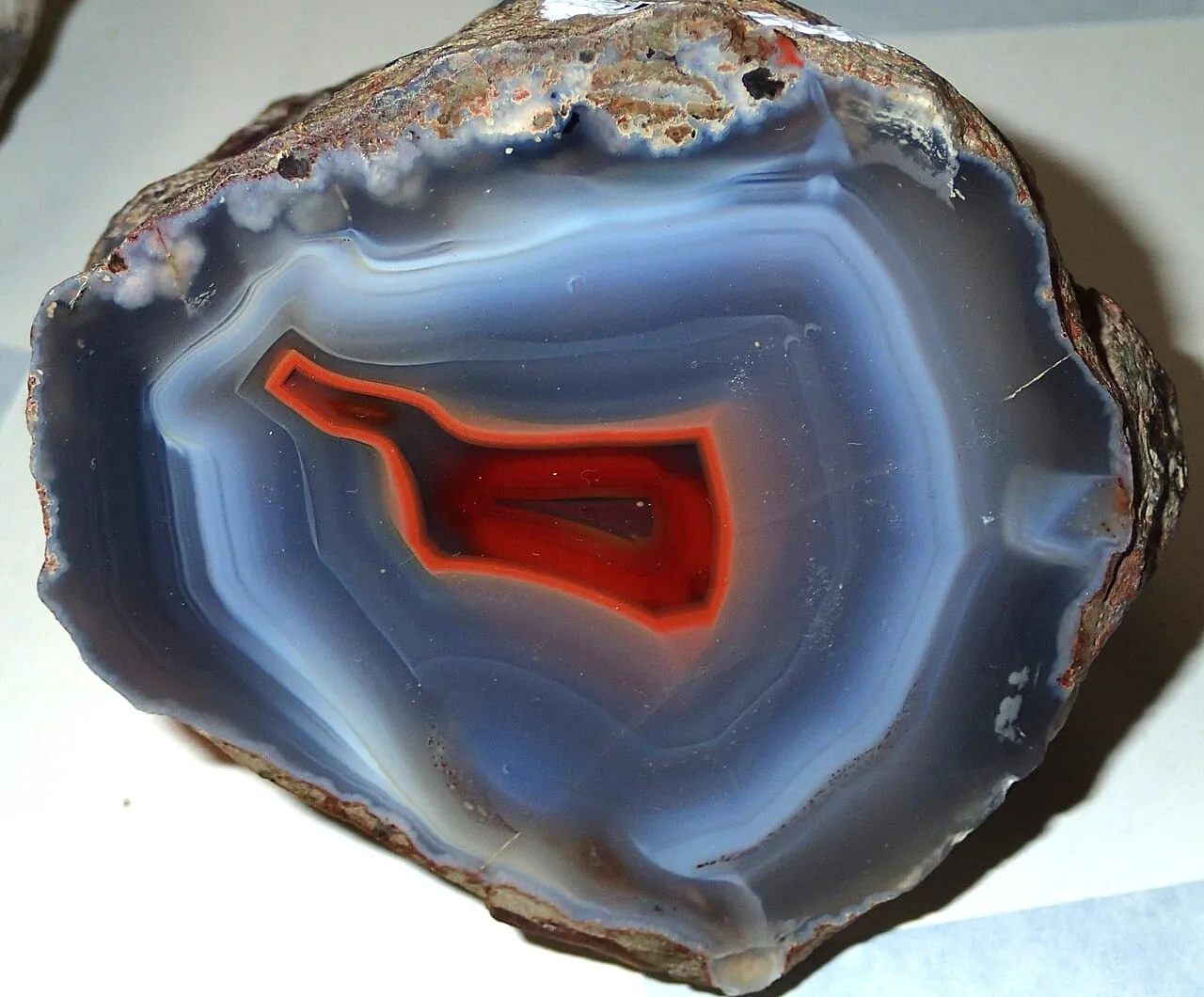
Agate
The banded variety of chalcedony: it grows layer by layer in hollows in volcanic rock and shows a new pattern every time it is cut.
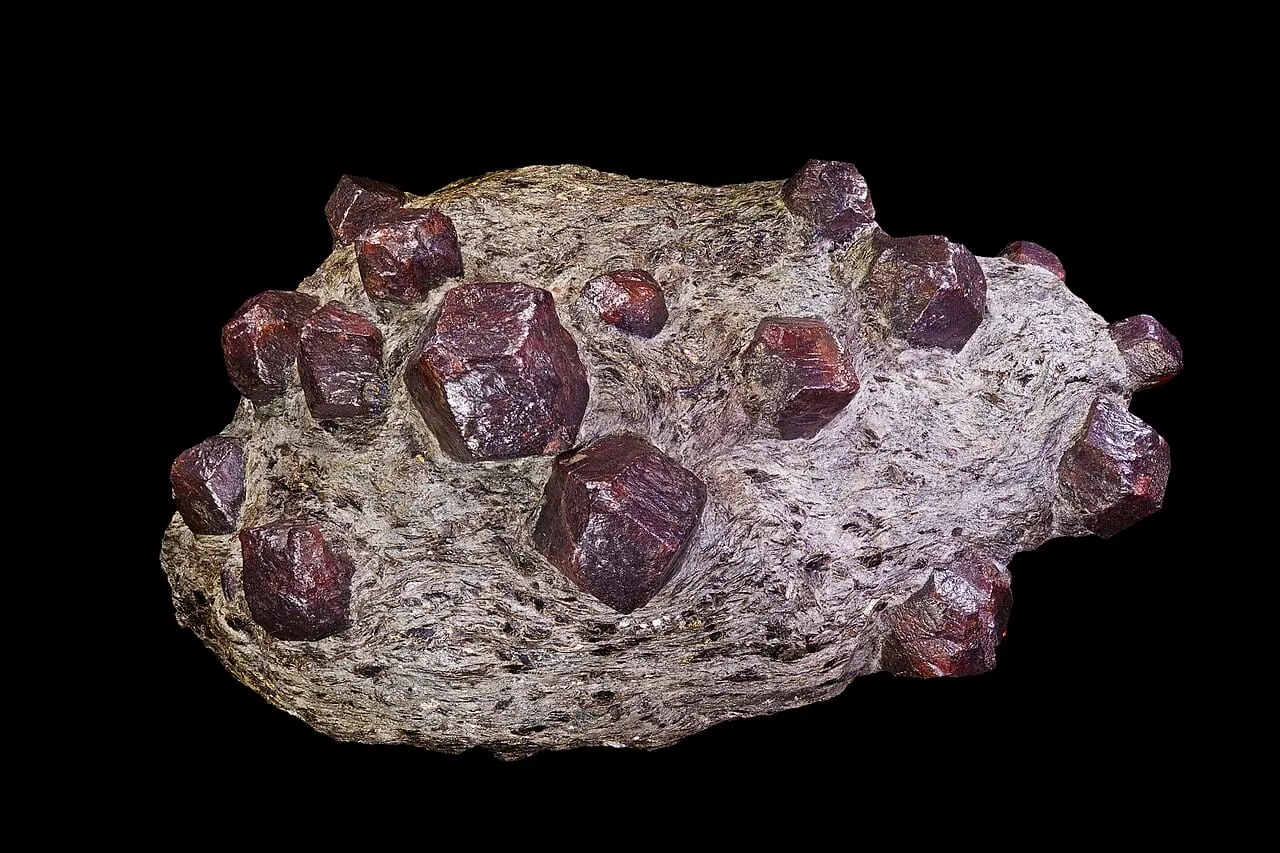
Almandine
The commonest garnet: a deep red, iron-rich stone named after the ancient city of Alabanda in Anatolia, used in jewellery and in sandpaper alike.
Amazonite
A turquoise-like green-blue feldspar: a variety of microcline worn as jewellery for more than three thousand years, but it can release lead.