VarietyA variety of Fluorite
Blue John
CaF₂Blue John
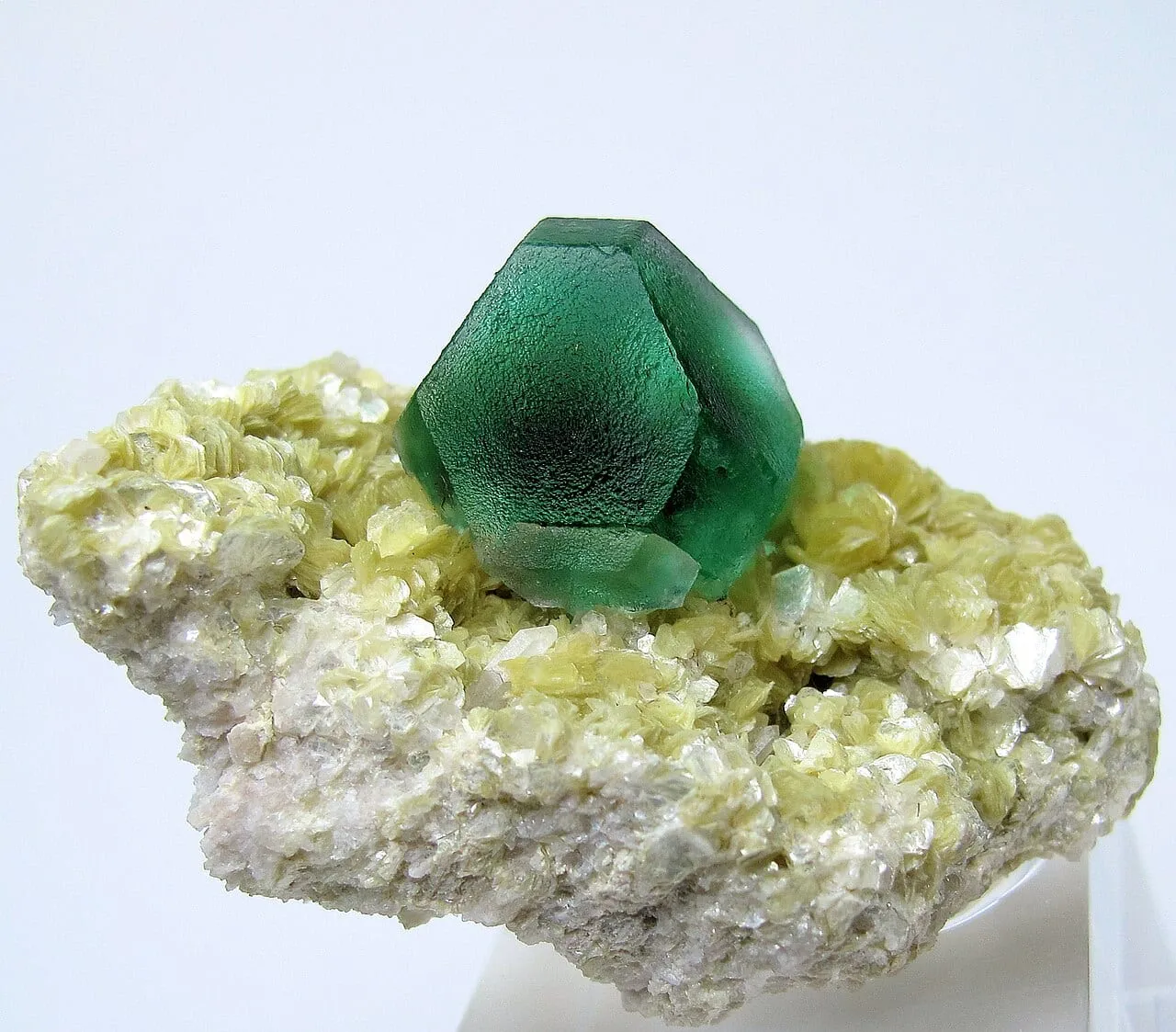
A rare fluorite banded in purplish blue and yellowish white, found in only one place in the world: beneath a single hill near Castleton in England.
Also known as: Derbyshire Spar
- Popularly: Semi-precious stone
In short
Blue John is a rare variety of fluorite with bands of purple-blue and yellowish white. It occurs in only one place in the world, beneath a triangular hill called Treak Cliff near the village of Castleton in Derbyshire, England, and today it is mined in very small amounts in two caverns. Since the 18th century it has been turned into ornaments such as vases, bowls, candelabra and fireplace panels. Because it is fragile, it is stabilised with resin before it is worked. It is also known as “Derbyshire Spar”.
Photos
How does it form?
The mineral veins of the Peak District formed in the late Carboniferous and early Permian, when the limestones lay about 3 kilometres deep. Hot, very salty waters coated the walls of fractures, caves and other cavities in the limestone with layer upon layer of crystals. Like other fluorite in the Peak District, Blue John crystallised from a highly saline fluid at 90–120 °C; its bands come from this layered growth.
The cause of the purple-blue colour is still not known for certain. Microscope studies have found no impurity that could explain it. The colour is now thought to be a physical effect caused by dislocations in the crystal lattice; one idea links them to an excess of the calcium atoms needed to form fluorite (colloidal calcium). Why the dislocations formed is unknown.
What is it used for?
- Ornaments: it is made into vases, bowls, goblets, candelabra and fireplace panels; in the 19th century it was fashioned into everything from knife handles to chalices. Blue John goblets are on display at Chatsworth House.
- Jewellery: the small amount mined today is made locally into jewellery and small ornaments such as bowls.
- Tourism: Blue John Cavern and Treak Cliff Cavern are show caves; mining continues on a small scale outside the tourist season.
Working the stone
Blue John is porous and fragile. Freshly mined stones are first air-dried for at least a year, then heated in an oven, placed in hot epoxy resin (pine resin was used in the past) and heated again in a vacuum oven. This drives the air out of the tiny pores in the stone and replaces it with resin, which binds the crystals together. Only then is the stone ready to be worked.
A short history
The earliest known document mentioning Blue John is a letter of 1766, which records that Lady Mazarine “let ye Blue John, Castleton”. The bridal suite of the Friary Hotel in Derby has a Blue John plaque dated to around 1760. The old workings at Treak Cliff go back to about 1745–1750, and Treak Cliff Cavern opened to visitors in 1935. Blue John Cavern also has a place in the history of photography: in 1865 the Manchester photographer Alfred Brothers used magnesium there to light a photograph underground for the first time.
Two Roman cups made of blue-yellow banded fluorspar, the Crawford Cup and the Barber Cup, were found among Roman grave goods near the Turkish–Syrian border. Their stone presumably came from a source in Persia, so they are not Blue John; both cups are now in the British Museum.
What determines its value?
Rarity sets the value of Blue John: it comes from a single hill, and only a little is mined each year. For an individual piece, the beauty and contrast of the colour bands, its size and the craftsmanship matter; large pieces and ornaments from the 18th and 19th centuries have collector value. Its origin should be documented so that it is not confused with similar-looking Chinese fluorite.
This information is educational, not buying, selling or investment advice. Value varies enormously with quality and treatment.
How to recognise it
- 1
The stone shows distinct colour bands running from purple to bluish black and yellowish white.
- 2
As a fluorite it has a Mohs hardness of 4: a steel knife scratches it, and it cannot scratch glass.
- 3
Being fluorite, it does not fizz in vinegar or dilute acid, which sets it apart from banded calcite that can look similar.
- 4
Genuine Blue John comes only from Castleton; similar stones with straight bands and different colours are mostly banded fluorite from China.
Fakes and imitations
What shops usually don’t tell you:
- Banded fluorite from China: blue and white-yellow banded fluorite ornaments resembling Blue John, from deposits in Deqing County in Zhejiang Province, are imported into the UK and other countries. Their banding is straighter, and they contain colours not seen in Blue John.
- Resin impregnation: almost all worked Blue John is filled with resin to stabilise its fragile structure; this is a normal treatment, but the seller should mention it.
Myths and misconceptions
MythThe Romans were the first to find and work Blue John, and Blue John vases were found at Pompeii.
FactThe earliest known source of this story is a book from 1843, and it was probably invented to add mystique to the stone. The Romans mined lead in Derbyshire, but there is no evidence that they came across the Blue John veins; the vases said to come from Pompeii are in fact made of banded amethystine quartz.
MythThe name certainly comes from the French “bleu-jaune” (blue-yellow).
FactThis is a popular explanation, but there is no archival record of any Blue John being exported to France. The name has also been traced to “Black Jack”, the miners’ name for sphalerite, or to a Cornish word meaning flower; its origin is uncertain.
MythAny blue-and-yellow banded fluorite is Blue John.
FactThe name Blue John belongs only to the fluorite from Treak Cliff at Castleton. Blue and banded fluorite is found in other parts of the world too; even the similar stones from Deqing in China differ from Blue John in their straighter bands and their colours.
Did you know?
Blue John loses its colour when heated: a few hours in an oven leave it colourless, and irradiating the decolourised stone in a nuclear reactor brings the colour back.
In the 18th century leases restricted output to 20 tons a year; in 1892 the limit is said to have been 3 tons; present production is probably around half a ton a year.
In 2015 the first new Blue John vein for 150 years was discovered close to the visitor route in Treak Cliff Cavern.
The industrialist Matthew Boulton tried to buy or lease the mines in 1768, and the fireplaces the architect Robert Adam designed for Kedleston Hall have Blue John panels.
Where is it found?
Loading map…
- Treak Cliff, Castleton, Derbyshire, England · Type localityBlue John occurs only beneath this triangular hill; today small amounts are mined in Blue John Cavern and Treak Cliff Cavern, while the Old Tor Mine on the north side of Winnats Pass has been abandoned.
Locations are approximate to protect sites. Red dots mark places in Türkiye. Open in the big map →
Frequently asked questions
What is blue John?
Blue John is a rare variety of fluorite with bands of purple-blue and yellowish white. It occurs in only one place in the world, beneath a triangular hill called Treak Cliff near the village of Castleton in Derbyshire, England, and today it is mined in very small amounts in two caverns. Since the 18th century it has been turned into ornaments such as vases, bowls, candelabra and fireplace panels. Because it is fragile, it is stabilised with resin before it is worked. It is also known as “Derbyshire Spar”.
What is blue John used for?
Ornaments: it is made into vases, bowls, goblets, candelabra and fireplace panels; in the 19th century it was fashioned into everything from knife handles to chalices. Blue John goblets are on display at Chatsworth House. Jewellery: the small amount mined today is made locally into jewellery and small ornaments such as bowls. Tourism: Blue John Cavern and Treak Cliff Cavern are show caves; mining continues on a small scale outside the tourist season.
How hard is blue John?
It has a hardness of 4 on the Mohs scale. A fingernail cannot scratch it, but a steel knife can. Its specific gravity is 3.18–3.18 g/cm³.
Where is blue John found?
Its best-known localities: Treak Cliff, Castleton, Derbyshire, England.
How can you tell if blue John is real?
The stone shows distinct colour bands running from purple to bluish black and yellowish white. As a fluorite it has a Mohs hardness of 4: a steel knife scratches it, and it cannot scratch glass. Being fluorite, it does not fizz in vinegar or dilute acid, which sets it apart from banded calcite that can look similar. Banded fluorite from China: blue and white-yellow banded fluorite ornaments resembling Blue John, from deposits in Deqing County in Zhejiang Province, are imported into the UK and other countries. Their banding is straighter, and they contain colours not seen in Blue John.
Is blue John valuable?
On the “street to diamond” value ladder it sits on step 6 of nine: Fine ornamental and collector stone. Rarity sets the value of Blue John: it comes from a single hill, and only a little is mined each year. For an individual piece, the beauty and contrast of the colour bands, its size and the craftsmanship matter; large pieces and ornaments from the 18th and 19th centuries have collector value. Its origin should be documented so that it is not confused with similar-looking Chinese fluorite.
Family



Sources
- Blue John (mineral) · Wikipedia
- Treak Cliff Cavern · Wikipedia
- Blue John Cavern · Wikipedia
- Handbook of Mineralogy: Fluorite · Mineralogical Society of America
External links
Draft: awaiting expert reviewReport an error
On the same step
Achondrite
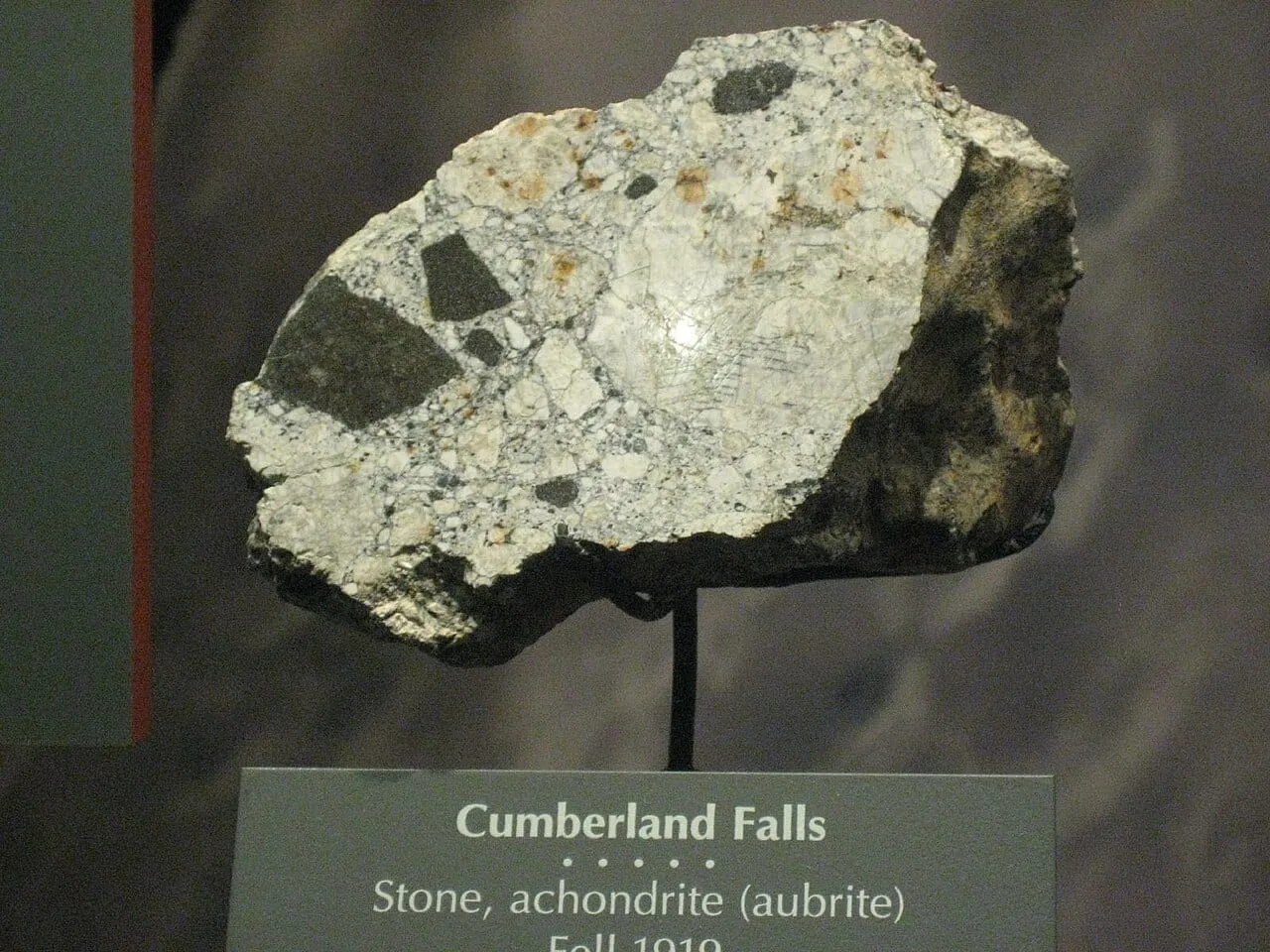
Stony meteorites with no chondrules: rock from melted asteroids, the Moon and Mars, and hard to recognise because they look like Earth rocks.
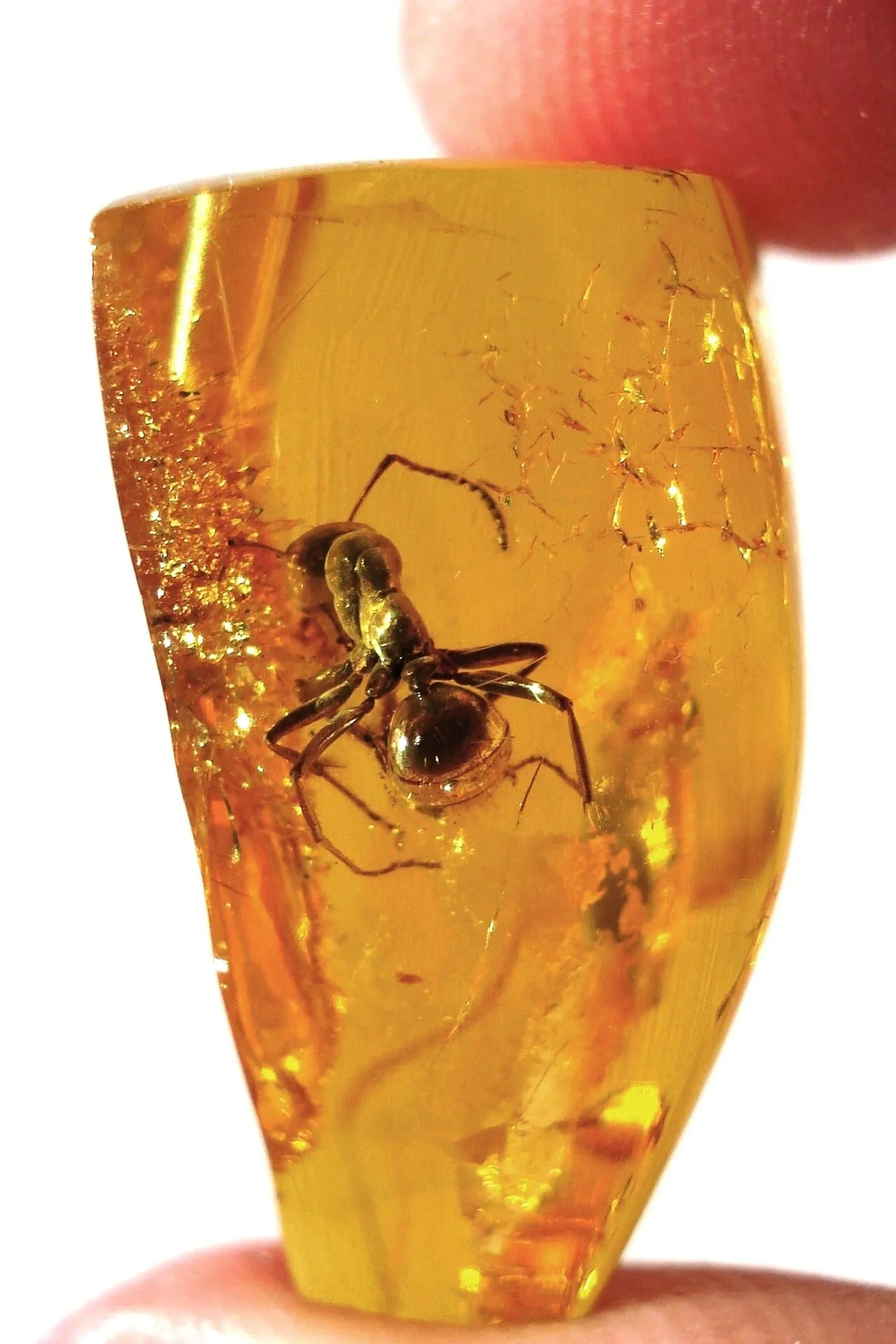
Amber
Tree resin fossilised over millions of years: a light, warm organic gem that sometimes holds prehistoric insects.
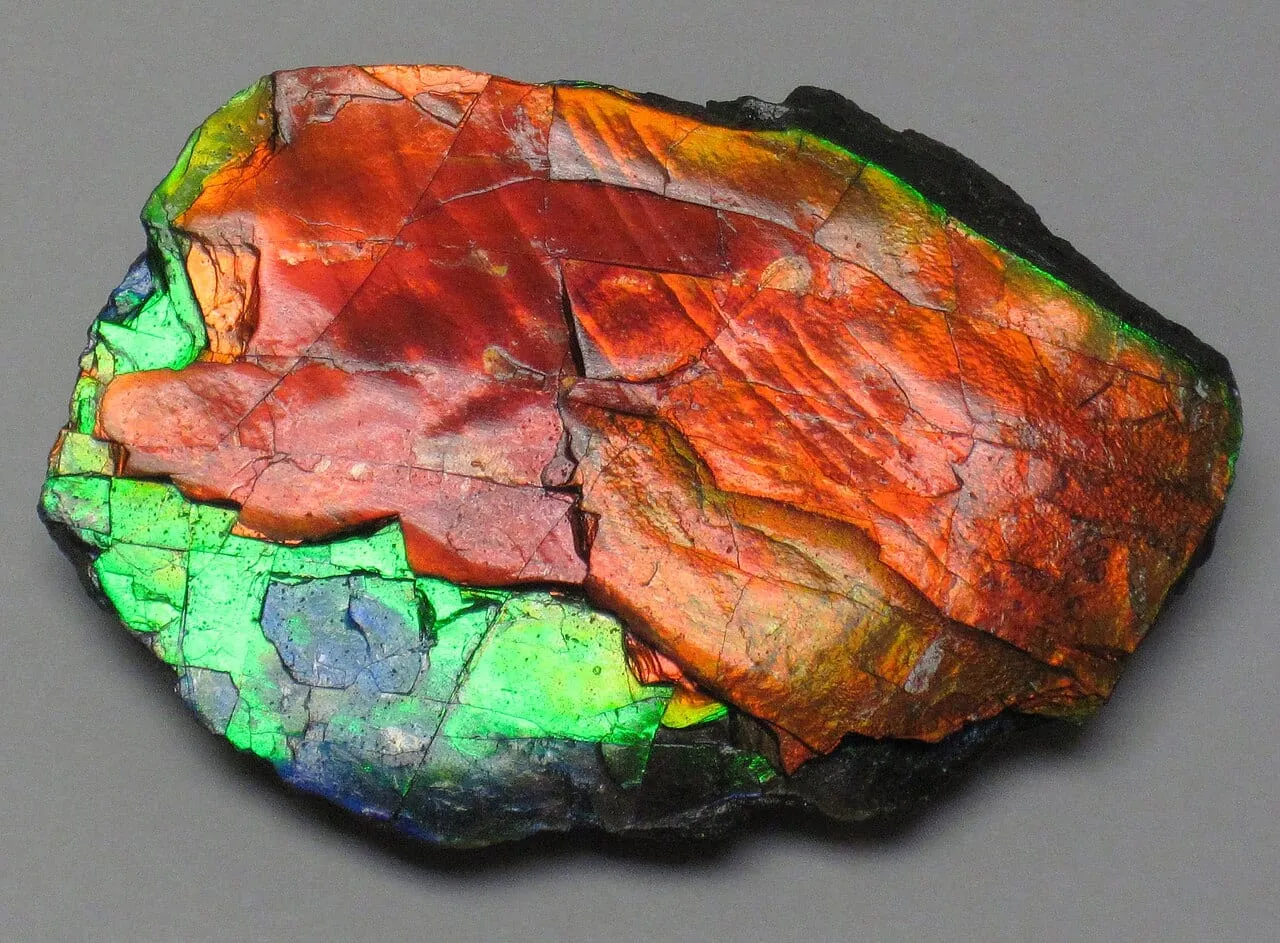
Ammolite
The rainbow-bright layer of fossil ammonite shell; of gem quality it comes only from the Canadian province of Alberta.