Mineral
Charoite
K(Ca,Na)₂Si₄O₁₀(OH,F)·H₂OÇaroit
A swirl-patterned purple stone found in the world only in Siberia; when first found it was thought to be a dyed fake.
Also known as: Charoitite (the rock made mostly of charoite)
- Popularly: Semi-precious stone
- Ornamental

In short
Charoite is a rare silicate mineral described in 1978, and its only known deposit today lies around Murun mountain in Siberia, Russia. It is known for its colour, from lilac to deep purple, and its silky, swirling, fibrous texture. In the raw it is dull and unremarkable; polished, it gains a silky sheen and is worked into cabochons, beads and carvings.
Photos

How does it form?
Charoite forms where the Murun syenite massif has intruded into limestone and transformed it, inside a potassium-rich feldspar rock (a metasomatite), at about 200–250 °C. Black aegirine, tinaksite and canasite and other rare minerals usually grow with it. Charoite occurs only in massive form, as fibrous aggregates; it has no distinct crystals.
What is it used for?
Charoite is mainly an ornamental stone: cabochons, beads, small carvings and decorative slabs are made from it. The rock made of charoite (charoitite) is worked in the same way. Collectors also seek raw pieces and the rare minerals that accompany it.
Its discovery
Charoite is said to have been found in the 1940s, but the world learned of it only with its scientific description in 1978. Its dull, unremarkable look in the raw may have contributed to its late recognition. The striking purple and swirling texture of the polished stone looks dyed or artificial to many people at first; yet the colour and pattern are natural.
What determines its value?
What matters most in charoite is the vividness and evenness of the purple, how marked the silky fibrous texture and chatoyancy are, and the distribution of the black aegirine and other spots and patches. Because the stone comes from a single deposit, supply is limited and the stone varies widely in colour and texture; large, evenly purple, crack-free, well-polishing pieces are more sought after.
This information is educational, not buying, selling or investment advice. Value varies enormously with quality and treatment.
How to recognise it
- 1
Its colour is lilac, purple or violet, with light brown zones here and there. Raw, it looks dull and unremarkable; polished, it takes on a silky sheen.
- 2
It shows a silky, swirling, fibrous texture, and sometimes a gliding band of light (chatoyancy).
- 3
It may carry black spots (mostly the mineral aegirine), roundish greenish patches (feldspar), brownish-yellow spots (tinaksite) and white flashes.
- 4
Its hardness is 5–6; it has good cleavage in three directions and breaks with conchoidal (shell-like) surfaces.
- 5
It can be confused with sugilite, which is also purple; but sugilite shows neither the swirling texture nor chatoyancy.
Fakes and imitations
What shops usually don’t tell you:
- Sugilite: it can be mistaken for charoite because of its purple colour, and may have black and white inclusions, but it does not show charoite's swirling fibrous texture or chatoyancy.
Myths and misconceptions
MythThe purple of charoite has been dyed.
FactThe colour of charoite is natural. Its intense purple and swirling texture are so striking that when it was found it was thought to be a dyed fake.
MythCharoite and sugilite are the same stone.
FactBoth are purple, but they are different minerals: charoite is found only in Siberia and shows a swirling, silky texture, while sugilite comes from places such as Japan and South Africa and does not show this texture.
What is it believed to be good for?
This section reports beliefs; it is not health information. There is no scientific evidence for these claims and no stone replaces medical treatment.
The meanings people give this stone, and who holds them:
- Today crystal-therapy practitioners claim that charoite sharpens intuition and wisdom, calms deep-seated fears and obsessions, intensifies dreams in sleep, and is linked with the crown, third eye and heart chakras.
- The same circles claim that charoite strengthens the heart, reduces fever and cramps, boosts immunity, “purifies” the liver, sinuses and pancreas, and removes toxins from the body.
- Some sources even suggest that charoite can help with conditions such as autism and bipolar disorder.
What science says
There is no scientific evidence that charoite sharpens intuition, changes dreams, “purifies” organs or helps any ailment. Autism and bipolar disorder are conditions that call for medical care; no effect of a stone on them has been shown, and a stone must not take the place of treatment.
Did you know?
Charoite was described scientifically in 1978. It had been reported earlier, in the 1940s, but the world only came to know it after that date.
Its name is generally said to come from the Chara River, about 70 km from where it was found.
A rock made mostly of charoite is called charoitite.
Where is it found?
Loading map…
- Murun massif, Sakha (Yakutia) Republic, Russia · Type localityThe only known deposit of charoite in the world, in this syenite massif of the Aldan Shield between the Chara and Tokko rivers
Locations are approximate to protect sites. Red dots mark places in Türkiye. Open in the big map →
Frequently asked questions
What is charoite?
Charoite is a rare silicate mineral described in 1978, and its only known deposit today lies around Murun mountain in Siberia, Russia. It is known for its colour, from lilac to deep purple, and its silky, swirling, fibrous texture. In the raw it is dull and unremarkable; polished, it gains a silky sheen and is worked into cabochons, beads and carvings.
What is charoite used for?
Charoite is mainly an ornamental stone: cabochons, beads, small carvings and decorative slabs are made from it. The rock made of charoite (charoitite) is worked in the same way. Collectors also seek raw pieces and the rare minerals that accompany it.
How hard is charoite?
It has a hardness of 5–6 on the Mohs scale. It can scratch glass; a steel knife scratches it only with difficulty. Its specific gravity is 2.54–2.58 g/cm³.
Where is charoite found?
Its best-known localities: Murun massif, Sakha (Yakutia) Republic, Russia.
How can you tell if charoite is real?
Its colour is lilac, purple or violet, with light brown zones here and there. Raw, it looks dull and unremarkable; polished, it takes on a silky sheen. It shows a silky, swirling, fibrous texture, and sometimes a gliding band of light (chatoyancy). It may carry black spots (mostly the mineral aegirine), roundish greenish patches (feldspar), brownish-yellow spots (tinaksite) and white flashes. Sugilite: it can be mistaken for charoite because of its purple colour, and may have black and white inclusions, but it does not show charoite's swirling fibrous texture or chatoyancy.
Is charoite valuable?
On the “street to diamond” value ladder it sits on step 6 of nine: Fine ornamental and collector stone. What matters most in charoite is the vividness and evenness of the purple, how marked the silky fibrous texture and chatoyancy are, and the distribution of the black aegirine and other spots and patches. Because the stone comes from a single deposit, supply is limited and the stone varies widely in colour and texture; large, evenly purple, crack-free, well-polishing pieces are more sought after.
What is charoite good for?
Today crystal-therapy practitioners claim that charoite sharpens intuition and wisdom, calms deep-seated fears and obsessions, intensifies dreams in sleep, and is linked with the crown, third eye and heart chakras. The same circles claim that charoite strengthens the heart, reduces fever and cramps, boosts immunity, “purifies” the liver, sinuses and pancreas, and removes toxins from the body. Some sources even suggest that charoite can help with conditions such as autism and bipolar disorder. There is no scientific evidence that charoite sharpens intuition, changes dreams, “purifies” organs or helps any ailment. Autism and bipolar disorder are conditions that call for medical care; no effect of a stone on them has been shown, and a stone must not take the place of treatment. This section reports beliefs; it is not health information. There is no scientific evidence for these claims and no stone replaces medical treatment.
Sources
- Charoite · Wikipedia
- Murun (mountain) · Wikipedia
- Charoite Mineral Data · Webmineral
- Sugilite · Wikipedia
External links
Draft: awaiting expert reviewReport an error ↗
On the same step
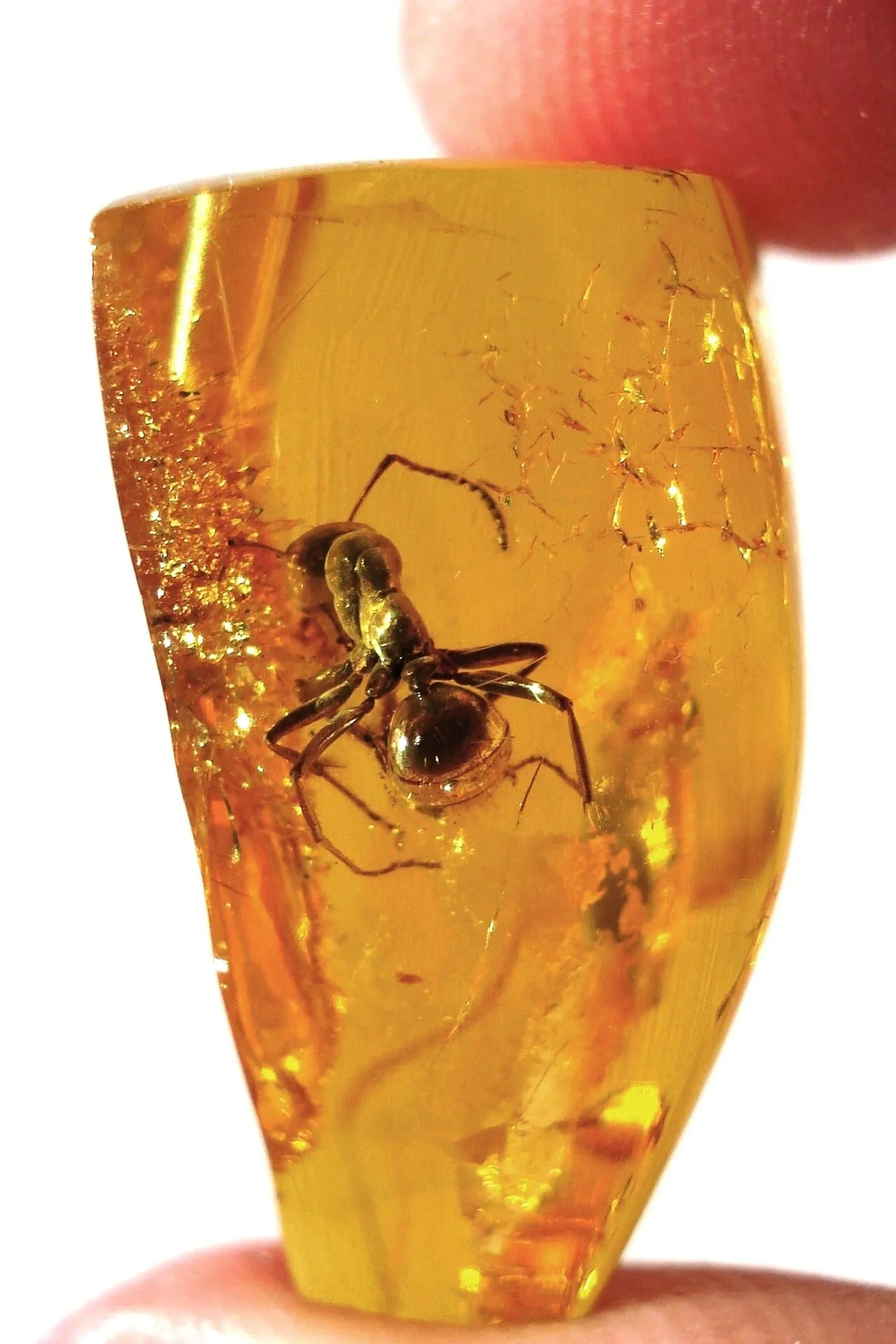
Amber
Tree resin fossilised over millions of years: a light, warm organic gem that sometimes holds prehistoric insects.
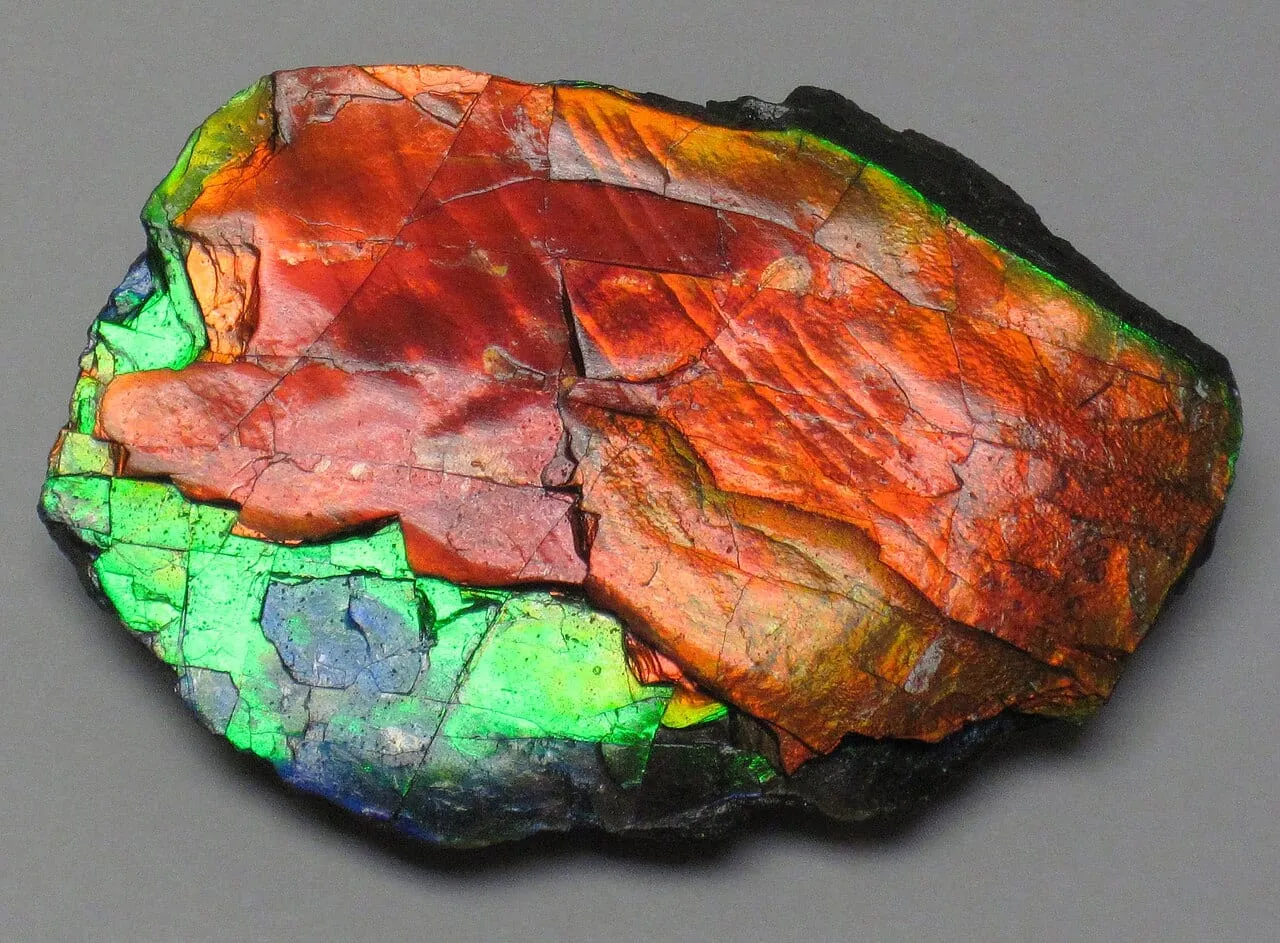
Ammolite
The rainbow-bright layer of fossil ammonite shell; of gem quality it comes only from the Canadian province of Alberta.
Aquamarine
The blue member of the beryl family, named after seawater: often found as large, clear, nearly flawless crystals.