Mineral
Apophyllite
KCa₄Si₈O₂₀(F,OH)·8H₂OApofillit
Clear, glassy crystals with a pearly shine that grow in basalt cavities beside zeolites; the name means “it flakes off”.
- Popularly: Semi-precious stone
- Ornamental

In short
Apophyllite is a water-bearing silicate mineral of potassium and calcium. Its crystals are often box-shaped or sharp-tipped prisms, colourless, white, green or pinkish, with a glassy shine and a pearly sheen on their flat top faces. It is found in the same cavities as zeolite minerals and is often mistaken for a zeolite, but it is not one. Being soft, it is more a collector’s stone than a jewellery stone.
Photos

How does it form?
Apophyllite is a secondary mineral. As volcanic rocks, especially basalt, cool, gas bubbles leave hollows behind. Later, hot, mineral-rich waters pass through these hollows and deposit crystals on their walls. Apophyllite lines these cavities together with zeolite minerals such as stilbite and heulandite, and with calcite. Less commonly it occurs in cavities in granite, in some metamorphic rocks, and as a late-stage hot-water (hydrothermal) mineral in some ore deposits.
What is it used for?
- Collecting: because of its large, well-formed crystals and variety of colours, it is popular with mineral collectors; crystal clusters are put on display.
- Ornaments: crystal clusters are used for decoration.
- Jewellery: being soft (4.5–5) and splitting easily in one direction, it is not much used in jewellery; cut stones are mostly made for collectors.
Where is it found?
The most famous specimens come from the Deccan Traps of western India, from basalt cavities around Pune (Poona), Nashik (Nasik) and Mumbai (Bombay); the crystals there often grow with zeolites, and green ones are especially sought after. In Iceland the Teigarhorn area is known for fine specimens with large crystals, and in Brazil the area near Bento Gonçalves for very large crystals. Sankt Andreasberg in Germany’s Harz Mountains, the Alpe di Siusi in Italy, Korsnäs in Finland and New Jersey in the USA (Paterson and surroundings) are also known localities.
What determines its value?
Clarity and lustre, and the size and shape of the crystals, matter most for apophyllite: undamaged, sharp-tipped and transparent crystals are the most sought after. Colour counts too, and green apophyllite from India is especially popular. A pleasing contrast with the zeolite or calcite beneath the crystals, a well-balanced cluster and unbroken tips add value. Because it is soft and splits easily, it is rarely used as a cut stone; its value comes mostly from being a collector’s specimen.
This information is educational, not buying, selling or investment advice. Value varies enormously with quality and treatment.
How to recognise it
- 1
Crystals are often box-like (pseudo-cubic) or prisms ending in a sharp pyramid; the prism faces are deeply striated.
- 2
It has a glassy shine, with a pearly sheen on faces parallel to the base. It may be colourless, white, pale green, pale yellow or pinkish, and is transparent or translucent.
- 3
It is soft (Mohs 4.5–5): a steel knife scratches it, while glass is not scratched. It splits easily into flat sheets in one direction.
- 4
It most often sits as clusters in a cavity of dark volcanic rock such as basalt, on zeolites such as stilbite and on calcite.
- 5
When heated it loses its water and flakes apart, which is where its name comes from.
Fakes and imitations
What shops usually don’t tell you:
- Quartz crystals can look like apophyllite, but quartz is much harder (7), scratches glass, and lacks the pearly flat faces at the crystal tips.
Myths and misconceptions
MythApophyllite is a zeolite mineral.
FactApophyllite grows in the same cavities as zeolites and is often confused with them, but it is not a zeolite; it is a sheet silicate (phyllosilicate).
MythApophyllite is one single mineral; it is all the same stone.
FactApophyllite is really a mineral group. Its commonest member is fluorapophyllite-(K), and there are others such as hydroxyapophyllite-(K) and fluorapophyllite-(Na). Telling them apart requires chemical analysis.
What is it believed to be good for?
This section reports beliefs; it is not health information. There is no scientific evidence for these claims and no stone replaces medical treatment.
The meanings people give this stone, and who holds them:
- Today crystal-therapy sellers and websites say that apophyllite is a “stone of truth” that opens the crown and third-eye chakras, strengthens intuition and deepens meditation.
- The same sources say the stone soothes anxiety and stress, clears “negative energy” and amplifies the effects of other crystals around it.
What science says
Apophyllite is a water-bearing calcium-potassium silicate; its clear, bright look comes from light reflecting off the crystal faces. There is no scientific evidence that the stone sharpens intuition, opens a chakra, soothes anxiety or boosts other crystals around it. Lasting anxiety or stress calls for a doctor.
Did you know?
The name comes from the Greek apophyllízo (“it flakes off”); the mineral loses water and splits into flakes when heated.
Its structure is unusual for a sheet silicate (phyllosilicate): it is built of interlocked four- and eight-membered rings of silica.
Crystals can grow up to 20 centimetres long; very large crystals have been found near Bento Gonçalves in the Brazilian state of Rio Grande do Sul.
Where is it found?
Loading map…
- Pune (Poona) area, Maharashtra, India · Major depositIn basalt cavities of the Deccan Traps together with zeolites; famous for exceptional crystal groups and green apophyllite
- Nashik (Nasik) area, Maharashtra, India · Major depositCrystal groups from quarries in the Deccan Traps, grown together with stilbite and other zeolites
- Djúpivogur area (Teigarhorn), Berufjörður, Iceland · Known localityKnown for fine specimens with large crystals
- Sankt Andreasberg, Harz Mountains, Germany · Historic sourceOld mining district; one of the known European apophyllite localities
- Bento Gonçalves area, Rio Grande do Sul, Brazil · Known localityKnown for very large apophyllite crystals
- Alpe di Siusi (Seiser Alm), South Tyrol, Italy · Known localityOne of the known Italian apophyllite localities
- Paterson, New Jersey, USA · Known localityNew Jersey is one of the known apophyllite localities in the USA
- Korsnäs, Ostrobothnia, Finland · Known localityOne of the known Finnish apophyllite localities
Locations are approximate to protect sites. Red dots mark places in Türkiye. Open in the big map →
Frequently asked questions
What is apophyllite?
Apophyllite is a water-bearing silicate mineral of potassium and calcium. Its crystals are often box-shaped or sharp-tipped prisms, colourless, white, green or pinkish, with a glassy shine and a pearly sheen on their flat top faces. It is found in the same cavities as zeolite minerals and is often mistaken for a zeolite, but it is not one. Being soft, it is more a collector’s stone than a jewellery stone.
What is apophyllite used for?
Collecting: because of its large, well-formed crystals and variety of colours, it is popular with mineral collectors; crystal clusters are put on display. Ornaments: crystal clusters are used for decoration. Jewellery: being soft (4.5–5) and splitting easily in one direction, it is not much used in jewellery; cut stones are mostly made for collectors.
How hard is apophyllite?
It has a hardness of 4.5–5 on the Mohs scale. A fingernail cannot scratch it, but a steel knife can. Its specific gravity is 2.33–2.37 g/cm³.
Where is apophyllite found?
Its best-known localities: Pune (Poona) area, Maharashtra, India; Nashik (Nasik) area, Maharashtra, India; Sankt Andreasberg, Harz Mountains, Germany; Djúpivogur area (Teigarhorn), Berufjörður, Iceland; Bento Gonçalves area, Rio Grande do Sul, Brazil.
How can you tell if apophyllite is real?
Crystals are often box-like (pseudo-cubic) or prisms ending in a sharp pyramid; the prism faces are deeply striated. It has a glassy shine, with a pearly sheen on faces parallel to the base. It may be colourless, white, pale green, pale yellow or pinkish, and is transparent or translucent. It is soft (Mohs 4.5–5): a steel knife scratches it, while glass is not scratched. It splits easily into flat sheets in one direction. Quartz crystals can look like apophyllite, but quartz is much harder (7), scratches glass, and lacks the pearly flat faces at the crystal tips.
Is apophyllite valuable?
On the “street to diamond” value ladder it sits on step 5 of nine: Ornamental stone. Clarity and lustre, and the size and shape of the crystals, matter most for apophyllite: undamaged, sharp-tipped and transparent crystals are the most sought after. Colour counts too, and green apophyllite from India is especially popular. A pleasing contrast with the zeolite or calcite beneath the crystals, a well-balanced cluster and unbroken tips add value. Because it is soft and splits easily, it is rarely used as a cut stone; its value comes mostly from being a collector’s specimen.
What is apophyllite good for?
Today crystal-therapy sellers and websites say that apophyllite is a “stone of truth” that opens the crown and third-eye chakras, strengthens intuition and deepens meditation. The same sources say the stone soothes anxiety and stress, clears “negative energy” and amplifies the effects of other crystals around it. Apophyllite is a water-bearing calcium-potassium silicate; its clear, bright look comes from light reflecting off the crystal faces. There is no scientific evidence that the stone sharpens intuition, opens a chakra, soothes anxiety or boosts other crystals around it. Lasting anxiety or stress calls for a doctor. This section reports beliefs; it is not health information. There is no scientific evidence for these claims and no stone replaces medical treatment.
Sources
- Handbook of Mineralogy: Fluorapophyllite · Mineralogical Society of America
- Apophyllite · Wikipedia
- Fluorapophyllite-(K) · Wikipedia
- Sankt Andreasberg · Wikipedia
- Pune · Wikipedia
- Nashik · Wikipedia
- Djúpivogur · Wikipedia
- Bento Gonçalves, Rio Grande do Sul · Wikipedia
- Seiser Alm · Wikipedia
- Paterson, New Jersey · Wikipedia
- Korsnäs · Wikipedia
External links
Draft: awaiting expert reviewReport an error ↗
On the same step
Agate
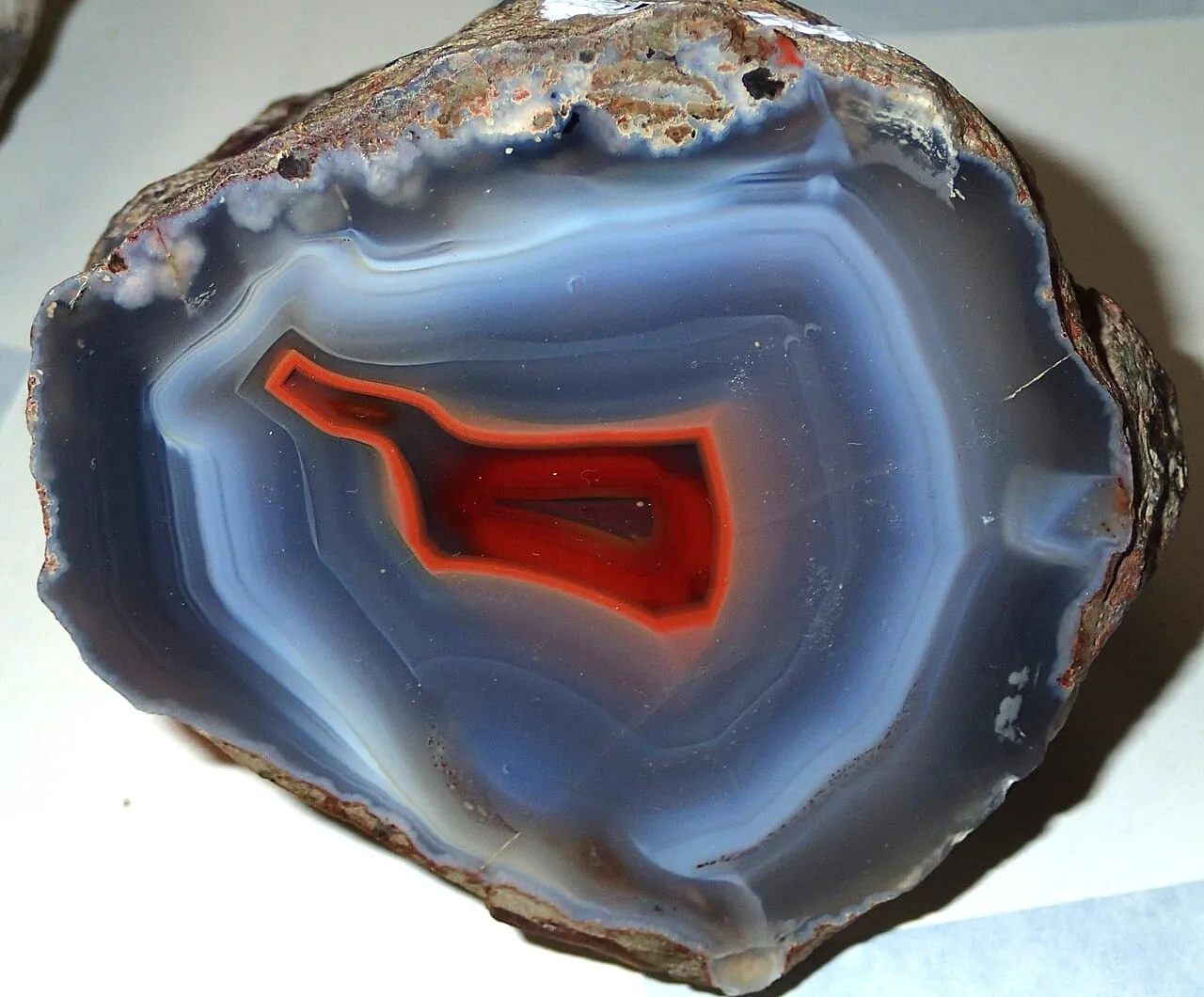
The banded variety of chalcedony: it grows layer by layer in hollows in volcanic rock and shows a new pattern every time it is cut.
Almandine
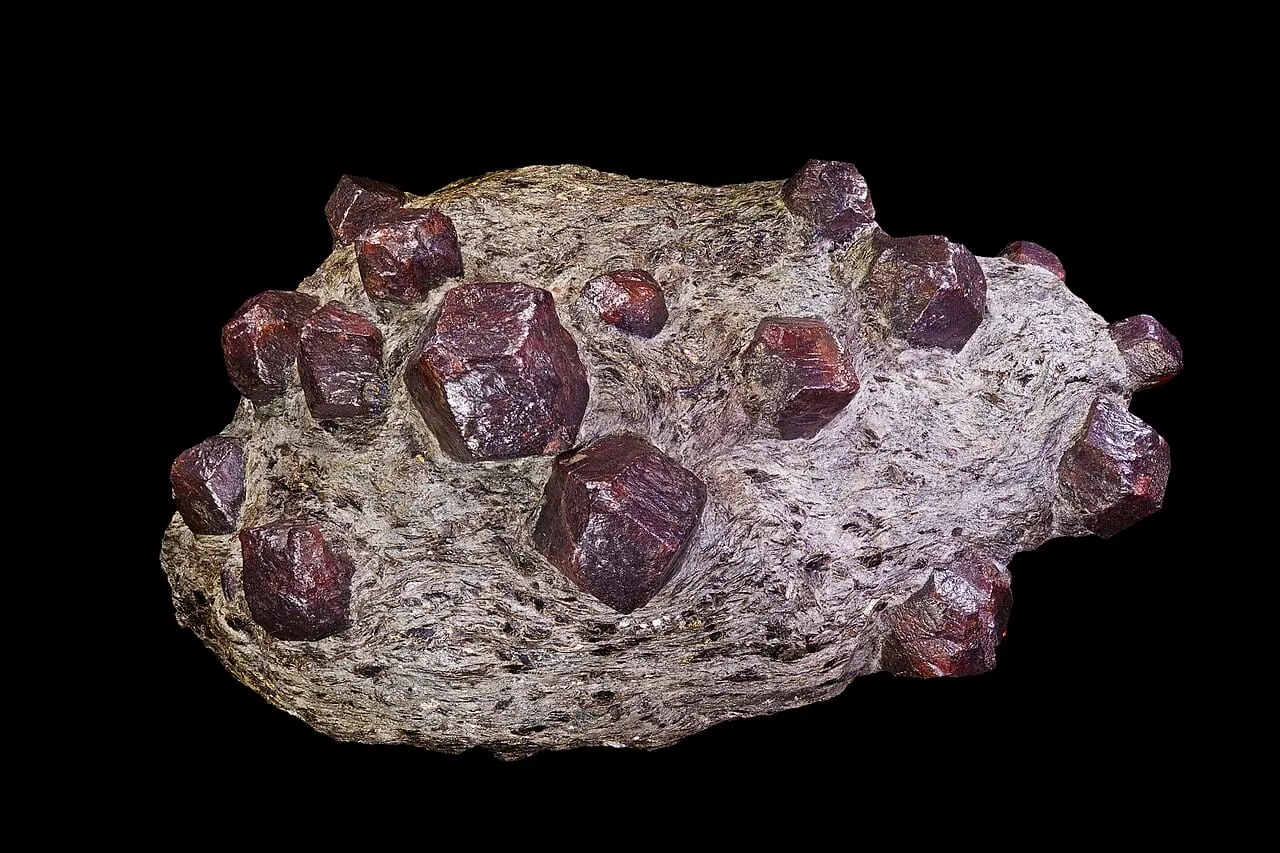
The commonest garnet: a deep red, iron-rich stone named after the ancient city of Alabanda in Anatolia, used in jewellery and in sandpaper alike.
Amazonite
A turquoise-like green-blue feldspar: a variety of microcline worn as jewellery for more than three thousand years, but it can release lead.