Rock
Ashford Black Marble
Ashford siyah mermeri
The Derbyshire stone that polishes to a glossy black: the background of Victorian urns, tables and jewellery inlaid with coloured stones.
Also known as: Derbyshire black marble · Ashford marble
- Popularly: Natural stone (building and decor)

In short
Ashford Black Marble is a dark limestone that was quarried and mined near the village of Ashford-in-the-Water in Derbyshire, England. Freshly broken it is dark grey or brown; polished, it turns a glossy black. Despite its name it is not a true marble but a very fine-grained sedimentary rock containing bitumen (a natural tar-like substance). In the 18th and 19th centuries it was made into urns, obelisks, tables and jewellery, until the quarry and mill closed in 1905.
Photos

How does it form?
Ashford Black Marble is a muddy limestone that settled on the floor of the sea covering what is now Derbyshire during the Carboniferous, more than 300 million years ago. Plenty of organic matter was mixed into the fine lime mud on the seabed. As the sediment was buried and hardened, this organic matter turned into bitumen, which is where the stone’s dark colour comes from.
The stone occurs in thin beds; an account from 1843 describes nine beds in the Arrock quarry, ranging from three to nine inches thick. Because it is so fine-grained, it takes an excellent polish, and the dark grey surface turns a glossy black. Here and there, fossils of sea creatures such as nautiloids can be seen between the beds.
What is it used for?
- Country-house decoration: It was used in 1580 for a chimney piece at Hardwick Hall. At Chatsworth House, seat of the Dukes of Devonshire, it appears in work done after 1680 and in the massive marble doorways of the 1830s.
- Turning and cutting: Turned on a lathe it became urns and candlesticks; sawn, it made flat items such as obelisks and paperweights. The water-powered mill that Henry Watson founded on the River Wye in 1748 was the centre of this work.
- Coloured stone inlay: A few years after 1832, floral and geometric designs in coloured stones began to be inlaid into the black ground, much like Florentine “pietra dura”. Blue John (the blue-purple fluorite of Castleton), yellow fluorite and other local coloured stones were used.
- Engraving and teaching: Ann Rayner engraved pictures onto the black stone with a diamond. In the late 1780s the geologist White Watson made “geological tablets” from it, showing the rock layers of Derbyshire.
- Museums: Derby Museum, Buxton Museum (which bought the Tomlinson collection in 2006) and Chatsworth House hold important examples.
Where is it found?
The stone was taken only from the Peak District of Derbyshire, around the village of Ashford-in-the-Water. All the stone used before 1832 came from the Arrock quarry near Sheldon or from the quarries on Sheldon Moor; around 1832 a new mine was opened at Rookery Plantation in Ashford. Demand was strong in Victorian times, but tastes changed and it fell away: the mill and quarry closed in 1905, and inlay work went on for a few more years until the stock of stone was used up. The craft was revived at Tideswell in the 1990s.
What determines its value?
Because the stone is no longer quarried, its value lies mostly in the workmanship of objects made in the 18th and 19th centuries: the fineness of the inlay, the coloured stones used (such as blue-purple and yellow fluorite and the rare “Duke's Red”), the size of the piece, the depth of the polish and its condition. Pieces whose black has not faded in the light and that are free of cracks are the most sought after. Famous examples in museum collections give the stone its historical renown.
This information is educational, not buying, selling or investment advice. Value varies enormously with quality and treatment.
How to recognise it
- 1
A fresh surface is dark grey or dark brown; a polished one is a deep, glossy black.
- 2
It is very fine-grained: grains are hard to make out even with a hand lens. Broken surfaces are smooth and dull.
- 3
Polished pieces left in the light for a long time fade from black to grey.
- 4
Being a limestone, it fizzes in dilute acid and can be scratched by a steel knife.
Myths and misconceptions
MythAshford Black Marble is a true marble.
FactDespite its name it is not a rock transformed by heat and pressure. It is a very fine-grained, bitumen-rich sedimentary limestone laid down in the Carboniferous; it was called “marble” because it takes a high polish.
MythThe long, segmented fossils in the stone are crocodile tails.
FactQuarrymen called these fossils “crocodile tails”. According to the naturalist William Martin, writing in 1809, they are the remains of straight-shelled nautiloids (orthoceratites), distant relatives of squid.
Did you know?
Its first known customer was Bess of Hardwick, who used it in 1580 for the chimney piece of the Great High Presence Chamber at Hardwick Hall.
In 1751 Henry Watson patented a machine he had devised for cutting, sawing and polishing marble.
A dressed slab of the stone was found in a prehistoric burial mound on Fin Cop, above Monsal Dale.
At the Great Exhibition of 1851 in London, Ashford inlay work was admired as equal to that of renowned Italian craftsmen.
Where is it found?
Loading map…
- Ashford-in-the-Water, Derbyshire, England · Type localitySite of the marble mill Henry Watson founded on the River Wye in 1748 and of the Rookery Plantation mine, opened around 1832; the mill and quarry closed in 1905.
- Sheldon and Sheldon Moor, Derbyshire, England · Historic sourceAll the stone used before 1832 came either from the Arrock quarry near Sheldon or from the quarries on Sheldon Moor.
Locations are approximate to protect sites. Red dots mark places in Türkiye. Open in the big map →
Frequently asked questions
What is ashford Black Marble?
Ashford Black Marble is a dark limestone that was quarried and mined near the village of Ashford-in-the-Water in Derbyshire, England. Freshly broken it is dark grey or brown; polished, it turns a glossy black. Despite its name it is not a true marble but a very fine-grained sedimentary rock containing bitumen (a natural tar-like substance). In the 18th and 19th centuries it was made into urns, obelisks, tables and jewellery, until the quarry and mill closed in 1905.
What is ashford Black Marble used for?
Country-house decoration: It was used in 1580 for a chimney piece at Hardwick Hall. At Chatsworth House, seat of the Dukes of Devonshire, it appears in work done after 1680 and in the massive marble doorways of the 1830s. Turning and cutting: Turned on a lathe it became urns and candlesticks; sawn, it made flat items such as obelisks and paperweights. The water-powered mill that Henry Watson founded on the River Wye in 1748 was the centre of this work.
How hard is ashford Black Marble?
It has a hardness of 3 on the Mohs scale. A fingernail cannot scratch it, but a steel knife can. Its specific gravity is 2.7–2.8 g/cm³.
Where is ashford Black Marble found?
Its best-known localities: Ashford-in-the-Water, Derbyshire, England; Sheldon and Sheldon Moor, Derbyshire, England.
How can you tell if ashford Black Marble is real?
A fresh surface is dark grey or dark brown; a polished one is a deep, glossy black. It is very fine-grained: grains are hard to make out even with a hand lens. Broken surfaces are smooth and dull. Polished pieces left in the light for a long time fade from black to grey.
Is ashford Black Marble valuable?
On the “street to diamond” value ladder it sits on step 5 of nine: Ornamental stone. Because the stone is no longer quarried, its value lies mostly in the workmanship of objects made in the 18th and 19th centuries: the fineness of the inlay, the coloured stones used (such as blue-purple and yellow fluorite and the rare “Duke's Red”), the size of the piece, the depth of the polish and its condition. Pieces whose black has not faded in the light and that are free of cracks are the most sought after. Famous examples in museum collections give the stone its historical renown.
Sources
- Ashford Black Marble · Wikipedia
- Corsi Collection of Decorative Stones, no. 72: Ashford black marble · Oxford University Museum of Natural History
- Black Marble Mill (site of), Ashford-in-the-Water (MDR1348) · Derbyshire Historic Environment Record
- Black marble mine, Rookery Plantation, Ashford-in-the-Water (MDR1426) · Derbyshire Historic Environment Record
- Bygone Industries of Derbyshire: Ashford Marble · Wishful Thinking (Derbyshire texts)
- Ashford-in-the-Water · Wikipedia
- Sheldon, Derbyshire · Wikipedia
- Density of Solids · The Engineering ToolBox
- Limestone · Geology.com
External links
Draft: awaiting expert reviewReport an error
On the same step
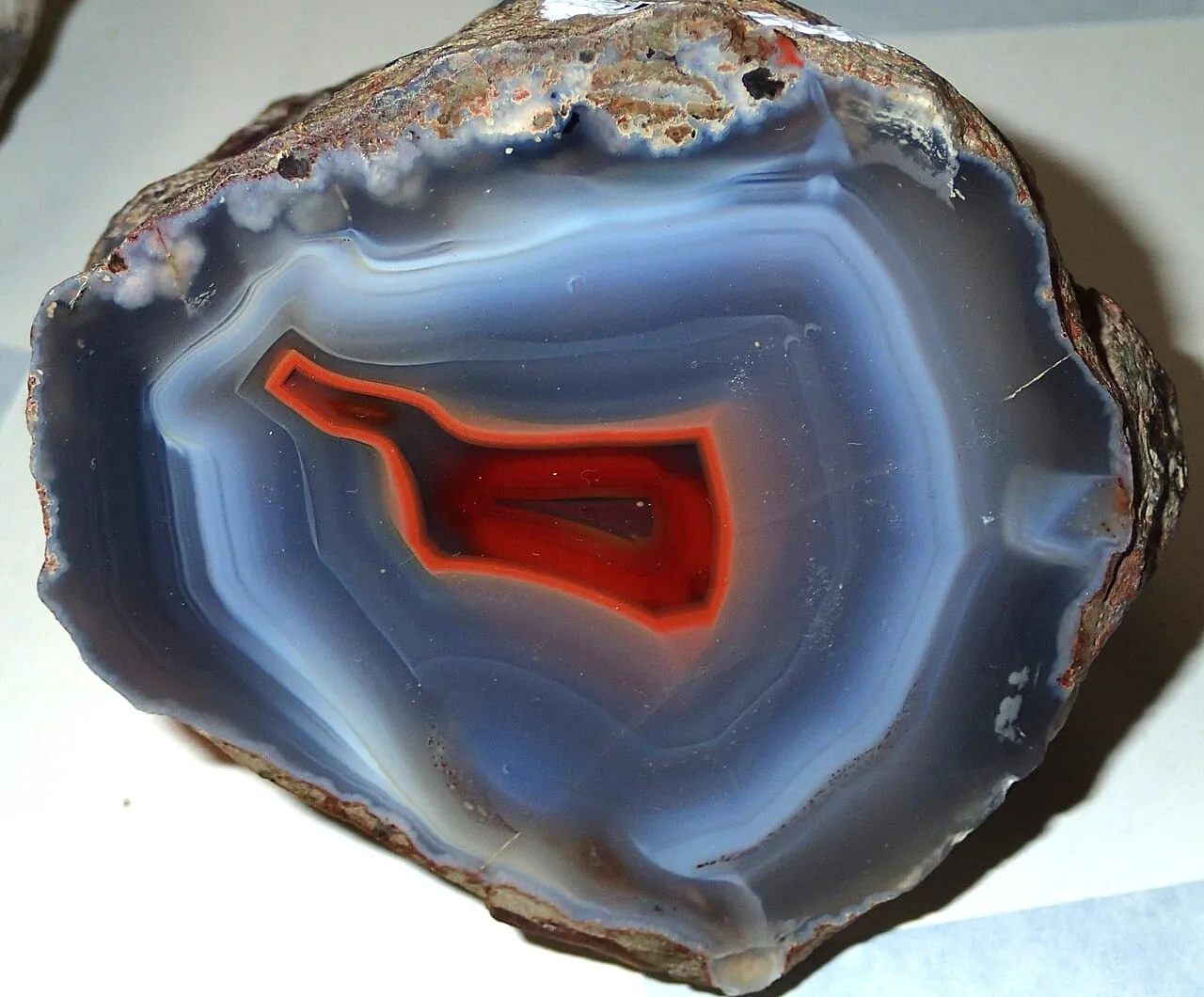
Agate
The banded variety of chalcedony: it grows layer by layer in hollows in volcanic rock and shows a new pattern every time it is cut.

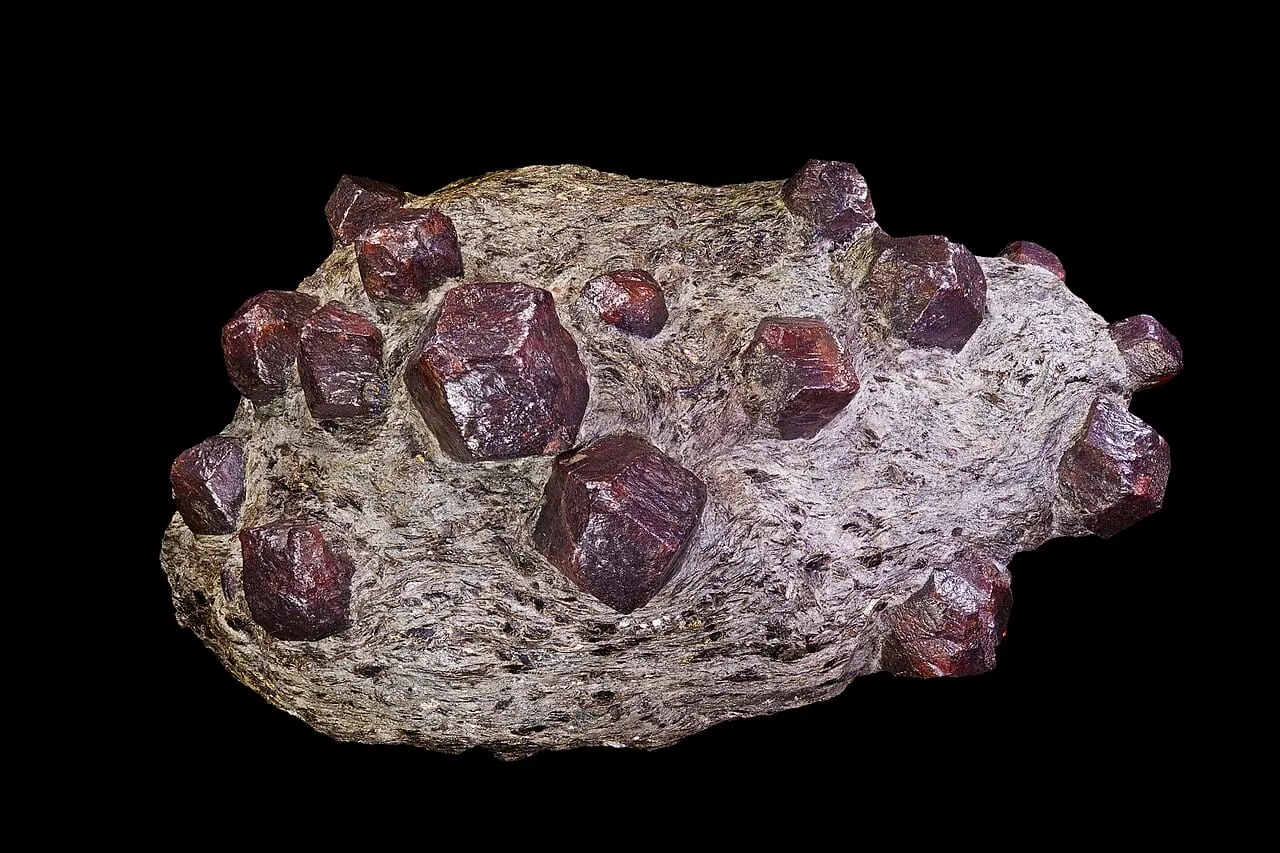
Almandine
The commonest garnet: a deep red, iron-rich stone named after the ancient city of Alabanda in Anatolia, used in jewellery and in sandpaper alike.
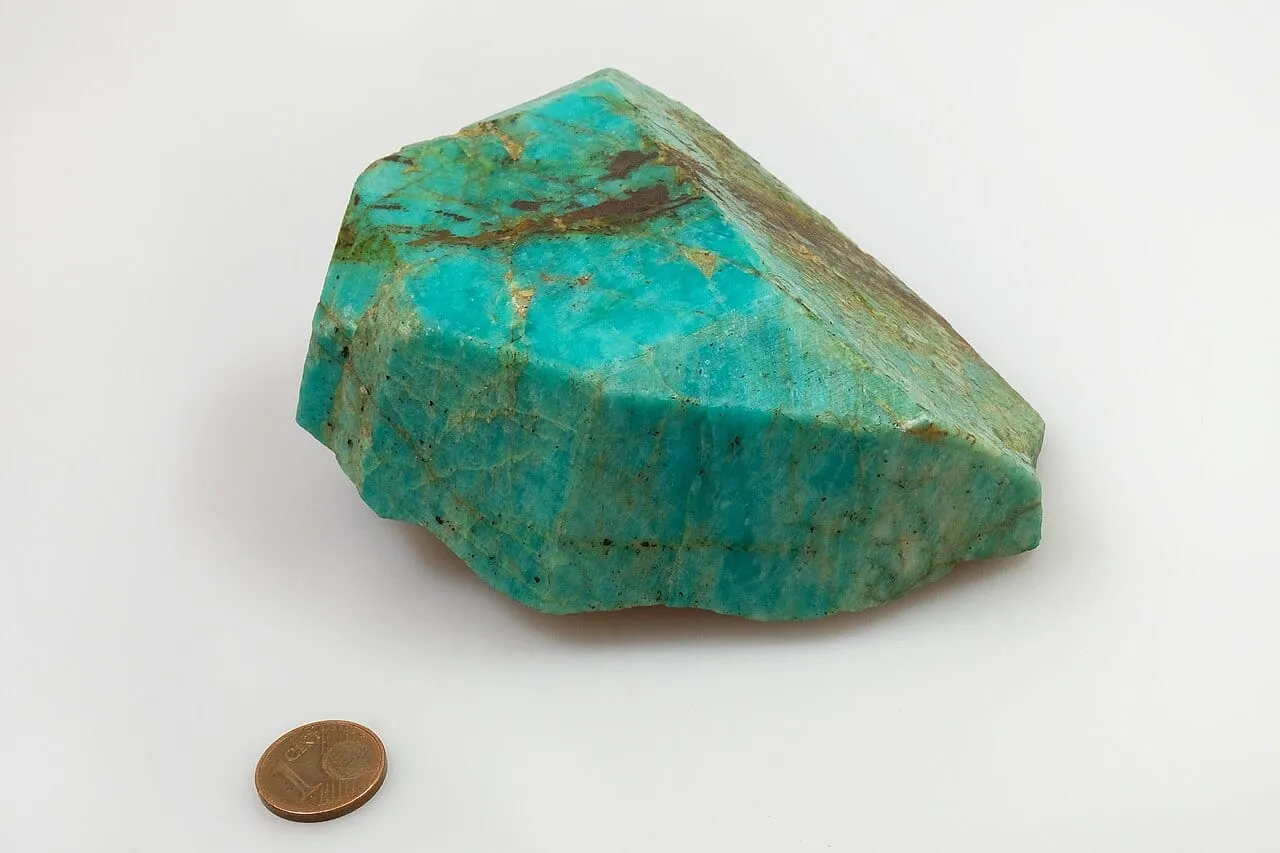
Amazonite
A turquoise-like green-blue feldspar: a variety of microcline worn as jewellery for more than three thousand years, but it can release lead.