Meteorite
Willamette Meteorite
Willamette meteoriti
The largest meteorite found in the US and a sacred stone of Oregon's native peoples: a 15-tonne iron carried by glaciers, its surface full of hollows.
Also known as: Tomanowos · t’əmanəwas (Clackamas Chinook) · Oregon City meteorite
- Popularly: Meteorite

In short
The Willamette Meteorite is an iron–nickel meteorite found near Oregon City in the Willamette Valley of Oregon, USA, and the largest meteorite ever found in the United States. The Clackamas Chinook called it Tomanowos, meaning “spirit power”. It has been on display at the American Museum of Natural History in New York since 1906 and has been seen by an estimated 40 million people, making it one of the world's most famous meteorites.
Photos

How does it form?
Most iron meteorites like Willamette come from the metal cores of small planets (asteroids) that melted and separated into layers early in the Solar System and were later broken up by collisions. Willamette is a medium octahedrite of group IIIAB. The heat of a strong impact on its parent body recrystallised the metal and largely erased the typical Widmanstätten pattern.
After falling to Earth, the meteorite lay on an ice sheet and was dragged along by a glacier. At the end of the last ice age, the ice dam holding back Lake Missoula collapsed; floodwaters of up to 10 million cubic metres per second swept down the Columbia River and the Willamette Valley with ice blocks carrying boulders. Willamette is one of these “glacial erratics”, carried inside the ice and later dropped in the floodwaters.
What is it used for?
Willamette is a museum object and a scientific specimen. Iron meteorites are studied to understand how the metal cores of asteroids formed. Features such as Willamette’s high iridium content show how metals rare in Earth’s crust are concentrated in meteorites. It is also a sacred cultural heritage of Oregon’s native peoples.
History
Settlers of European descent recognised the meteorite’s importance in 1902. In 1905 Sarah Tappan Hoadley, wife of William E. Dodge Jr., bought it, displayed it at the Lewis and Clark Centennial Exposition and donated it to the American Museum of Natural History. In 1999 the Confederated Tribes of the Grand Ronde asked for its return under NAGPRA, the law protecting Native heritage. Under the 2000 agreement, the meteorite stayed at the museum; tribal members gained the right to hold a ceremony once a year, and ownership will pass to the tribes if the museum stops exhibiting it.
What determines its value?
The Willamette itself is not for sale: under a 2000 agreement between the museum and the Confederated Tribes of the Grand Ronde, it stays at the museum as long as it is exhibited and passes to the tribes if it is not. Its value is scientific, cultural and sacred, which is why the sale of small pieces cut from it has caused controversy.
This information is educational, not buying, selling or investment advice. Value varies enormously with quality and treatment.
How to recognise it
- 1
A huge mass of metal about 3 metres tall, 2 metres wide and 1.3 metres deep.
- 2
Its surface is full of deep hollows and pits, formed both during atmospheric entry and by thousands of years of weathering.
- 3
When cut and etched with acid it shows only faint traces of a Widmanstätten pattern, because it was heated and recrystallised by an impact on its parent body.
Myths and misconceptions
MythThe Willamette Meteorite was found where it fell.
FactThere is no crater at the find site. It is thought to have landed on a glacier in Canada or Montana and been carried to Oregon by the Missoula Floods at the end of the last ice age.
MythWillamette is the sixth-largest meteorite in the world.
FactIt was long seen that way, but with large finds such as El Ali and Gancedo, Willamette is no longer in the top ten. It is still the largest meteorite found in the United States.
What is it believed to be good for?
This section reports beliefs; it is not health information. There is no scientific evidence for these claims and no stone replaces medical treatment.
The meanings people give this stone, and who holds them:
- The Clackamas Chinook held the meteorite sacred and called it t’əmanəwas (Tomanowos), “spirit power”; the Confederated Tribes of the Grand Ronde still use the name today.
- According to Native witnesses at the ownership trial, being sent up to the stone on dark nights was a rite of passage for young men, and warriors dipped their arrows in rainwater collected in its hollows to seek success in battle.
What science says
These are sacred traditions of a living culture, not health claims. Tribal members still hold a private ceremony at the meteorite in the museum once a year. Geologically, water in the hollows becomes acidic as troilite in the meteorite weathers, so it should not be drunk.
Did you know?
Ellis Hughes, who recognised the meteorite in 1902, tried to move it secretly onto his own land; the 1.2-kilometre journey took 90 days. The court ruled that it belonged to the landowner, the Oregon Iron and Steel Company.
The hollows deepened as troilite in the meteorite reacted with rainwater to form a kind of sulfuric acid that slowly dissolved the metal.
In 1998 the museum cut a 13-kilogram section from the crown and traded it to a collector for a 14-gram piece of a Martian meteorite.
Where is it found?
Loading map…
- Near Oregon City, Willamette Valley, Oregon, USA · Type localityWhere the meteorite was found; there is no impact crater here. It is thought to have landed in what is now Canada or Montana and been carried here inside ice by the Missoula Floods at the end of the last ice age.
Locations are approximate to protect sites. Red dots mark places in Türkiye. Open in the big map →
Frequently asked questions
What is willamette Meteorite?
The Willamette Meteorite is an iron–nickel meteorite found near Oregon City in the Willamette Valley of Oregon, USA, and the largest meteorite ever found in the United States. The Clackamas Chinook called it Tomanowos, meaning “spirit power”. It has been on display at the American Museum of Natural History in New York since 1906 and has been seen by an estimated 40 million people, making it one of the world's most famous meteorites.
Why isn't the Willamette Meteorite where it fell?
There is no impact crater where it was found. Researchers think it landed on an ice sheet in what is now Montana or western Canada, was dragged along by a glacier, and about 13,000 years ago was carried to the Willamette Valley inside ice during the Missoula Floods, which broke out when a giant ice dam collapsed.
What is willamette Meteorite used for?
Willamette is a museum object and a scientific specimen. Iron meteorites are studied to understand how the metal cores of asteroids formed. Features such as Willamette's high iridium content show how metals rare in Earth's crust are concentrated in meteorites. It is also a sacred cultural heritage of Oregon's native peoples.
How hard is willamette Meteorite?
It has a hardness of 4–5.5 on the Mohs scale. A fingernail cannot scratch it, but a steel knife can. Its specific gravity is 7–8 g/cm³.
Where is willamette Meteorite found?
Its best-known localities: Near Oregon City, Willamette Valley, Oregon, USA.
How can you tell if willamette Meteorite is real?
A huge mass of metal about 3 metres tall, 2 metres wide and 1.3 metres deep. Its surface is full of deep hollows and pits, formed both during atmospheric entry and by thousands of years of weathering. When cut and etched with acid it shows only faint traces of a Widmanstätten pattern, because it was heated and recrystallised by an impact on its parent body.
Is willamette Meteorite valuable?
On the “street to diamond” value ladder it sits on step 6 of nine: Fine ornamental and collector stone. The Willamette itself is not for sale: under a 2000 agreement between the museum and the Confederated Tribes of the Grand Ronde, it stays at the museum as long as it is exhibited and passes to the tribes if it is not. Its value is scientific, cultural and sacred, which is why the sale of small pieces cut from it has caused controversy.
What is willamette Meteorite good for?
The Clackamas Chinook held the meteorite sacred and called it t’əmanəwas (Tomanowos), “spirit power”; the Confederated Tribes of the Grand Ronde still use the name today. According to Native witnesses at the ownership trial, being sent up to the stone on dark nights was a rite of passage for young men, and warriors dipped their arrows in rainwater collected in its hollows to seek success in battle. These are sacred traditions of a living culture, not health claims. Tribal members still hold a private ceremony at the meteorite in the museum once a year. Geologically, water in the hollows becomes acidic as troilite in the meteorite weathers, so it should not be drunk. This section reports beliefs; it is not health information. There is no scientific evidence for these claims and no stone replaces medical treatment.
Sources
- Willamette Meteorite · Wikipedia
- Iron meteorite · Wikipedia
- Kamacite Mineral Data · Webmineral.com
- Taenite Mineral Data · Webmineral.com
- Density and specific gravity (R. L. Korotev) · Washington University in St. Louis, Some Meteorite Information
External links
Draft: awaiting expert reviewReport an error
On the same step
Achondrite
Stony meteorites with no chondrules: rock from melted asteroids, the Moon and Mars, and hard to recognise because they look like Earth rocks.
Allende meteorite
The most studied meteorite in history: the largest carbonaceous chondrite, which fell in Mexico in 1969 carrying the first solids of the Solar System.
Amber
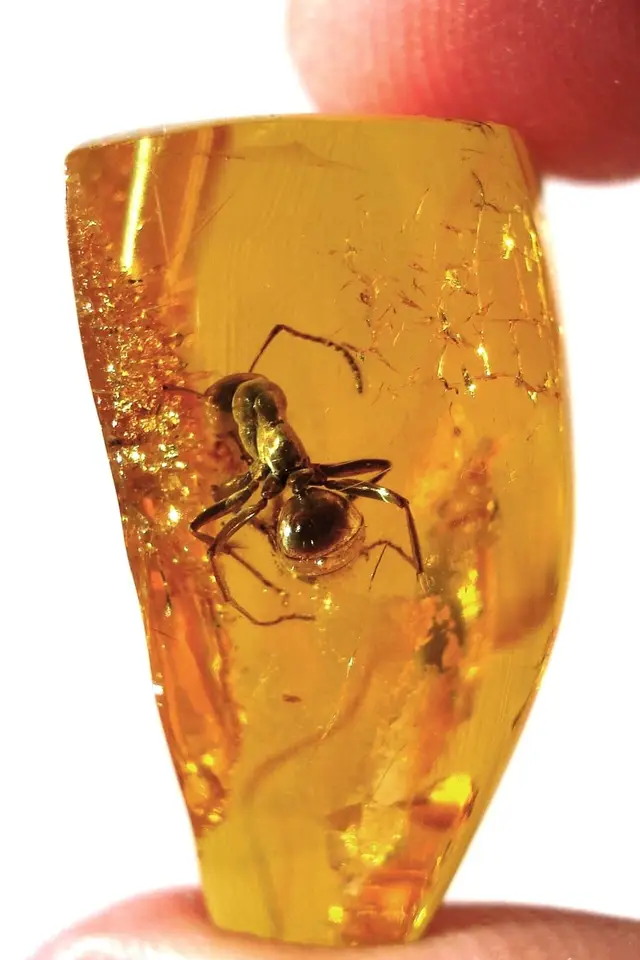
Tree resin fossilised over millions of years: a light, warm organic gem that sometimes holds prehistoric insects.