Mineral
Uraninite
UO₂Uraninit
The main ore of uranium: black, very heavy and radioactive; the pitchblende in which the Curies discovered radium and polonium.
Also known as: Pitchblende (massive, pitch-like variety) · Uranium dioxide
- Ore
- Handle with care

In short
Uraninite is a black, very heavy, radioactive mineral made mostly of uranium and oxygen. It is the most important ore of uranium. Its massive, pitch-like variety is called pitchblende, and the elements radium and polonium were discovered in this ore.
How does it form?
Uraninite forms in granite pegmatites, in ore veins where hot fluids circulated, in some sandstones and in ancient conglomerates. Because its uranium slowly decays into lead over millions of years, uraninite always contains some lead. Near the surface it oxidises into yellow, orange and green secondary uranium minerals, and its density drops markedly as it does so.
Its place in history
Uraninite played a key role in the birth of modern physics. Residues of pitchblende from the mines of Jáchymov (Joachimsthal), in today’s Czechia, were the raw material in which the Curies discovered radium and polonium. In the 1930s, the ore mined for radium on the shore of Great Bear Lake in Canada was also pitchblende. The Shinkolobwe mine in the Congo became one of the main sources of uranium for the Manhattan Project.
What is it used for today?
Uraninite and pitchblende are the main sources of the uranium used as fuel in nuclear power plants. Deposits in the Athabasca Basin in Saskatchewan, Canada, are among the highest-grade uranium deposits in the world. Workers who mine and process uranium ore must be protected by strict measures against radiation and radon.
How to recognise it
- 1
It is surprisingly heavy for its size: unoxidised specimens have a specific gravity above 10, about four times that of a piece of quartz of the same size.
- 2
It is black or brownish black with a submetallic or pitch-like shine; its streak is brownish black, grey or olive green.
- 3
It is radioactive and gives a clear signal on a radiation meter such as a Geiger counter. Certain identification needs laboratory testing.
- 4
It is often surrounded by bright yellow, orange or green secondary uranium minerals formed as it alters.
Fakes and imitations
What shops usually don’t tell you:
- Black, heavy minerals such as magnetite, chromite and hematite can look like uraninite, but they are not radioactive and are clearly lighter.
- The name “pitchblende” is sometimes wrongly used for altered or ordinary black rocks with little uranium. Only radiation measurement and laboratory analysis can show a specimen's real uranium content.
Safety
Uraninite is radioactive, and as it decays it gives off radon, a radioactive gas; according to the World Health Organization, radon is one of the leading causes of lung cancer. Store specimens in a closed, labelled container in a well-ventilated place away from bedrooms, kitchens and living areas, out of reach of children, and open the box in a well-aired space. Do not carry specimens on you, do not hold them longer than necessary and wash your hands after touching them. Never break, cut or grind them: dust that is inhaled or swallowed irradiates the body from inside. Possessing, transporting and shipping radioactive materials is regulated by law in many countries; in Türkiye the competent authority is the Nuclear Regulatory Authority (NDK).
Did you know?
The element uranium was discovered in pitchblende in 1789 by the German chemist Martin Heinrich Klaproth.
In 1898 Marie and Pierre Curie found two new elements, polonium and radium, in pitchblende residues from which the uranium had been removed. Marie Curie received the 1911 Nobel Prize in Chemistry for these discoveries.
Where is it found?
Loading map…
- Jáchymov (Joachimsthal), Czechia · Historic sourceMarie and Pierre Curie discovered radium and polonium in 1898 in residues of pitchblende from these mines
- Shinkolobwe, Haut-Katanga, DR Congo · Historic sourceAn important source of uranium for the Manhattan Project
- Athabasca Basin, Saskatchewan, Canada · Major depositAmong the highest-grade uranium deposits in the world
- Great Bear Lake (Port Radium), Northwest Territories, Canada · Historic sourceRadium and later uranium production from the 1930s
Locations are approximate to protect sites. Red dots mark places in Türkiye. Open in the big map →
Sources
- Handbook of Mineralogy: Uraninite · Mineralogical Society of America
- Uraninite · Encyclopaedia Britannica
- Marie Curie — Facts (Nobel Prize in Chemistry 1911) · Nobel Prize Outreach
- Radon and health (fact sheet) · World Health Organization
External links
Draft: awaiting expert reviewReport an error ↗
On the same step
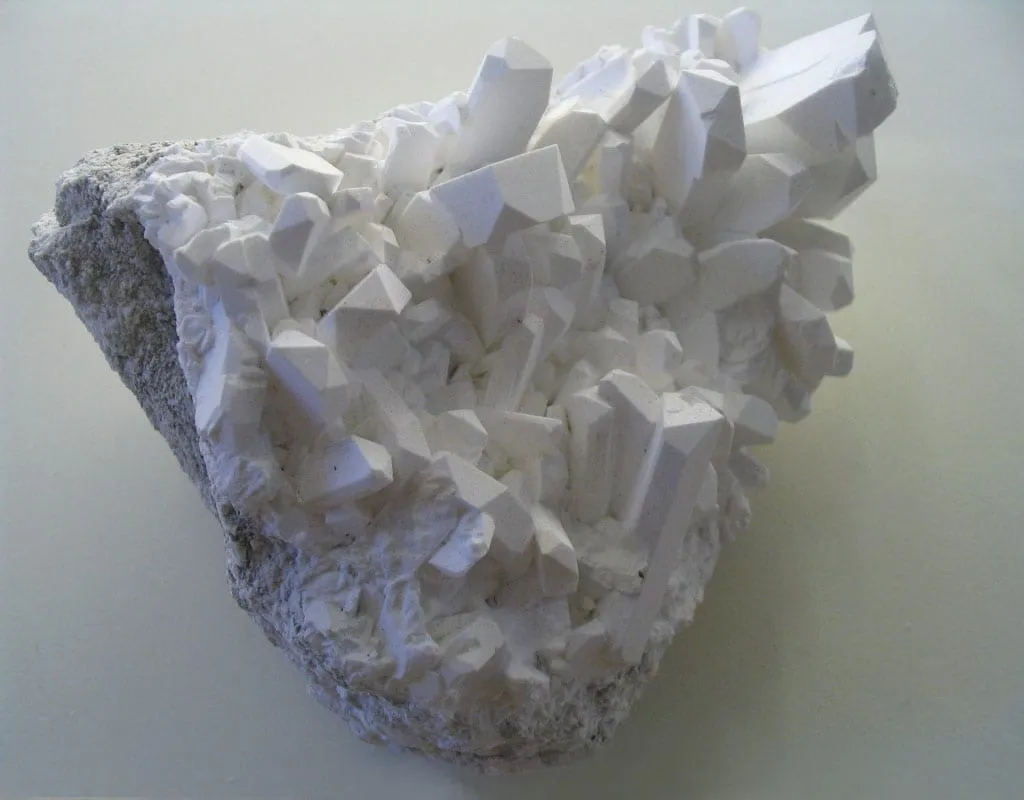
Borax (tincal)
A sodium borate that dissolves in water and crumbles to white powder in dry air; one of the world’s key tincal deposits is at Kırka in Eskişehir.
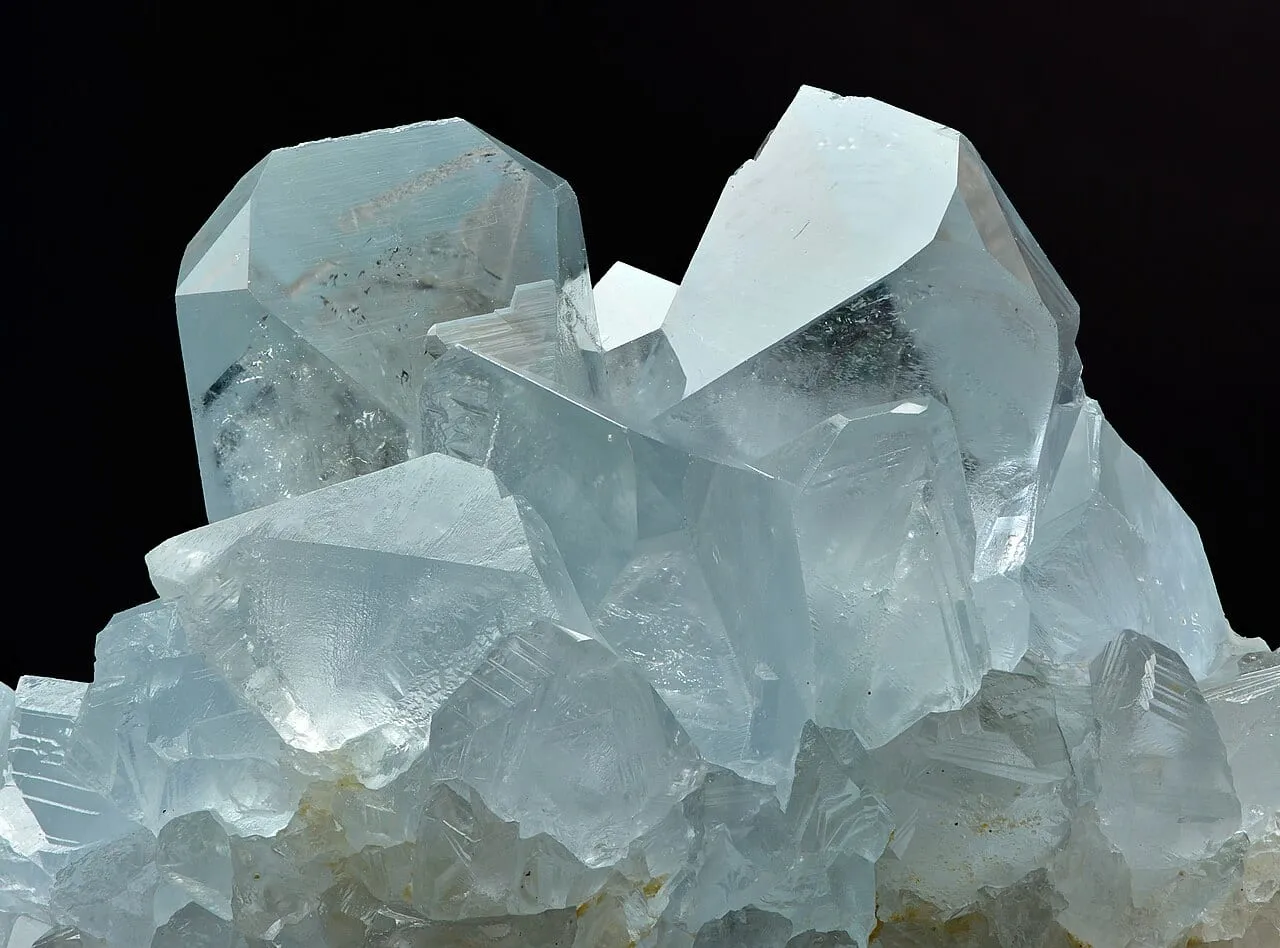
Celestine
A strontium mineral named after the sky, often forming pale blue crystals; the source of the red in fireworks.
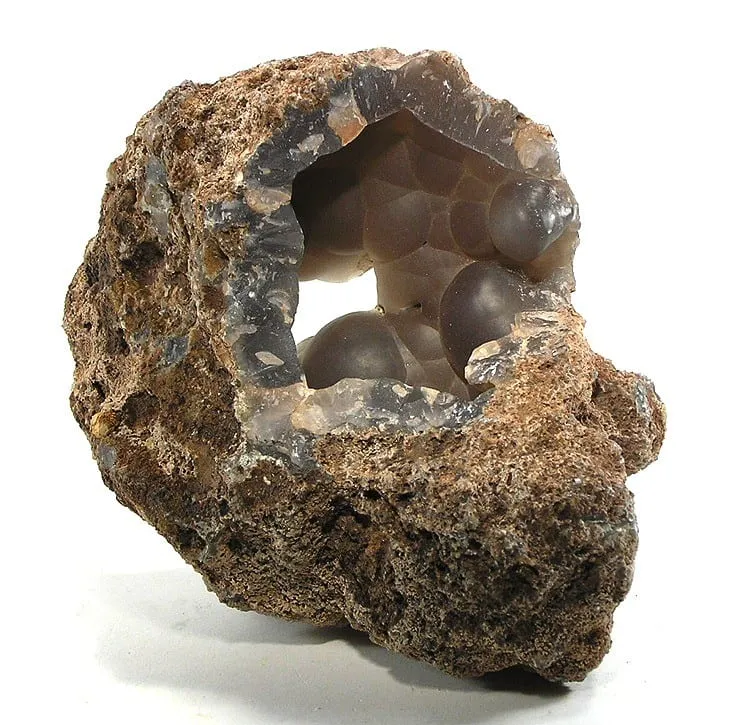
Chalcedony
A waxy-lustred stone made of quartz crystals far too small to see: the family name for agate, onyx and many other ornamental stones.