Everyday name
Soil
Toprak
Soil is not a stone: it is sand, silt and clay from crumbled rock, mixed with rotted plants, water, air and living things.
Also known as: Dirt · Earth · Topsoil · Terra rossa · Alluvium
- Popularly: Common stone
- Everyday

In short
Soil is the loose, porous, living layer at the very top of Earth’s crust, formed over thousands of years as rocks weather and crumble and plant and animal remains are mixed in. About half its volume is mineral grains from rock, from coarse to fine: sand, silt and clay. The rest is organic matter plus the water and air that fill the spaces between the grains. That is why soil is not counted as a rock, although the sand in it is mostly quartz and its clay is made of clay minerals such as kaolinite.
In scientific terms
This is an everyday name; in science it means these stones:
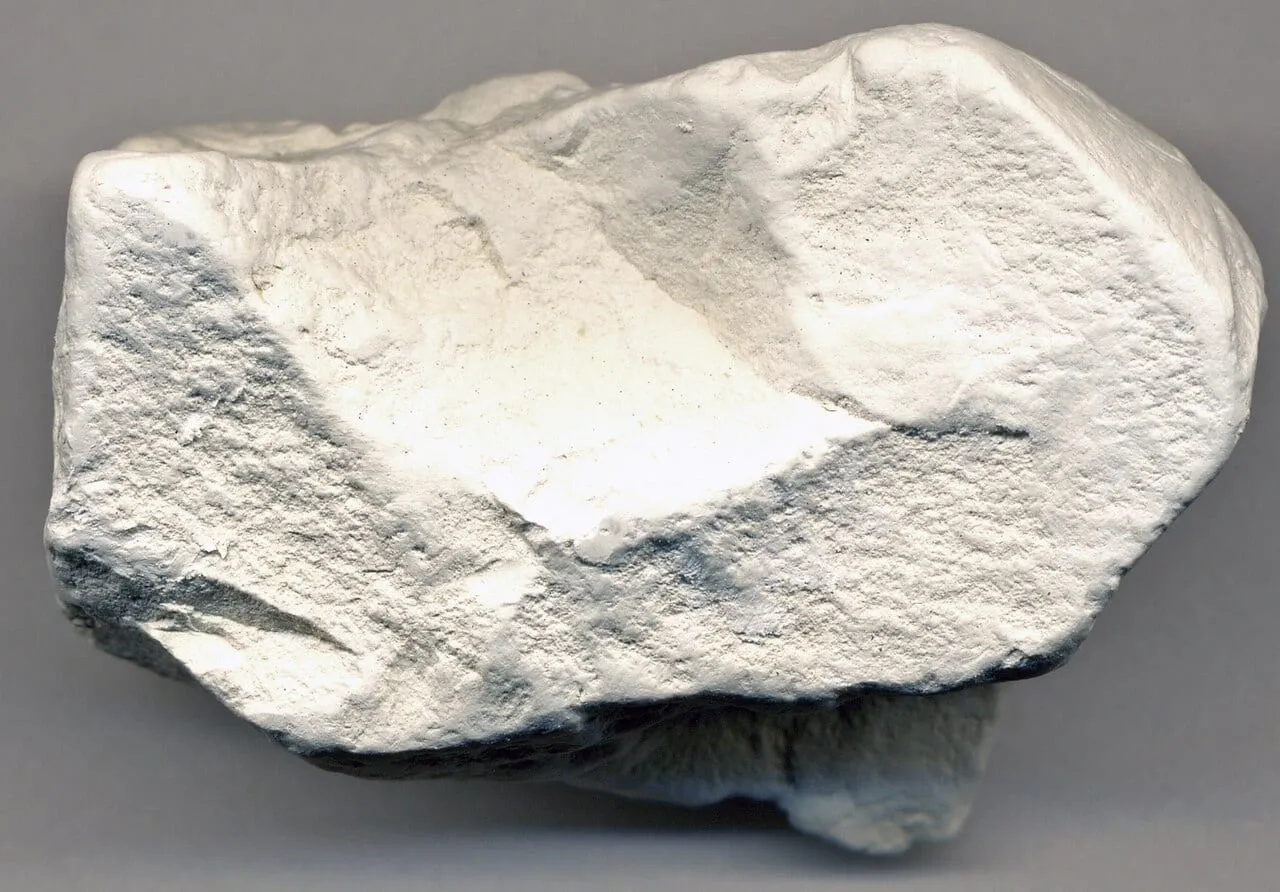
Kaolinite
The white clay of porcelain: named after Gaoling hill in China, it is a raw material for everything from ceramics to paper.
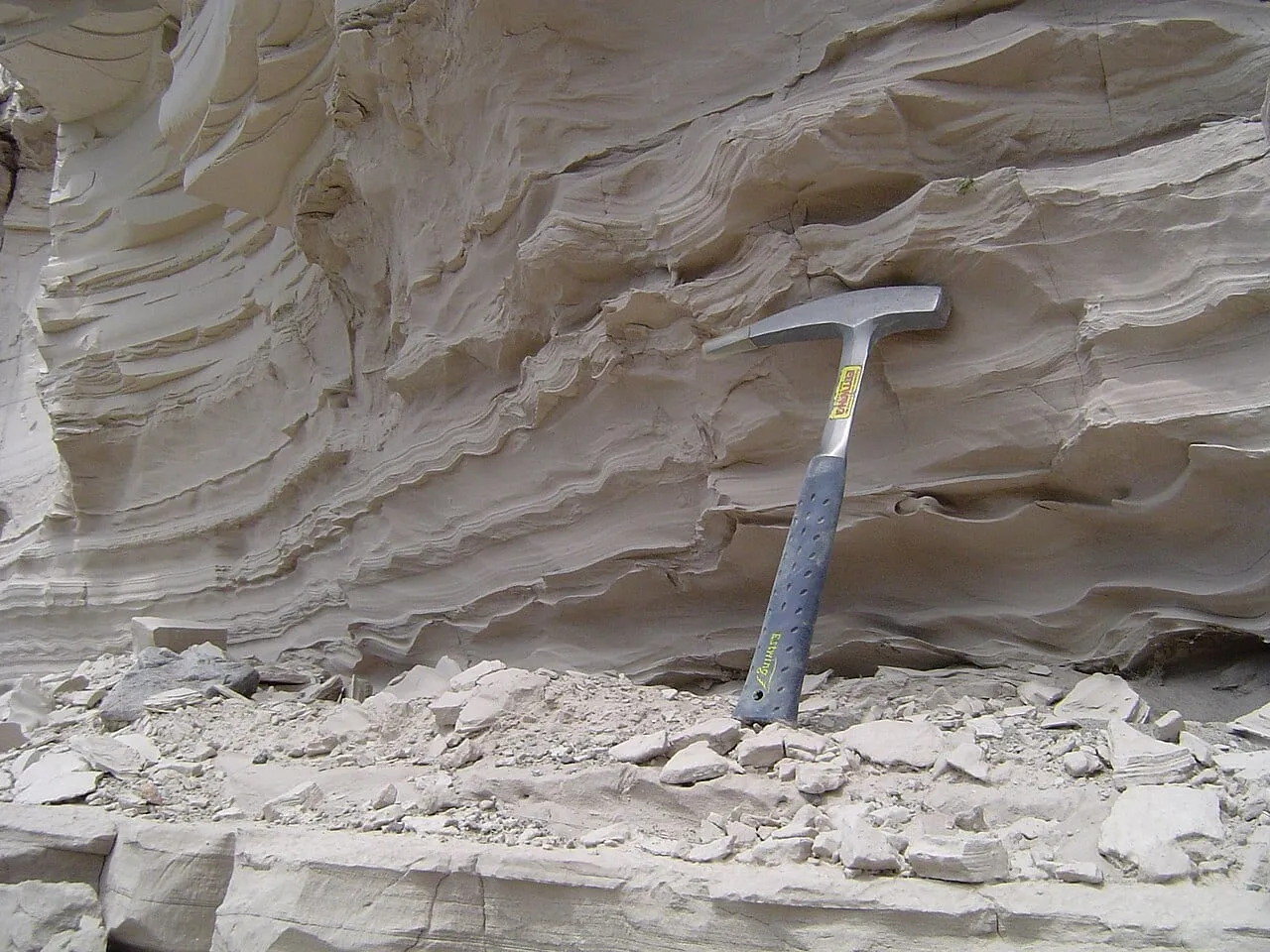
Claystone
Clay turned to stone: a raw material for bricks, studied as a home for radioactive waste because water barely passes through it.
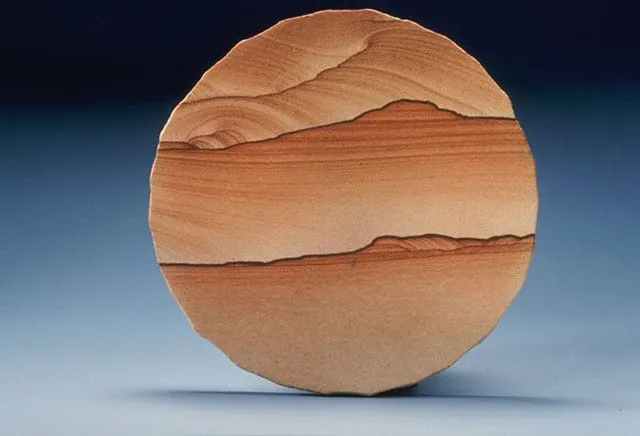
Sandstone
Sand turned to stone: from the carved facades of Petra to the layers that hold groundwater and oil.
How does soil form?
Soil begins with the weathering of the underlying rock, known as the parent rock. Freezing and thawing, repeated heating and cooling, and plant roots break the rock apart physically, while rainwater and the carbon dioxide dissolved in it break down minerals chemically. The feldspar in granite, for example, slowly turns into clay minerals such as kaolinite, while its quartz grains remain behind as sand. Rotting leaves and roots, earthworms and microbes are mixed into these fragments. Five factors decide what kind of soil forms: parent rock, climate, living organisms, the slope of the land and time.
A mature soil, when dug up, shows layers (horizons): a cover of leaves and litter at the top (O), dark topsoil coloured by humus (A), subsoil where clay and iron oxides accumulate (B), fragments of weathering parent rock (C) and, at the bottom, solid bedrock (R).
What is it used for?
- Food: It is the basis of farming; plants take water and nutrients from the soil.
- Water: It holds rainwater like a sponge, filters it and releases it slowly to groundwater, reducing floods.
- Carbon store: Soil stores the carbon from decayed plant remains for long periods.
- Building and crafts: Clay-rich soil is made into mud brick, fired brick and pottery, and soil is used as fill in construction.
- Habitat: It is home to countless living things.
Soil and erosion in Türkiye
Türkiye’s soils vary widely with the parent rock and the climate. On the limestone land of the Mediterranean climate zone, red terra rossa, formed by the weathering of limestone and dolomite, is common, while the alluvial plains built up from material carried by large rivers are the most fertile farmland.
Erosion is one of Türkiye’s greatest environmental problems. Steep slopes, destruction of plant cover, overgrazing and poor tillage speed up the loss of soil to rain and wind. According to figures reported by the TEMA Foundation in 2018, erosion affects 86 percent of Türkiye’s soils; about 642 million tonnes of soil are moved every year, 154 million tonnes of which are lost to the sea, streams and lakes. Tree planting, terracing, protecting pastures and ploughing across the slope are the main ways to reduce erosion.
What determines its value?
Soil is not valued like a stone, by the piece or the tonne. What makes farmland valuable is its depth, its organic matter, how well it holds and releases water, freedom from salt and pollution, and a gentle slope. Garden soil or fill dirt is a cheap material sold by the truckload, but once fertile soil has been lost to erosion it cannot be replaced within a human lifetime. The real value of soil lies in a society’s ability to grow its food.
This information is educational, not buying, selling or investment advice. Value varies enormously with quality and treatment.
How to recognise it
- 1
It crumbles in the hand: not a single hard piece but a mixture of loose grains and bits of roots and plants.
- 2
Feel test: knead some moist soil in your palm and try to push it out between thumb and forefinger into a ribbon. Sandy soil feels gritty and falls apart; silty soil feels smooth like flour; clay soil is sticky and forms a long ribbon that does not break.
- 3
Jar test: shake some soil with water in a jar and leave it for a day. Coarse sand settles first, then silt, and clay last; organic bits float on top. The thickness of each layer shows the soil’s texture.
- 4
Colour is a clue: dark colours usually mean plenty of humus (decomposed organic matter); reds and yellows come from iron oxides; grey and bluish mottles show that the soil has been waterlogged for long periods.
Fakes and imitations
What shops usually don’t tell you:
- Bagged potting soil is often not natural soil at all but a growing medium made from peat, compost, coconut coir and perlite.
- Clay and soil are often confused: clay is the name for the finest soil particles (smaller than 0.002 mm) and the clay minerals that make them up, whereas soil is a mixture that includes clay.
Myths and misconceptions
MythSoil renews itself quickly; if a field is lost, new soil will form.
FactSoil forms very slowly: according to the FAO, it takes more than a thousand years to form 1 centimetre. Soil carried away by erosion cannot be renewed on a human time scale, which is why soil is regarded as a non-renewable resource.
MythSoil is lifeless, dead material.
FactSoil is one of the most crowded habitats on Earth: bacteria, fungi, earthworms, insects and countless tiny creatures live in it. These organisms are what break plant remains down into humus and keep the soil aerated.
Did you know?
According to the FAO, it takes more than a thousand years to form 1 centimetre of soil, and a tablespoon of soil holds more living organisms than there are people on Earth.
According to the FAO, 95 percent of our food is produced in soils, yet about a third of the world’s soils are moderately to highly degraded by erosion, salinisation, compaction, pollution and other causes.
5 December is World Soil Day, recognised by the United Nations.
Frequently asked questions
What is soil?
Soil is the loose, porous, living layer at the very top of Earth’s crust, formed over thousands of years as rocks weather and crumble and plant and animal remains are mixed in. About half its volume is mineral grains from rock, from coarse to fine: sand, silt and clay. The rest is organic matter plus the water and air that fill the spaces between the grains. That is why soil is not counted as a rock, although the sand in it is mostly quartz and its clay is made of clay minerals such as kaolinite.
What is soil used for?
Food: It is the basis of farming; plants take water and nutrients from the soil. Water: It holds rainwater like a sponge, filters it and releases it slowly to groundwater, reducing floods. Carbon store: Soil stores the carbon from decayed plant remains for long periods. Building and crafts: Clay-rich soil is made into mud brick, fired brick and pottery, and soil is used as fill in construction. Habitat: It is home to countless living things.
How can you tell if soil is real?
It crumbles in the hand: not a single hard piece but a mixture of loose grains and bits of roots and plants. Feel test: knead some moist soil in your palm and try to push it out between thumb and forefinger into a ribbon. Sandy soil feels gritty and falls apart; silty soil feels smooth like flour; clay soil is sticky and forms a long ribbon that does not break. Jar test: shake some soil with water in a jar and leave it for a day. Coarse sand settles first, then silt, and clay last; organic bits float on top. The thickness of each layer shows the soil’s texture. Bagged potting soil is often not natural soil at all but a growing medium made from peat, compost, coconut coir and perlite.
Is soil valuable?
On the “street to diamond” value ladder it sits on step 1 of nine: Everywhere, worthless. Soil is not valued like a stone, by the piece or the tonne. What makes farmland valuable is its depth, its organic matter, how well it holds and releases water, freedom from salt and pollution, and a gentle slope. Garden soil or fill dirt is a cheap material sold by the truckload, but once fertile soil has been lost to erosion it cannot be replaced within a human lifetime. The real value of soil lies in a society’s ability to grow its food.
Sources
- Cherishing the ground we walk on · FAO, 2017
- Plant nutrition for food security: A guide for integrated nutrient management — Soil · FAO, 2006
- Terra rossa · Encyclopaedia Britannica
- TEMA Vakfı'ndan erozyonla mücadele çağrısı: Toprağı ve iklimi koru · BirGün, 2018
- Soil · Encyclopaedia Britannica
- Soil · Wikipedia
External links
Draft: awaiting expert reviewReport an error ↗
On the same step
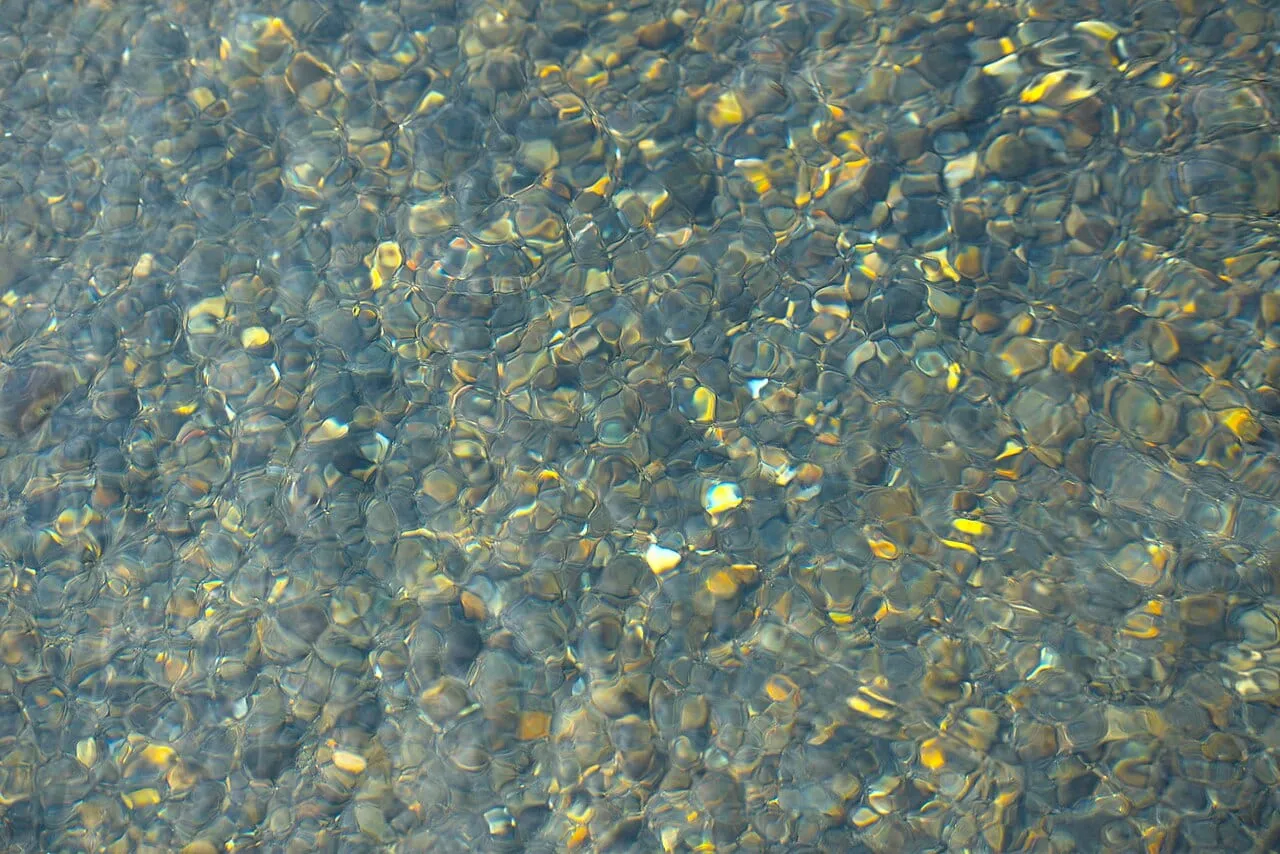
Gravel and river pebbles
Gravel is rock fragments over 2 millimetres, rounded by rivers and waves; a river stone is not a kind of rock but any hard stone worn smooth by water.
Sand
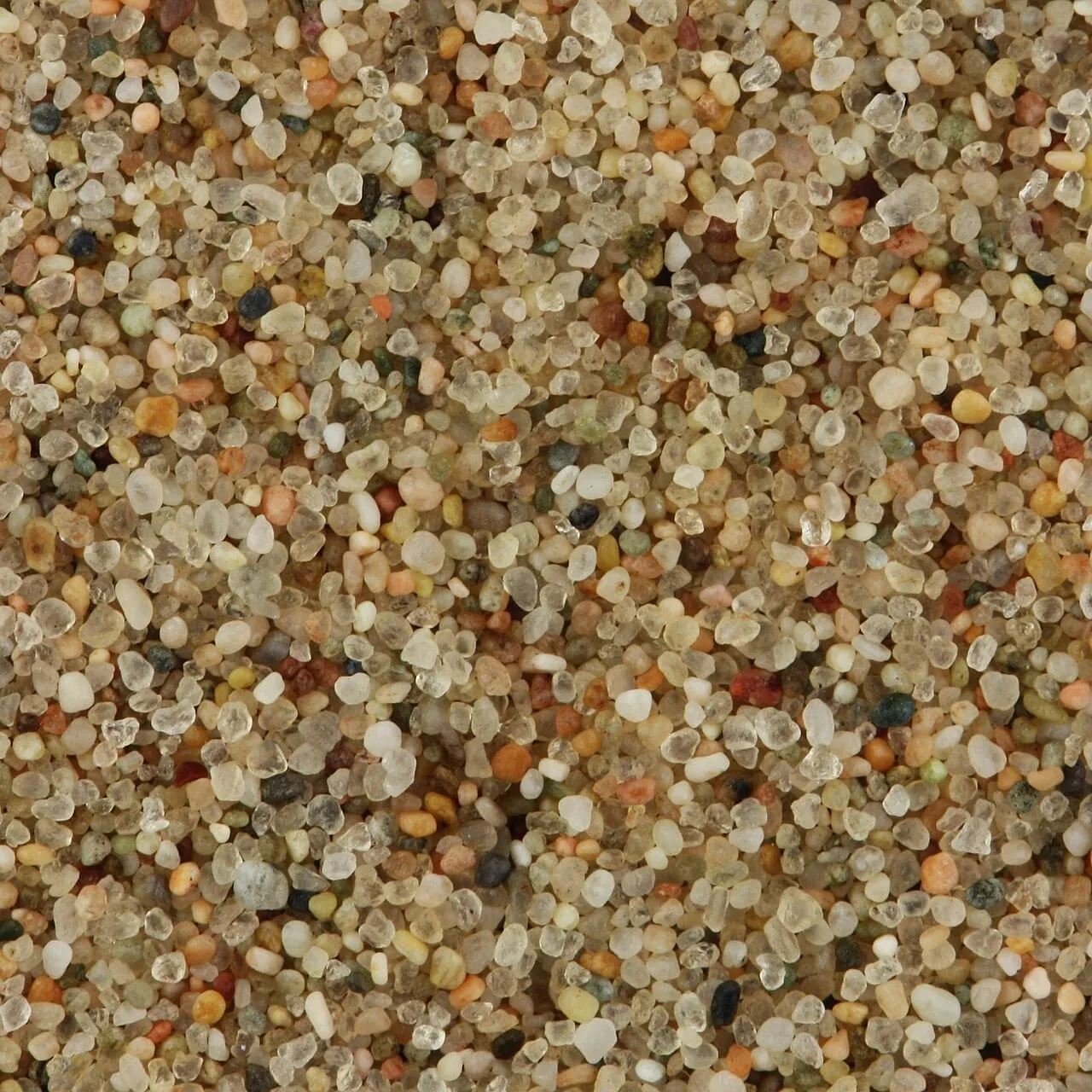
Sand is not a kind of stone but a size: grains between 0.06 and 2 millimetres, mostly quartz, sometimes shell fragments or black magnetite.