Mineral
Kaolinite
Al₂Si₂O₅(OH)₄Kaolinit
The white clay of porcelain: named after Gaoling hill in China, it is a raw material for everything from ceramics to paper.
Also known as: Kaolin (kaolinite-rich clay) · China clay
- Everyday
- Industrial
- Important in Türkiye

In short
Kaolinite is a white clay mineral made of aluminium, silicon, oxygen and hydrogen. It occurs as hexagon-like flakes far too small to see. White clay rich in kaolinite is called kaolin, and it is used to make porcelain, ceramics and paper.
How does it form?
Kaolinite forms when aluminium silicate minerals such as feldspar break down. In warm, humid climates rainwater slowly dissolves the feldspar in rocks such as granite and turns it into kaolinite. Hot, acidic waters rising from below can also alter volcanic rocks and form hydrothermal kaolin deposits. Kaolinite grains carried by water also settle in lake and river sediments.
What is it used for?
- Porcelain and ceramics: Kaolin is one of the main raw materials of porcelain and white ceramics; it stays white when fired.
- Paper: It is used as a filler inside paper and as a coating on its surface.
- Filler: It is used in paint, plastics and rubber products.
In Türkiye
According to U.S. Geological Survey (USGS) data, Türkiye is among the world’s significant kaolin producers. The Düvertepe area in the Sındırgı district of Balıkesir is Türkiye’s largest known hydrothermal kaolin deposit; its kaolin formed when hot waters altered Miocene rhyolitic volcanic rocks. Kaolinite-bearing clays from Şile in İstanbul are, according to MTA, among the domestic clays most preferred by the ceramics industry.
How to recognise it
- 1
It forms white, cream or light brown, fine-grained, earthy masses that crumble between the fingers and leave a white, chalky powder.
- 2
Wetted, it turns into a dough that can be shaped; it hardens again when dry and becomes permanently hard when fired.
- 3
It does not fizz in dilute acid; a white powder that fizzes is usually calcite or chalk.
- 4
Kaolinite can only be told apart with certainty from other clay minerals such as illite and montmorillonite by laboratory methods such as X-ray diffraction (XRD).
Fakes and imitations
What shops usually don’t tell you:
- Chalk (fine-grained limestone) powder looks like kaolin but fizzes in dilute acid; kaolin does not.
- Materials sold as “clay” or “ceramic clay” are usually mixtures of kaolinite, illite, montmorillonite and quartz, not pure kaolinite.
Safety
Kaolinite is harmless to handle. However, the fine dust in kaolin pits and grinding plants should not be breathed in over long periods; it may also contain quartz (crystalline silica). Wear a suitable dust mask for dusty work.
Did you know?
Its name comes from Gaoling (“high ridge”) near the porcelain city of Jingdezhen in Jiangxi Province, China, whose white clay was a raw material of Chinese porcelain.
The smooth surface of glossy magazine paper often carries a thin coating of kaolin.
Where is it found?
Loading map…
- Gaoling, near Jingdezhen, Jiangxi, China · Historic sourceThe place that gave the mineral its name; historic clay source of Chinese porcelain
- St Austell, Cornwall, England · Major depositLarge china clay pits formed by the alteration of granite
- Kaolin belt around Macon, Georgia, USA · Major deposit
- Düvertepe, Sındırgı, Balıkesir, Türkiye · Major depositTürkiye's largest known hydrothermal kaolin deposit, formed by the alteration of Miocene rhyolitic volcanic rocks
- Şile, İstanbul, Türkiye · Known localityKaolinite-bearing clays widely used by the ceramics industry
Locations are approximate to protect sites. Red dots mark places in Türkiye. Open in the big map →
Sources
- Handbook of Mineralogy: Kaolinite · Mineralogical Society of America
- Origin of the Düvertepe kaolin–alunite deposits in Simav Graben, Turkey (Ece et al.), Journal of Volcanology and Geothermal Research 255: 57–78 · İstanbul Teknik Üniversitesi (research portal), 2013
- Ülkemizde seramik killeri üretimi ve MTA (Günaydın), MTA Doğal Kaynaklar ve Ekonomi Bülteni 35: 61–69 · MTA Genel Müdürlüğü, 2023
- Mineral Commodity Summaries 2026: Clays · U.S. Geological Survey, 2026
External links
Draft: awaiting expert reviewReport an error ↗
On the same step
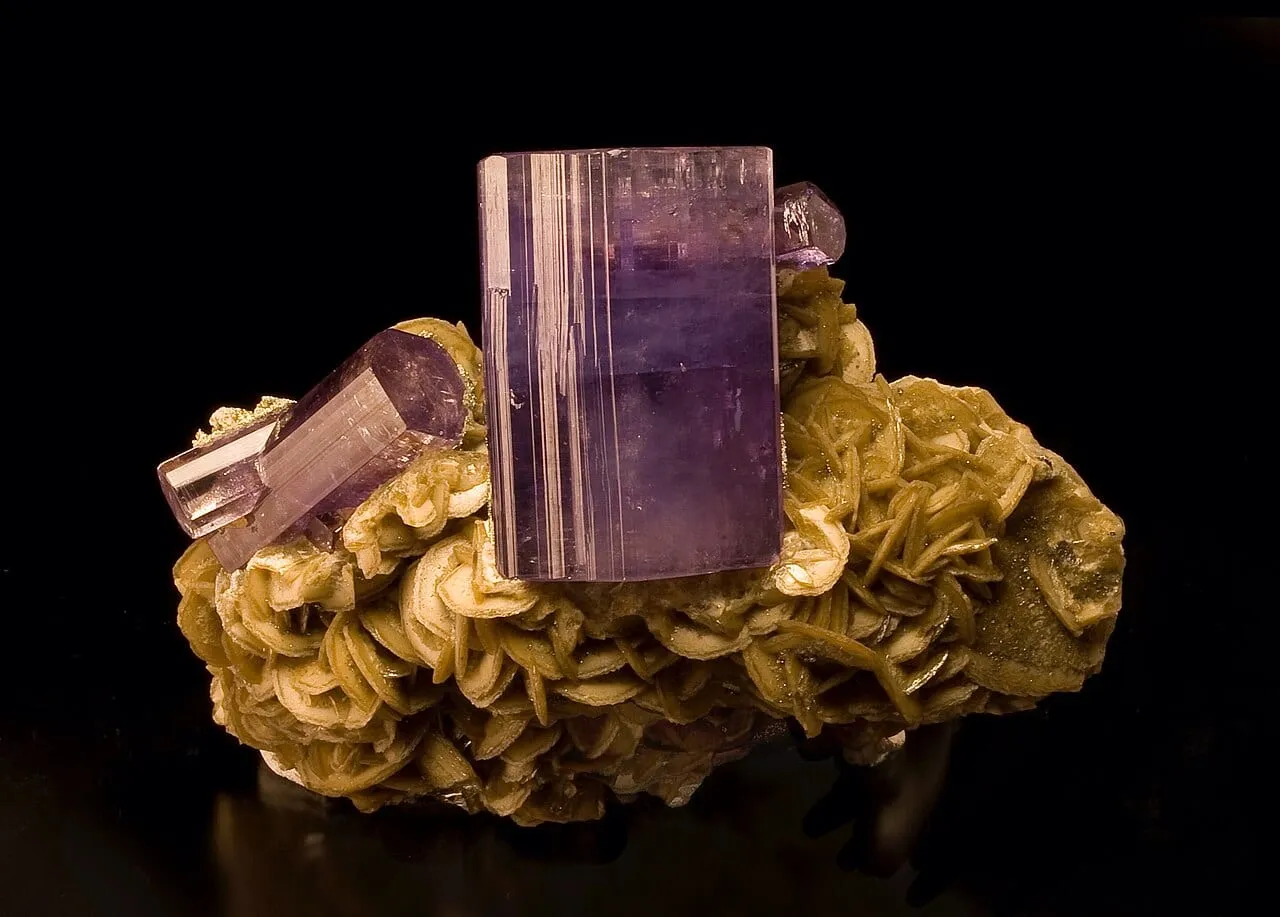
Apatite
A mineral cousin of our teeth and bones, the source of the phosphorus in fertilisers, and number 5 on the Mohs scale.
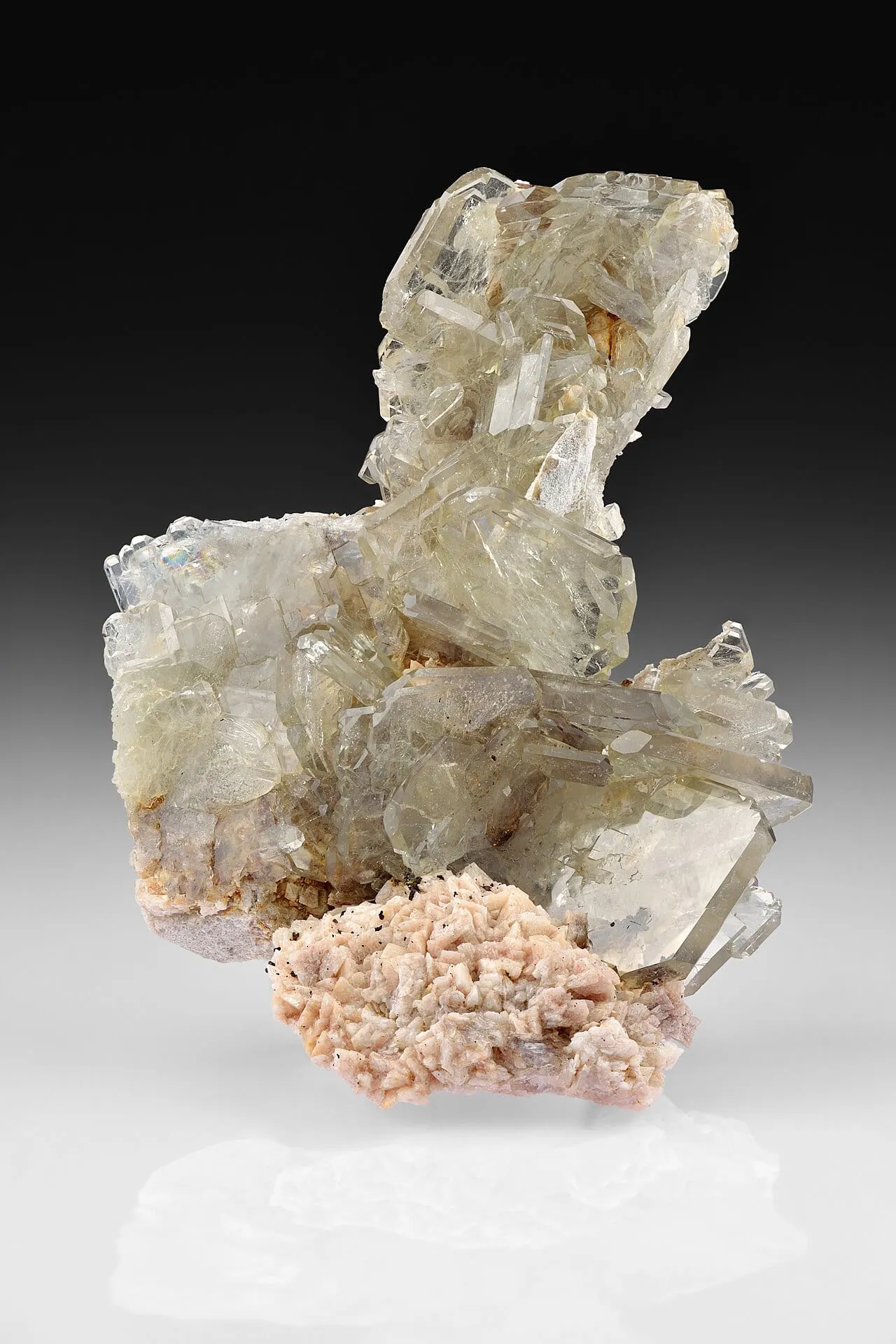
Baryte
A pale barium mineral that feels surprisingly heavy in the hand; even its name comes from the Greek word for heavy.
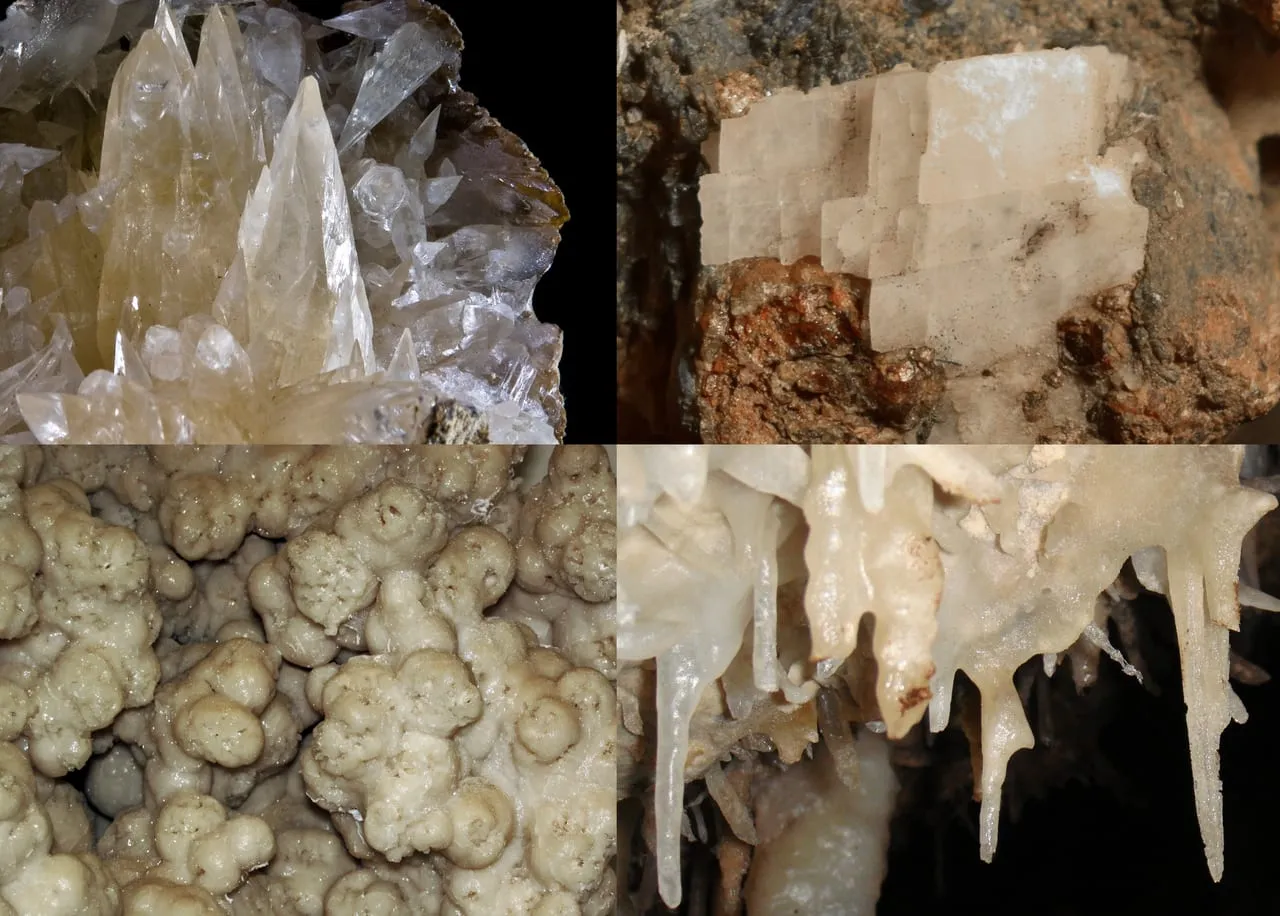
Calcite
The main mineral of limestone, marble and cave stalactites: it fizzes in acid, and its clear crystals show everything double.