Everyday name
Lava stone
Lav taşı (volkan taşı)
The “lava stone” in bead bracelets is a basaltic volcanic rock riddled with gas bubbles; it is often dyed black.
Also known as: Lava rock · Volcanic stone · Scoria · Lava beads
- Popularly: Semi-precious stone
- Everyday
- Ornamental
In short
Lava stone, or volcanic stone, is not a scientific rock name but an everyday name for porous rocks formed when lava from a volcano cools and hardens. The dark, holey stone sold as “lava stone” for jewellery, barbecues and gardens is mostly scoria (cinder) or vesicular basalt. The holes form when gases in the lava make bubbles as it erupts. Its pale relative that floats on water is pumice. Lava beads are also popular because their pores soak up essential oils and give off a scent for a while.
In scientific terms
This is an everyday name; in science it means these stones:
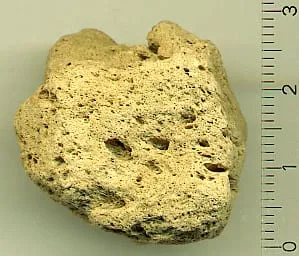
.jpg)
How does it form?
The magma deep inside a volcano holds dissolved gases such as water vapour and carbon dioxide. As magma nears the surface and the pressure drops, these gases come out as bubbles; if the lava cools and hardens while the bubbles are still inside, a holey rock forms. Frothy blobs of lava thrown into the air during an eruption pile up around the vent to build scoria cones. This dark, porous rock of basaltic or andesitic composition is called scoria. More silica-rich, frothier lava produces pale pumice.
What is it used for?
- Jewellery: Drilled and rounded lava beads are used in bracelets and necklaces; because their pores absorb essential oils, they are also sold as scent diffusers.
- Barbecues and heat: It is used in gas barbecues to hold heat and spread it evenly.
- Gardens and landscaping: It is spread in pots and gardens to aerate soil, improve drainage and for decoration.
- Building: It is used as lightweight aggregate in blocks and fill.
Lava stone in Türkiye
Türkiye is rich in young volcanoes. The volcanic field in the Kula and Salihli districts of Manisa, built in three phases about 1.1 million, 300,000 and 15,000 years ago, has some 80 scoria cones, maars, basalt lava flows and basalt columns, making it one of the geologically youngest volcanic fields in Türkiye. It was recognised as a UNESCO Global Geopark in 2013. Kula’s jet-black lava flows and reddish scoria cones are among the best places to see “lava stone” in its natural setting.
What determines its value?
Lava stone is an abundant, cheap volcanic rock. As garden and barbecue stone it is sold by the tonne or the bag, and its value depends on grain size, soundness and transport costs. For beads, the workmanship (drilling and rounding) and evenness of size and colour matter. Dyed beads are not worth more than naturally coloured ones.
This information is educational, not buying, selling or investment advice. Value varies enormously with quality and treatment.
How to recognise it
- 1
Its surface is full of small and large holes and feels rough, like sandpaper.
- 2
Its natural colour is dark grey, blackish, brown, or reddish brown where iron has oxidised.
- 3
It is light for its size, but most pieces sink when dropped in water; the pale volcanic stone that floats is pumice.
- 4
Its pores soak up liquid fast: a drop of water or oil is drawn straight in.
Fakes and imitations
What shops usually don’t tell you:
- Jet-black lava beads, or beads in bright colours such as blue, red or green, are usually dyed. Wiping them with cotton wool soaked in alcohol or acetone may remove the dye.
- Imitation beads moulded from plastic or resin have shallow holes and repeat the same pattern on every bead; real stone feels cooler and heavier in the hand.
- Lava stone and pumice are easily confused: both are volcanic and porous, but pumice is pale, very light and often floats.
Myths and misconceptions
MythLava stone floats on water.
FactThe volcanic stone that floats is pumice. The scoria and vesicular basalt called lava stone have larger bubbles with thicker walls between them, so most pieces sink when dropped in water.
MythLava stone is a special, precious kind of stone.
FactLava stone is not a kind of stone but an everyday name for porous volcanic rocks. It is mostly basaltic in composition, one of the most common volcanic rocks on Earth.
What is it believed to be good for?
This section reports beliefs; it is not health information. There is no scientific evidence for these claims and no stone replaces medical treatment.
The meanings people give this stone, and who holds them:
- According to today’s crystal sellers and crystal therapy writers, lava stone, born of the fire deep inside the Earth, “grounds” the wearer, calms them and soothes anger.
- The same sources claim that lava stone gives the wearer strength, courage and vitality.
What science says
There is no scientific evidence that lava stone calms people or gives them strength or courage; it is an ordinary volcanic rock riddled with gas bubbles. The only real property of the beads is their porosity: they soak up a drop of essential oil and give off its scent for a while. Bear in mind that essential oils can cause skin irritation and allergies.
Did you know?
Scoria is used in gas barbecues to hold and spread heat, as it withstands high temperatures.
The Kula volcanic field in Manisa, Türkiye, was called Katakekaumene, “the burnt land”, by the ancient geographer Strabo.
Where is it found?
Loading map…
- Kula, Manisa, Türkiye · Known localityOne of Türkiye's youngest volcanic fields, with scoria cones and basalt lava flows; the Kula-Salihli UNESCO Global Geopark (2013).
Locations are approximate to protect sites. Red dots mark places in Türkiye. Open in the big map →
Frequently asked questions
What is lava stone?
Lava stone, or volcanic stone, is not a scientific rock name but an everyday name for porous rocks formed when lava from a volcano cools and hardens. The dark, holey stone sold as “lava stone” for jewellery, barbecues and gardens is mostly scoria (cinder) or vesicular basalt. The holes form when gases in the lava make bubbles as it erupts. Its pale relative that floats on water is pumice. Lava beads are also popular because their pores soak up essential oils and give off a scent for a while.
What is lava stone used for?
Jewellery: Drilled and rounded lava beads are used in bracelets and necklaces; because their pores absorb essential oils, they are also sold as scent diffusers. Barbecues and heat: It is used in gas barbecues to hold heat and spread it evenly. Gardens and landscaping: It is spread in pots and gardens to aerate soil, improve drainage and for decoration. Building: It is used as lightweight aggregate in blocks and fill.
Where is lava stone found?
Its best-known localities: Kula, Manisa, Türkiye.
Where is lava stone found in Türkiye?
Known localities in Türkiye: Kula, Manisa, Türkiye.
How can you tell if lava stone is real?
Its surface is full of small and large holes and feels rough, like sandpaper. Its natural colour is dark grey, blackish, brown, or reddish brown where iron has oxidised. It is light for its size, but most pieces sink when dropped in water; the pale volcanic stone that floats is pumice. Jet-black lava beads, or beads in bright colours such as blue, red or green, are usually dyed. Wiping them with cotton wool soaked in alcohol or acetone may remove the dye.
Is lava stone valuable?
On the “street to diamond” value ladder it sits on step 2 of nine: Raw material by the tonne. Lava stone is an abundant, cheap volcanic rock. As garden and barbecue stone it is sold by the tonne or the bag, and its value depends on grain size, soundness and transport costs. For beads, the workmanship (drilling and rounding) and evenness of size and colour matter. Dyed beads are not worth more than naturally coloured ones.
What is lava stone good for?
According to today’s crystal sellers and crystal therapy writers, lava stone, born of the fire deep inside the Earth, “grounds” the wearer, calms them and soothes anger. The same sources claim that lava stone gives the wearer strength, courage and vitality. There is no scientific evidence that lava stone calms people or gives them strength or courage; it is an ordinary volcanic rock riddled with gas bubbles. The only real property of the beads is their porosity: they soak up a drop of essential oil and give off its scent for a while. Bear in mind that essential oils can cause skin irritation and allergies. This section reports beliefs; it is not health information. There is no scientific evidence for these claims and no stone replaces medical treatment.
Sources
- Scoria · Wikipedia
- Basalt · Encyclopaedia Britannica
- Kula Volcanic Geopark · Wikipedia
- Pumice · Encyclopaedia Britannica
External links
Draft: awaiting expert reviewReport an error ↗
On the same step
Andesite
The rock of volcanic arcs, named after the Andes — and the pink-grey stone of Ankara Castle.
Augite (pyroxene)
The most common pyroxene, which darkens basalt and gabbro: inconspicuous, yet one of the key building blocks of Earth’s crust.
Basalt
The rock of the ocean floors and the Moon’s dark plains — the most common volcanic rock on Earth.