Variety
Larimar
NaCa₂Si₃O₈(OH)Larimar
The sky- and sea-blue variety of pectolite; commercially it comes only from the Dominican Republic, and its colour comes from copper.
Also known as: Blue pectolite · Atlantis stone (trade nickname) · Dolphin stone (trade nickname)
- Popularly: Semi-precious stone
- Gemstone
- Ornamental

In short
Larimar is the pale blue, sky- or sea-coloured variety of pectolite, a calcium-sodium silicate mineral. Gem-quality material is mined commercially from just one place, the Barahona region in the south-west of the Dominican Republic. Its name joins the name of Larissa, the daughter of Miguel Méndez, who rediscovered the stone in 1974, with the Spanish word for “sea” (mar).
Photos

How does it form?
Larimar is the blue variety of pectolite. On the south coast of the Dominican Republic, volcanic rocks such as andesite and basalt erupted into limestones in the Miocene. Hot waters later filled cavities in these rocks with minerals, among them blue pectolite. The blue comes from copper replacing calcium in the pectolite. When the rocks eroded, the pectolite fillings travelled down the slope and mixed into stream gravels. The Bahoruco River carried these gravels to the sea, and tumbling in the stream bed polished the stones naturally.
What is it used for?
- Jewellery: It is cut into cabochons, beads, rings and necklaces. It is mostly set in silver, and fine stones sometimes in gold. It is sold in the Dominican Republic and the Caribbean as a local jewellery and souvenir speciality.
- Care: According to GIA its blue colour is stable to light, but it reacts to irradiation and to the heat of a jeweller’s torch, so care is needed during repairs.
It comes from a single place
The only known place where larimar is mined commercially is Los Chupaderos, about 10 km south-west of Barahona. This mountainside is now perforated by about 2,000 vertical shafts and is surrounded by rainforest and blue-coloured mine tailings. Because it is tied to this one spot, larimar counts as a rare ornamental stone.
What determines its value?
Its value depends on the intensity and vividness of the blue; sky-blue tones and strong contrast with the white pattern are sought. Stones free of cracks, solid and taking a good polish are worth more. Because it comes commercially from a single place, supply is limited, and since a ceramic imitation exists it matters that the seller states the stone is natural larimar.
This information is educational, not buying, selling or investment advice. Value varies enormously with quality and treatment.
How to recognise it
- 1
Blue ground with white, fibrous, radiating (fan-shaped) patterns; the colour ranges from pale sky blue to sea green.
- 2
Its hardness is 4.5–5: a steel knife scratches it, but it cannot scratch glass, and harder stones such as quartz scratch it. It is translucent to opaque with a silky lustre.
- 3
Genuine larimar has a refractive index of about 1.60 and a specific gravity of about 2.81; these values are used to tell imitations apart.
- 4
The name larimar is used only for blue pectolite from the Dominican Republic; “larimar” said to come from another country should be treated with suspicion.
Fakes and imitations
What shops usually don’t tell you:
- Ceramic imitation: in 2013 GIA described a Chinese-made larimar imitation consisting of about 95 % aluminium oxide. Its refractive index was 1.53 and its specific gravity 1.87; under the microscope it showed white gas bubbles and concentrations of blue colour.
Myths and misconceptions
MythLarimar is a stone from Atlantis.
FactLarimar is a natural blue pectolite that formed in cavities of Miocene volcanic rock in the south-west of the Dominican Republic. The name “Atlantis stone” comes from trade and crystal-therapy stories; the stone was only rediscovered in 1974.
MythLarimar is a stone taken from the sea.
FactLocal people once thought the stone came from the sea, but larimar forms inside volcanic rock in the mountains; the Bahoruco River carried eroded pieces down to the sea. Its blue comes from copper, not from sea water.
What is it believed to be good for?
This section reports beliefs; it is not health information. There is no scientific evidence for these claims and no stone replaces medical treatment.
The meanings people give this stone, and who holds them:
- In crystal-therapy circles larimar is called the “Atlantis stone” or “dolphin stone”; the name is said to go back to a “reading” by the medium Edgar Cayce about a blue stone that would be found in the Caribbean.
- Crystal-therapy practitioners claim that larimar opens the throat chakra and makes it easier to express feelings and thoughts.
- The same circles say larimar soothes anger and reduces fear, anxiety and stress.
What science says
There is no scientific evidence that larimar opens chakras, improves mood or reduces anxiety; lasting anxiety and panic call for a doctor or a mental-health professional. The “Atlantis” link is only a story: the stone was rediscovered in the Dominican Republic in 1974, and its blue comes from copper replacing calcium in pectolite.
Did you know?
In 1916 a priest from Barahona asked for permission to work a blue rock he had found. Pectolite was not yet known in the Dominican Republic, so the request was rejected.
In 1974 Miguel Méndez and Norman Rilling, a Peace Corps volunteer, rediscovered the stone on a beach at the foot of the Bahoruco Mountains. Local people thought the stone came from the sea and called it the “Blue Stone”.
Where is it found?
Loading map…
- Los Chupaderos, Barahona, Dominican Republic · Type localityThe only known commercial source of larimar: a mountainside about 10 km south-west of Barahona, perforated with about 2,000 vertical shafts
- Bahoruco Mountains, Barahona, Dominican Republic · Historic sourceLarimar was rediscovered in 1974 on a beach at the foot of this range; the Bahoruco River had carried the stones down to the sea
Locations are approximate to protect sites. Red dots mark places in Türkiye. Open in the big map →
Frequently asked questions
What is larimar?
Larimar is the pale blue, sky- or sea-coloured variety of pectolite, a calcium-sodium silicate mineral. Gem-quality material is mined commercially from just one place, the Barahona region in the south-west of the Dominican Republic. Its name joins the name of Larissa, the daughter of Miguel Méndez, who rediscovered the stone in 1974, with the Spanish word for “sea” (mar).
What is larimar used for?
Jewellery: It is cut into cabochons, beads, rings and necklaces. It is mostly set in silver, and fine stones sometimes in gold. It is sold in the Dominican Republic and the Caribbean as a local jewellery and souvenir speciality. Care: According to GIA its blue colour is stable to light, but it reacts to irradiation and to the heat of a jeweller's torch, so care is needed during repairs.
How hard is larimar?
It has a hardness of 4.5–5 on the Mohs scale. A fingernail cannot scratch it, but a steel knife can. Its specific gravity is 2.81–2.9 g/cm³.
Where is larimar found?
Its best-known localities: Los Chupaderos, Barahona, Dominican Republic; Bahoruco Mountains, Barahona, Dominican Republic.
How can you tell if larimar is real?
Blue ground with white, fibrous, radiating (fan-shaped) patterns; the colour ranges from pale sky blue to sea green. Its hardness is 4.5–5: a steel knife scratches it, but it cannot scratch glass, and harder stones such as quartz scratch it. It is translucent to opaque with a silky lustre. Genuine larimar has a refractive index of about 1.60 and a specific gravity of about 2.81; these values are used to tell imitations apart. Ceramic imitation: in 2013 GIA described a Chinese-made larimar imitation consisting of about 95 % aluminium oxide. Its refractive index was 1.53 and its specific gravity 1.87; under the microscope it showed white gas bubbles and concentrations of blue colour.
Is larimar valuable?
On the “street to diamond” value ladder it sits on step 6 of nine: Fine ornamental and collector stone. Its value depends on the intensity and vividness of the blue; sky-blue tones and strong contrast with the white pattern are sought. Stones free of cracks, solid and taking a good polish are worth more. Because it comes commercially from a single place, supply is limited, and since a ceramic imitation exists it matters that the seller states the stone is natural larimar.
What is larimar good for?
In crystal-therapy circles larimar is called the “Atlantis stone” or “dolphin stone”; the name is said to go back to a “reading” by the medium Edgar Cayce about a blue stone that would be found in the Caribbean. Crystal-therapy practitioners claim that larimar opens the throat chakra and makes it easier to express feelings and thoughts. The same circles say larimar soothes anger and reduces fear, anxiety and stress. There is no scientific evidence that larimar opens chakras, improves mood or reduces anxiety; lasting anxiety and panic call for a doctor or a mental-health professional. The “Atlantis” link is only a story: the stone was rediscovered in the Dominican Republic in 1974, and its blue comes from copper replacing calcium in pectolite. This section reports beliefs; it is not health information. There is no scientific evidence for these claims and no stone replaces medical treatment.
Sources
- Larimar · Wikipedia
- Handbook of Mineralogy: Pectolite · Mineralogical Society of America
- Pectolite · Webmineral
- Blue Pectolite from the Dominican Republic, Gems & Gemology 25(4) · GIA, 1989
- Imitation larimar (Gem News International), Gems & Gemology 49(2) · GIA, 2013
- Barahona, Dominican Republic · Wikipedia
- Baoruco Mountain Range · Wikipedia
External links
Draft: awaiting expert reviewReport an error ↗
On the same step
Amber
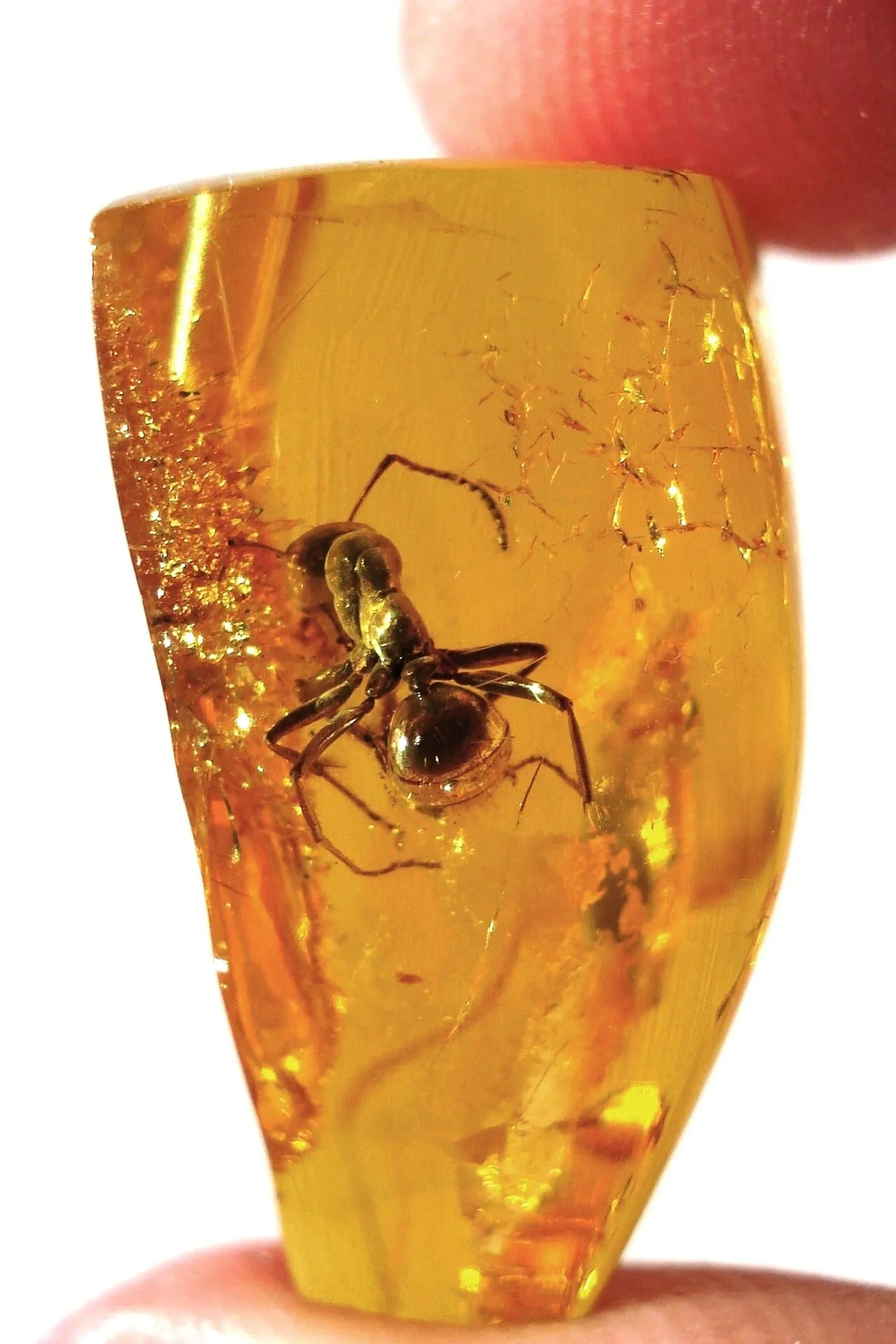
Tree resin fossilised over millions of years: a light, warm organic gem that sometimes holds prehistoric insects.
Ammolite
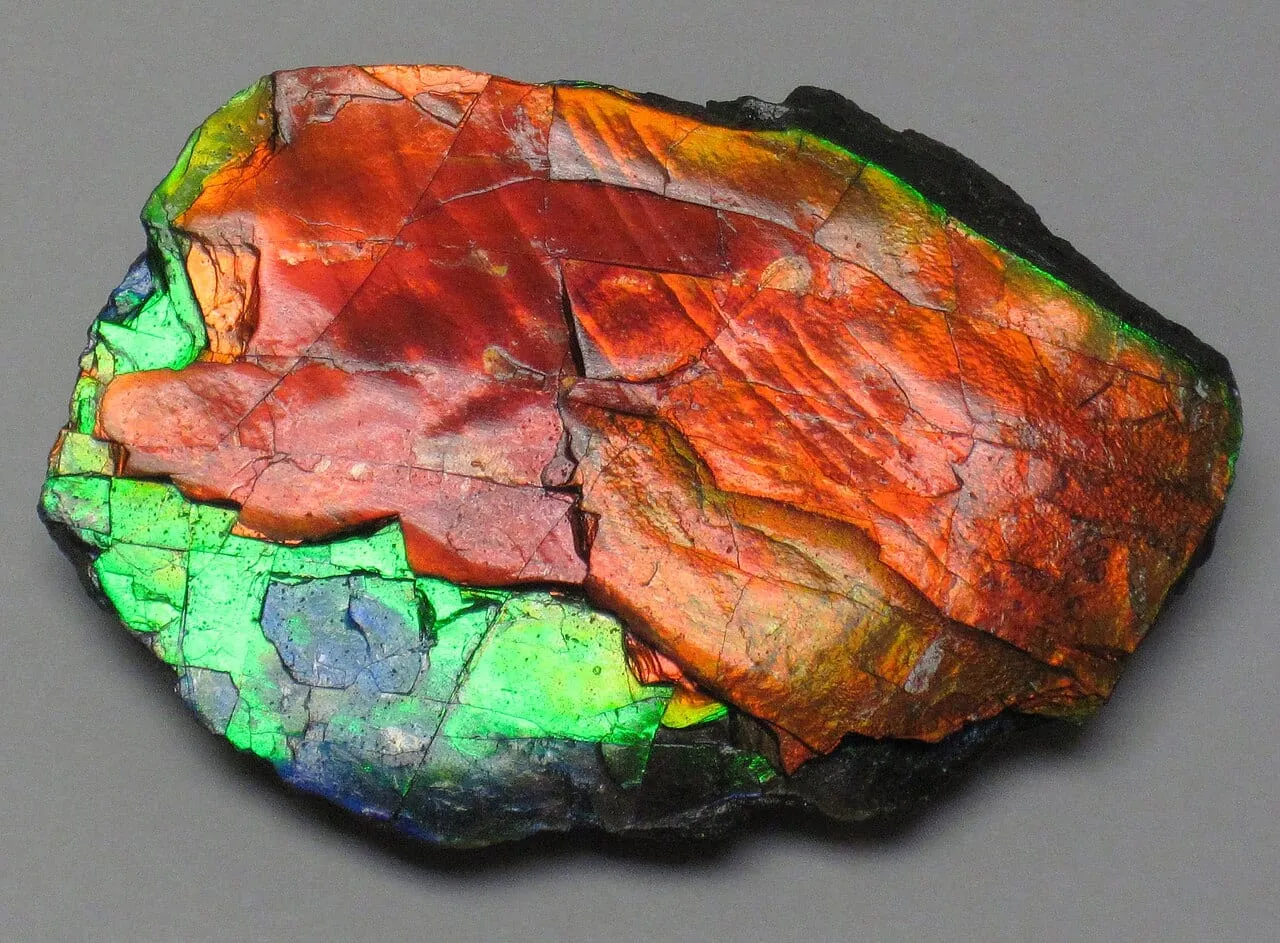
The rainbow-bright layer of fossil ammonite shell; of gem quality it comes only from the Canadian province of Alberta.
Aquamarine
The blue member of the beryl family, named after seawater: often found as large, clear, nearly flawless crystals.