Everyday name
Himalayan salt and salt lamps
Himalaya tuzu ve tuz lambası
Himalayan salt is pink rock salt, the mineral halite, mined in Pakistan’s Salt Range; a salt lamp is a hollowed-out block of it.
Also known as: Salt lamp · Himalayan salt lamp · Pink salt · Pink rock salt
- Popularly: Common stone
- Everyday
In short
The pink salt sold as “Himalayan salt” does not come from the Himalayas but from the Salt Range in the Punjab region of Pakistan, above all from the Khewra salt mine. It comes from thick salt beds left by seas that dried up some 600 to 540 million years ago. Its mineral name is halite; 96–99 percent of it is sodium chloride, the same as table salt, and its pink and reddish colours come from trace minerals in some veins. A salt lamp is an ornament made by placing a light bulb inside a hollowed-out block of this salt. Claims that it cleans the air, gives off “negative ions” or benefits health have no scientific basis.
In scientific terms
This is an everyday name; in science it means these stones:
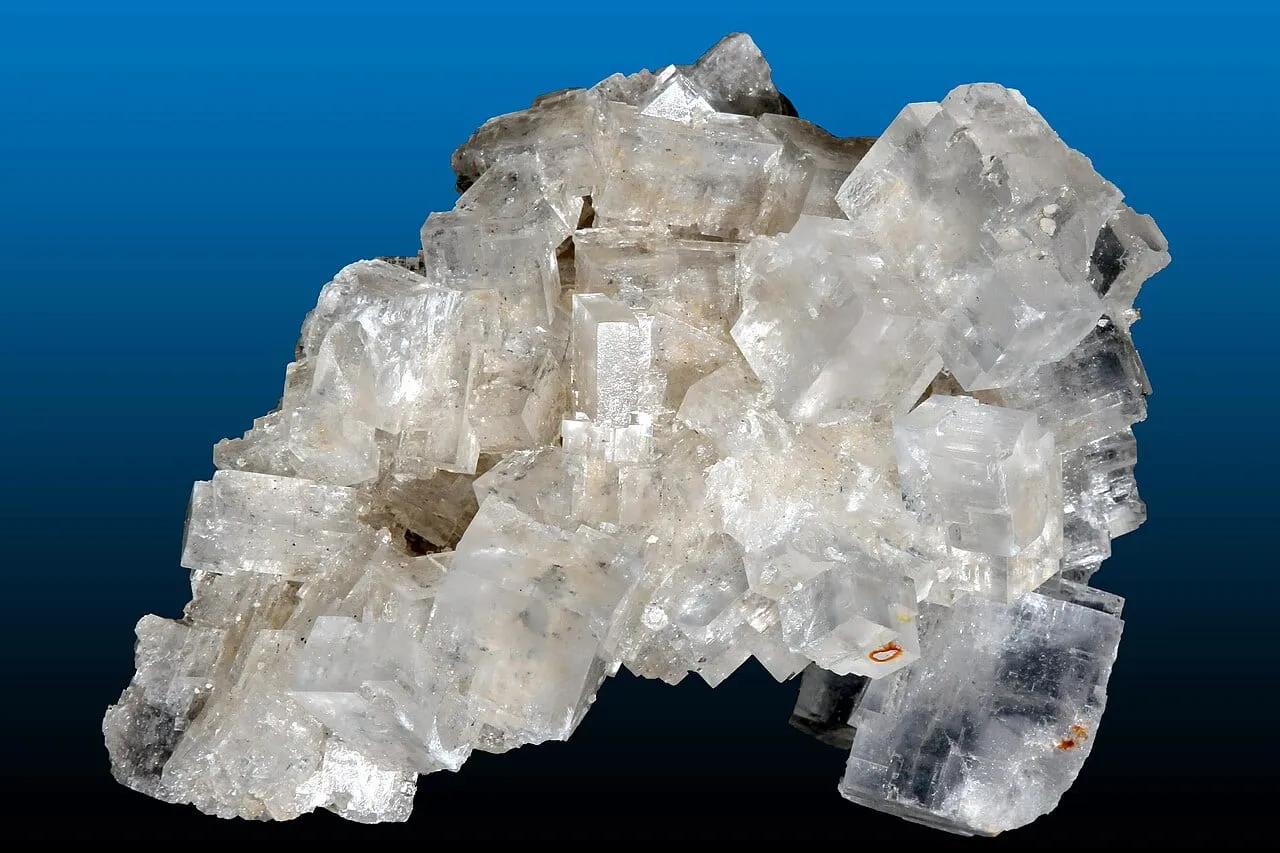
_01.jpg)
Where does it come from?
Himalayan salt is found in the Salt Range in the Punjab region of Pakistan, in the hills between the Indus River and the Punjab plain. The salt comes from thick beds laid down some 600 to 540 million years ago, in the Ediacaran and early Cambrian periods, as shallow seas evaporated. Later squeezed and lifted by plate movements, these beds now lie close to the surface. The most important mine is Khewra in Jhelum District. The salt’s pink, orange and reddish colours come from trace amounts of iron and other minerals in some veins.
What is it used for?
- Cooking salt: It is ground and used like table salt; nutritionally it is no different from table salt.
- Ornaments: Hollowed-out blocks fitted with a bulb are sold as salt lamps, and the salt is also made into candle holders, serving plates and wall bricks.
- Livestock: Blocks of rock salt are used as salt licks for animals.
Rock salt in Türkiye
Türkiye has its own rock salt. The rock salt mined from a salt cave in Çankırı was registered as a protected designation of origin, “Çankırı Kaya Tuzu”, in 2023. The Himalayan salt sold in Türkiye comes from Pakistan; as a mineral it is the same halite as Çankırı rock salt, differing only in colour.
What determines its value?
Himalayan salt is the same mineral as ordinary table salt; it sells for more because of its colour, origin and marketing, not its chemistry. For salt lamps, the size, colour and workmanship of the block and the quality of the electrical parts determine the value. Nutritionally, Himalayan salt is no better than table salt: its sodium content is similar, and its trace minerals are not present in amounts that matter for health.
This information is educational, not buying, selling or investment advice. Value varies enormously with quality and treatment.
How to recognise it
- 1
Real rock salt tastes salty and dissolves in water; in humid air its surface slowly becomes wet.
- 2
When broken, it tends to split into cube-shaped pieces, because halite cleaves in three directions at right angles.
- 3
It is soft: it can be scratched with difficulty by a fingernail and easily by a copper coin.
- 4
Its colour is unevenly distributed through the block: white, pink, orange and reddish bands or patches.
Fakes and imitations
What shops usually don’t tell you:
- Some cheap “salt lamps” are not rock salt at all but glass or plastic imitations tinted orange. A real salt lamp tastes salty, sweats in humid air and leaves a trace of salt on your fingers.
- Pink salt does not come only from Pakistan; coloured rock salt occurs in many parts of the world. “Himalayan” is a marketing name.
Safety
In humid air a salt lamp absorbs moisture and can drip; the salty water can damage the electrical parts and furniture. Use the lamp in a dry place on a sturdy base, and check its cable and bulb holder regularly. Cats and dogs that lick the lamp can suffer salt poisoning, so keep it out of pets’ reach. Himalayan salt is usually not iodised; using only this salt in place of table salt can increase the risk of iodine deficiency.
Myths and misconceptions
MythHimalayan salt is mined in the Himalayas.
FactHimalayan salt is mined in the Salt Range, a separate range of hills south of the Himalayas, in the Punjab region of Pakistan. The name is a marketing name.
MythHimalayan salt contains less sodium and is healthier than table salt.
FactHimalayan salt is 96–99 percent sodium chloride, so its sodium content is similar to that of table salt. Its trace minerals are not significant for health. Moreover, most of it is not iodised, whereas iodised table salt plays an important role in preventing iodine deficiency disorders.
MythA salt lamp “sweats” because it draws dirt and pollutants out of the air.
FactSalt is hygroscopic: it attracts water vapour from the air. The droplets on a lamp are salty water formed when humidity wets the salt; they are no sign that the air is being cleaned.
What is it believed to be good for?
This section reports beliefs; it is not health information. There is no scientific evidence for these claims and no stone replaces medical treatment.
The meanings people give this stone, and who holds them:
- According to salt lamp sellers, the lamp gives off “negative ions” when it warms up; these ions are said to clean the air and neutralise “harmful radiation” from electronic devices.
- The same sources claim that salt lamps relieve allergies and asthma, improve sleep, reduce stress and lift the mood.
- In some countries of Central and Eastern Europe, spending time in salt caves (speleotherapy, halotherapy) is believed to help asthma and respiratory diseases.
What science says
Claims that salt lamps release health-giving ions or clean the air have no scientific basis; the lamp is simply a block of salt warmed by the bulb inside, and its light can make a room feel cosy. The idea that it “absorbs” radiation from electronic devices also contradicts physics. A Cochrane systematic review of salt-cave therapy concluded that the available evidence does not allow a reliable conclusion as to whether it works for asthma. Salt lamps or salt caves should never replace asthma or allergy medicines.
Did you know?
Khewra is considered the world’s second largest salt mine; inside there is a mosque built of coloured salt bricks and sculptures carved from salt.
According to local legend, the salt at Khewra was discovered in 326 BCE by the horses of Alexander the Great’s army, which were found licking the rocks. The first records of mining, however, date from the 13th century.
Only about half of the salt in the mine is extracted; the rest is left as huge salt pillars that hold up the roof (the room-and-pillar method).
Where is it found?
Loading map…
- Khewra, Salt Range, Punjab, Pakistan · Major depositMain source of the pink rock salt sold as “Himalayan salt”; it lies in the Salt Range, not in the Himalayas.
Locations are approximate to protect sites. Red dots mark places in Türkiye. Open in the big map →
Frequently asked questions
What is himalayan salt and salt lamps?
The pink salt sold as “Himalayan salt” does not come from the Himalayas but from the Salt Range in the Punjab region of Pakistan, above all from the Khewra salt mine. It comes from thick salt beds left by seas that dried up some 600 to 540 million years ago. Its mineral name is halite; 96–99 percent of it is sodium chloride, the same as table salt, and its pink and reddish colours come from trace minerals in some veins. A salt lamp is an ornament made by placing a light bulb inside a hollowed-out block of this salt. Claims that it cleans the air, gives off “negative ions” or benefits health have no scientific basis.
What is himalayan salt and salt lamps used for?
Cooking salt: It is ground and used like table salt; nutritionally it is no different from table salt. Ornaments: Hollowed-out blocks fitted with a bulb are sold as salt lamps, and the salt is also made into candle holders, serving plates and wall bricks. Livestock: Blocks of rock salt are used as salt licks for animals.
Where is himalayan salt and salt lamps found?
Its best-known localities: Khewra, Salt Range, Punjab, Pakistan.
How can you tell if himalayan salt and salt lamps is real?
Real rock salt tastes salty and dissolves in water; in humid air its surface slowly becomes wet. When broken, it tends to split into cube-shaped pieces, because halite cleaves in three directions at right angles. It is soft: it can be scratched with difficulty by a fingernail and easily by a copper coin. Some cheap “salt lamps” are not rock salt at all but glass or plastic imitations tinted orange. A real salt lamp tastes salty, sweats in humid air and leaves a trace of salt on your fingers.
Is himalayan salt and salt lamps valuable?
On the “street to diamond” value ladder it sits on step 2 of nine: Raw material by the tonne. Himalayan salt is the same mineral as ordinary table salt; it sells for more because of its colour, origin and marketing, not its chemistry. For salt lamps, the size, colour and workmanship of the block and the quality of the electrical parts determine the value. Nutritionally, Himalayan salt is no better than table salt: its sodium content is similar, and its trace minerals are not present in amounts that matter for health.
What is himalayan salt and salt lamps good for?
According to salt lamp sellers, the lamp gives off “negative ions” when it warms up; these ions are said to clean the air and neutralise “harmful radiation” from electronic devices. The same sources claim that salt lamps relieve allergies and asthma, improve sleep, reduce stress and lift the mood. In some countries of Central and Eastern Europe, spending time in salt caves (speleotherapy, halotherapy) is believed to help asthma and respiratory diseases. Claims that salt lamps release health-giving ions or clean the air have no scientific basis; the lamp is simply a block of salt warmed by the bulb inside, and its light can make a room feel cosy. The idea that it “absorbs” radiation from electronic devices also contradicts physics. A Cochrane systematic review of salt-cave therapy concluded that the available evidence does not allow a reliable conclusion as to whether it works for asthma. Salt lamps or salt caves should never replace asthma or allergy medicines. This section reports beliefs; it is not health information. There is no scientific evidence for these claims and no stone replaces medical treatment.
Is himalayan salt and salt lamps dangerous?
In humid air a salt lamp absorbs moisture and can drip; the salty water can damage the electrical parts and furniture. Use the lamp in a dry place on a sturdy base, and check its cable and bulb holder regularly. Cats and dogs that lick the lamp can suffer salt poisoning, so keep it out of pets’ reach. Himalayan salt is usually not iodised; using only this salt in place of table salt can increase the risk of iodine deficiency.
Sources
- Himalayan salt · Wikipedia
- Speleotherapy for asthma (Beamon et al.) · Cochrane Database of Systematic Reviews, 2001
- Khewra Salt Mine · Wikipedia
- İyot Yetersizliği Hastalıklarının Önlenmesi Haftası (Toplum İçin Bilgilendirme Dizisi 2024/2025-59) · Hacettepe Üniversitesi Tıp Fakültesi Halk Sağlığı Anabilim Dalı, 2025
- Çankırı Kaya Tuzu — Coğrafi işaret tescil belgesi (No. 1377, menşe adı) · TÜRKPATENT, 2023
External links
Draft: awaiting expert reviewReport an error ↗
On the same step
Andesite
The rock of volcanic arcs, named after the Andes — and the pink-grey stone of Ankara Castle.
Augite (pyroxene)
The most common pyroxene, which darkens basalt and gabbro: inconspicuous, yet one of the key building blocks of Earth’s crust.
Basalt
The rock of the ocean floors and the Moon’s dark plains — the most common volcanic rock on Earth.