Mineral
Hornblende (amphibole)
Ca₂(Mg,Fe)₄Al(Si₇Al)O₂₂(OH)₂Hornblend (amfibol)
Behind most of the black grains in granite and the dark rods in andesite: the most common dark amphibole in rocks.
Also known as: Magnesio-hornblende and ferro-hornblende (series members)
- Everyday
-Hornblende-38354.jpg)
In short
Hornblende is a black or dark green mineral containing calcium, magnesium, iron, aluminium, silicon, oxygen and hydrogen. It is the most common member of the mineral group called amphiboles. In rocks such as granite, diorite and andesite it appears as black, shiny, elongated grains.
How does it form?
Hornblende forms in both igneous and metamorphic rocks. In igneous rocks such as granite, diorite and andesite it is common as black grains or rods. When dark rocks such as basalt are transformed by moderate heat and pressure, the result is a metamorphic rock called amphibolite, made largely of hornblende and plagioclase.
A single mineral?
Hornblende is not really a single mineral. The International Mineralogical Association (IMA) recognises species such as magnesium-rich magnesio-hornblende and iron-rich ferro-hornblende as separate minerals. “Hornblende” is a practical name used in the field for dark calcium amphiboles when no chemical analysis has been made.
How do you tell it from augite?
In the field, hornblende and augite look very much alike. The best clue is cleavage: hornblende splits at about 56° and 124°, augite almost at right angles. Hornblende crystals are also usually longer and slimmer, while augite crystals are shorter and stubbier. Hornblende is more prominent in light to medium-coloured rocks such as granite and andesite, augite in dark rocks such as basalt and gabbro.
How to recognise it
- 1
It forms long, prismatic, black or dark green crystals whose cross-sections look like a hexagon or a diamond.
- 2
It has perfect cleavage in two directions, and the cleavage planes meet at about 56° and 124°; in augite they meet almost at right angles.
- 3
Its cleavage surfaces flash with a glassy lustre in the light; its hardness is 5–6.
- 4
It is common in rocks such as granite, diorite, andesite and amphibolite.
Fakes and imitations
What shops usually don’t tell you:
- Hornblende can be confused with augite, black tourmaline and biotite. Tourmaline has no cleavage and a roughly triangular cross-section; biotite splits into thin sheets; augite’s cleavage angle is close to a right angle.
- Today “hornblende” is not the name of a single mineral but a field name for dark calcium amphiboles. Which species a specimen belongs to (magnesio-hornblende, for example) can only be determined by chemical analysis.
Safety
Hornblende is not asbestos and does not normally form fibrous crystals. However, some members of the same group, such as actinolite and tremolite, can occur as asbestos fibres. Avoid breaking, grinding or inhaling the dust of amphiboles that look fibrous.
Did you know?
Its name comes from German words meaning “horn” and “to deceive”: with its shiny look it resembled valuable ore minerals, yet it was of no use to miners.
Because its crystal structure contains hydroxyl (OH), hornblende can only crystallise from magmas that contain enough water, so finding it in a rock is a clue that the magma was water-bearing.
Where is it found?
Loading map…
- Kragerø and Arendal, southern Norway · Historic sourceHistoric localities for well-formed crystals
- Bancroft, Ontario, Canada · Known localityLarge hornblende crystals
- Vesuvius and Monte Somma, Campania, Italy · Known locality
- Bílina, northern Bohemia, Czechia · Historic source
Locations are approximate to protect sites. Red dots mark places in Türkiye. Open in the big map →
Sources
- Handbook of Mineralogy: Magnesiohornblende · Mineralogical Society of America
- Handbook of Mineralogy: Ferrohornblende · Mineralogical Society of America
- Hornblende · Encyclopaedia Britannica
External links
Draft: awaiting expert reviewReport an error ↗
On the same step
Andesite
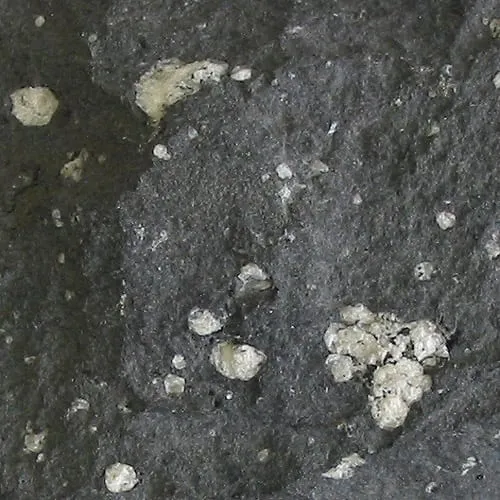
The rock of volcanic arcs, named after the Andes — and the pink-grey stone of Ankara Castle.
Augite (pyroxene)
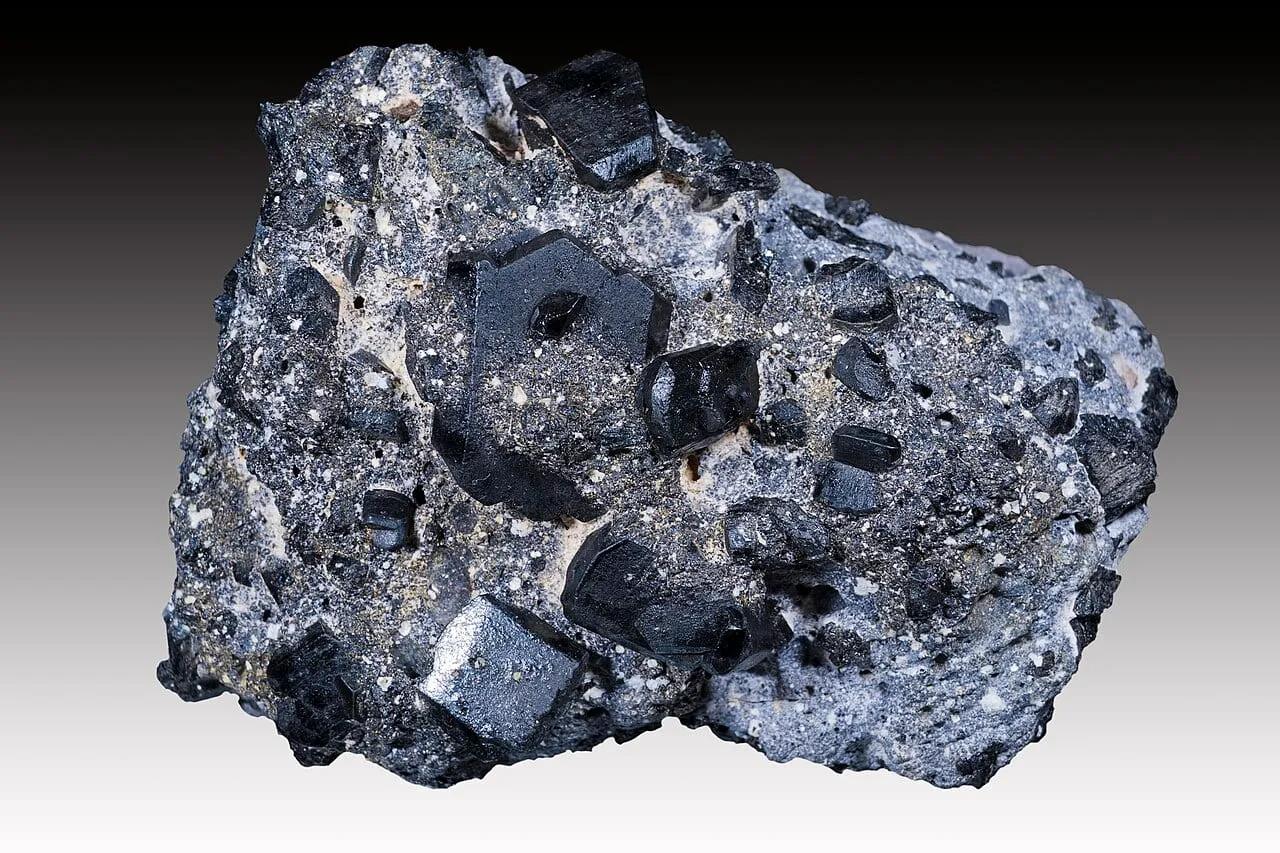
The most common pyroxene, which darkens basalt and gabbro: inconspicuous, yet one of the key building blocks of Earth’s crust.
Basalt
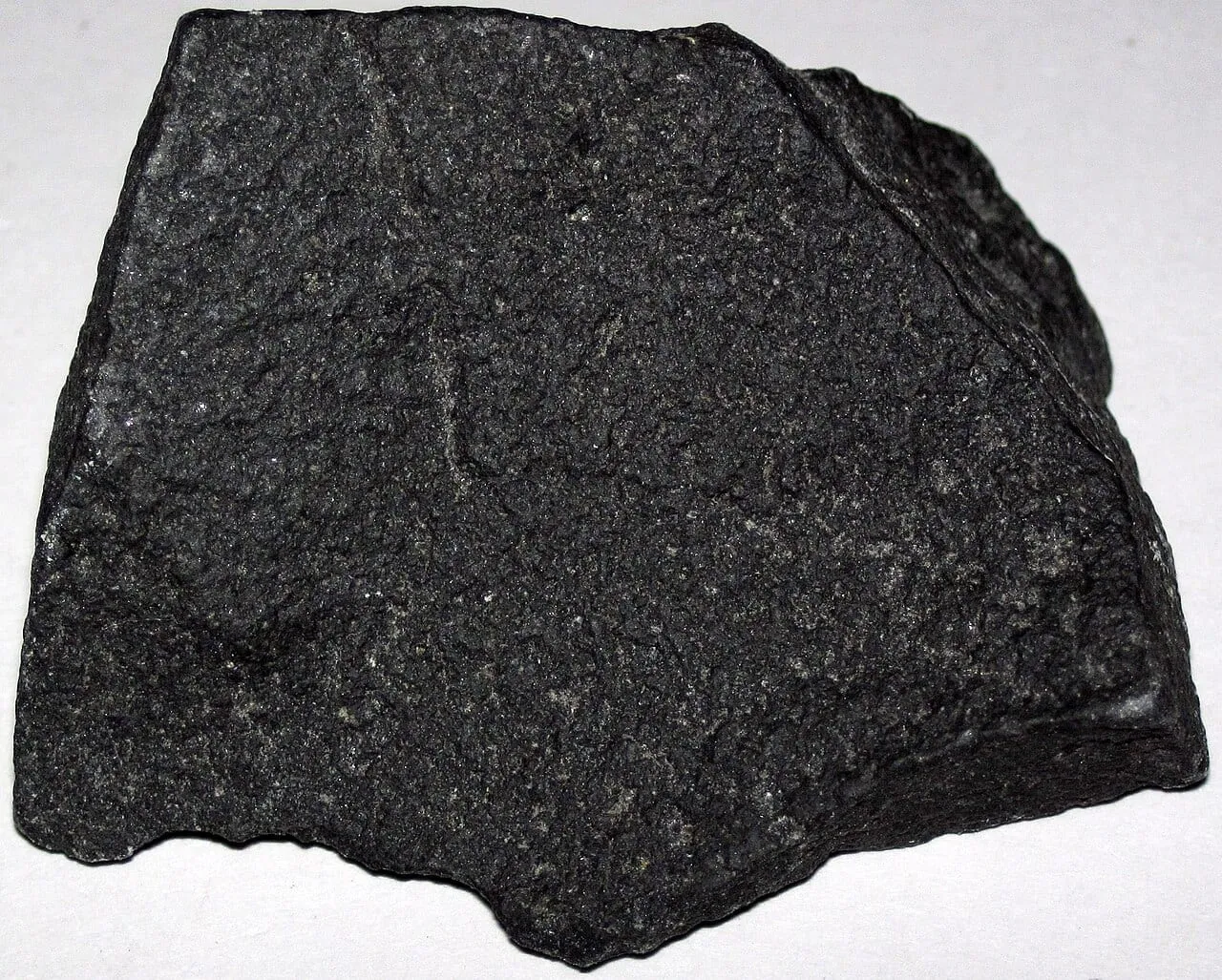
The rock of the ocean floors and the Moon’s dark plains — the most common volcanic rock on Earth.