Mineral
Haüyne
(Na,Ca)₄₋₈Al₆Si₆(O,S)₂₄(SO₄,Cl)₁₋₂Hauyn
Small, vivid blue grains glittering in volcanic rock: a gemstone rarely seen in cut form.
Also known as: Hauyne · Hauynite
- Popularly: Semi-precious stone

In short
Haüyne is a sodalite-group mineral made of sodium, calcium, aluminium, silicon, oxygen and sulfate. Its best-known colour is bright blue; it can also be white, grey, green or reddish. It occurs as small grains or crystals in silica-poor volcanic rocks such as phonolite. It was first described in 1807 from Vesuvian lavas of Monte Somma in Italy and named after the French crystallographer René Just Haüy. It is sometimes cut as a gemstone, but cut haüyne is very rare.
Photos
.jpg)
How does it form?
Haüyne forms in silica-poor volcanic rocks rich in leucite or nepheline, such as phonolite; less commonly it occurs in volcanic rocks without nepheline. It grows as small grains or crystals within the rock as the magma cools. That is why it occurs with nepheline, leucite, melilite, augite, sanidine, biotite and apatite. It is a member of the sodalite group, which also includes sodalite, nosean and lazurite.
According to the Handbook of Mineralogy, its best-known localities are the Alban Hills near Rome (Ariccia, Marino), Monte Somma and Monte Vulture in Italy, and the Mendig and Mayen area of the Eifel in Germany.
What is it used for?
- Gemstone: Its bright blue, transparent pieces are sometimes cut as gemstones; cut stones are rare and small.
- Collecting: Its vivid blue crystals in volcanic rock are sought by collectors.
What determines its value?
Haüyne is a rare gemstone whose value depends on the vividness of its colour, its transparency and its size. Cut stones are usually very small, and bright, saturated blue ones are sought by collectors. In rough form, specimens with bright blue crystals in volcanic rock are also valued in collections.
This information is educational, not buying, selling or investment advice. Value varies enormously with quality and treatment.
How to recognise it
- 1
Bright blue or greenish-blue small grains or crystals with a vitreous to greasy lustre.
- 2
Its crystals are dodecahedra or octahedron-like shapes and rarely exceed 3 cm.
- 3
Hardness 5.5–6; a steel knife scratches it only with difficulty.
- 4
Usually found in volcanic rocks such as phonolite, with nepheline, leucite and sanidine.
- 5
Some specimens glow reddish orange to purplish pink under long-wave ultraviolet light.
Fakes and imitations
What shops usually don’t tell you:
- Sodalite and lazurite are blue minerals of the same group, but they are usually found as masses. Haüyne mostly occurs as small, bright blue grains or crystals within volcanic rock. A certain distinction is made in the laboratory.
- Cut blue haüyne can be mistaken for sapphire or other blue stones; haüyne is much softer (Mohs 5.5–6) and has a lower refractive index (about 1.50).
Myths and misconceptions
MythBlue haüyne is a kind of sapphire.
FactHaüyne is a sodalite-group silicate mineral unrelated to sapphire. Sapphire is corundum and much harder (Mohs 9); haüyne has a hardness of 5.5–6.
Did you know?
It is named after René Just Haüy, regarded as one of the founders of crystallography.
Its crystals are generally small, growing up to 3 cm, which is why cut haüyne gems are usually tiny.
The Laacher See volcanic area in Germany's Eifel region is known for attractive, gem-quality blue haüyne.
Where is it found?
Loading map…
- Monte Somma (Vesuvius), Campania, Italy · Type localityHaüyne was first described in 1807 from samples found in the Vesuvian lavas of Monte Somma
- Laacher See, Eifel, Rhineland-Palatinate, Germany · Major depositThe Laacher See volcanic area yields attractive blue gem specimens; the Mendig and Mayen area is also known
- Alban Hills (Colli Albani), Lazio, Italy · Known localityHaüyne occurs at many places here, such as Ariccia and Marino
Locations are approximate to protect sites. Red dots mark places in Türkiye. Open in the big map →
Frequently asked questions
What is haüyne?
Haüyne is a sodalite-group mineral made of sodium, calcium, aluminium, silicon, oxygen and sulfate. Its best-known colour is bright blue; it can also be white, grey, green or reddish. It occurs as small grains or crystals in silica-poor volcanic rocks such as phonolite. It was first described in 1807 from Vesuvian lavas of Monte Somma in Italy and named after the French crystallographer René Just Haüy. It is sometimes cut as a gemstone, but cut haüyne is very rare.
Why is haüyne rarely seen as a gemstone?
Its crystals are generally small and occur as single grains within volcanic rocks. Pieces transparent and large enough to cut are scarce, and with a hardness of 5.5–6 it is relatively soft. Cut haüyne is therefore rare and mostly found in collections.
What is haüyne used for?
Gemstone: Its bright blue, transparent pieces are sometimes cut as gemstones; cut stones are rare and small. Collecting: Its vivid blue crystals in volcanic rock are sought by collectors.
How hard is haüyne?
It has a hardness of 5.5–6 on the Mohs scale. It can scratch glass; a steel knife scratches it only with difficulty. Its specific gravity is 2.44–2.5 g/cm³.
Where is haüyne found?
Its best-known localities: Monte Somma (Vesuvius), Campania, Italy; Laacher See, Eifel, Rhineland-Palatinate, Germany; Alban Hills (Colli Albani), Lazio, Italy.
How can you tell if haüyne is real?
Bright blue or greenish-blue small grains or crystals with a vitreous to greasy lustre. Its crystals are dodecahedra or octahedron-like shapes and rarely exceed 3 cm. Hardness 5.5–6; a steel knife scratches it only with difficulty. Sodalite and lazurite are blue minerals of the same group, but they are usually found as masses. Haüyne mostly occurs as small, bright blue grains or crystals within volcanic rock. A certain distinction is made in the laboratory.
Is haüyne valuable?
On the “street to diamond” value ladder it sits on step 4 of nine: Fine dimension stone and ore. Haüyne is a rare gemstone whose value depends on the vividness of its colour, its transparency and its size. Cut stones are usually very small, and bright, saturated blue ones are sought by collectors. In rough form, specimens with bright blue crystals in volcanic rock are also valued in collections.
Sources
- Haüyne · Wikipedia
- Handbook of Mineralogy: Haüyne · Mineralogical Society of America
External links
ReviewedLast checked: 4 October 2026
On the same step
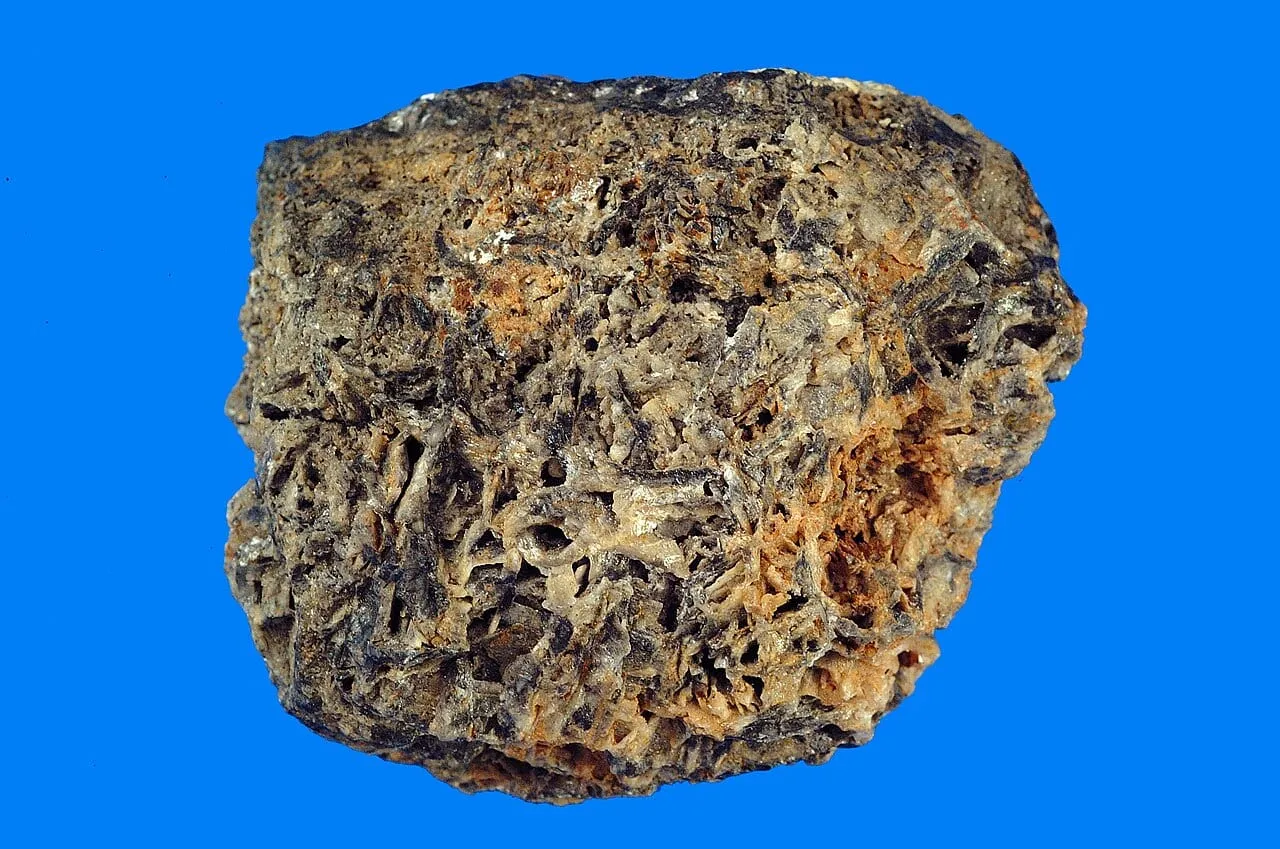
Anglesite
A heavy lead sulfate mineral with a diamond-like shine that grows as a crust around galena; it is named after the island of Anglesey in Wales.
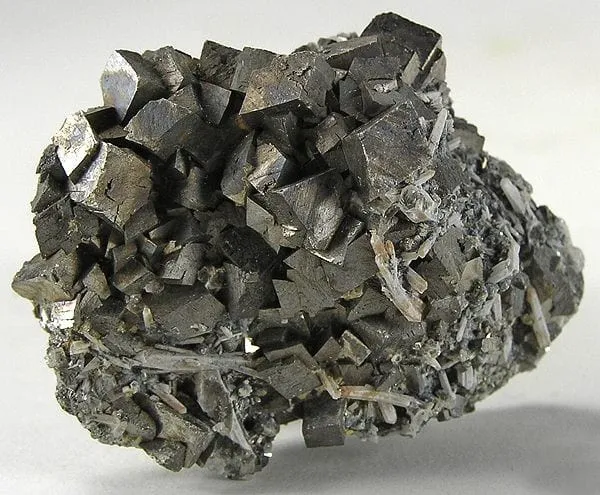
Arsenopyrite
A widespread silvery-grey sulfide containing arsenic: it smells of garlic when struck and is poisonous.
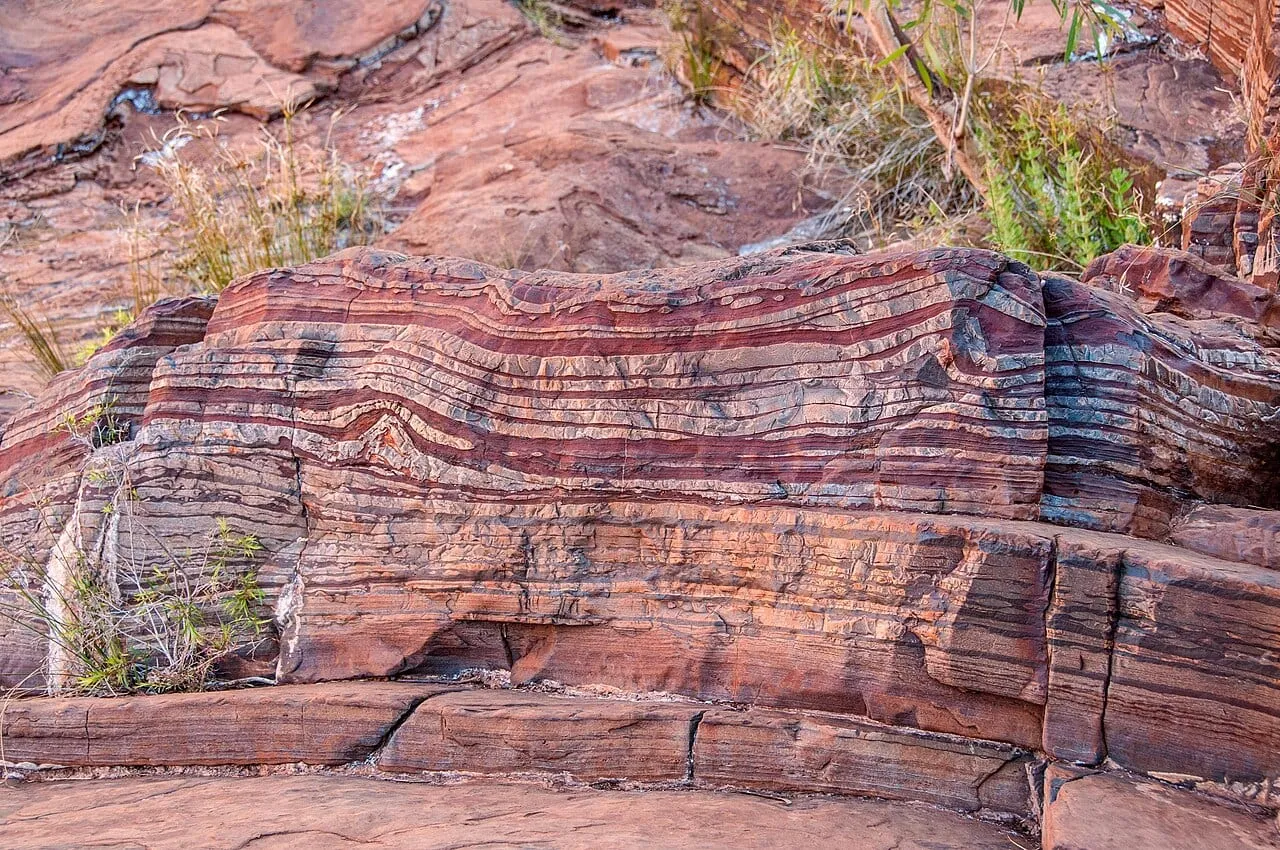
Banded iron formation
An ancient rock of alternating iron-oxide and chert bands: the record of oxygen beginning to build up on Earth, and the main source of iron ore.