Meteorite
Heat Shield Rock
Isı Kalkanı Kayası
The first meteorite found on another planet: a basketball-sized iron the rover Opportunity came across on Mars in 2005, next to its own heat shield.
Also known as: Meridiani Planum meteorite
- Popularly: Meteorite

In short
Heat Shield Rock is a basketball-sized iron–nickel meteorite found on the Meridiani Planum plain of Mars by NASA's Opportunity rover in January 2005. It got its name because it was found by chance near the rover's own discarded heat shield; the Meteoritical Society formally named it the “Meridiani Planum meteorite” in October 2005. It was the first meteorite found on another planet and the third found on another body in the Solar System.
Photos

How does it form?
Heat Shield Rock is an iron–nickel meteorite very like the IAB iron meteorites that fall on Earth. Meteorites like this come from the metal parts of asteroids formed early in the Solar System. This piece of metal drifting through space one day entered Mars’s atmosphere and fell to the surface. Passing through the atmosphere, its surface melted and wore away, forming thumbprint-like pits.
To survive largely undeformed, it must have hit at less than about 1.5 kilometres per second. When it fell is unknown; Meridiani Planum is thought to have once been covered by up to 1 kilometre of material that has since eroded away.
What is it used for?
- Mars’s past: Its impact speed and lack of rust give clues to the history of the Martian atmosphere and surface conditions.
- Planetary science: Meteorites found on other planets help study how meteorites are spread through the Solar System and how planetary surfaces weather.
- History of space exploration: As the first meteorite found on another planet, it has a special place in the history of space exploration.
How was it found?
After leaving Endurance crater, Opportunity was sent to examine the heat shield it had dropped during landing, and came across the meteorite by chance. Its Mini-TES spectrometer showed the rock was unusual; the APXS instrument measured its composition, and Mössbauer spectra confirmed that the iron was mainly metallic. This settled that the rock was an iron–nickel meteorite.
What determines its value?
Heat Shield Rock lies on Mars, so it is not a collector's item; its value is purely scientific. As the first meteorite found on another planet it has historic importance, and it tells us about the past of Mars's atmosphere and surface.
This information is educational, not buying, selling or investment advice. Value varies enormously with quality and treatment.
How to recognise it
- 1
Its surface shows regmaglypts, the thumbprint-like pits typical of meteorites that have passed through an atmosphere.
- 2
It first stood out because its infrared spectrum looked surprisingly like a reflection of the sky.
- 3
It is 93% iron and 7% nickel, very like IAB iron meteorites on Earth.
Myths and misconceptions
MythHeat Shield Rock is a “Martian meteorite”.
Fact“Martian meteorite” means rocks that broke off Mars and fell to Earth; ALH 84001 is a famous example. Heat Shield Rock is the opposite: a meteorite from space that fell on Mars and was found on Mars.
Did you know?
Opportunity's Rock Abrasion Tool was never used on it: tests on iron meteorites on Earth had shown the tool would be worn and damaged by iron–nickel alloy.
The only meteorites found earlier on another body in the Solar System were the millimetre-sized Bench Crater and Hadley Rille meteorites on the Moon.
After Heat Shield Rock, Opportunity found five more iron–nickel meteorites, Spirit two and Curiosity one.
Frequently asked questions
What is heat Shield Rock?
Heat Shield Rock is a basketball-sized iron–nickel meteorite found on the Meridiani Planum plain of Mars by NASA's Opportunity rover in January 2005. It got its name because it was found by chance near the rover's own discarded heat shield; the Meteoritical Society formally named it the “Meridiani Planum meteorite” in October 2005. It was the first meteorite found on another planet and the third found on another body in the Solar System.
What can a meteorite found on Mars tell us?
To survive largely undeformed, it must have hit Mars at less than about 1.5 kilometres per second, which gives a clue to how dense the Martian atmosphere was when it fell. Its lack of rust also says something about surface conditions, though when it fell is not known.
What is heat Shield Rock used for?
Mars's past: Its impact speed and lack of rust give clues to the history of the Martian atmosphere and surface conditions. Planetary science: Meteorites found on other planets help study how meteorites are spread through the Solar System and how planetary surfaces weather. History of space exploration: As the first meteorite found on another planet, it has a special place in the history of space exploration.
How hard is heat Shield Rock?
It has a hardness of 4–5.5 on the Mohs scale. A fingernail cannot scratch it, but a steel knife can. Its specific gravity is 7–8 g/cm³.
How can you tell if heat Shield Rock is real?
Its surface shows regmaglypts, the thumbprint-like pits typical of meteorites that have passed through an atmosphere. It first stood out because its infrared spectrum looked surprisingly like a reflection of the sky. It is 93% iron and 7% nickel, very like IAB iron meteorites on Earth.
Is heat Shield Rock valuable?
On the “street to diamond” value ladder it sits on step 6 of nine: Fine ornamental and collector stone. Heat Shield Rock lies on Mars, so it is not a collector's item; its value is purely scientific. As the first meteorite found on another planet it has historic importance, and it tells us about the past of Mars's atmosphere and surface.
Sources
- Heat Shield Rock · Wikipedia
- Isı Kalkanı Kayası · Vikipedi
- Kamacite Mineral Data · Webmineral.com
- Taenite Mineral Data · Webmineral.com
- Density and specific gravity (R. L. Korotev) · Washington University in St. Louis, Some Meteorite Information
External links
Draft: awaiting expert reviewReport an error
On the same step
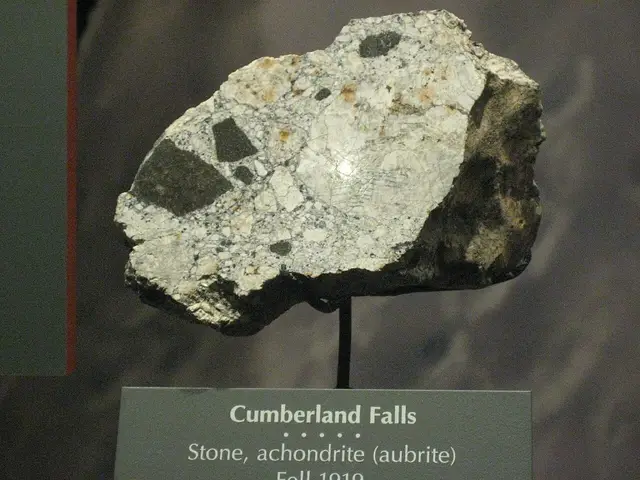
Achondrite
Stony meteorites with no chondrules: rock from melted asteroids, the Moon and Mars, and hard to recognise because they look like Earth rocks.
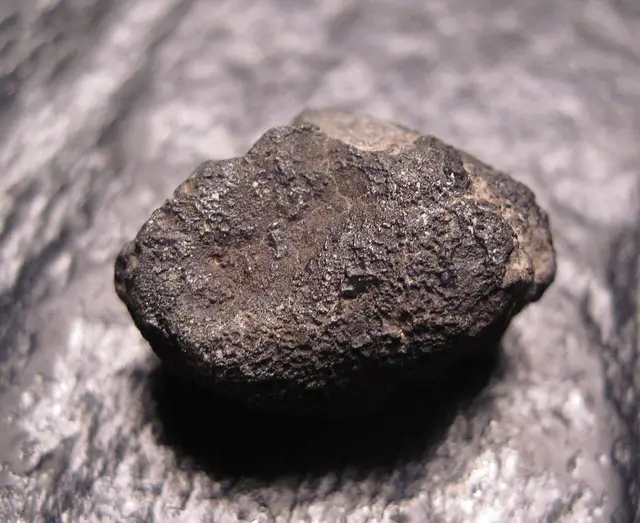
Allende meteorite
The most studied meteorite in history: the largest carbonaceous chondrite, which fell in Mexico in 1969 carrying the first solids of the Solar System.
Amber
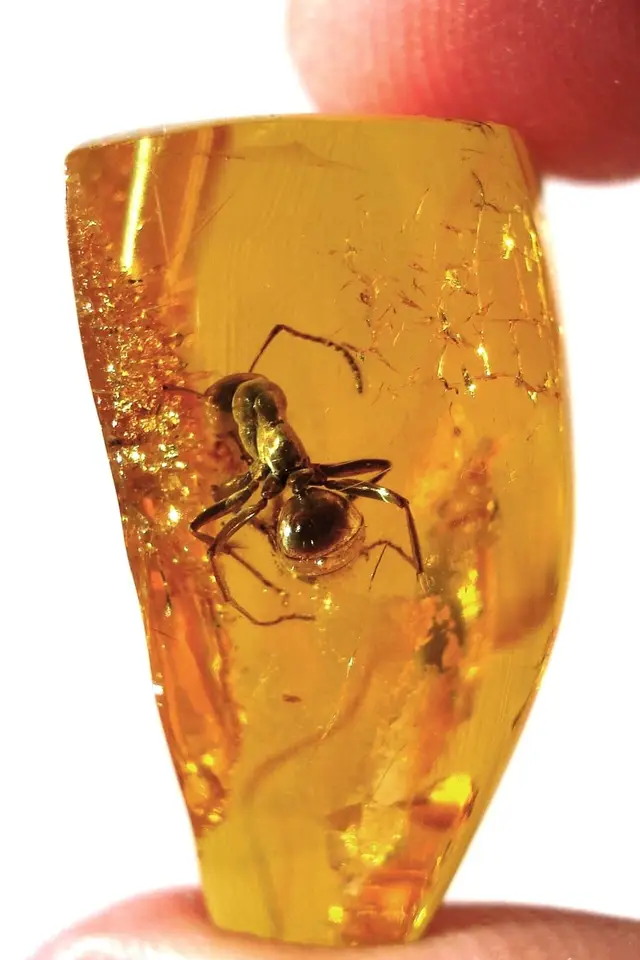
Tree resin fossilised over millions of years: a light, warm organic gem that sometimes holds prehistoric insects.