VarietyA variety of Pearl
Cultured pearl
Kültür incisi
A pearl started by people but grown with nacre inside a living oyster or mussel, just like a natural one: the great majority of pearls sold today.
- Popularly: Semi-precious stone
In short
A cultured pearl begins on a pearl farm, when a technician places a small piece of mantle (the tissue that builds the shell) and, usually, a bead carved from shell inside an oyster or mussel. The animal does the rest, coating the implant with thin layers of nacre over months or years. A cultured pearl is therefore not an imitation but a real pearl; what sets it apart from a natural pearl is that people started the process. Today the great majority of pearls on the market are cultured.
Photos
How does it form?
A cultured pearl starts on a pearl farm. In saltwater oysters, a technician takes a small piece of mantle (the tissue that makes the shell and its nacre) from another, sacrificed oyster and inserts it, together with a polished bead carved from shell, into the reproductive organ of the host oyster. Cells from the mantle piece form a pearl sac around the bead and begin coating it with nacre, layer after layer. Meanwhile the oysters are kept in the sea, hanging from nets and ropes, and their shells are cleaned regularly. Akoya pearls are usually harvested after a year, Tahitian and South Sea pearls after two to four years.
Freshwater mussels are mostly cultured without a bead: only small pieces of tissue are inserted into the mussel’s mantle. Because 25 to 30 pieces can be placed in a single mussel this way, one mussel yields many pearls, and these pearls are nacre all the way through. In a natural pearl, by contrast, the process is started not by a person but by a tiny parasite entering the mantle or by damage to the tissue (see pearl).
What is it used for?
- Jewellery: most of the pearls seen today in necklaces, earrings, rings and brooches are cultured pearls.
- Mabe (half pearls): a half-dome nucleus is placed against the inside of the shell, and when the oyster coats it with nacre a blister forms, attached to the shell. The nacre dome is cut from the shell, the nucleus removed, the cavity filled with materials such as resin and a piece of polished shell added as a back. These assembled half pearls are used in rings and earrings.
- Keshi: small and often irregular pearls made entirely of nacre, which form when something goes wrong in culturing, for instance when the oyster rejects the bead and a pearl grows around the remaining tissue.
- Traceability: some farms are experimenting with a radio-frequency identification (RFID) chip inside the bead nucleus, so that a pearl’s farm of origin can be traced.
Main types
- Akoya: grown in Japan and China in the Pinctada fucata oyster. Small, usually white or cream, lustrous pearls; the pearl of the classic pearl necklace.
- South Sea: grown in Australia, Indonesia and the Philippines in the Pinctada maxima oyster. White, silvery or golden, they are prized for their large size and thick nacre.
- Tahitian: grown in French Polynesia in the black-lipped pearl oyster (Pinctada margaritifera). Their grey, black or brown body colour carries green, blue, purple and pink overtones.
- Freshwater: mostly grown in China, in mussels kept in lakes and ponds. The most plentiful cultured pearl, in a very wide range of sizes, shapes and colours.
A short history
The first steps towards pearl culture were taken in China centuries ago. The modern method was developed in Australia by the British biologist William Saville-Kent and brought to Japan by Tatsuhei Mise and Tokichi Nishikawa; Nishikawa received the patent in 1916, and in the same year the method was applied to Akoya oysters in Japan. Freshwater pearls were cultured at Lake Biwa in Japan from 1914, and in 1917 the technique was tried on the South Sea pearl oyster in the Philippines. According to GIA, cultured pearls became commercially important in the 1920s, as natural pearl production declined, and between the 1930s and the 1980s pearl culture spread to other countries. In 2010 China overtook Japan in Akoya pearl production.
What determines its value?
Seven factors set the value of a cultured pearl: size, shape, colour, lustre, surface quality, nacre quality and how well the pearls in a strand match; GIA often counts lustre as the most important. In bead-nucleated pearls, the thickness of the nacre governs both lustre and durability, and thin-nacred pearls whose nucleus shows through or that look chalky are worth less. The type matters too: freshwater cultured pearls are the most plentiful, while large, thick-nacred South Sea and Tahitian pearls are among the most valuable. Treatments such as dyeing and irradiation should be disclosed.
This information is educational, not buying, selling or investment advice. Value varies enormously with quality and treatment.
How to recognise it
- 1
Like natural pearls, cultured pearls are made of nacre, so two of them rubbed together feel slightly gritty, while glass and plastic imitations feel completely smooth. This test does not separate cultured from natural pearls.
- 2
In bead-nucleated pearls, a loupe at the drill hole may show the boundary between the nacre and the shell bead inside. If the nucleus shows through the nacre, or the pearl looks dull and chalky, the nacre is thin.
- 3
Akoya pearls are small, mostly 6–8 mm across, and Akoya pearls larger than 10 mm are very rare; Tahitian and South Sea pearls are usually much larger.
- 4
Whether a pearl is natural or cultured can only be settled with X-rays: a bead-nucleated cultured pearl shows a solid centre without growth rings, while a natural pearl shows concentric growth rings.
Fakes and imitations
What shops usually don’t tell you:
- Imitation pearls: glass beads coated with a solution made from fish scales, or beads made of mother-of-pearl, coral or conch shell (“shell pearls”). They are not cultured pearls; they never grew inside a living animal.
- Dyed and irradiated pearls: since the early 1900s small, light-coloured Akoya pearls have been dyed black with silver nitrate solutions, and darkening by gamma irradiation has been used since the 1950s. These treatments are hard to see with the naked eye and should be disclosed by the seller.
- Cultured pearls sold as “natural”: the difference cannot be seen by eye, so a claim that a pearl is natural should be backed by a gemmological laboratory report.
Myths and misconceptions
MythA cultured pearl is a fake or plastic pearl.
FactA cultured pearl grows inside a living mollusc from the same material as a natural pearl, nacre; people only start the process. The so-called fake pearls are imitations: coated glass, plastic or shell beads.
MythMikimoto invented the cultured pearl.
FactMikimoto produced hemispherical cultured pearls in 1893 and made cultured pearls famous worldwide, but the method used to grow round pearls was developed by the British biologist William Saville-Kent and by Tatsuhei Mise and Tokichi Nishikawa in Japan. Nishikawa was granted the patent in 1916, and Mikimoto adopted the method afterwards.
MythA cultured pearl can be told from a natural one with the tooth test or a loupe.
FactBoth are made of nacre, so both feel gritty against the teeth or against each other. Whether a pearl is natural or cultured can only be settled in a gemmological laboratory, by looking at its internal structure with X-rays.
Did you know?
On 11 July 1893, after many failures and near bankruptcy, Kokichi Mikimoto obtained his first hemispherical cultured pearls. Commercial harvests of fully round pearls only became possible in the 1920s.
By 1935 Japan had 350 pearl farms producing about 10 million cultured pearls a year.
The bead nucleus of a saltwater cultured pearl is usually carved from the shell of freshwater mussels, often from the Mississippi River basin in the United States or from China. So a Tahitian pearl may have the shell of an American river mussel at its heart.
In China during the Song dynasty (960–1279), small Buddha figures made of lead were placed inside freshwater mussels, which coated them with nacre; this counts among the earliest known examples of pearl culture.
Where is it found?
Loading map…
- Ago Bay, Mie Prefecture, Japan · Historic sourceKokichi Mikimoto obtained his first hemispherical cultured pearls in this area in 1893; in 2006 Ago Bay and its surroundings produced a third of Japan’s cultured pearls.
- Uwajima, Ehime Prefecture, Japan · Known localityFishing, aquaculture and cultured pearls, all making use of the ria coastline, are the mainstay of the local economy.
- Zhuji, Zhejiang, China · Major depositKnown as “the Pearl City”, Zhuji has China’s largest pearl trading market and is one of the main centres of freshwater cultured pearl production.
- Tuamotu Archipelago, French Polynesia · Major depositThe main growing area of Tahitian cultured pearls, farmed in the black-lipped pearl oyster (Pinctada margaritifera).
- Broome, Western Australia · Major depositPearling here began with the harvesting of oysters for mother-of-pearl in the 1880s and has grown into large South Sea cultured pearl farms.
- Buton Island, Southeast Sulawesi, Indonesia · Historic sourceMitsubishi’s Baron Iwasaki applied pearl culture to the South Sea pearl oyster in 1917 in the Philippines and later in Buton and Palau; the first small commercial crop came in 1928.
Locations are approximate to protect sites. Red dots mark places in Türkiye. Open in the big map →
Frequently asked questions
What is cultured pearl?
A cultured pearl begins on a pearl farm, when a technician places a small piece of mantle (the tissue that builds the shell) and, usually, a bead carved from shell inside an oyster or mussel. The animal does the rest, coating the implant with thin layers of nacre over months or years. A cultured pearl is therefore not an imitation but a real pearl; what sets it apart from a natural pearl is that people started the process. Today the great majority of pearls on the market are cultured.
What is cultured pearl used for?
Jewellery: most of the pearls seen today in necklaces, earrings, rings and brooches are cultured pearls. Mabe (half pearls): a half-dome nucleus is placed against the inside of the shell, and when the oyster coats it with nacre a blister forms, attached to the shell. The nacre dome is cut from the shell, the nucleus removed, the cavity filled with materials such as resin and a piece of polished shell added as a back. These assembled half pearls are used in rings and earrings.
How hard is cultured pearl?
It has a hardness of 2.5–3 on the Mohs scale. A fingernail cannot scratch it, but a steel knife can. Its specific gravity is 2.72–2.78 g/cm³.
Where is cultured pearl found?
Its best-known localities: Zhuji, Zhejiang, China; Tuamotu Archipelago, French Polynesia; Broome, Western Australia; Ago Bay, Mie Prefecture, Japan; Buton Island, Southeast Sulawesi, Indonesia.
How can you tell if cultured pearl is real?
Like natural pearls, cultured pearls are made of nacre, so two of them rubbed together feel slightly gritty, while glass and plastic imitations feel completely smooth. This test does not separate cultured from natural pearls. In bead-nucleated pearls, a loupe at the drill hole may show the boundary between the nacre and the shell bead inside. If the nucleus shows through the nacre, or the pearl looks dull and chalky, the nacre is thin. Akoya pearls are small, mostly 6–8 mm across, and Akoya pearls larger than 10 mm are very rare; Tahitian and South Sea pearls are usually much larger. Imitation pearls: glass beads coated with a solution made from fish scales, or beads made of mother-of-pearl, coral or conch shell (“shell pearls”). They are not cultured pearls; they never grew inside a living animal.
Is cultured pearl valuable?
On the “street to diamond” value ladder it sits on step 6 of nine: Fine ornamental and collector stone. Seven factors set the value of a cultured pearl: size, shape, colour, lustre, surface quality, nacre quality and how well the pearls in a strand match; GIA often counts lustre as the most important. In bead-nucleated pearls, the thickness of the nacre governs both lustre and durability, and thin-nacred pearls whose nucleus shows through or that look chalky are worth less. The type matters too: freshwater cultured pearls are the most plentiful, while large, thick-nacred South Sea and Tahitian pearls are among the most valuable. Treatments such as dyeing and irradiation should be disclosed.
Family

.JPG)
Sources
- Pearl Description (Gem Encyclopedia) · Gemological Institute of America (GIA)
- Pearl Quality Factors · Gemological Institute of America (GIA)
- Pearl History and Lore · Gemological Institute of America (GIA)
- Polynesian Black Pearls (M. Goebel & D. M. Dirlam), Gems & Gemology 25(3) · GIA, 1989
- Continuity and Change in Chinese Freshwater Pearl Culture (D. Fiske & J. Shepherd), Gems & Gemology 43(2) · GIA, 2007
- Lab Notes: Assembled Bead-Cultured Half Pearl, Gems & Gemology 61(1) · GIA, 2025
- Freshwater Pearl Culture in China (Hua Dan, Gu Ruobo & Wen Haibo) · Global Aquaculture Advocate (Global Seafood Alliance), 2003
- Cultured pearl · Wikipedia
- Pearl · Wikipedia
- Kōkichi Mikimoto · Wikipedia
- Ago Bay · Wikipedia
- Uwajima, Ehime · Wikipedia
- Zhuji · Wikipedia
- South Sea pearl · Wikipedia
- Broome, Western Australia · Wikipedia
- Buton Island · Wikipedia
- La perle de Tahiti (note de l'Institut d'émission) · Institut d'émission d'outre-mer (IEOM), 2006
- Greft İmplantasyonunda İnci Kesesi Oluşumunun Dört Midye Türünde (Unionidae) Karşılaştırılması (H. Şereflişan), Türk Tarım – Gıda Bilim ve Teknoloji Dergisi 7(10) · Turkish Science and Technology Publishing, 2019
External links
Draft: awaiting expert reviewReport an error
On the same step
Achondrite
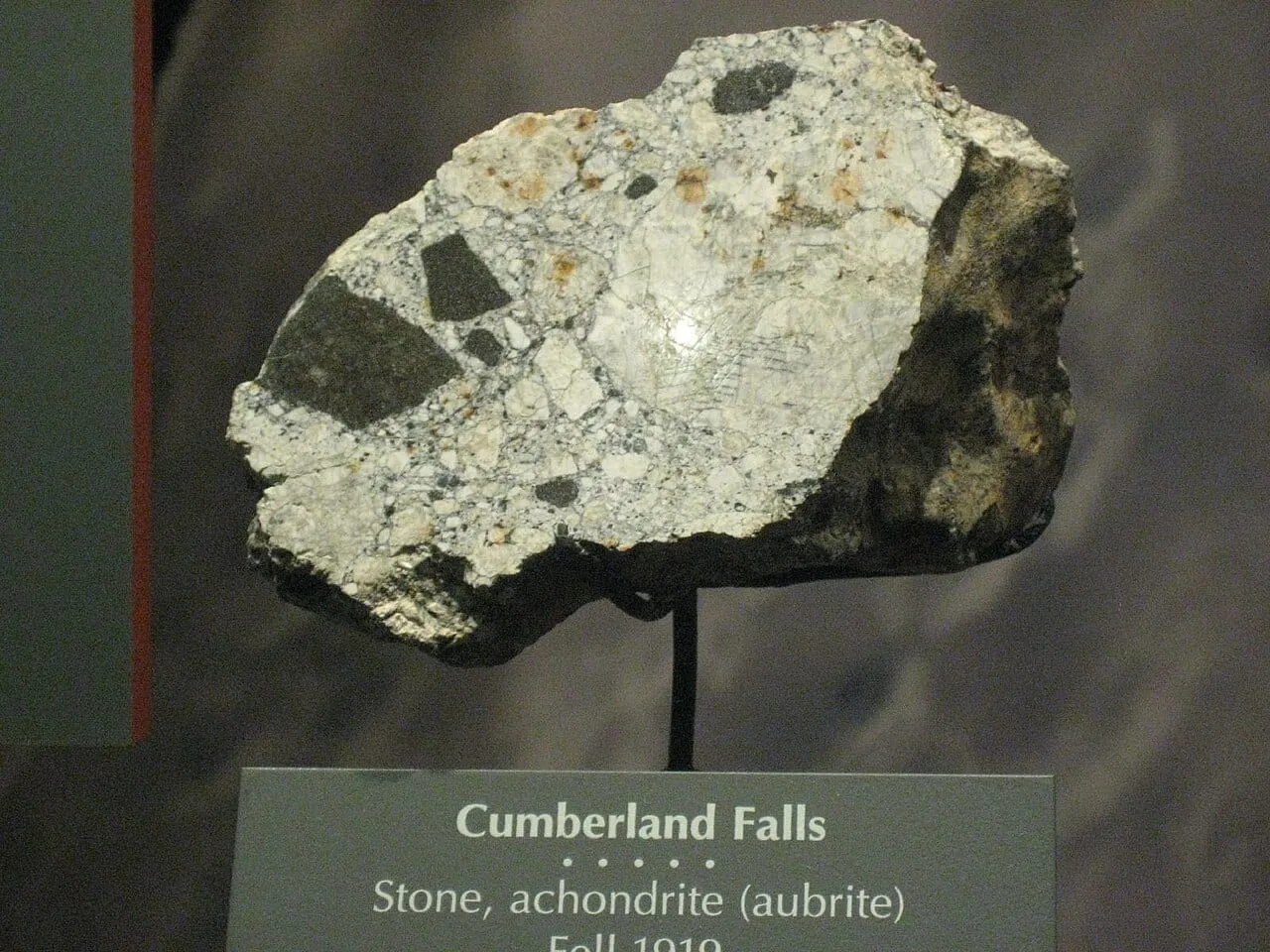
Stony meteorites with no chondrules: rock from melted asteroids, the Moon and Mars, and hard to recognise because they look like Earth rocks.
Amber
Tree resin fossilised over millions of years: a light, warm organic gem that sometimes holds prehistoric insects.
Ammolite
The rainbow-bright layer of fossil ammonite shell; of gem quality it comes only from the Canadian province of Alberta.