Mineral
Danburite
CaB₂(SiO₄)₂Danburit
A colourless or pale yellow, topaz-like collector gem named after Danbury, the US town where it was first found.
- Popularly: Semi-precious stone
- Gemstone

In short
Danburite is a mineral containing calcium, boron and silicon. It is mostly colourless like quartz; pale yellow, honey-yellow, yellowish-brown and pale pink examples also occur. Its crystals resemble topaz, but topaz is a different mineral. Its hardness (7–7.5), lack of a distinct cleavage and strong dispersion of light make it suitable for cutting as a faceted stone; even so, it remains a relatively little-known collector gem.
Photos

How does it form?
Danburite forms in granites and metamorphosed carbonate rocks through the action of hot fluids (hydrothermal activity); it is also found in rocks left by evaporation. It typically occurs in contact-metamorphic rocks. Minerals such as titanite, axinite, tourmaline, mica, quartz, grossular, albite, fluorite and apophyllite may grow with it.
What is it used for?
- Jewellery: Clear, clean crystals are cut as faceted stones. Because of its hardness and the lack of a distinct cleavage, it is also suitable for jewellery such as rings and bracelets.
- Collecting: Well-formed clusters of long prismatic crystals attract mineral collectors.
Likeness to topaz
The crystal form and symmetry of danburite resemble topaz, yet topaz is a nesosilicate containing aluminium and fluorine. The structure of danburite is read differently by different classification systems: the Dana classification counts it as a sorosilicate, the Strunz classification as a tectosilicate.
What determines its value?
What matters most in danburite is clarity and colour: fully colourless stones are sought after more than pale yellow or slightly pink ones. Cut quality and size also count; the strong dispersion of light adds brilliance to a good cut. Danburite is mostly untreated, although irradiation has been applied to some Russian crystals.
This information is educational, not buying, selling or investment advice. Value varies enormously with quality and treatment.
How to recognise it
- 1
It is often colourless or very pale yellow; honey-yellow, yellowish-brown and pale pink examples also occur. At first glance it can look like quartz.
- 2
Its crystals are prismatic with a rhomb-like or square cross-section, a shape that resembles topaz crystals.
- 3
Its hardness is 7–7.5; its cleavage is indistinct, and when broken it gives uneven to subconchoidal surfaces. That makes it durable in jewellery.
- 4
It splits light strongly into its colours (dispersion); a well-cut stone sparkles vividly.
- 5
Most danburite glows sky-blue under long-wave ultraviolet light (fluorescence); but this varies with the place it comes from, and some examples show none.
Fakes and imitations
What shops usually don’t tell you:
- Irradiated danburite: some Russian danburite has been given a stable irradiation treatment to improve its colour.
Myths and misconceptions
MythDanburite is a kind of topaz.
FactDanburite is a silicate containing calcium and boron, while topaz is a separate mineral containing aluminium and fluorine. The shapes of their crystals are similar, but their chemical compositions and structures are different.
What is it believed to be good for?
This section reports beliefs; it is not health information. There is no scientific evidence for these claims and no stone replaces medical treatment.
The meanings people give this stone, and who holds them:
- Today crystal-therapy practitioners regard danburite as a “stone of enlightenment”, link it with the heart and crown chakras, and claim that it eases fear and stress and gives calm, patience and love.
- Some sources claim that danburite makes it easier to communicate with spiritual beings such as angels and raises spiritual awareness.
What science says
There is no scientific evidence that danburite eases fear and stress or allows communication with spiritual beings; lasting anxiety and stress call for help from a professional. The stone's known real qualities are its hardness, clarity and strong dispersion of light.
Did you know?
Its name comes from Danbury in the US state of Connecticut, where it was first found; the mineral was discovered in 1839 by Charles Upham Shepard.
Its crystals can grow very large: danburite prisms reach 50 cm, and very large crystals have been reported from Madagascar.
In the summer of 2015, honey-yellow danburite was found in the Bai Cat placer deposit in the Luc Yen area of Vietnam; a clean 4.6-carat stone with no flaws visible to the eye was cut from a 26.3-carat rough crystal.
Where is it found?
Loading map…
- Danbury, Connecticut, USA · Type localityThe mineral was found here in 1839 and takes its name from the town
- Charcas, San Luis Potosí, Mexico · Major depositOne of the main known sources of gem-quality danburite
- Anjanabonoina and Mt. Bity area (Betafo), Madagascar · Major depositVery large crystals and gem-quality material
- Mogok, Mandalay Region, Myanmar · Known localityColourless and yellow danburite
- Luc Yen, Yen Bai, Vietnam · Known localityHoney-yellow danburite was found in the Bai Cat placer deposit in the summer of 2015
- Dalnegorsk, Primorsky Krai, Russia · Known localityA danburite locality named in the Handbook of Mineralogy
- Russell, St. Lawrence County, New York, USA · Known localityA danburite locality named in the Handbook of Mineralogy
Locations are approximate to protect sites. Red dots mark places in Türkiye. Open in the big map →
Frequently asked questions
What is danburite?
Danburite is a mineral containing calcium, boron and silicon. It is mostly colourless like quartz; pale yellow, honey-yellow, yellowish-brown and pale pink examples also occur. Its crystals resemble topaz, but topaz is a different mineral. Its hardness (7–7.5), lack of a distinct cleavage and strong dispersion of light make it suitable for cutting as a faceted stone; even so, it remains a relatively little-known collector gem.
What is danburite used for?
Jewellery: Clear, clean crystals are cut as faceted stones. Because of its hardness and the lack of a distinct cleavage, it is also suitable for jewellery such as rings and bracelets. Collecting: Well-formed clusters of long prismatic crystals attract mineral collectors.
How hard is danburite?
It has a hardness of 7–7.5 on the Mohs scale. It scratches glass and steel; a steel knife cannot scratch it. Its specific gravity is 2.93–3.02 g/cm³.
Where is danburite found?
Its best-known localities: Danbury, Connecticut, USA; Charcas, San Luis Potosí, Mexico; Anjanabonoina and Mt. Bity area (Betafo), Madagascar; Mogok, Mandalay Region, Myanmar; Luc Yen, Yen Bai, Vietnam.
How can you tell if danburite is real?
It is often colourless or very pale yellow; honey-yellow, yellowish-brown and pale pink examples also occur. At first glance it can look like quartz. Its crystals are prismatic with a rhomb-like or square cross-section, a shape that resembles topaz crystals. Its hardness is 7–7.5; its cleavage is indistinct, and when broken it gives uneven to subconchoidal surfaces. That makes it durable in jewellery. Irradiated danburite: some Russian danburite has been given a stable irradiation treatment to improve its colour.
Is danburite valuable?
On the “street to diamond” value ladder it sits on step 6 of nine: Fine ornamental and collector stone. What matters most in danburite is clarity and colour: fully colourless stones are sought after more than pale yellow or slightly pink ones. Cut quality and size also count; the strong dispersion of light adds brilliance to a good cut. Danburite is mostly untreated, although irradiation has been applied to some Russian crystals.
What is danburite good for?
Today crystal-therapy practitioners regard danburite as a “stone of enlightenment”, link it with the heart and crown chakras, and claim that it eases fear and stress and gives calm, patience and love. Some sources claim that danburite makes it easier to communicate with spiritual beings such as angels and raises spiritual awareness. There is no scientific evidence that danburite eases fear and stress or allows communication with spiritual beings; lasting anxiety and stress call for help from a professional. The stone's known real qualities are its hardness, clarity and strong dispersion of light. This section reports beliefs; it is not health information. There is no scientific evidence for these claims and no stone replaces medical treatment.
Sources
- Handbook of Mineralogy: Danburite · Mineralogical Society of America
- Danburite · Wikipedia
- A New Find of Danburite in the Luc Yen Mining Area, Vietnam, Gems & Gemology Winter 2016 · GIA, 2016
- Danburite Jewelry and Gemstone Information · International Gem Society
External links
Draft: awaiting expert reviewReport an error ↗
On the same step
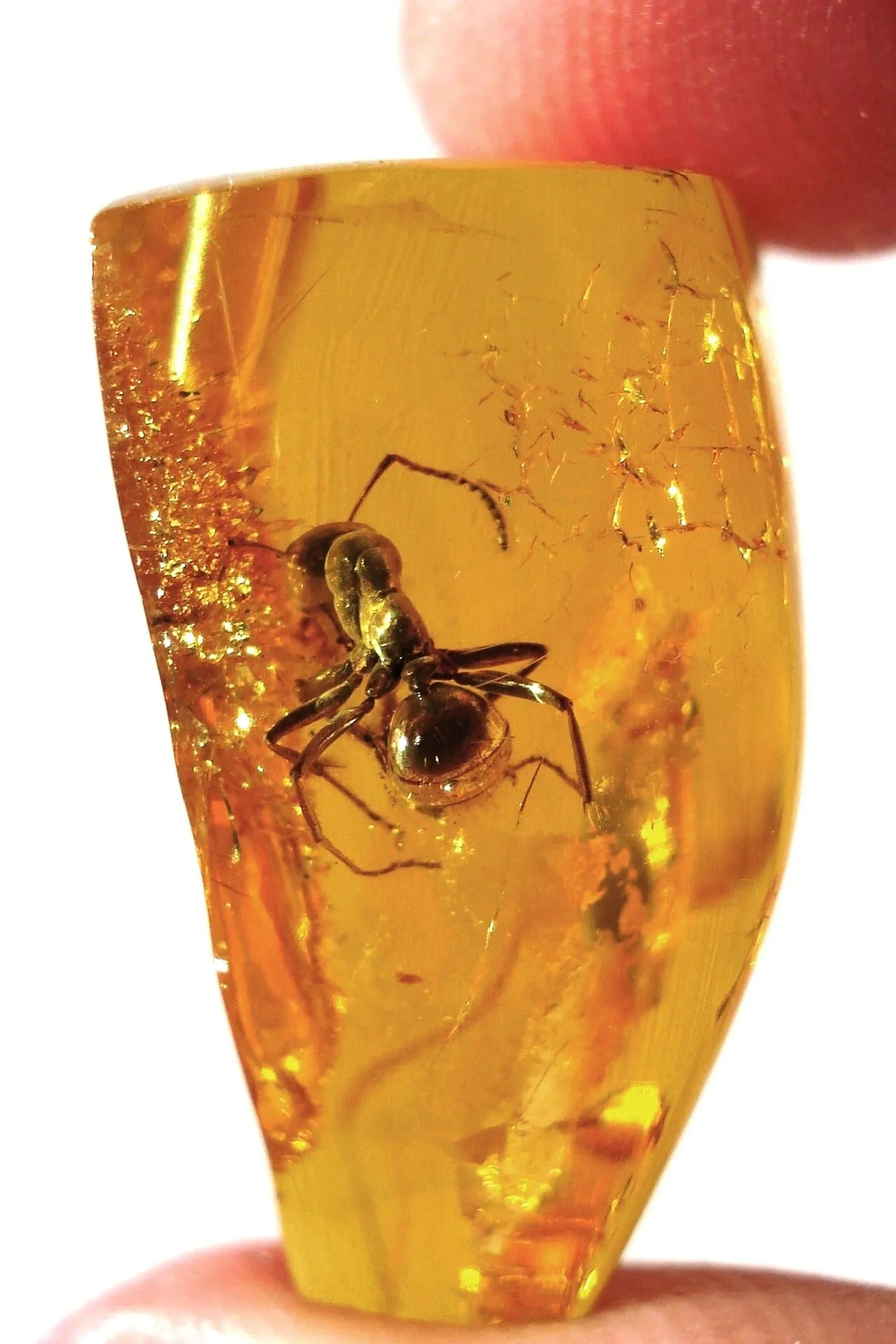
Amber
Tree resin fossilised over millions of years: a light, warm organic gem that sometimes holds prehistoric insects.
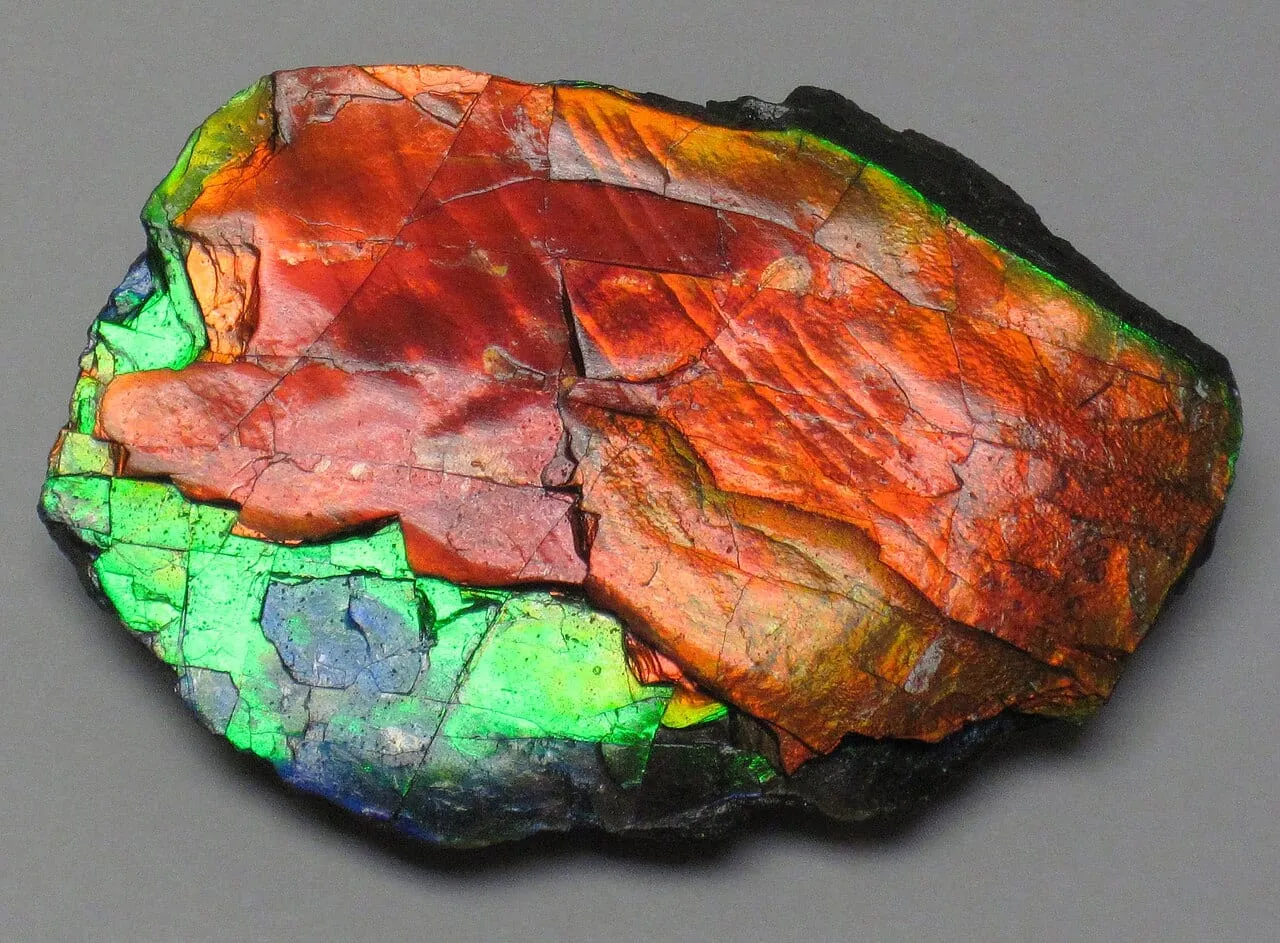
Ammolite
The rainbow-bright layer of fossil ammonite shell; of gem quality it comes only from the Canadian province of Alberta.
Aquamarine
The blue member of the beryl family, named after seawater: often found as large, clear, nearly flawless crystals.