VarietyA variety of Quartz
Blue quartz
SiO₂Mavi kuvars
A rare quartz that is blue for the same reason as the sky: mineral particles too small to see scatter the blue part of light.
- Popularly: Semi-precious stone
In short
Blue quartz is a variety of quartz coloured from pale sky blue to dark greyish blue. Blue is a rare colour for quartz. In most cases it does not come from a pigment but from submicroscopic particles of ilmenite, rutile or mica scattered through the quartz, which scatter the blue wavelengths of light; this is the same effect that makes the sky blue. It is found mostly as blue grains inside rocks such as granite, rhyolite, gneiss and charnockite; free crystals are uncommon.
Photos
How does it form?
Blue quartz is found mostly as rock-forming grains in rocks that crystallised from magma or were later transformed by high temperature and pressure. According to a study published in 2011, such quartz is rich in titanium and crystallised at about 700–900 °C. As the crystal grows, or later as it cools, submicroscopic particles of ilmenite, rutile and mica form inside it. Just as in the sky, these particles scatter the short-wavelength blue part of light more than the other colours, so the quartz looks blue; this is called Rayleigh scattering.
A 1988 study of the llanite of Texas showed that the blue colour comes from countless submicroscopic ilmenite inclusions that crystallised from the magma, while larger, ribbon-shaped ilmenite inclusions create a cat’s-eye shimmer in some directions. Researchers in Virginia reported that some inclusion-free blue quartz is also heavily fractured, and that the depth of colour may be linked to the fracturing. In the crystals from Antequera in Spain, the colour comes from fibrous magnesioriebeckite inclusions.
What is it used for?
- Science: because of its microscopic inclusions and the high temperatures at which it formed, blue quartz interests researchers studying the history of rocks.
- Collecting: the intensely blue crystals of Antequera and specimens showing a star effect have a place in collections.
- Decoration: polished slices of rocks with blue quartz grains, such as llanite, are used decoratively.
Where is it found?
Blue quartz has been reported from many parts of the world. In the United States its best-known examples are in the Llano Uplift of Texas, in the llanite dikes cut by State Highway 16 about 9 miles (15 km) north of the town of Llano. In Virginia most of it lies in the metamorphosed igneous rocks of the Blue Ridge Complex. It occurs in pegmatites of the Cape Ann granite at Rockport, Massachusetts, and in a diorite near Tony, Wisconsin. Blue quartz grains have been reported in the charnockites and gneisses of the former Mysore Province in India and in metamorphosed sedimentary rocks in Norway. Opaque “dumortierite quartz”, which contains blue dumortierite needles, is a different stone; for it see the dumortierite page, and for quartz in general the quartz page.
What determines its value?
Most blue quartz occurs as small grains inside rocks and has no value as an ornamental stone on its own; its value comes more from its scientific and collecting interest. Depth of colour, grain size and transparency set its value. Intensely blue, translucent crystals from Antequera in Spain and specimens showing a star or cat's-eye effect are sought by collectors. Rocks with blue quartz grains, such as llanite, take on a decorative look when polished.
This information is educational, not buying, selling or investment advice. Value varies enormously with quality and treatment.
How to recognise it
- 1
It appears as translucent grains or small crystals inside rock, from pale sky blue to dark greyish blue.
- 2
Its lustre is waxy or greasy with a slightly milky opalescence; this is stronger in pale blue specimens.
- 3
Like quartz it is hard (7), breaks with a shell-like fracture and has a white streak.
- 4
Unlike some amethyst and smoky quartz, it keeps its colour when heated.
Myths and misconceptions
MythQuartz is never blue in nature; blue quartz is always dyed.
FactNatural blue quartz exists and is found in many places, in the United States from Rhode Island to South Carolina, as well as in Texas, Spain and India; still, blue is a rare colour for quartz, and it occurs mostly as small grains inside rocks.
MythThe colour of blue quartz comes from a blue pigment inside it.
FactIn most blue quartz the colour comes from submicroscopic ilmenite or rutile particles scattering the blue part of light (Rayleigh scattering); some researchers think fine fractures also play a part. Only in some kinds, such as the Antequera crystals, does the colour come from fibres of blue magnesioriebeckite.
Did you know?
In 1885 Robert Robertson described a peculiar quartz from Nelson County, Virginia, “with a waxy lustre and a colour from pale to deep blue”, and wondered what caused the colour.
Some blue quartz shows a star (asterism) when cut into a sphere or hemisphere; specimens from Bull Knob in Virginia show a four-rayed star.
The blue quartz in the llanite of Texas is about 1.1 billion years old; on sunny days it is said to “wink” at you from the roadcut.
A 2011 study of blue quartz from eight different localities showed that it crystallised at high temperatures of about 700–900 °C.
Where is it found?
Loading map…
- North of Llano (Texas State Highway 16 roadcut), Llano County, Texas, USA · Major deposit“Llanite”, a rhyolite about 1.1 billion years old with large crystals of blue quartz and reddish feldspar; here the blue colour was shown to come from ilmenite inclusions
- Nelson County, Virginia, USA · Historic sourceBlue quartz was described from here in 1885; most of Virginia's blue quartz lies in the metamorphosed igneous rocks of the Blue Ridge Complex
- Antequera, Málaga, Andalusia, Spain · Major depositTranslucent, intensely blue quartz crystals coloured by fibrous magnesioriebeckite inclusions
- Andrews Point, Rockport, Massachusetts, USA · Known localityIn pegmatites of the Cape Ann granite
- Tony, Rusk County, Wisconsin, USA · Known localityIn a diorite near the Dairyland Power Dam
- Mysore region, Karnataka, India · Known localityBlue quartz grains in the charnockites and gneisses of the former Mysore Province (reported in 1939); no exact site is given
Locations are approximate to protect sites. Red dots mark places in Türkiye. Open in the big map →
Frequently asked questions
What is blue quartz?
Blue quartz is a variety of quartz coloured from pale sky blue to dark greyish blue. Blue is a rare colour for quartz. In most cases it does not come from a pigment but from submicroscopic particles of ilmenite, rutile or mica scattered through the quartz, which scatter the blue wavelengths of light; this is the same effect that makes the sky blue. It is found mostly as blue grains inside rocks such as granite, rhyolite, gneiss and charnockite; free crystals are uncommon.
What is blue quartz used for?
Science: because of its microscopic inclusions and the high temperatures at which it formed, blue quartz interests researchers studying the history of rocks. Collecting: the intensely blue crystals of Antequera and specimens showing a star effect have a place in collections. Decoration: polished slices of rocks with blue quartz grains, such as llanite, are used decoratively.
How hard is blue quartz?
It has a hardness of 7 on the Mohs scale. It scratches glass and steel; a steel knife cannot scratch it. Its specific gravity is 2.65–2.66 g/cm³.
Where is blue quartz found?
Its best-known localities: North of Llano (Texas State Highway 16 roadcut), Llano County, Texas, USA; Antequera, Málaga, Andalusia, Spain; Nelson County, Virginia, USA; Andrews Point, Rockport, Massachusetts, USA; Tony, Rusk County, Wisconsin, USA.
How can you tell if blue quartz is real?
It appears as translucent grains or small crystals inside rock, from pale sky blue to dark greyish blue. Its lustre is waxy or greasy with a slightly milky opalescence; this is stronger in pale blue specimens. Like quartz it is hard (7), breaks with a shell-like fracture and has a white streak.
Is blue quartz valuable?
On the “street to diamond” value ladder it sits on step 5 of nine: Ornamental stone. Most blue quartz occurs as small grains inside rocks and has no value as an ornamental stone on its own; its value comes more from its scientific and collecting interest. Depth of colour, grain size and transparency set its value. Intensely blue, translucent crystals from Antequera in Spain and specimens showing a star or cat's-eye effect are sought by collectors. Rocks with blue quartz grains, such as llanite, take on a decorative look when polished.
Family
_(Mesoproterozoic,_1.106_Ga;_roadcut_~9_miles_north_of_Llano,_Texas,_USA)_1.jpg)

Sources
- Blue quartz in Virginia (M. A. Wise), Virginia Minerals 27(2) · Virginia Division of Mineral Resources, 1981
- Origin and significance of blue coloration in quartz from Llano rhyolite (llanite), north-central Llano County, Texas (Zolensky, Sylvester & Paces), American Mineralogist 73 · Mineralogical Society of America, 1988
- Distinctive properties of rock-forming blue quartz: inferences from a multi-analytical study of submicron mineral inclusions (Seifert et al.), Mineralogical Magazine 75(4) · Cambridge University Press, 2011
- Rose and blue quartz (S. W. Veatch) · Deposits Magazine, 2016
- Llanite · Wikipedia
- Llanite (R. Gibson), The Geologic Column · Substack
- Blue quartz (G. L. Nord Jr., USGS) · University of Maryland Geology Club
- Llanite (porphyritic melarhyolite) ... 1 (J. St. John) · Wikimedia Commons
- Quartz-Magnesioriebeckite-118652 (R. Lavinsky), Antequera, Spain · Wikimedia Commons
- Nelson County, Virginia · Wikipedia
- Antequera · Wikipedia
- Rockport, Massachusetts · Wikipedia
- Tony, Wisconsin · Wikipedia
- Mysore · Wikipedia
Draft: awaiting expert reviewReport an error
On the same step
Agate
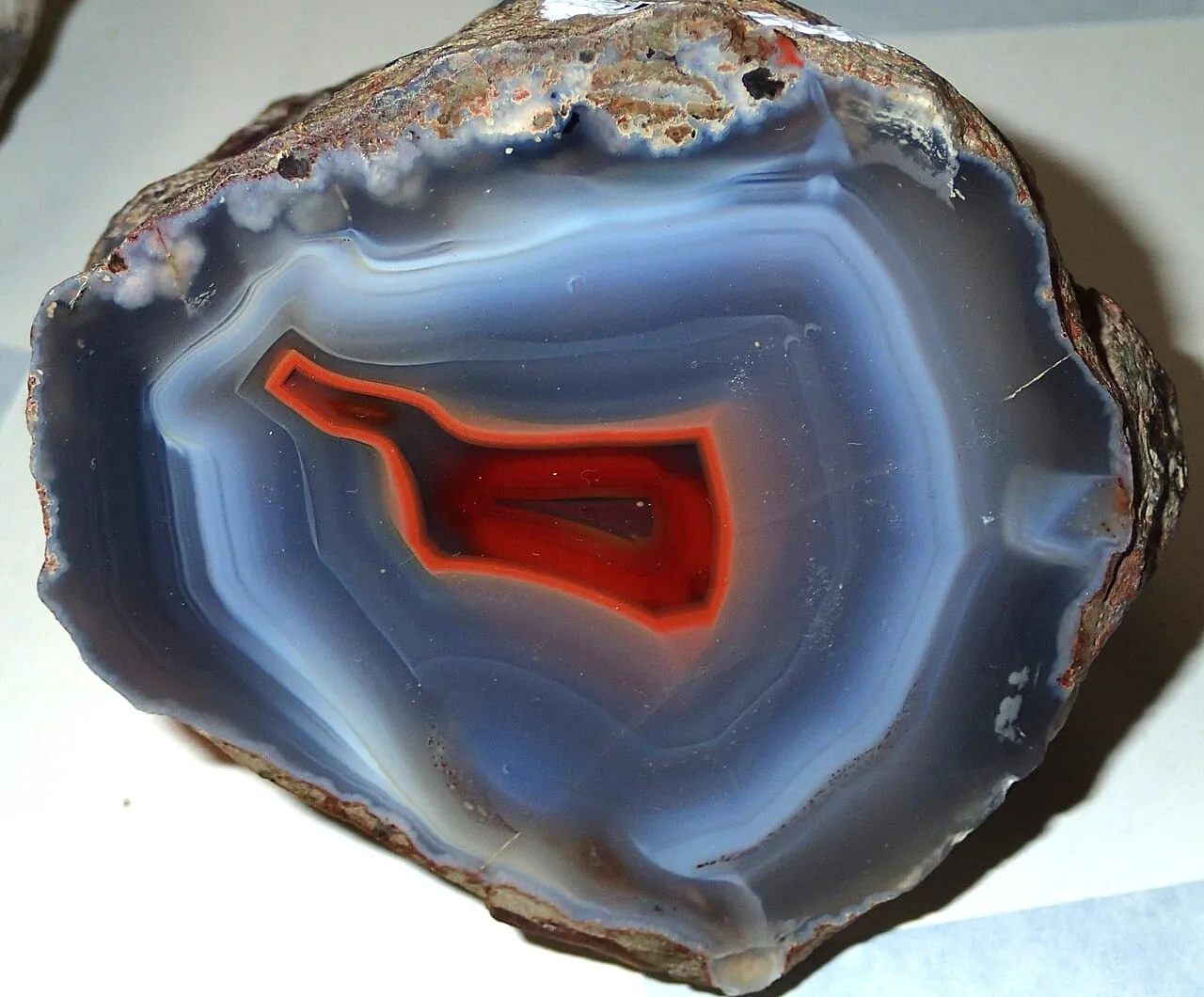
The banded variety of chalcedony: it grows layer by layer in hollows in volcanic rock and shows a new pattern every time it is cut.

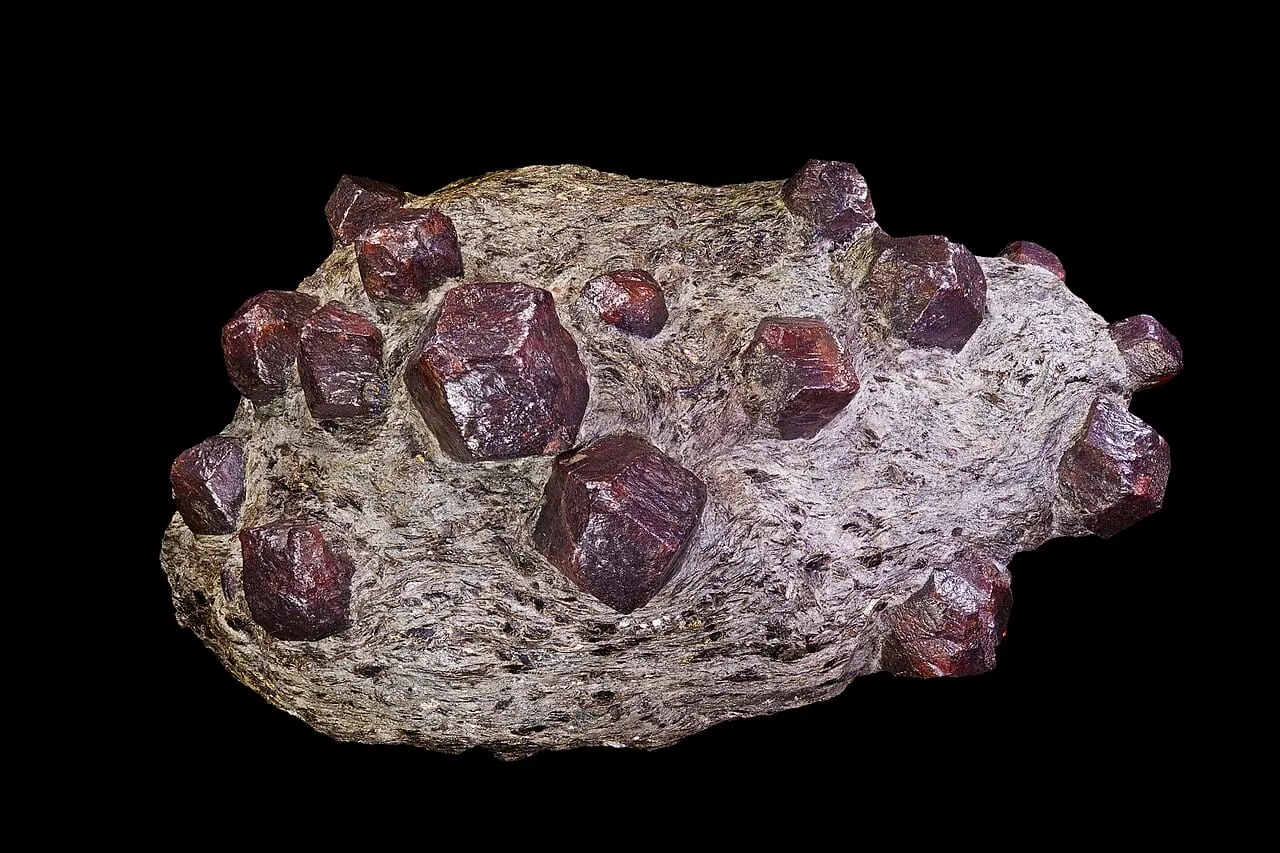
Almandine
The commonest garnet: a deep red, iron-rich stone named after the ancient city of Alabanda in Anatolia, used in jewellery and in sandpaper alike.
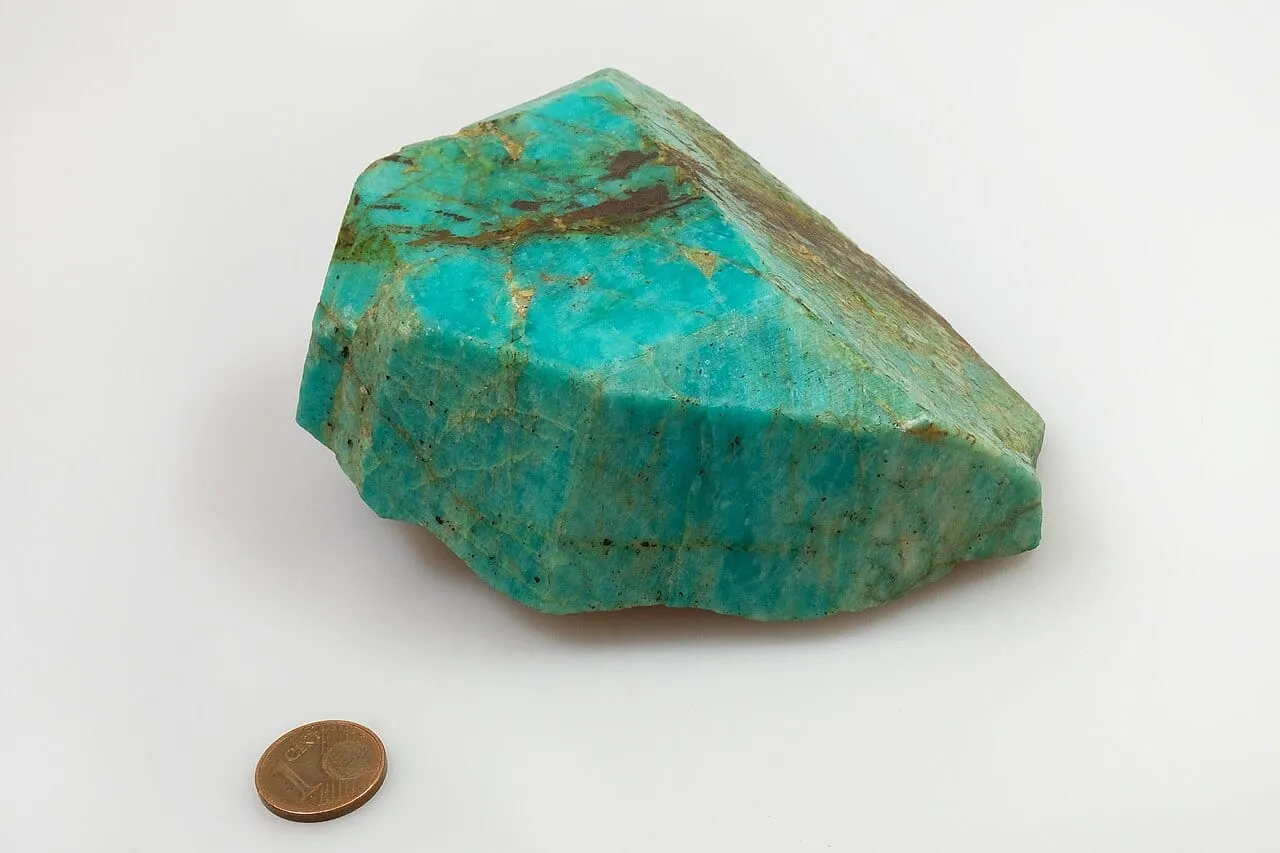
Amazonite
A turquoise-like green-blue feldspar: a variety of microcline worn as jewellery for more than three thousand years, but it can release lead.