VarietyA variety of Tektite
Australite
Avustralit
The black tektites of southern Australia: natural glass formed from rock melted in an impact, famous for aerodynamic shapes such as the flanged button.
Also known as: Australian tektite · Obsidian bombs (historic)
- Popularly: Semi-precious stone
In short
Australite is the name for tektites found in Australia. They form the southern end of the vast Australasian strewn field, which stretches from southern China to Australia, and are about 610,000–750,000 years old; the strewn field is probably linked to an impact in Indochina. They are dark or black and generally smaller than other tektites. The most famous are the “flanged buttons”, whose front face melted again as they passed through the atmosphere, leaving a rim around the edge. Aboriginal Australians have used these stones as tools and ritual objects for tens of thousands of years.
Photos
How does it form?
Australites are part of the Australasian strewn field, which extends from southern China to Australia. The field is about 610,000–750,000 years old and is probably linked to an impact in Indochina. Rocks melted by the impact were thrown into the air as droplets and cooled into glass.
What sets australites apart from other tektites is their shape. They were launched at higher speeds than other tektites, leaving the atmosphere and then re-entering it. According to the Australian Museum, spherical and button-shaped australites hardly rotated as they fell; on re-entry their heated front faces melted again, and the melt flowed backwards to form ridges and a rim (flange) around the edge.
What is it used for?
- Aboriginal tools and ritual objects: Aboriginal Australians have used australites for tens of thousands of years. About 15 percent of 8,720 specimens collected at Earaheedy Station in Western Australia are knapped flakes and cores.
- Science: Australites show how a molten object moving very fast takes shape in the atmosphere; NASA drew on the flanged-button shape when designing the Apollo capsules. The age and spread of the strewn field are studied to understand large impacts.
- Collecting: Buttons with intact flanges and rare shapes are sought by collectors.
Where is it found?
Australites occur in southern Australia, mostly south of latitude 25° S, in an east–west belt across the Northern Territory, Queensland, most of South Australia, Victoria, New South Wales and Tasmania. The best-preserved shapes come from near Port Campbell in western Victoria. In Western Australia, the Eastern Goldfields around Kalgoorlie-Boulder, Earaheedy Station in the north and Corrigin in the south-west, together with the area around Hughes on the Nullarbor Plain in South Australia, are among the main australite areas that have been studied scientifically.
What determines its value?
Because australites are plentiful, most are inexpensive collector’s pieces. Value depends mostly on shape and preservation: buttons with an unbroken flange and rare forms such as thin discs and bowls are the most sought after. Size, crisp surface detail and a documented find site also matter; worked pieces belonging to Aboriginal culture are cultural heritage rather than mere natural specimens.
This information is educational, not buying, selling or investment advice. Value varies enormously with quality and treatment.
How to recognise it
- 1
They are black or dark, glassy and usually small pieces; a fine network pattern may show on their surfaces.
- 2
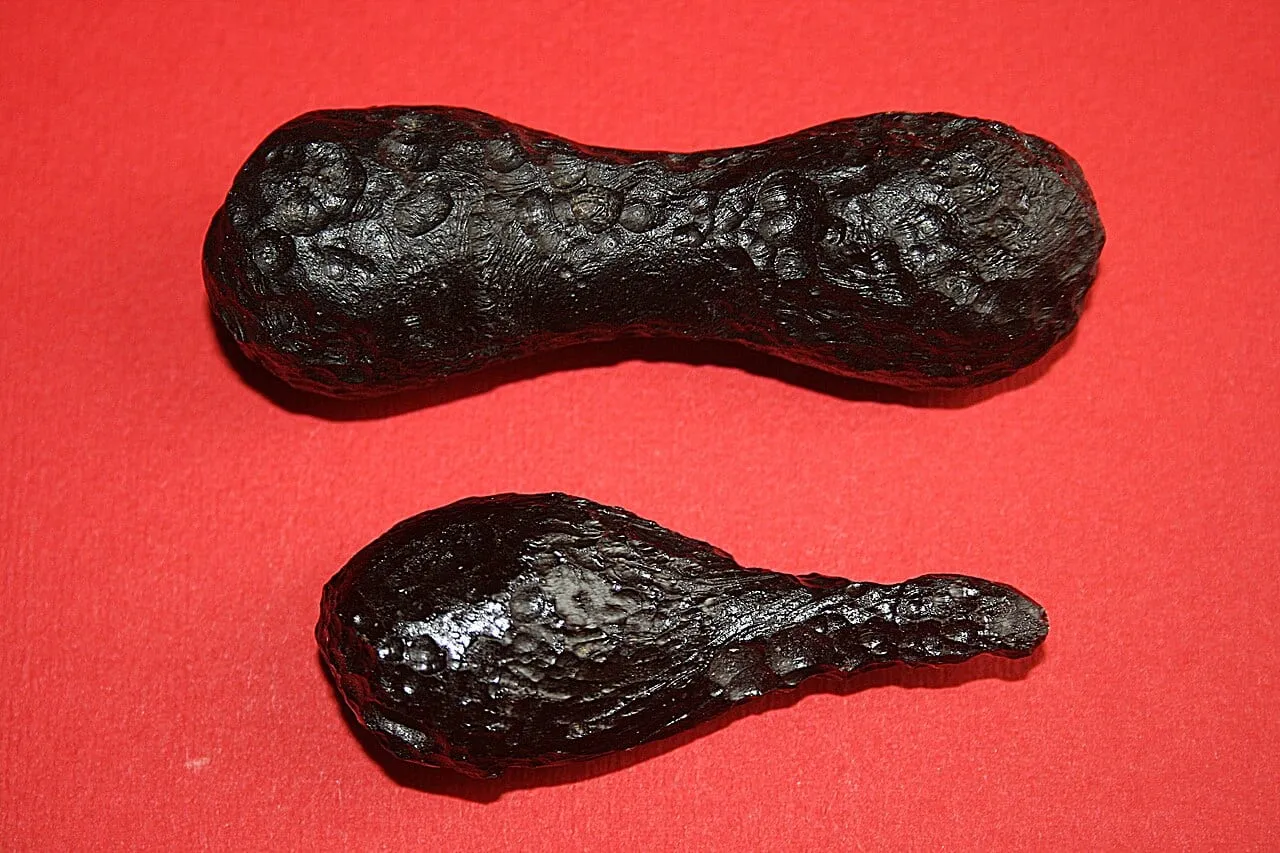
Regular shapes are typical: spheres, ovals, boats, dumbbells and teardrops; the best known is the button, with a domed centre and a thin rim (flange) around the edge.
- 3
When broken they show curved, shell-like surfaces and sharp edges; there are no crystal faces.
- 4
In Australia they are found mainly south of latitude 25° S, on the ground surface or in shallow sand.
Myths and misconceptions
MythAustralites are glass meteorites.
FactThe researcher Charles Fenner, who studied australites from 1907 onward, classed them as “glass meteorites”. Today we know they did not come from space but formed from Earth rocks melted and thrown out by an impact.
MythAustralites are volcanic glass (obsidian bombs).
FactCharles Darwin thought australite was volcanic because it looks like obsidian, and australites were once also called “obsidian bombs”. Explanations such as bushfires or sand fused by lightning were also put forward. The current consensus is that they formed from melt thrown out by an impact.
What is it believed to be good for?
This section reports beliefs; it is not health information. There is no scientific evidence for these claims and no stone replaces medical treatment.
The meanings people give this stone, and who holds them:
- The Aboriginal Diyari people called australites “ooga” (“staring eyes”) and used them as sacred objects.
- According to the Australian Museum, Aboriginal Australians have used australites as artefacts and ritual objects for more than 30,000 years; tektites are also recorded as having been used as surgical tools and ritual implements.
What science says
The sacred and ritual place of australites in Aboriginal traditions is cultural heritage. Scientifically, they are natural glasses formed from Earth rocks melted and thrown out by an impact; there is no evidence that they carry any supernatural power.
Did you know?
In the 1960s, NASA drew on the shape of flanged-button australites when designing the re-entry capsules of the Apollo programme.
Emus swallow australites and use them as gizzard stones to grind their food; in Western Australia, the Aboriginal word “mappin” used for australites is reported to mean “emu stones”.
Australite size varies greatly from place to place: around Corrigin in Western Australia the average weight is about 30 grams and the heaviest 437 grams, while in samples from Hughes on the Nullarbor Plain the average is only 0.55 grams.
Where is it found?
Loading map…
- Port Campbell, western Victoria, Australia · Major depositWhere australites with the best-preserved shapes are found
- Eastern Goldfields (around Kalgoorlie-Boulder), Western Australia · Major depositMany australite samples studied in detail; average weight about 1.9 g
- Earaheedy Station, Western Australia · Known localityThe northernmost area of Western Australia with abundant australites; about 15% of 8,720 specimens are flakes and cores knapped by Aboriginal people
- Corrigin area, Western Australia · Known localityVery heavy australites up to 437 g; average weight about 30 g
- Nullarbor Plain (north-west of Hughes), South Australia · Known localityMostly flakes because of knapping by Aboriginal people; average weight only 0.55 g
Locations are approximate to protect sites. Red dots mark places in Türkiye. Open in the big map →
Frequently asked questions
What is australite?
Australite is the name for tektites found in Australia. They form the southern end of the vast Australasian strewn field, which stretches from southern China to Australia, and are about 610,000–750,000 years old; the strewn field is probably linked to an impact in Indochina. They are dark or black and generally smaller than other tektites. The most famous are the “flanged buttons”, whose front face melted again as they passed through the atmosphere, leaving a rim around the edge. Aboriginal Australians have used these stones as tools and ritual objects for tens of thousands of years.
How did NASA make use of australites?
Flanged-button australites took their shape when their front face melted and flowed backwards as they entered the atmosphere at very high speed. In the 1960s, NASA drew on this shape when designing the re-entry capsules of the Apollo programme.
What is australite used for?
Aboriginal tools and ritual objects: Aboriginal Australians have used australites for tens of thousands of years. About 15 percent of 8,720 specimens collected at Earaheedy Station in Western Australia are knapped flakes and cores. Science: Australites show how a molten object moving very fast takes shape in the atmosphere; NASA drew on the flanged-button shape when designing the Apollo capsules. The age and spread of the strewn field are studied to understand large impacts. Collecting: Buttons with intact flanges and rare shapes are sought by collectors.
How hard is australite?
It has a hardness of 5–6 on the Mohs scale. It can scratch glass; a steel knife scratches it only with difficulty. Its specific gravity is 2.3–2.5 g/cm³.
Where is australite found?
Its best-known localities: Port Campbell, western Victoria, Australia; Eastern Goldfields (around Kalgoorlie-Boulder), Western Australia; Earaheedy Station, Western Australia; Corrigin area, Western Australia; Nullarbor Plain (north-west of Hughes), South Australia.
How can you tell if australite is real?
They are black or dark, glassy and usually small pieces; a fine network pattern may show on their surfaces. Regular shapes are typical: spheres, ovals, boats, dumbbells and teardrops; the best known is the button, with a domed centre and a thin rim (flange) around the edge. When broken they show curved, shell-like surfaces and sharp edges; there are no crystal faces.
Is australite valuable?
On the “street to diamond” value ladder it sits on step 5 of nine: Ornamental stone. Because australites are plentiful, most are inexpensive collector’s pieces. Value depends mostly on shape and preservation: buttons with an unbroken flange and rare forms such as thin discs and bowls are the most sought after. Size, crisp surface detail and a documented find site also matter; worked pieces belonging to Aboriginal culture are cultural heritage rather than mere natural specimens.
What is australite good for?
The Aboriginal Diyari people called australites “ooga” (“staring eyes”) and used them as sacred objects. According to the Australian Museum, Aboriginal Australians have used australites as artefacts and ritual objects for more than 30,000 years; tektites are also recorded as having been used as surgical tools and ritual implements. The sacred and ritual place of australites in Aboriginal traditions is cultural heritage. Scientifically, they are natural glasses formed from Earth rocks melted and thrown out by an impact; there is no evidence that they carry any supernatural power. This section reports beliefs; it is not health information. There is no scientific evidence for these claims and no stone replaces medical treatment.
Family


Sources
- Australite · Wikipedia
- Tektites · Australian Museum
- Australites from three localities in south-western Australia (W. H. Cleverly), Records of the Western Australian Museum 15(2): 371–381 · Western Australian Museum, 1991
- Australites from Earaheedy Station, Western Australia, with notes on australites from the nearby Glenayle Station (W. H. Cleverly), Records of the Western Australian Museum 17: 169–175 · Western Australian Museum, 1995
- Comet and meteorite traditions of Aboriginal Australians (D. W. Hamacher), Encyclopaedia of the History of Science, Technology, and Medicine in Non-Western Cultures (preprint) · Springer, 2014
External links
Draft: awaiting expert reviewReport an error
On the same step
Agate
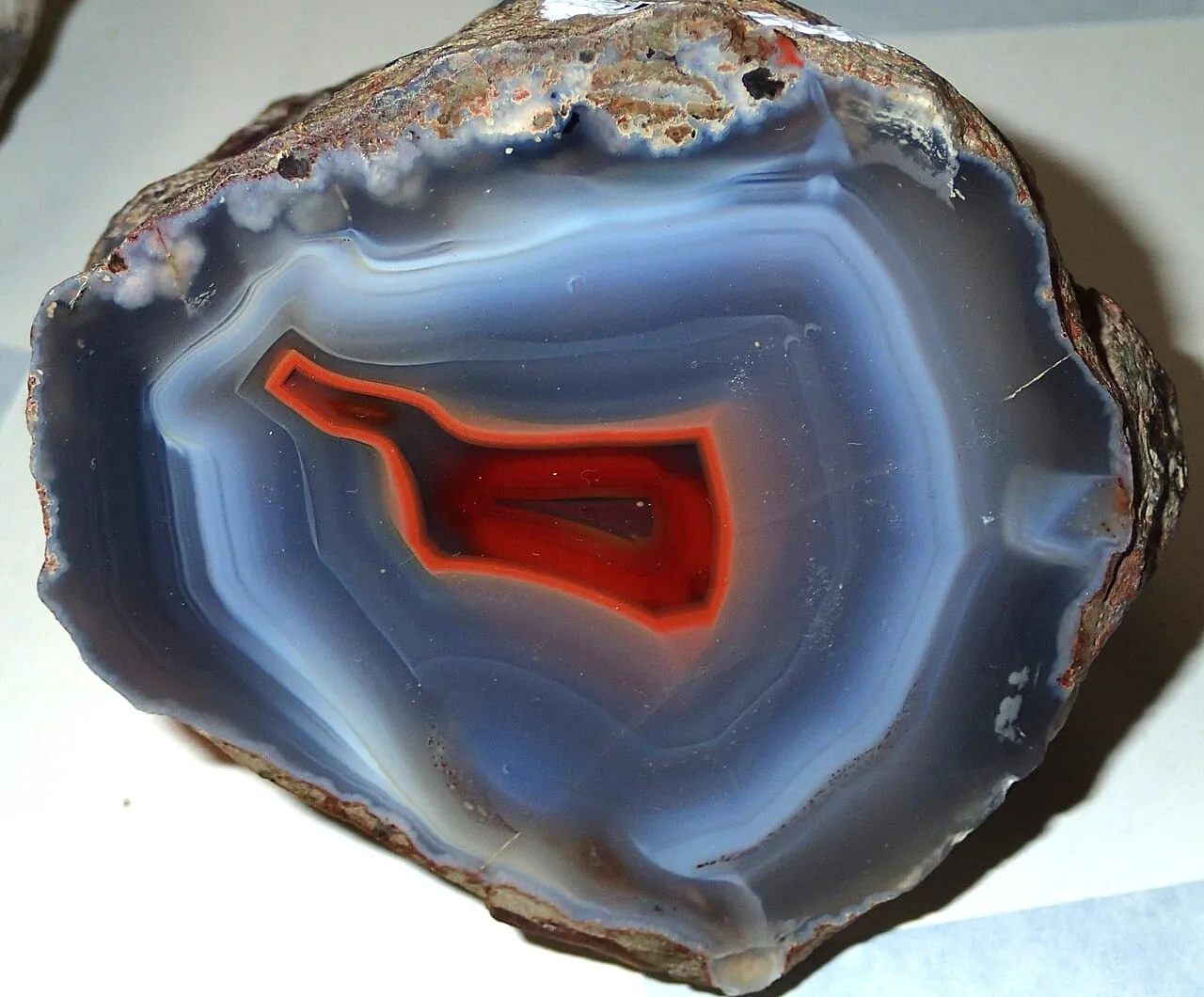
The banded variety of chalcedony: it grows layer by layer in hollows in volcanic rock and shows a new pattern every time it is cut.
Almandine
The commonest garnet: a deep red, iron-rich stone named after the ancient city of Alabanda in Anatolia, used in jewellery and in sandpaper alike.
Amazonite
A turquoise-like green-blue feldspar: a variety of microcline worn as jewellery for more than three thousand years, but it can release lead.