Rock
Andesite
Andezit
The rock of volcanic arcs, named after the Andes — and the pink-grey stone of Ankara Castle.
Also known as: Ankara stone (the pink-grey andesite of Ankara)
- Building stone
- Important in Türkiye

In short
Andesite is a grey, pink or brownish rock that forms when lava from volcanoes cools at the surface. Small white and black crystals sit in a fine-grained background. It is very common at volcanoes where one ocean plate sinks beneath another, and the “Ankara stone” used in the historic buildings of Ankara is an andesite.
How does it form?
Andesite is the most typical rock of volcanoes at subduction zones, where one oceanic plate sinks beneath another. Water released from the sinking plate causes the mantle above it to partly melt; the rising magma changes as it passes through the crust, becoming richer in silica and reaching andesitic composition. Most of the volcanoes in the belt that rings the Pacific Ocean erupt andesite.
Andesitic magma is more viscous than basaltic magma, so these volcanoes build steep-sided stratovolcanoes and sometimes erupt explosively. If the same magma cools slowly at depth, it forms diorite.
Andesite in Türkiye
Anatolia has extensive areas of andesite, and the rock is widely used as a building stone. Ankara Castle stands on andesite crags, and most of its rampart stones are pink andesite. The pink and grey andesite known as “Ankara stone” was used in the city’s historic buildings: the First Grand National Assembly building, which served as the parliament from 1920 to 1924, was built of it. The Gölbaşı area is one of the known quarrying areas for Ankara andesite.
Today andesite is also used, thanks to its durability, for paving setts, kerbs, walls and facade cladding.
How to recognise it
- 1
Visible white feldspar and black, rod-shaped hornblende or pyroxene crystals sit in a fine-grained grey, pink or brownish groundmass.
- 2
It is usually paler than basalt, although dark andesites may be impossible to tell from basalt by eye.
- 3
It does not fizz in vinegar or dilute acid, and a steel knife scratches it only with difficulty.
- 4
Some pieces show small holes left by gas bubbles in the lava.
Fakes and imitations
What shops usually don’t tell you:
- Dark andesite and basalt are often confused as paving and cladding stones; telling them apart reliably needs a thin section or chemical analysis.
- In the stone trade andesite is sometimes sold under vague names such as “volcanic stone” or “lava stone”, which say nothing about the rock type.
- Andesite is not the same as the similarly named mineral andesine. Andesine is one of the plagioclases found in andesite, and gem labs have found that some red stones sold as “andesine” were coloured by heat treatment with copper.
Did you know?
Ankara’s First Grand National Assembly building (today the War of Independence Museum) was built of pink-purple local andesite, the “Ankara stone”.
The name andesite was first used for a series of lavas from the Andes.
Where is it found?
Loading map…
- Andes, South America · Historic sourceThe rock is named after the lavas of the volcanoes in this mountain range.
- Ankara Castle, Altındağ, Ankara, Türkiye · Historic sourceThe castle stands on andesite crags, and most of its rampart stones are pink, porphyritic andesite.
- Gölbaşı, Ankara, Türkiye · Known localityOne of the known quarrying areas for the pink and grey andesite called “Ankara stone”.
- Soufrière Hills, Montserrat · Known localityIts eruptions, which began in 1995, built andesite lava domes whose collapses produced pyroclastic flows.
Locations are approximate to protect sites. Red dots mark places in Türkiye. Open in the big map →
Sources
- Andesite · Encyclopaedia Britannica
- Origin of Ankara Castle Rampart Building Stones (Deniz & Kadıoğlu) · Ankara Araştırmaları Dergisi / Journal of Ankara Studies, 2022
- Kurtuluş Savaşı Müzesi (I. TBMM Binası) · Türkiye Diyanet Vakfı Küre Ansiklopedi
- Control on the emplacement of the andesite lava dome of the Soufriere Hills volcano, Montserrat by degassing-induced crystallization · Terra Nova, 2000
External links
Draft: awaiting expert reviewReport an error ↗
On the same step
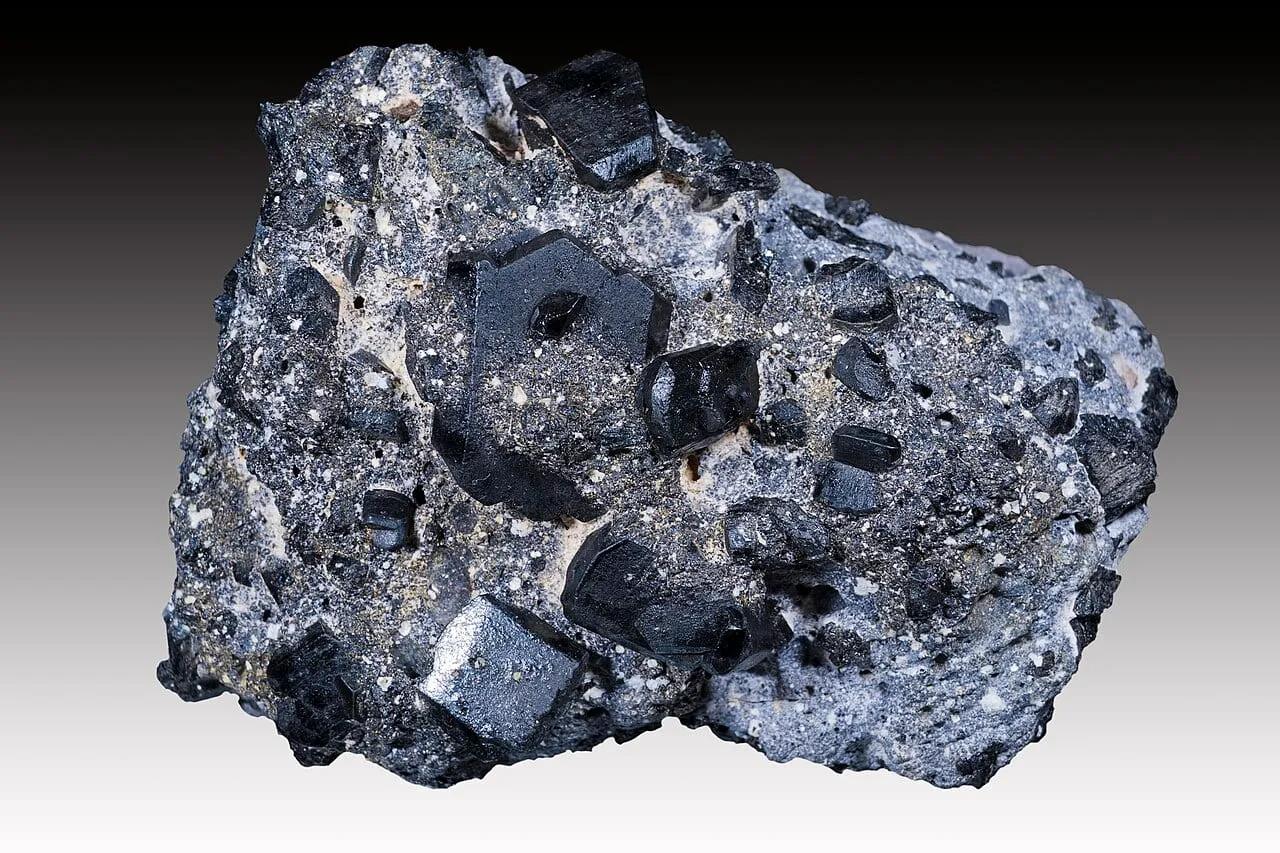
Augite (pyroxene)
The most common pyroxene, which darkens basalt and gabbro: inconspicuous, yet one of the key building blocks of Earth’s crust.
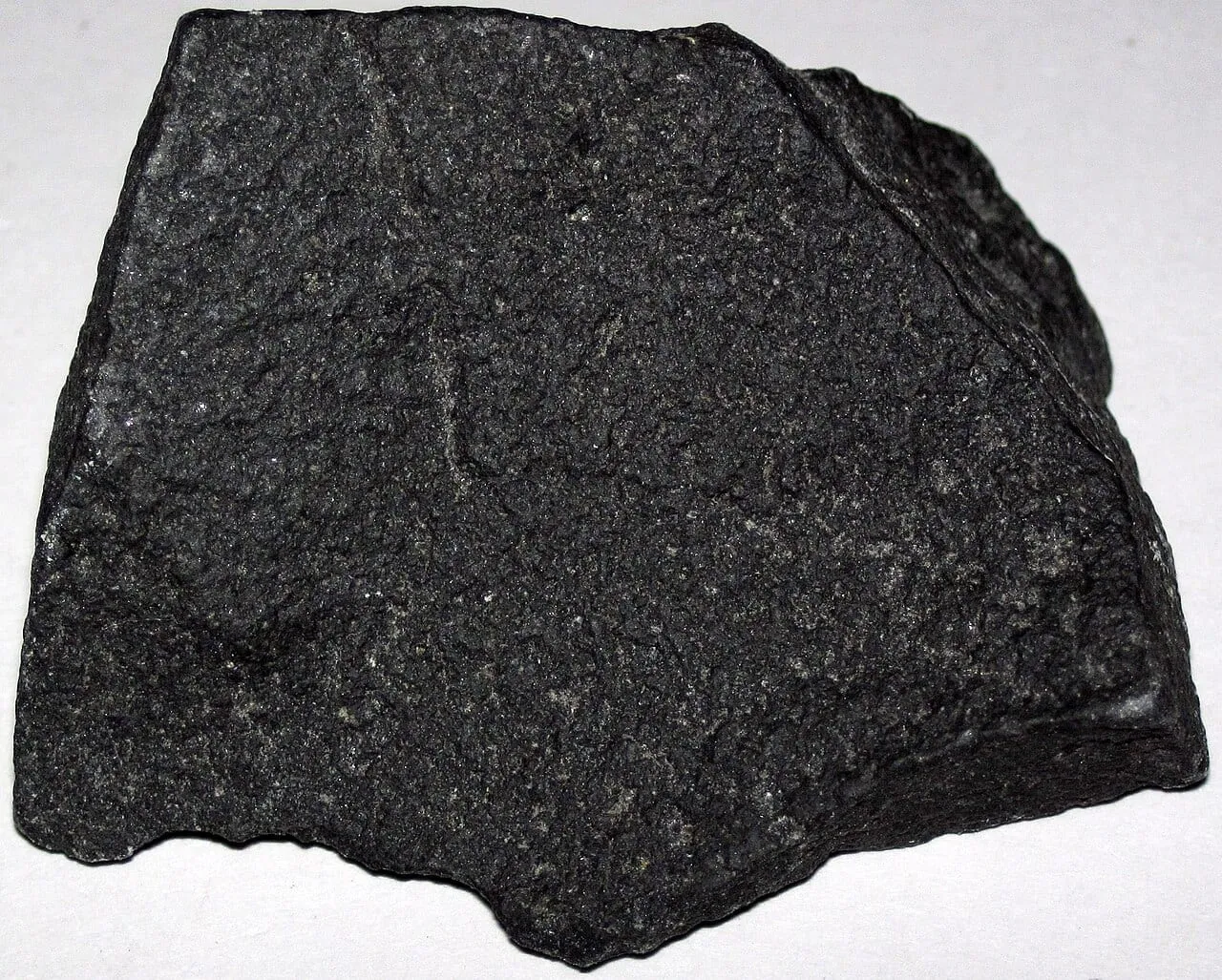
Basalt
The rock of the ocean floors and the Moon’s dark plains — the most common volcanic rock on Earth.
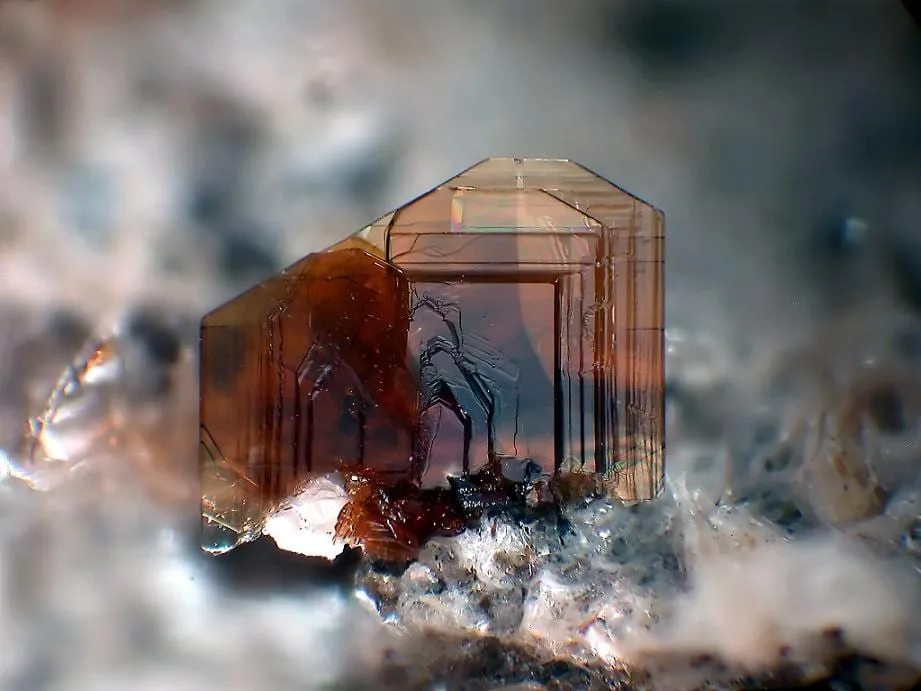
Biotite
The shiny black flakes in granite: a dark mica that peels into thin sheets and can glitter like gold as it weathers.