Meteorite
Sylacauga meteorite
Sylacauga meteoriti
The only meteorite documented to hit a person: the stone that crashed through an Alabama roof in 1954 and bruised Ann Hodges as she napped on her couch.
Also known as: Hodges meteorite · Hodges fragment
- Popularly: Meteorite

In short
The Sylacauga meteorite is a stony meteorite that fell on 30 November 1954 in Oak Grove, near Sylacauga, Alabama, USA. One of its fragments came through the roof of a house, bounced off a radio and struck Ann Elizabeth Hodges, who was napping on her couch, on the thigh and hand, leaving a large bruise. Hodges is the first documented person to be struck by a meteorite and survive, which is why it is also called the “Hodges meteorite”. It is an H4 ordinary chondrite.
Photos

How does it form?
Sylacauga is an ordinary chondrite of the H group. Meteorites like this come from stony asteroids that formed at the start of the Solar System and never melted. H-group chondrites hold the most metallic iron among ordinary chondrites. Its “type 4” label shows that it was moderately heated on its parent body, but its chondrules are still distinct.
The meteoroid approached Earth from the sunward side; when it hit, it had passed perihelion (its closest point to the Sun) and was moving away from the Sun. Its orbit may have been similar to that of the asteroid 1685 Toro. It broke into at least three pieces in the atmosphere.
What is it used for?
Sylacauga is a museum object and a scientific specimen. As an observed fall it is valuable, because such meteorites are collected soon after landing and are little weathered. The event is often cited in science communication as the best-known example of how rarely meteorites hit people.
History
The meteorite fell at 12:46 local time on 30 November 1954 and broke into at least three pieces. The 3.86-kilogram Hodges fragment went through the house; the next day the farmer Julius McKinney found the 1.68-kilogram second piece, which was bought for the Smithsonian Institution. A third piece is thought to have landed near Childersburg. A team from Maxwell Air Force Base confirmed the stone was a chondrite meteorite. The Hodges family gave the fragment to the Alabama Museum of Natural History in 1956. The attention and the ownership dispute took a heavy toll on Ann Hodges.
What determines its value?
Sylacauga's value is historical and scientific: it is famous as the only meteorite documented to have struck a person. The Hodges fragment is at the Alabama Museum of Natural History and the McKinney fragment at the Smithsonian Institution. A link to a famous event, and documentation of it, can greatly raise a meteorite's value.
This information is educational, not buying, selling or investment advice. Value varies enormously with quality and treatment.
How to recognise it
- 1
The pieces have a thin black fusion crust outside and a light grey interior.
- 2
A broken face shows small round chondrules and shiny metal specks.
- 3
Only museum records and laboratory analysis can show that a piece really comes from Sylacauga.
Myths and misconceptions
MythThe meteorite hit Ann Hodges straight from the sky.
FactThe fragment first punched a hole about 90 centimetres wide in the roof, then bounced off a radio, and only then hit Hodges on the thigh and hand. That is why she escaped with just a large bruise.
MythA meteorite that falls on a house belongs to the person living there.
FactAt Sylacauga this was disputed: the meteorite was first taken by the police and handed to the Air Force, then both the Hodges family and their landlord, Bertie Guy, claimed it. They settled, and the meteorite was returned to the Hodgeses more than a year later.
Did you know?
Although it fell in the early afternoon, the meteor made a fireball seen from three states; witnesses described hearing explosions or loud booms.
Hodges and her mother at first thought the chimney had collapsed, because the room filled with dust and debris.
The radio the meteorite hit was loaned to the American Museum of Natural History in New York in 2005, fifty years after the event.
Where is it found?
Loading map…
- Oak Grove, near Sylacauga, Alabama, USA · Type localityHere the 3.86-kilogram Hodges fragment crashed through a roof and struck Ann Hodges. It is now on display at the Alabama Museum of Natural History.
- Site of the McKinney fragment, north of Oak Grove, Alabama, USA · Known localityThe 1.68-kilogram second-largest fragment, found the next day by the farmer Julius McKinney; it was bought for the Smithsonian Institution.
Locations are approximate to protect sites. Red dots mark places in Türkiye. Open in the big map →
Frequently asked questions
What is sylacauga meteorite?
The Sylacauga meteorite is a stony meteorite that fell on 30 November 1954 in Oak Grove, near Sylacauga, Alabama, USA. One of its fragments came through the roof of a house, bounced off a radio and struck Ann Elizabeth Hodges, who was napping on her couch, on the thigh and hand, leaving a large bruise. Hodges is the first documented person to be struck by a meteorite and survive, which is why it is also called the “Hodges meteorite”. It is an H4 ordinary chondrite.
Do meteorites hit people?
Very rarely. More than 50,000 meteorites have been found on Earth, but the Hodges fragment is the only one known for certain to have hit a person. In 1992 a 3-gram piece in Uganda touched a boy after being slowed by a tree, without injuring him; in 2021 a meteorite in Canada landed on a sleeping woman's pillow without harming her.
What is sylacauga meteorite used for?
Sylacauga is a museum object and a scientific specimen. As an observed fall it is valuable, because such meteorites are collected soon after landing and are little weathered. The event is often cited in science communication as the best-known example of how rarely meteorites hit people.
How hard is sylacauga meteorite?
It has a hardness of 5–7 on the Mohs scale. It can scratch glass; a steel knife scratches it only with difficulty. Its specific gravity is 3.22–3.58 g/cm³.
Where is sylacauga meteorite found?
Its best-known localities: Oak Grove, near Sylacauga, Alabama, USA; Site of the McKinney fragment, north of Oak Grove, Alabama, USA.
How can you tell if sylacauga meteorite is real?
The pieces have a thin black fusion crust outside and a light grey interior. A broken face shows small round chondrules and shiny metal specks. Only museum records and laboratory analysis can show that a piece really comes from Sylacauga.
Is sylacauga meteorite valuable?
On the “street to diamond” value ladder it sits on step 6 of nine: Fine ornamental and collector stone. Sylacauga's value is historical and scientific: it is famous as the only meteorite documented to have struck a person. The Hodges fragment is at the Alabama Museum of Natural History and the McKinney fragment at the Smithsonian Institution. A link to a famous event, and documentation of it, can greatly raise a meteorite's value.
Sources
- Sylacauga (meteorite) · Wikipedia
- Ordinary chondrite · Wikipedia
- Meteorite porosities and densities: a review of trends in the data (D. T. Britt & G. J. Consolmagno), Lunar and Planetary Science XXXV, abstract 2108 · Lunar and Planetary Institute, 2004
- Handbook of Mineralogy: Forsterite · Mineralogical Society of America
External links
Draft: awaiting expert reviewReport an error
On the same step
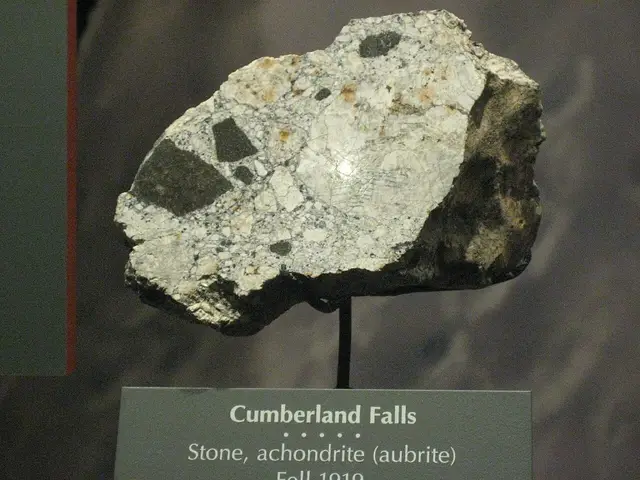
Achondrite
Stony meteorites with no chondrules: rock from melted asteroids, the Moon and Mars, and hard to recognise because they look like Earth rocks.
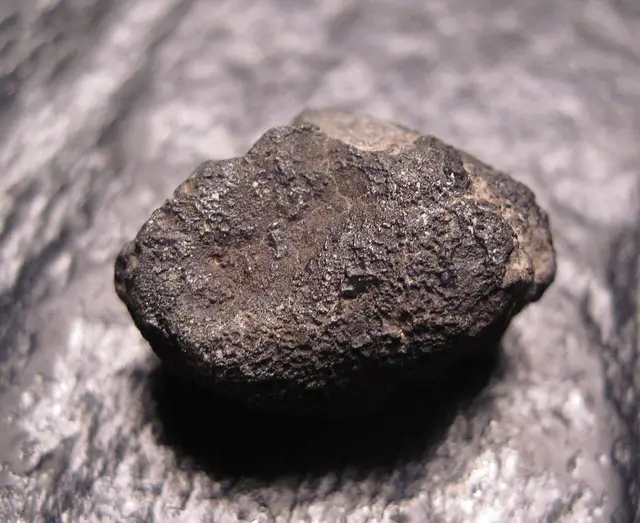
Allende meteorite
The most studied meteorite in history: the largest carbonaceous chondrite, which fell in Mexico in 1969 carrying the first solids of the Solar System.
Amber
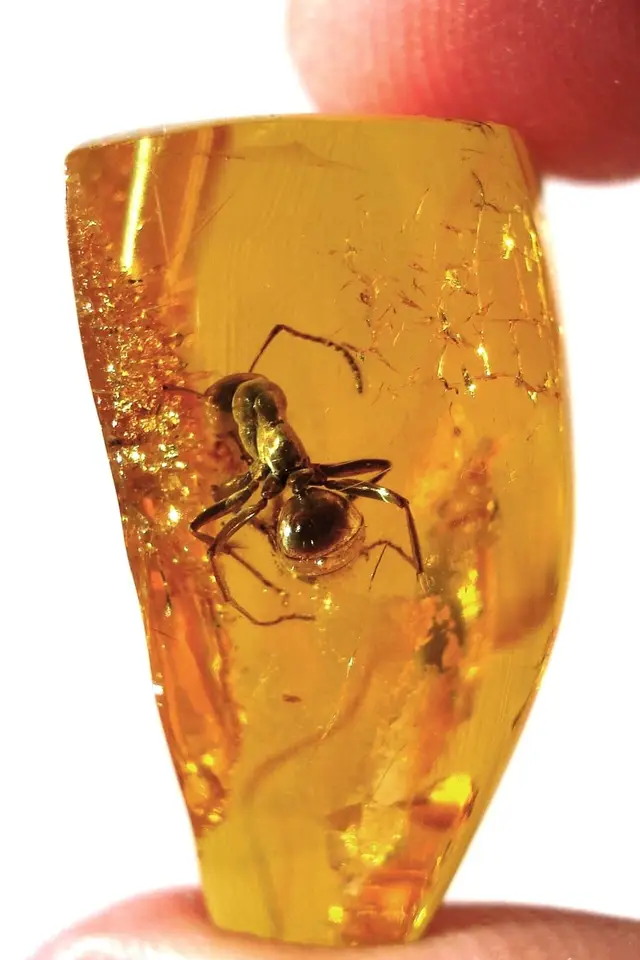
Tree resin fossilised over millions of years: a light, warm organic gem that sometimes holds prehistoric insects.