Mineral
Smithsonite
ZnCO₃Smitsonit
A zinc carbonate in blue-green and pink tones that is also cut as an ornamental stone; for centuries it was mixed up with hemimorphite.
Also known as: Zinc spar · Calamine (old name shared with hemimorphite) · Turkey-fat ore (bright yellow variety)
- Popularly: Semi-precious stone
- Gemstone
- Ornamental
- Ore

In short
Smithsonite is a carbonate mineral made of zinc and carbon (ZnCO₃). It mostly occurs not as crystals but as grape-like or kidney-shaped masses, and its colour ranges from white through blue-green to pink and yellow. It is important as an ore of zinc, and attractively coloured pieces are cut as ornamental stones. It is named after James Smithson, the English scientist who first identified it.
Photos

How does it form?
Smithsonite is a secondary mineral: it forms in the oxidised zone near the surface of zinc-bearing ore deposits, as zinc sulfides such as sphalerite break down in air and water. In places it replaces the surrounding carbonate rocks and builds masses big enough to count as zinc ore. It is found with hemimorphite, willemite, hydrozincite, cerussite, malachite and azurite. With manganese it forms a partial series towards rhodochrosite, and with iron towards siderite.
What is it used for?
- Zinc ore: Today it is a minor ore of zinc; in the past it was far more important. Heated together with copper, it was used to make brass.
- Ornamental stone: Well-coloured, translucent pieces are cut as cabochons and faceted stones. Because it is soft, it needs care in jewellery.
- Collecting: Coloured masses and large crystals attract mineral collectors.
In Türkiye
In Türkiye smithsonite is known from the zinc-lead deposits of the Aladağlar in the Central Taurus (the Zamantı metal district; the area around Yahyalı in Kayseri). According to the study by Çevrim, Echle and Friedrich (1986), these deposits formed in old karst cavities in Permian and Jurassic limestones. The sulfide ore has been almost entirely broken down in places; the main components of the oxidised ore are limonite, smithsonite, hemimorphite, hydrozincite and zinc-aluminium silicates.
What determines its value?
As an ornamental stone its value depends on the vividness of the colour (blue-green, pink and green tones), translucency and the evenness and polish of the surface. Crystals are sought after by collectors when they are large, well formed and undamaged, or come from famous places such as Tsumeb or Kelly. Because the stone is soft and cleaves easily, it is rarely used as a faceted gem; the quality of cutting and workmanship matters. As a zinc ore it is a minor ore today; its value depends on its grade and on mining conditions.
This information is educational, not buying, selling or investment advice. Value varies enormously with quality and treatment.
How to recognise it
- 1
It fizzes when a drop of cold, dilute hydrochloric acid is applied; the very similar hemimorphite does not.
- 2
Its hardness is 4–4.5: a steel knife scratches it. Its specific gravity is high (about 4.4); it feels distinctly heavier than hemimorphite of the same size (about 3.5).
- 3
It mostly forms grape-like (botryoidal) or kidney-shaped masses, crusts and stalactites; well-formed crystals are rare.
- 4
Copper gives green and blue tones and cadmium gives yellow, so its colour is very variable.
Fakes and imitations
What shops usually don’t tell you:
- Hemimorphite: it looks very much like smithsonite and occurs in the same deposits; for centuries both were called “calamine”. It is told apart by not fizzing in acid and by being lighter.
Myths and misconceptions
MythSmithsonite and hemimorphite (calamine) are the same stone.
FactFor a long time the two minerals were treated as one ore and called “calamine”; that they are different was worked out in the 18th and 19th centuries. In fact smithsonite is a zinc carbonate and hemimorphite a zinc silicate; smithsonite fizzes in acid, hemimorphite does not.
MythBlue-green smithsonite is a hard, durable gemstone.
FactIts hardness is only 4–4.5 and it cleaves easily; even with careful wear it scratches and wears quickly. That is why it is seldom seen as a faceted stone in jewellery and is used more as cabochons and as a collector's stone.
What is it believed to be good for?
This section reports beliefs; it is not health information. There is no scientific evidence for these claims and no stone replaces medical treatment.
The meanings people give this stone, and who holds them:
- Crystal-therapy practitioners claim that smithsonite is soothing and calming, reduces stress and tension, and makes it easier to feel compassion for oneself and others.
- The same circles say smithsonite is linked to the heart chakra, helps process past emotional wounds and encourages forgiveness; they claim blue smithsonite brings calm and clarity and pink smithsonite love and compassion.
What science says
There is no scientific evidence that smithsonite affects emotions or stress; lasting stress or emotional distress calls for help from a professional. Smithsonite is a zinc carbonate: the stone should not be put in water or an acidic liquid to make a drinkable “elixir”, and its dust should not be breathed in.
Did you know?
James Smithson identified smithsonite as a mineral separate from hemimorphite in 1802; the mineral was named after him in 1832. Smithson's bequest led to the founding of the Smithsonian Institution in the United States.
In 16th-century England the only known way of making brass (a copper-zinc alloy) was to heat copper together with calamine.
The bright yellow variety is called “turkey-fat ore”; its yellow comes from inclusions of greenockite (cadmium sulfide) inside the crystals.
Where is it found?
Loading map…
- Lavrio (Laurium), Attica, Greece · Historic sourceSmithsonite is abundant in the area of the ancient silver mines
- Tsumeb, Oshikoto, Namibia · Major depositFamous for fine smithsonite specimens with large crystals
- Kabwe (Broken Hill), Central Province, Zambia · Known localityYields large smithsonite crystals
- Tarnowskie Góry (Tarnowitz), Silesia, Poland · Historic sourceMajor zinc ore deposits
- Kelly mine, Magdalena, New Mexico, USA · Major depositA famous deposit of blue-green smithsonite cut as an ornamental stone
- Santa Eulalia, Chihuahua, Mexico · Known localityAbundant in the silver, lead and zinc mines
- Choix, Sinaloa, Mexico · Known locality
- Aladağlar (Yahyalı area), Kayseri, Türkiye · Known localityThe oxidised ore of the zinc-lead deposits of the Aladağlar consists mainly of smithsonite and hemimorphite
Locations are approximate to protect sites. Red dots mark places in Türkiye. Open in the big map →
Frequently asked questions
What is smithsonite?
Smithsonite is a carbonate mineral made of zinc and carbon (ZnCO₃). It mostly occurs not as crystals but as grape-like or kidney-shaped masses, and its colour ranges from white through blue-green to pink and yellow. It is important as an ore of zinc, and attractively coloured pieces are cut as ornamental stones. It is named after James Smithson, the English scientist who first identified it.
What is smithsonite used for?
Zinc ore: Today it is a minor ore of zinc; in the past it was far more important. Heated together with copper, it was used to make brass. Ornamental stone: Well-coloured, translucent pieces are cut as cabochons and faceted stones. Because it is soft, it needs care in jewellery. Collecting: Coloured masses and large crystals attract mineral collectors.
How hard is smithsonite?
It has a hardness of 4–4.5 on the Mohs scale. A fingernail cannot scratch it, but a steel knife can. Its specific gravity is 4.3–4.5 g/cm³.
Where is smithsonite found?
Its best-known localities: Tsumeb, Oshikoto, Namibia; Kelly mine, Magdalena, New Mexico, USA; Lavrio (Laurium), Attica, Greece; Tarnowskie Góry (Tarnowitz), Silesia, Poland; Kabwe (Broken Hill), Central Province, Zambia.
Where is smithsonite found in Türkiye?
Known localities in Türkiye: Aladağlar (Yahyalı area), Kayseri, Türkiye.
How can you tell if smithsonite is real?
It fizzes when a drop of cold, dilute hydrochloric acid is applied; the very similar hemimorphite does not. Its hardness is 4–4.5: a steel knife scratches it. Its specific gravity is high (about 4.4); it feels distinctly heavier than hemimorphite of the same size (about 3.5). It mostly forms grape-like (botryoidal) or kidney-shaped masses, crusts and stalactites; well-formed crystals are rare. Hemimorphite: it looks very much like smithsonite and occurs in the same deposits; for centuries both were called “calamine”. It is told apart by not fizzing in acid and by being lighter.
Is smithsonite valuable?
On the “street to diamond” value ladder it sits on step 5 of nine: Ornamental stone. As an ornamental stone its value depends on the vividness of the colour (blue-green, pink and green tones), translucency and the evenness and polish of the surface. Crystals are sought after by collectors when they are large, well formed and undamaged, or come from famous places such as Tsumeb or Kelly. Because the stone is soft and cleaves easily, it is rarely used as a faceted gem; the quality of cutting and workmanship matters. As a zinc ore it is a minor ore today; its value depends on its grade and on mining conditions.
What is smithsonite good for?
Crystal-therapy practitioners claim that smithsonite is soothing and calming, reduces stress and tension, and makes it easier to feel compassion for oneself and others. The same circles say smithsonite is linked to the heart chakra, helps process past emotional wounds and encourages forgiveness; they claim blue smithsonite brings calm and clarity and pink smithsonite love and compassion. There is no scientific evidence that smithsonite affects emotions or stress; lasting stress or emotional distress calls for help from a professional. Smithsonite is a zinc carbonate: the stone should not be put in water or an acidic liquid to make a drinkable “elixir”, and its dust should not be breathed in. This section reports beliefs; it is not health information. There is no scientific evidence for these claims and no stone replaces medical treatment.
Sources
- Handbook of Mineralogy: Smithsonite · Mineralogical Society of America
- Smithsonite · Wikipedia
- Smithsonite · Webmineral
- Smithsonite: properties, color, crystals, uses, gemstone · Geology.com
- Calamine (mineral) · Wikipedia
- Smitsonit · Vikipedi
- Aladağlar'da Paleokarstlaşmaya Bağlı Zn-Pb Mineralizasyonu (Çevrim, Echle & Friedrich), Türkiye Jeoloji Kurumu Bülteni 29, 27–41 · Türkiye Jeoloji Kurumu, 1986
- Lavrio · Wikipedia
- Tsumeb · Wikipedia
- Magdalena, New Mexico · Wikipedia
- Yahyalı · Wikipedia
External links
Draft: awaiting expert reviewReport an error ↗
On the same step
Agate
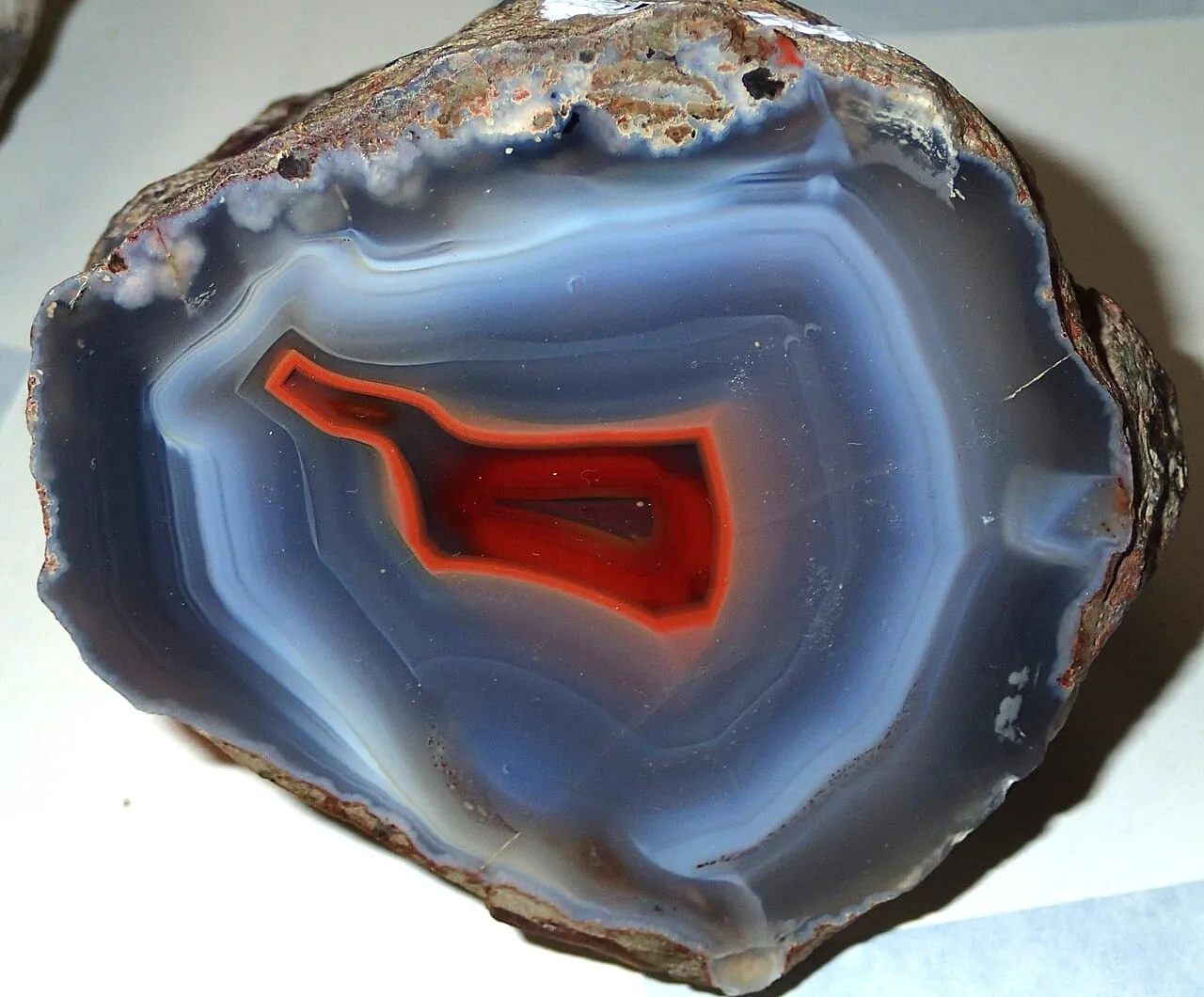
The banded variety of chalcedony: it grows layer by layer in hollows in volcanic rock and shows a new pattern every time it is cut.

Almandine
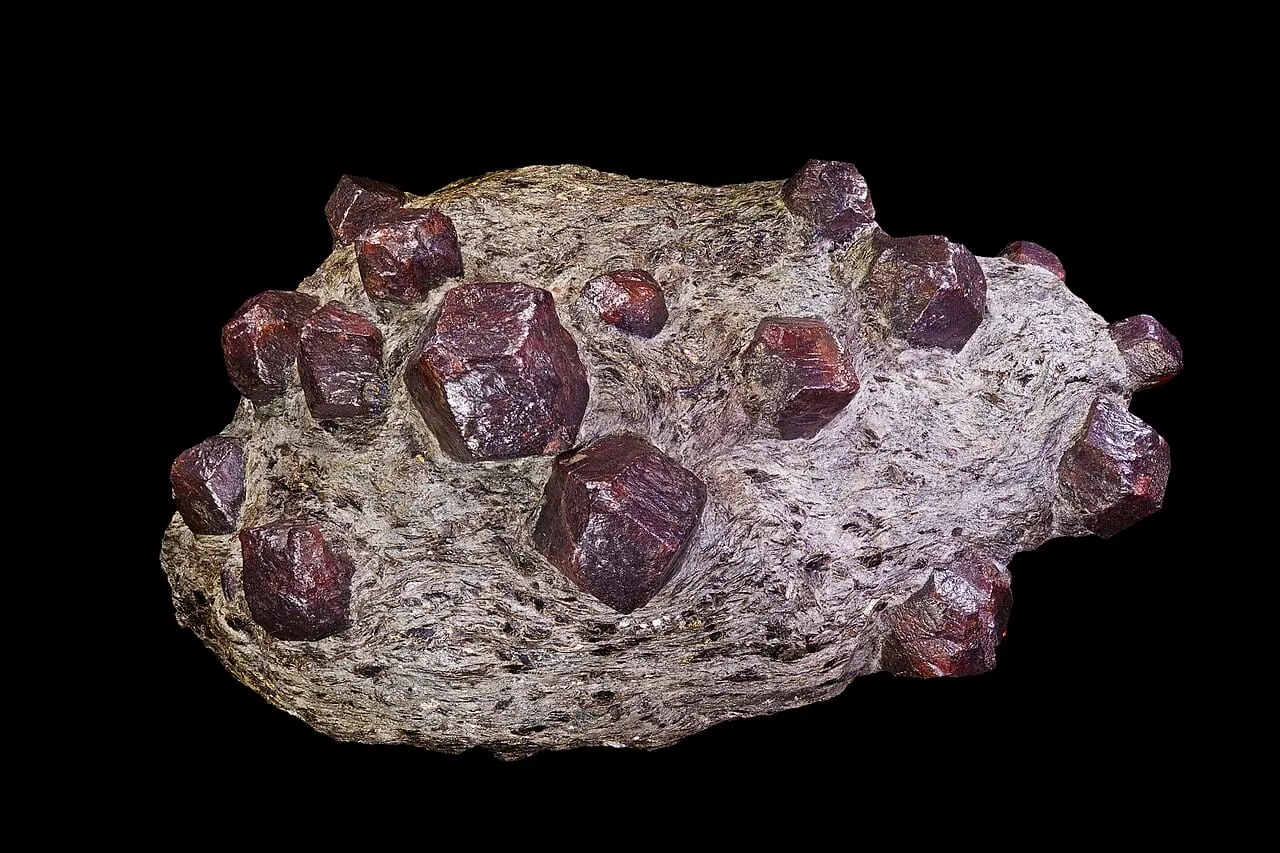
The commonest garnet: a deep red, iron-rich stone named after the ancient city of Alabanda in Anatolia, used in jewellery and in sandpaper alike.
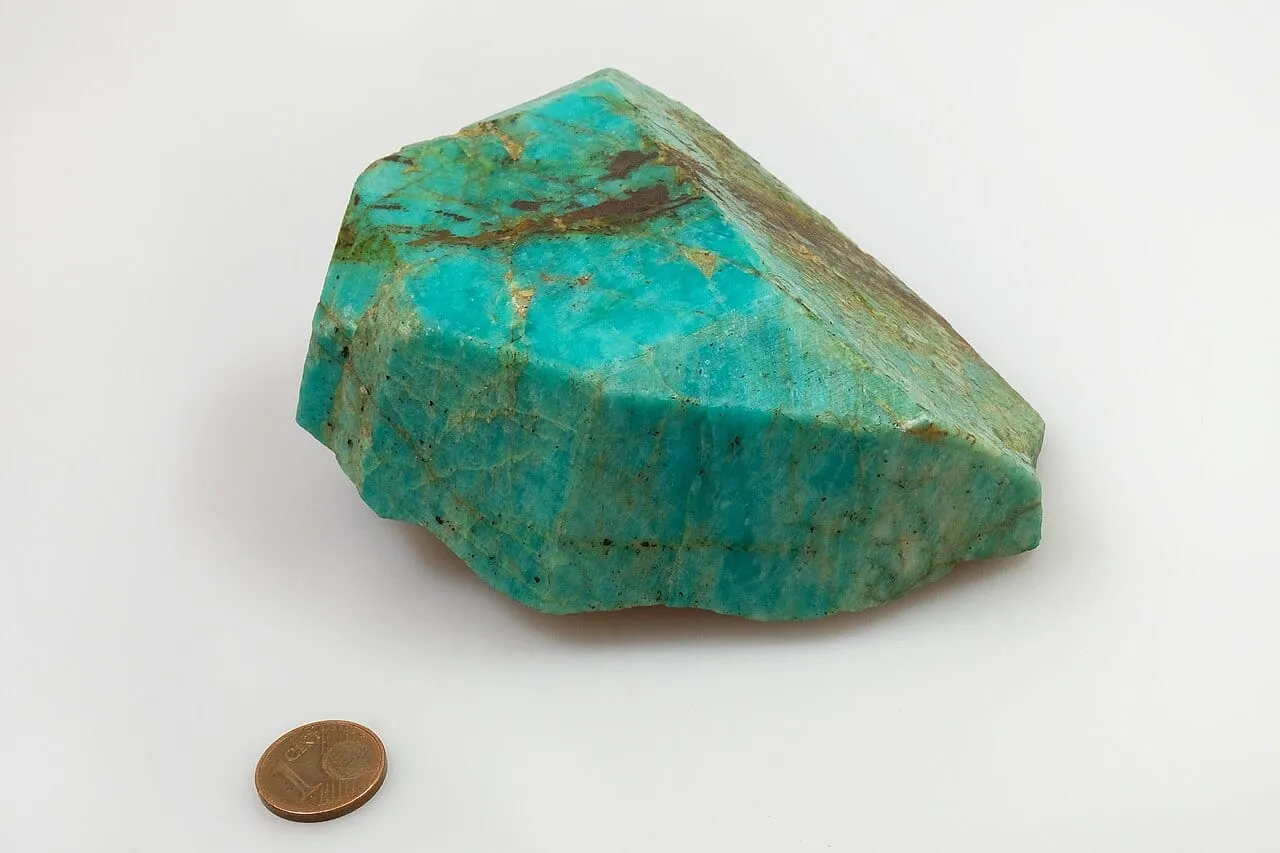
Amazonite
A turquoise-like green-blue feldspar: a variety of microcline worn as jewellery for more than three thousand years, but it can release lead.