Mineral
Realgar
As₄S₄Realgar
An orange-red arsenic mineral: highly poisonous, and it crumbles into a yellow powder if left in the light for long.
Also known as: Arsenic blende · Ruby sulphur · Ruby of arsenic
- Popularly: Ore and raw material
- Ore
- Handle with care
- Important in Türkiye
_1.jpg)
In short
Realgar is a soft, orange-red mineral with a resinous lustre, made of arsenic and sulfur. It occurs in the same places as orpiment, and its name comes from an Arabic phrase meaning “powder of the mine”. Since ancient times it has been used as a red paint, a pest poison and a traditional medicine; but it contains arsenic and is toxic. Left in the light for a long time, it crumbles by itself into a yellow powder.
Photos

How does it form?
Realgar mostly forms in low-temperature hydrothermal veins, together with arsenic and antimony minerals. It also appears as volcanic sublimates, when gases cool, and in the deposits of hot springs; it can occur in carbonate and clay sedimentary rocks too. It is accompanied by orpiment, arsenolite, calcite and barite. In Hungary, Bohemia and Saxony it is found with lead, silver and gold ores, and in the USA it also occurs in the geyser deposits of Yellowstone National Park.
What is it used for?
- Arsenic ore: As a minor ore of arsenic it is extracted in China, Peru and the Philippines.
- Red paint: It was traded in the Roman Empire together with orpiment, and early red paint made from it is known from China, India, Central Asia and Egypt. In the Renaissance, Venetian painters and illuminators used it from the late 15th century through the 16th; the use died out by the 18th century.
- Fireworks: In white-flame and star compositions, and for yellow smoke in daytime fireworks.
- Pest poison: Used against weeds, insects and rodents; in medieval Spain and 16th-century England it was a rat poison.
- Other uses: Making lead shot, printing, and dyeing calico cloth.
Why does it break down in light?
After long exposure to light, realgar changes form: α-As₄S₄, realgar, is turned by light into β-As₄S₄, pararealgar. The yellow powder that results was once taken for orpiment. That is why the two are so often found together on medieval manuscripts, and why realgar specimens are kept in the dark in museums and collections.
In Türkiye
Small amounts of realgar and orpiment have been reported from the historic Balya lead-zinc-silver mine in Balıkesir, western Anatolia. Between 1880 and 1940 Balya was among the most important lead and silver producers in Türkiye.
A note on the Ottoman past: Alšar (Allchar), now in North Macedonia, is one of the localities the Handbook of Mineralogy names for realgar and orpiment. An Ottoman register of 1481 counts arsenic ore sold from the mine among the sultan’s revenues.
What determines its value?
Realgar is sought as a collector’s specimen; its value depends on the vividness of its colour, the sharpness and size of its crystals, freedom from damage and light decay, and a famous source such as Shimen in China or Getchell in the USA. Because it is sensitive to light, well-preserved, bright specimens are scarcer and are kept in the dark. It has also been extracted as a minor ore of arsenic, but arsenic is toxic and its uses are limited.
This information is educational, not buying, selling or investment advice. Value varies enormously with quality and treatment.
How to recognise it
- 1
Its colour runs from orange-red to red; its streak (powder colour) is red-orange. Orpiment, which it is usually found with, is lemon-yellow.
- 2
It is very soft (hardness 1.5–2): a fingernail scratches it, a knife can cut it, and it is slightly brittle.
- 3
Its lustre lies between resinous and greasy; fresh specimens are transparent.
- 4
Crystals are prismatic and striated lengthwise, but it is more often found as granular masses or crusts.
Fakes and imitations
What shops usually don’t tell you:
- Red cinnabar (mercury sulfide) can be mistaken for realgar; cinnabar is much heavier and has a bright scarlet streak. Both are toxic.
- The yellow powder that realgar turns into in the light was once thought to be orpiment; it is in fact a separate compound called pararealgar.
Safety
Realgar contains arsenic; it is toxic and linked to cancer. Do not lick it, put it in your mouth or eat it; never put it in water or wine to make “gem water” or an “elixir”; never use it as a medicine, a cosmetic or something painted on children’s skin. Pure realgar dissolves poorly in water, but real specimens can contain soluble arsenic compounds, and poisonings linked to swallowing realgar have been reported. Do not burn or heat it (arsenic and sulfur fumes are released), crush it to powder or sand it. Realgar left in the light for a long time crumbles into a yellow powder; do not breathe this powder or touch it with bare hands. Wash your hands after handling. Keep specimens away from children and pets, in a closed container away from light.
Myths and misconceptions
MythRealgar wine is traditional, so it is harmless and protects health.
FactSamples of realgar wine have been found to contain 70–400 mg of dissolved arsenic compounds per litre, more than a thousand times the arsenic legally allowed in commercial liquor. Arsenic was also found in the urine of children painted with realgar slurry; arsenic is absorbed through the skin too.
MythRealgar stays red on a display shelf, even in the light.
FactRealgar is light-sensitive: after long exposure to light it turns into a yellow powder (pararealgar, or a mixture of arsenolite and orpiment). That is why it is kept in the dark and in closed containers in collections.
MythPure realgar does not dissolve in water, so it is harmless even if swallowed.
FactPure realgar dissolves poorly and is absorbed little by the gut, but natural realgar and mixtures made from it can contain absorbable arsenic compounds such as arsenite and arsenate; poisonings linked to swallowing realgar have been reported.
What is it believed to be good for?
This section reports beliefs; it is not health information. There is no scientific evidence for these claims and no stone replaces medical treatment.
The meanings people give this stone, and who holds them:
- In traditional Chinese medicine, realgar was believed to be a universal antidote against poison and to protect against disease, snakes and evil spirits; a realgar solution was sprinkled around houses.
- At the Dragon Boat Festival in China, adults were advised to drink yellow wine dosed with realgar powder (xionghuang wine), and children had the character 王 (“king”) drawn on the forehead or chest with realgar slurry, or wore a realgar amulet; this was believed to protect them from illness and evil.
What science says
Although pure realgar dissolves poorly, the arsenic dissolved in realgar wine is high: samples have contained 70–400 mg of arsenic compounds per litre. Arsenic is a cause of bladder, skin, liver and lung cancer, and arsenic has been found in the urine of children painted with realgar slurry. Never put realgar in drinking water or wine (“gem water”, “elixirs”), in the mouth or over a flame, never breathe its dust, and never rub it on children’s skin.
Did you know?
In Chinese, realgar is “male yellow” (xiong huang) and orpiment “female yellow” (ci huang).
Ancient Greek apothecaries made a medicine called “bull’s blood” from realgar; the death the physician Nicander described fits arsenic poisoning.
Realgar was used in fireworks for white-flame and star compositions, and to make yellow smoke in daytime fireworks.
Where is it found?
Loading map…
- Shimen, Hunan, China · Major depositThe Shimen mine, which the Handbook of Mineralogy lists among its sites for fine realgar crystals (coordinates at county level); China is one of the countries where realgar is extracted
- Getchell mine, Potosi district, Nevada, USA · Major depositA gold mine known for large, fine realgar crystals
- Mercur, Tooele County, Utah, USA · Known localityA former mining town named for realgar by both the Handbook of Mineralogy and Wikipedia
- Lengenbach quarry, Binntal, Valais, Switzerland · Known localityA quarry the Handbook of Mineralogy lists among its sites for fine realgar crystals
- Jáchymov, Karlovy Vary, Czechia · Historic sourceAn old silver-mining town the Handbook of Mineralogy lists for fine realgar
- Alšar (Allchar), Kavadarci, North Macedonia · Historic sourceA mine of arsenic, antimony and thallium; Ottoman registers of 1481 mention arsenic ore sold from it
- Schneeberg, Saxony, Germany · Historic sourceAn old mining town that, according to the Handbook of Mineralogy, has produced fine realgar crystals
- Balya, Balıkesir, Türkiye · Known localitySmall amounts of realgar and orpiment in the historic lead-zinc-silver mine (coordinate is the district centre)
Locations are approximate to protect sites. Red dots mark places in Türkiye. Open in the big map →
Frequently asked questions
What is realgar?
Realgar is a soft, orange-red mineral with a resinous lustre, made of arsenic and sulfur. It occurs in the same places as orpiment, and its name comes from an Arabic phrase meaning “powder of the mine”. Since ancient times it has been used as a red paint, a pest poison and a traditional medicine; but it contains arsenic and is toxic. Left in the light for a long time, it crumbles by itself into a yellow powder.
What is realgar used for?
Arsenic ore: As a minor ore of arsenic it is extracted in China, Peru and the Philippines. Red paint: It was traded in the Roman Empire together with orpiment, and early red paint made from it is known from China, India, Central Asia and Egypt. In the Renaissance, Venetian painters and illuminators used it from the late 15th century through the 16th; the use died out by the 18th century. Fireworks: In white-flame and star compositions, and for yellow smoke in daytime fireworks.
How hard is realgar?
It has a hardness of 1.5–2 on the Mohs scale. It is soft enough to scratch with a fingernail. Its specific gravity is 3.56–3.59 g/cm³.
Where is realgar found?
Its best-known localities: Shimen, Hunan, China; Getchell mine, Potosi district, Nevada, USA; Jáchymov, Karlovy Vary, Czechia; Alšar (Allchar), Kavadarci, North Macedonia; Schneeberg, Saxony, Germany.
Where is realgar found in Türkiye?
Known localities in Türkiye: Balya, Balıkesir, Türkiye.
How can you tell if realgar is real?
Its colour runs from orange-red to red; its streak (powder colour) is red-orange. Orpiment, which it is usually found with, is lemon-yellow. It is very soft (hardness 1.5–2): a fingernail scratches it, a knife can cut it, and it is slightly brittle. Its lustre lies between resinous and greasy; fresh specimens are transparent. Red cinnabar (mercury sulfide) can be mistaken for realgar; cinnabar is much heavier and has a bright scarlet streak. Both are toxic.
Is realgar valuable?
On the “street to diamond” value ladder it sits on step 4 of nine: Fine dimension stone and ore. Realgar is sought as a collector’s specimen; its value depends on the vividness of its colour, the sharpness and size of its crystals, freedom from damage and light decay, and a famous source such as Shimen in China or Getchell in the USA. Because it is sensitive to light, well-preserved, bright specimens are scarcer and are kept in the dark. It has also been extracted as a minor ore of arsenic, but arsenic is toxic and its uses are limited.
What is realgar good for?
In traditional Chinese medicine, realgar was believed to be a universal antidote against poison and to protect against disease, snakes and evil spirits; a realgar solution was sprinkled around houses. At the Dragon Boat Festival in China, adults were advised to drink yellow wine dosed with realgar powder (xionghuang wine), and children had the character 王 (“king”) drawn on the forehead or chest with realgar slurry, or wore a realgar amulet; this was believed to protect them from illness and evil. Although pure realgar dissolves poorly, the arsenic dissolved in realgar wine is high: samples have contained 70–400 mg of arsenic compounds per litre. Arsenic is a cause of bladder, skin, liver and lung cancer, and arsenic has been found in the urine of children painted with realgar slurry. Never put realgar in drinking water or wine (“gem water”, “elixirs”), in the mouth or over a flame, never breathe its dust, and never rub it on children’s skin. This section reports beliefs; it is not health information. There is no scientific evidence for these claims and no stone replaces medical treatment.
Is realgar dangerous?
Realgar contains arsenic; it is toxic and linked to cancer. Do not lick it, put it in your mouth or eat it; never put it in water or wine to make “gem water” or an “elixir”; never use it as a medicine, a cosmetic or something painted on children’s skin. Pure realgar dissolves poorly in water, but real specimens can contain soluble arsenic compounds, and poisonings linked to swallowing realgar have been reported. Do not burn or heat it (arsenic and sulfur fumes are released), crush it to powder or sand it. Realgar left in the light for a long time crumbles into a yellow powder; do not breathe this powder or touch it with bare hands. Wash your hands after handling. Keep specimens away from children and pets, in a closed container away from light.
Sources
- Handbook of Mineralogy: Realgar · Mineralogical Society of America
- Realgar · Wikipedia
- Realgar wine · Wikipedia
- Realgar and pararealgar (ILLUMINATED: Manuscripts in the Making) · The Fitzwilliam Museum
- Batı Anadolu Kurşun-Çinko Yataklarının Jeoloji-Mineraloji Etüdü ve Kökenleri Hakkında Görüşler (A. Çağatay) · Türkiye Jeoloji Kurumu Bülteni 23: 119–132, 1980
- Kocadere Nehri'nde Balya Kurşun-Çinko-Gümüş Maden Sahası Atıklarından Kaynaklanan Ağır Metal Kirlenmesi (Aykol vd.) · 55. Türkiye Jeoloji Kurultayı bildiri özü
- Алшар (Alšar) · Wikipedia (Macedonian)
- Getchell Mine · Wikipedia
- Shimen County · Wikipedia
External links
Draft: awaiting expert reviewReport an error ↗
On the same step
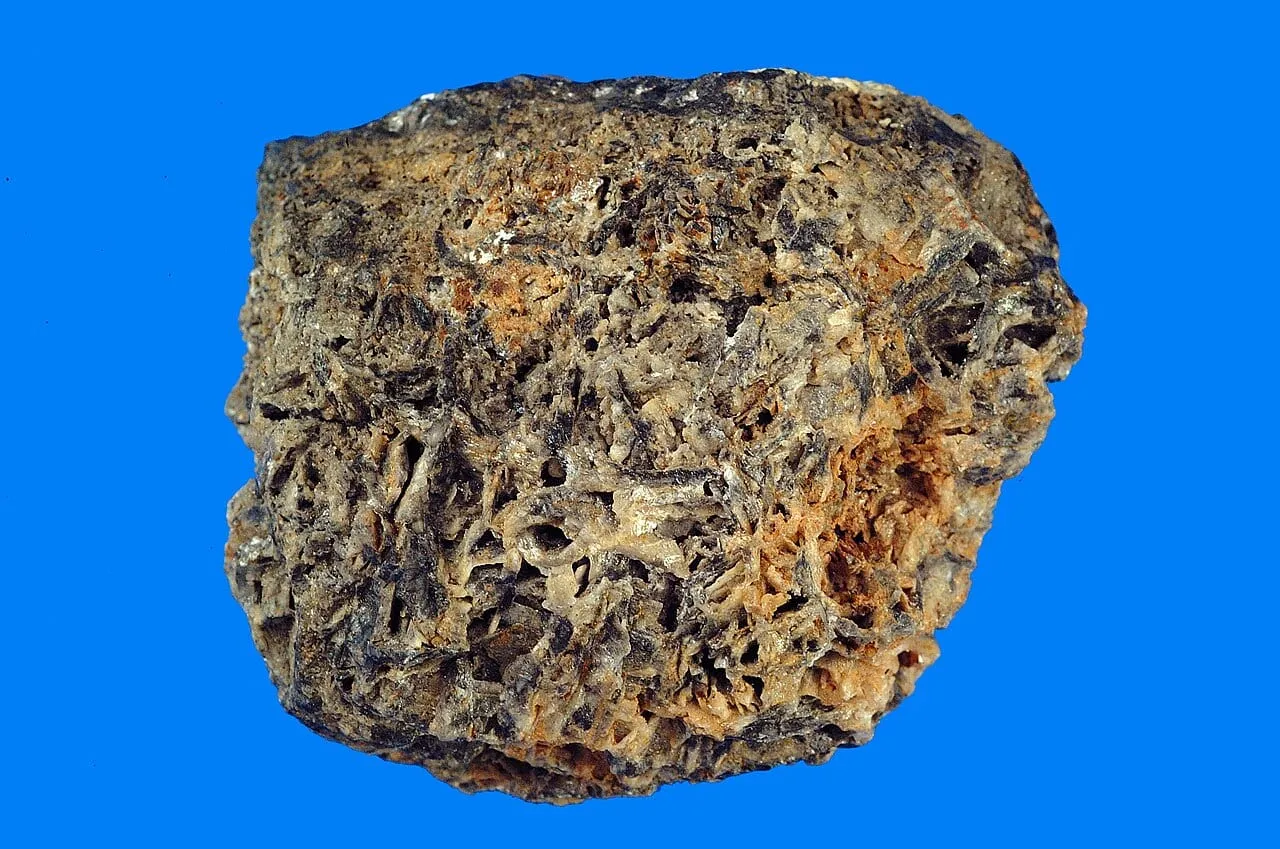
Anglesite
A heavy lead sulfate mineral with a diamond-like shine that grows as a crust around galena; it is named after the island of Anglesey in Wales.
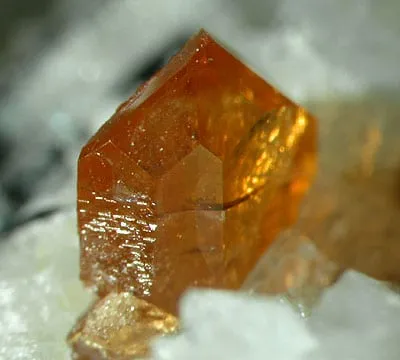
Bastnäsite
One of the main ore minerals of the “rare earth” elements such as cerium, lanthanum and neodymium; a raw material for magnets and electronics.
Borax (tincal)
A sodium borate that dissolves in water and crumbles to white powder in dry air; one of the world’s key tincal deposits is at Kırka in Eskişehir.