VarietyA variety of Quartz
Phantom quartz
SiO₂Hayalet kuvars
Quartz with the silhouette of a second crystal inside: ghostly traces left by pauses in the crystal's growth.
Also known as: Phantom crystal
- Popularly: Semi-precious stone
In short
Phantom quartz is a kind of quartz in which the outline of a smaller crystal of the same shape, the “phantom”, can be seen inside. These inner lines mark the boundary of an earlier growth stage of the crystal. The crystal stops growing for a while, tiny bubbles or specks of another mineral, such as green chlorite, settle on its faces, and when growth resumes this thin layer is left inside. Like all quartz it is silicon dioxide (SiO₂), and phantoms can appear in many varieties of quartz.
Photos
How does it form?
Quartz crystals grow layer by layer from hot, silica-rich water moving through cracks and cavities in rock. In the Ouachita Mountains of Arkansas, these quartz veins were deposited from hot water during the closing stages of mountain building, some 280 to 245 million years ago. Growth does not always run without a break: from time to time a crystal may stop growing for a while.
During such a pause, tiny bubbles may stick to the crystal faces, or fine particles of shale and fine-grained minerals such as chlorite drifting in the water may settle on them. When growth starts again, new quartz covers this thin coating. The outer surface of the earlier crystal is thus preserved inside as a thin line: the phantom. If the crystal stopped and restarted several times, several nested phantoms form. Sometimes a phantom becomes visible through a small change in the crystal’s composition rather than a foreign mineral.
What is it used for?
- Collecting: crystals with phantoms are favourites of mineral collectors and are displayed in museums such as the Oxford University Museum of Natural History and the Bündner Natural History Museum in Switzerland.
- Science and teaching: because phantoms show the stages a crystal went through as it grew, they are a good example for explaining crystal growth.
- Decoration: rough crystals, and pieces polished to bring out the phantom, are used as ornaments and pendants.
Where is it found?
Phantoms can appear almost anywhere quartz grows. In the US state of Arkansas, crystals with chlorite phantoms are found in a quartz belt that stretches about 170 miles (270 km) from Little Rock to Oklahoma, especially in Garland and Montgomery counties; at mines around Mount Ida visitors can dig for crystals for a fee. Water-clear quartz points with moss-green chlorite phantoms are also known from Gouveia in the Brazilian state of Minas Gerais. For quartz in general, see the quartz page.
What determines its value?
The value of phantom quartz depends mostly on the clarity of the host crystal and on how sharp and contrasting the phantom is: crisp, vivid green or white phantoms inside a water-clear crystal are the most sought after. Several nested phantoms, undamaged points and the size of the crystal also add value. Because quartz is a common mineral, phantom quartz is not an expensive stone; its value comes mostly from its beauty as a collector's specimen.
This information is educational, not buying, selling or investment advice. Value varies enormously with quality and treatment.
How to recognise it
- 1
Inside a transparent crystal you see the silhouette of a smaller crystal with the same pointed tip and straight sides, as if there were a crystal within a crystal.
- 2
The phantom line can be green (chlorite), white (tiny bubbles), grey or black (fine rock particles).
- 3
Some crystals hold several nested phantoms, each marking a separate pause in growth.
- 4
Like all quartz it is hard (7) and glassy: it scratches glass, and a steel knife cannot scratch it.
Myths and misconceptions
MythPhantom quartz is a separate mineral or a special type of quartz in its own right.
FactPhantom quartz is silicon dioxide like all quartz; phantoms are a growth feature that can appear in many varieties, from colourless quartz to smoky quartz and amethyst.
MythBlack specks trapped inside quartz crystals are carbon or manganese oxide.
FactAccording to the Arkansas Geological Survey, the black particles captured during growth in the region's quartz crystals are usually fragments of a fine-grained rock called shale, and are often mistaken for carbon or manganese oxides.
What is it believed to be good for?
This section reports beliefs; it is not health information. There is no scientific evidence for these claims and no stone replaces medical treatment.
The meanings people give this stone, and who holds them:
- Today crystal-therapy websites and stone sellers present phantom quartz as a symbol of transformation and “rebirth”, and claim that it helps personal and spiritual growth.
- The same sources claim that meditating with phantom quartz helps people let go of past pain and grief.
What science says
There is no scientific evidence that phantom quartz helps spiritual growth or coping with grief; the phantom inside is a physical trace left by a pause in crystal growth. Lasting grief and emotional distress call for a professional.
Did you know?
According to the Arkansas Geological Survey, phantoms reveal part of the complex growth history of quartz.
Some quartz crystals show four or more phantoms nested inside one another.
Arkansas made quartz crystal its official state mineral by a 1976 act; Mount Ida, a source of crystals with phantoms, calls itself the “quartz crystal capital”.
Where is it found?
Loading map…
- Garland County, Arkansas, USA · Major depositIn the quartz belt of the Ouachita Mountains; the Arkansas Geological Survey illustrates quartz with chlorite phantoms from here
- Mount Ida, Montgomery County, Arkansas, USA · Major depositThe town called the “quartz crystal capital”; fee-digging mines lie around it, and quartz with phantoms is known from Montgomery County
- Gouveia, Minas Gerais, Brazil · Known localityMoss-green chlorite phantoms inside water-clear quartz points
Locations are approximate to protect sites. Red dots mark places in Türkiye. Open in the big map →
Frequently asked questions
What is phantom quartz?
Phantom quartz is a kind of quartz in which the outline of a smaller crystal of the same shape, the “phantom”, can be seen inside. These inner lines mark the boundary of an earlier growth stage of the crystal. The crystal stops growing for a while, tiny bubbles or specks of another mineral, such as green chlorite, settle on its faces, and when growth resumes this thin layer is left inside. Like all quartz it is silicon dioxide (SiO₂), and phantoms can appear in many varieties of quartz.
What is phantom quartz used for?
Collecting: crystals with phantoms are favourites of mineral collectors and are displayed in museums such as the Oxford University Museum of Natural History and the Bündner Natural History Museum in Switzerland. Science and teaching: because phantoms show the stages a crystal went through as it grew, they are a good example for explaining crystal growth. Decoration: rough crystals, and pieces polished to bring out the phantom, are used as ornaments and pendants.
How hard is phantom quartz?
It has a hardness of 7 on the Mohs scale. It scratches glass and steel; a steel knife cannot scratch it. Its specific gravity is 2.65–2.66 g/cm³.
Where is phantom quartz found?
Its best-known localities: Garland County, Arkansas, USA; Mount Ida, Montgomery County, Arkansas, USA; Gouveia, Minas Gerais, Brazil.
How can you tell if phantom quartz is real?
Inside a transparent crystal you see the silhouette of a smaller crystal with the same pointed tip and straight sides, as if there were a crystal within a crystal. The phantom line can be green (chlorite), white (tiny bubbles), grey or black (fine rock particles). Some crystals hold several nested phantoms, each marking a separate pause in growth.
Is phantom quartz valuable?
On the “street to diamond” value ladder it sits on step 5 of nine: Ornamental stone. The value of phantom quartz depends mostly on the clarity of the host crystal and on how sharp and contrasting the phantom is: crisp, vivid green or white phantoms inside a water-clear crystal are the most sought after. Several nested phantoms, undamaged points and the size of the crystal also add value. Because quartz is a common mineral, phantom quartz is not an expensive stone; its value comes mostly from its beauty as a collector's specimen.
What is phantom quartz good for?
Today crystal-therapy websites and stone sellers present phantom quartz as a symbol of transformation and “rebirth”, and claim that it helps personal and spiritual growth. The same sources claim that meditating with phantom quartz helps people let go of past pain and grief. There is no scientific evidence that phantom quartz helps spiritual growth or coping with grief; the phantom inside is a physical trace left by a pause in crystal growth. Lasting grief and emotional distress call for a professional. This section reports beliefs; it is not health information. There is no scientific evidence for these claims and no stone replaces medical treatment.
Family
_1_(33833038263).jpg)

Sources
- Phantom quartz · Wikipedia
- Arkansas Quartz Crystals (J. M. Howard), Brochure Series 001 · Arkansas Geological Survey, 2008
- Phantom quartz (Garland County, Arkansas, USA) 1 (J. St. John) · Wikimedia Commons
- Quartz Point with “Chlorite Phantom” (Gouveia, Minas Gerais, Brazil) · Gemdat.org
- Quartz · Minerals.net
- Chlorite phantom quartz (Bündner Naturmuseum, Chur; T. Monto) · Wikimedia Commons
- Phantom quartz at the Oxford Museum of Natural History (BVBurton) · Wikimedia Commons
- Phantom quartz (5581680186), with four inside phantoms · Wikimedia Commons
- Mount Ida, Arkansas · Wikipedia
- Garland County, Arkansas · Wikipedia
- Gouveia, Minas Gerais · Wikipedia

.jpg)
External links
Draft: awaiting expert reviewReport an error
On the same step
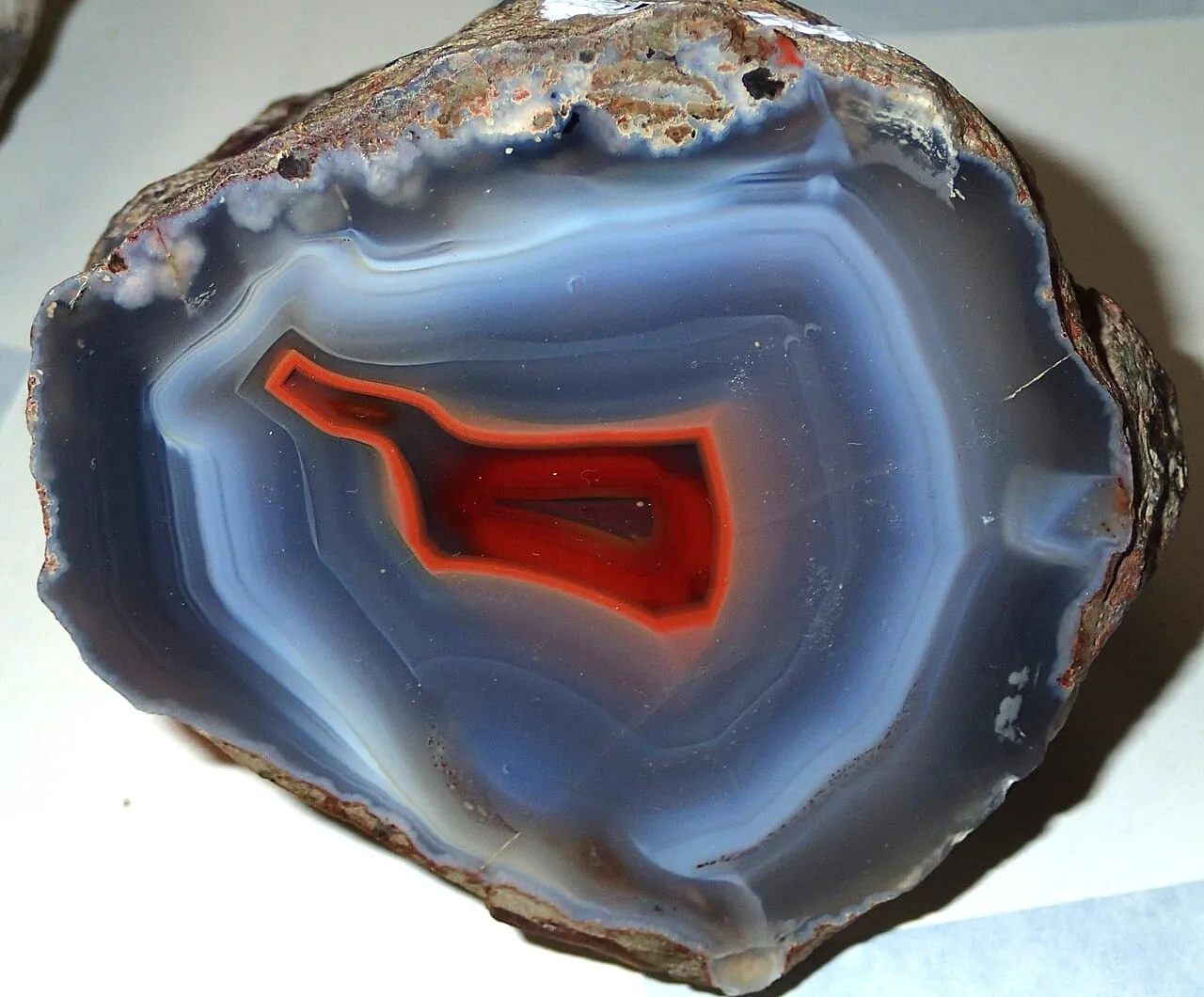
Agate
The banded variety of chalcedony: it grows layer by layer in hollows in volcanic rock and shows a new pattern every time it is cut.

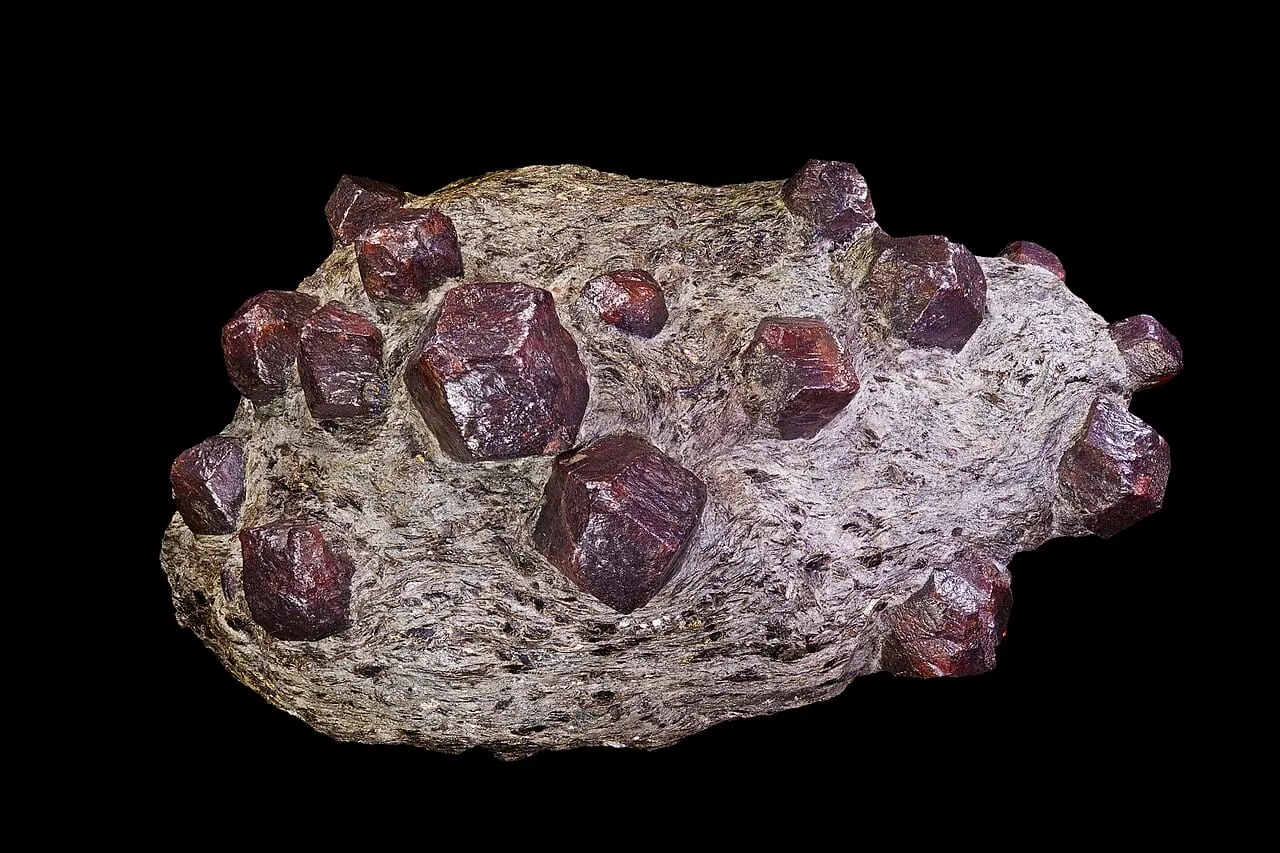
Almandine
The commonest garnet: a deep red, iron-rich stone named after the ancient city of Alabanda in Anatolia, used in jewellery and in sandpaper alike.
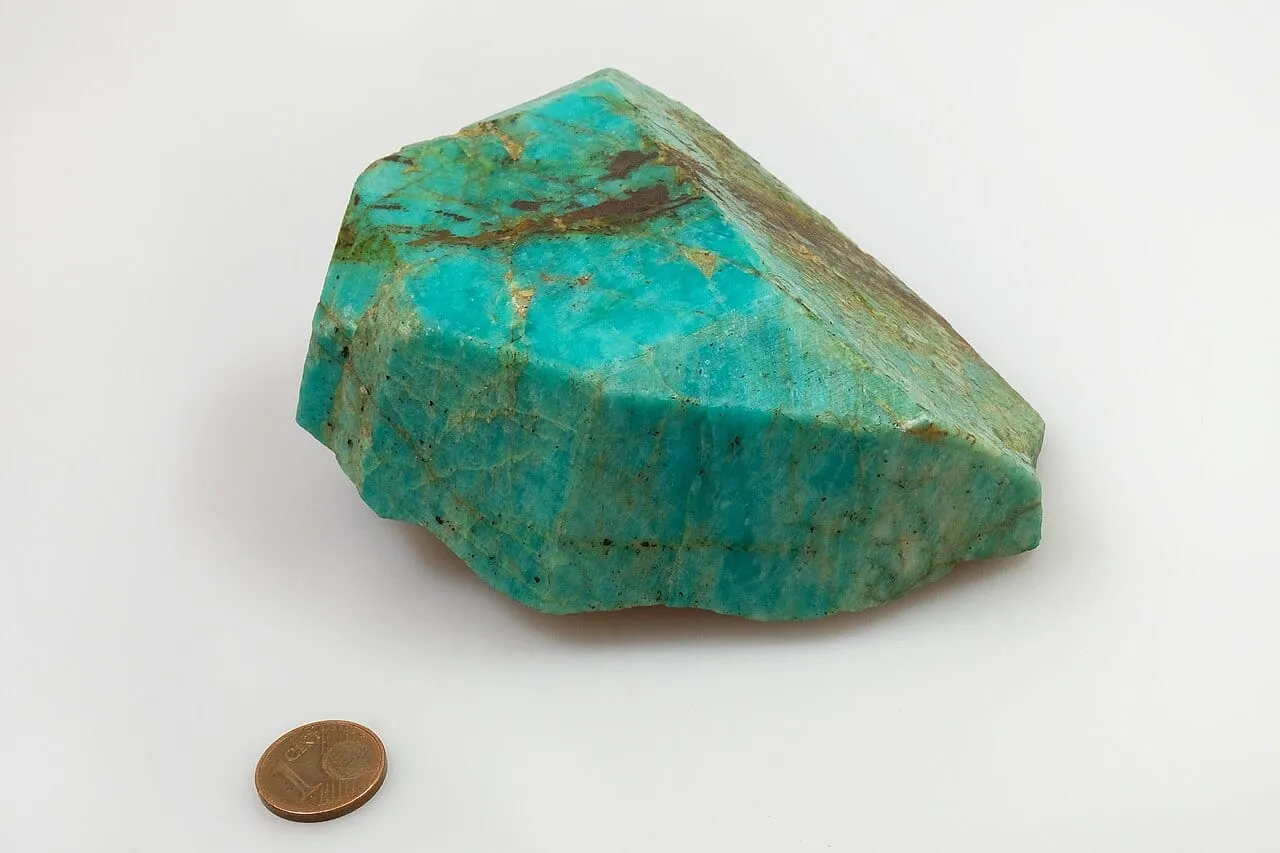
Amazonite
A turquoise-like green-blue feldspar: a variety of microcline worn as jewellery for more than three thousand years, but it can release lead.