Organic gem
Nacre
Sedef
The rainbow-shimmering lining of oyster, mussel and abalone shells: the material pearls are made of, and the star of Ottoman inlay work.
Also known as: Mother-of-pearl · Pearl shell · Pāua (New Zealand abalone shell)
- Popularly: Semi-precious stone

In short
Nacre, or mother-of-pearl, is the hard, lustrous material that lines the inside of some mollusc shells. It is built from microscopic platelets of aragonite stacked with thin organic layers like the bricks and mortar of a wall. This structure gives it both rainbow-like iridescent colours and remarkable toughness. Pearls are made of the same material. Nacre has been used for buttons, jewellery and inlay for thousands of years, and Ottoman mother-of-pearl inlay is one of its most famous uses.
Photos

How does it form?
Nacre is laid down layer by layer on the inside of the shell by the tissue that secretes the shell, called the mantle. The animal first builds a thin organic scaffold of proteins and chitin; calcium carbonate collects in the spaces of this scaffold as particles 50–80 nanometres across and turns into platelets of aragonite. Each platelet grows until it meets its neighbours, so hexagonal platelets stack up like bricks with the organic layers as mortar. New layers are added as the shell grows, which is why older shells have thicker nacre.
If a foreign object entering the shell, or cells trapped inside the animal’s tissue, are coated with nacre, a pearl forms. The main nacre-making animals are pearl oysters, freshwater mussels, abalones, some sea snails and the nautilus.
What is it used for?
- Buttons: mother-of-pearl buttons were very common, especially in the 1900s, punched from the shells of sea snails and freshwater mussels.
- Inlay and decoration: it is inlaid into wood, metal and lacquerware, and used on furniture, chests, doors and window shutters. Pieces of nacre are also set into wall mosaics.
- Jewellery and accessories: necklaces, earrings, ring stones, watch dials and inlaid jewellery.
- Musical instruments: it decorates the fret markers of guitars, accordion bodies and violin bows.
- Materials science: nacre’s light yet very tough structure is a model for designing new ceramics and glasses.
Where is it found?
Nacre is found wherever these molluscs live, in seas, lakes and rivers. The most important commercial sources are pearl oysters: at Broome in Western Australia, Pinctada maxima, the world’s largest pearl oyster, has been gathered and farmed since the 1880s, and the black-lip pearl oyster is farmed in the Tuamotu islands of French Polynesia. The pearl beds of Bahrain were among the most famous in the world from the 1850s to 1930. In the United States, freshwater mussels along the Mississippi River fed a mother-of-pearl button industry. The dark blue and green nacre of the pāua abalone, found only in New Zealand, is one of that country’s icons. International trade in the nacre of some species is regulated under the CITES convention.
Mother-of-pearl inlay in Türkiye
Mother-of-pearl inlay (sedef kakma) is one of the most striking Ottoman decorative arts. The earliest known examples, from the late 15th century, are on the door leaves of the Bayezid II Mosque in Edirne; the art matured in the 16th century and reached its height in the 17th and 18th centuries. Evliya Çelebi wrote that in the 1600s about 5,000 mother-of-pearl craftsmen worked in some 100 workshops in Istanbul alone. Craftsmen carved dark walnut and ebony and set into it mother-of-pearl, tortoiseshell, ivory, bone and silver. The Harem doors of Topkapı Palace and the door and window shutters of the Sultan Ahmed and Süleymaniye mosques are famous examples. Sedefkâr Mehmed Ağa, architect of the Sultan Ahmed (Blue) Mosque, took his name from the twenty years he spent on mother-of-pearl inlay; the walnut throne inlaid with nacre and tortoiseshell that he made for Ahmed I is now in Topkapı Palace.
What determines its value?
The value of nacre depends on the thickness of the nacreous layer, the size of the flat, flawless pieces that can be cut from the shell and the intensity of its iridescence. Rare, vivid colours such as the nacre of gold-lip and black-lip pearl oysters or the blue-green of pāua are more sought after. Cracks, blemishes and dyed colours lower the value. In worked objects, craftsmanship and age decide the value; Ottoman mother-of-pearl inlay is prized far more for its artistry than for the material itself.
This information is educational, not buying, selling or investment advice. Value varies enormously with quality and treatment.
How to recognise it
- 1
The surface shows iridescent pinks, greens, blues and golds that shift as the viewing angle changes. Under a loupe, fine wavy or terraced lines can be seen.
- 2
It usually comes in flat or slightly curved pieces; the back of a piece may still carry a dull, colourless layer left from the outer shell.
- 3
Its hardness is 2.5–4.5, so a steel knife can scratch it. Being calcium carbonate, it fizzes in dilute acid, a test that damages the surface.
- 4
It feels noticeably heavier and cooler than plastic imitations; its specific gravity is about 2.65–2.87.
Safety
Nacre is harmless when worn as jewellery. The dust from cutting and grinding shells should not be breathed in, however: in one mother-of-pearl button factory, 6 of 26 workers who sawed shells (23%) were diagnosed with hypersensitivity pneumonitis caused by shell dust, and their symptoms receded once they were removed from the dust. Use a dust mask and good ventilation when working shell.
Myths and misconceptions
MythMother-of-pearl is obtained from pearls.
FactMother-of-pearl is the layer lining the inside of the shell, and buttons and inlay are cut from the shell, not from pearls. Pearls are made of nacre too, but they grow as free bodies inside the animal's soft tissue.
MythThe inside of every seashell is mother-of-pearl.
FactOnly some molluscs make nacre: pearl oysters, freshwater mussels, abalones, some sea snails and the nautilus, for example. The inner surface of many other shells looks shiny but is not iridescent nacre.
What is it believed to be good for?
This section reports beliefs; it is not health information. There is no scientific evidence for these claims and no stone replaces medical treatment.
The meanings people give this stone, and who holds them:
- In Māori culture pāua shell is regarded as a treasure (taonga); pāua set as the eyes of carved figures is believed to represent the stars (whetū), seen as the eyes of the ancestors looking down from the night sky.
What science says
The place of pāua in Māori culture is not a health claim but a cultural and spiritual meaning passed down through generations. There is no scientific evidence that nacre has any effect on health.
Did you know?
The aragonite platelets of nacre are 10–20 micrometres wide and only about 0.5 micrometres thick. Because this thickness is close to the wavelength of visible light, light interferes within the layers and produces iridescent colours without any dye or pigment.
Nacre's brick-and-mortar structure deflects spreading cracks and makes it far tougher than the aragonite it is made of. By imitating this structure, scientists have grown nacre in the laboratory and developed a glass 200 times tougher than ordinary glass.
Caviar spoons are traditionally made of mother-of-pearl, to keep a metal spoon from affecting the taste of the caviar.
In 1884, button-making from Mississippi River mussel shells began in Muscatine, Iowa, and the town came to be known as “The Pearl Button Capital of the World”.
Where is it found?
Loading map…
- Broome, Western Australia · Major depositThe thick nacre-lined shells of Pinctada maxima, the world's largest pearl oyster, have been gathered here since the 1880s; in 1910 about 3,500 of the town's 5,000 people worked in pearling.
- Tuamotu Islands, French Polynesia · Major depositIslands where the black-lip pearl oyster (Pinctada margaritifera), named for the black margin inside its shell, is farmed; by the late 19th century pearls from the islands were being sold in Europe, and black-pearl farming is now a main source of income.
- Muharraq, Bahrain · Historic sourceA pearling economy built on the pearl-oyster beds of the Persian Gulf, at its height from the 1850s to 1930; this heritage is on UNESCO's World Heritage List.
- Muscatine, Iowa, USA · Historic sourceMaking mother-of-pearl buttons from the shells of Mississippi River freshwater mussels began here in 1884, and the town became known as “The Pearl Button Capital of the World”.
- Coasts of New Zealand · Known localityThe pāua abalone (Haliotis iris), found only in New Zealand; its nacre with dark blue, green and purple reflections is one of the country's icons.
Locations are approximate to protect sites. Red dots mark places in Türkiye. Open in the big map →
Frequently asked questions
What is nacre?
Nacre, or mother-of-pearl, is the hard, lustrous material that lines the inside of some mollusc shells. It is built from microscopic platelets of aragonite stacked with thin organic layers like the bricks and mortar of a wall. This structure gives it both rainbow-like iridescent colours and remarkable toughness. Pearls are made of the same material. Nacre has been used for buttons, jewellery and inlay for thousands of years, and Ottoman mother-of-pearl inlay is one of its most famous uses.
What is nacre used for?
Buttons: mother-of-pearl buttons were very common, especially in the 1900s, punched from the shells of sea snails and freshwater mussels. Inlay and decoration: it is inlaid into wood, metal and lacquerware, and used on furniture, chests, doors and window shutters. Pieces of nacre are also set into wall mosaics. Jewellery and accessories: necklaces, earrings, ring stones, watch dials and inlaid jewellery. Musical instruments: it decorates the fret markers of guitars, accordion bodies and violin bows.
How hard is nacre?
It has a hardness of 2.5–4.5 on the Mohs scale. A fingernail cannot scratch it, but a steel knife can. Its specific gravity is 2.65–2.87 g/cm³.
Where is nacre found?
Its best-known localities: Broome, Western Australia; Tuamotu Islands, French Polynesia; Muharraq, Bahrain; Muscatine, Iowa, USA; Coasts of New Zealand.
How can you tell if nacre is real?
The surface shows iridescent pinks, greens, blues and golds that shift as the viewing angle changes. Under a loupe, fine wavy or terraced lines can be seen. It usually comes in flat or slightly curved pieces; the back of a piece may still carry a dull, colourless layer left from the outer shell. Its hardness is 2.5–4.5, so a steel knife can scratch it. Being calcium carbonate, it fizzes in dilute acid, a test that damages the surface.
Is nacre valuable?
On the “street to diamond” value ladder it sits on step 5 of nine: Ornamental stone. The value of nacre depends on the thickness of the nacreous layer, the size of the flat, flawless pieces that can be cut from the shell and the intensity of its iridescence. Rare, vivid colours such as the nacre of gold-lip and black-lip pearl oysters or the blue-green of pāua are more sought after. Cracks, blemishes and dyed colours lower the value. In worked objects, craftsmanship and age decide the value; Ottoman mother-of-pearl inlay is prized far more for its artistry than for the material itself.
What is nacre good for?
In Māori culture pāua shell is regarded as a treasure (taonga); pāua set as the eyes of carved figures is believed to represent the stars (whetū), seen as the eyes of the ancestors looking down from the night sky. The place of pāua in Māori culture is not a health claim but a cultural and spiritual meaning passed down through generations. There is no scientific evidence that nacre has any effect on health. This section reports beliefs; it is not health information. There is no scientific evidence for these claims and no stone replaces medical treatment.
Is nacre dangerous?
Nacre is harmless when worn as jewellery. The dust from cutting and grinding shells should not be breathed in, however: in one mother-of-pearl button factory, 6 of 26 workers who sawed shells (23%) were diagnosed with hypersensitivity pneumonitis caused by shell dust, and their symptoms receded once they were removed from the dust. Use a dust mask and good ventilation when working shell.
Sources
- Nacre · Wikipedia
- Sedef · Vikipedi
- Sedef kakma · Vikipedi
- Mother of Pearl · Gemdat.org
- Sedefkâr Mehmed Ağa · Wikipedia
- Pinctada maxima · Wikipedia
- Pinctada margaritifera · Wikipedia
- Broome, Western Australia · Wikipedia
- Tuamotus · Wikipedia
- Pearling, Testimony of an Island Economy · Wikipedia
- Muscatine, Iowa · Wikipedia
- Haliotis iris · Wikipedia
- Pāua · Wikipedia
- High prevalence of mollusc shell hypersensitivity pneumonitis in nacre factory workers (Orriols et al.), European Respiratory Journal 10(4) · European Respiratory Society, 1997
External links
Draft: awaiting expert reviewReport an error
On the same step
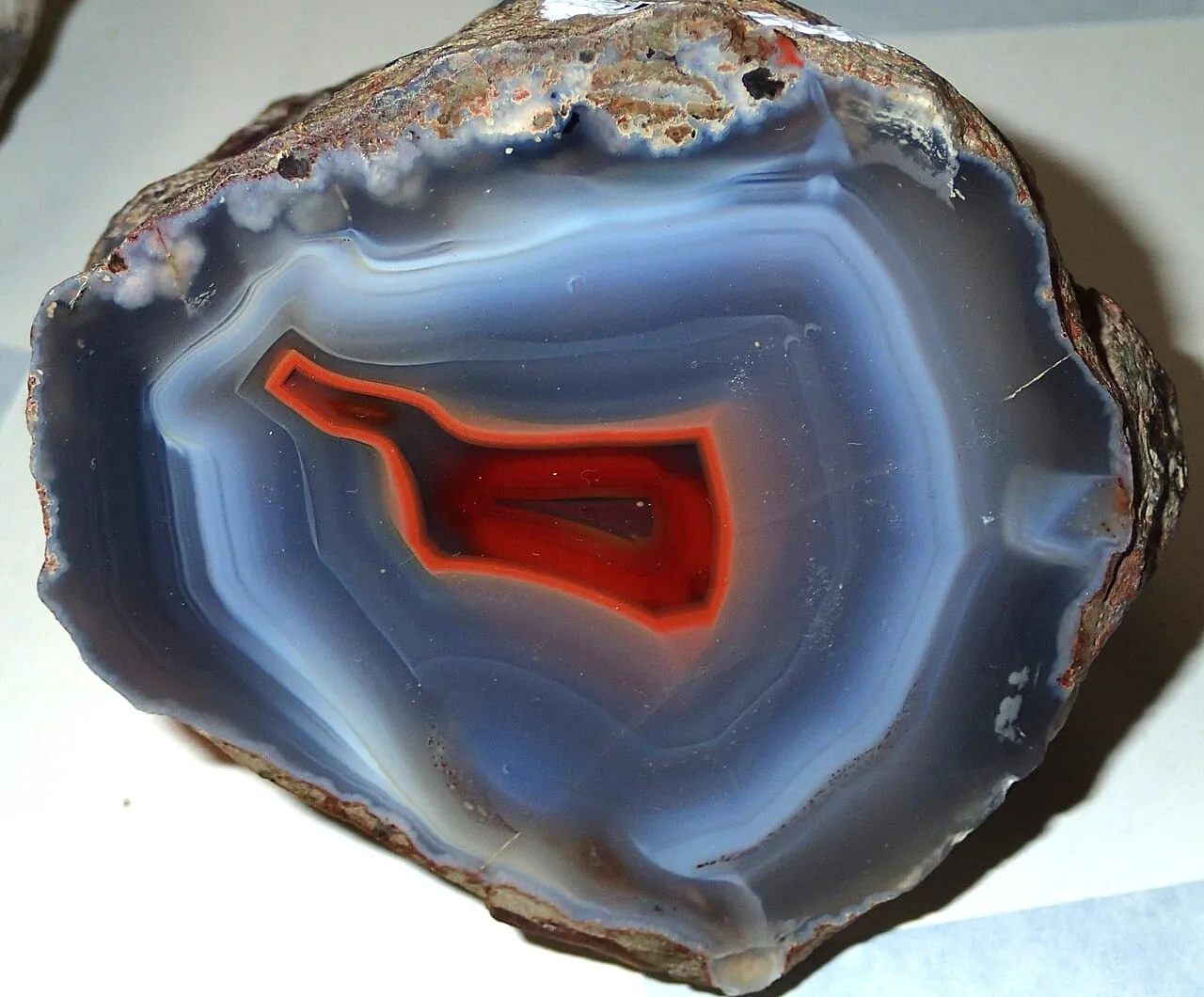
Agate
The banded variety of chalcedony: it grows layer by layer in hollows in volcanic rock and shows a new pattern every time it is cut.

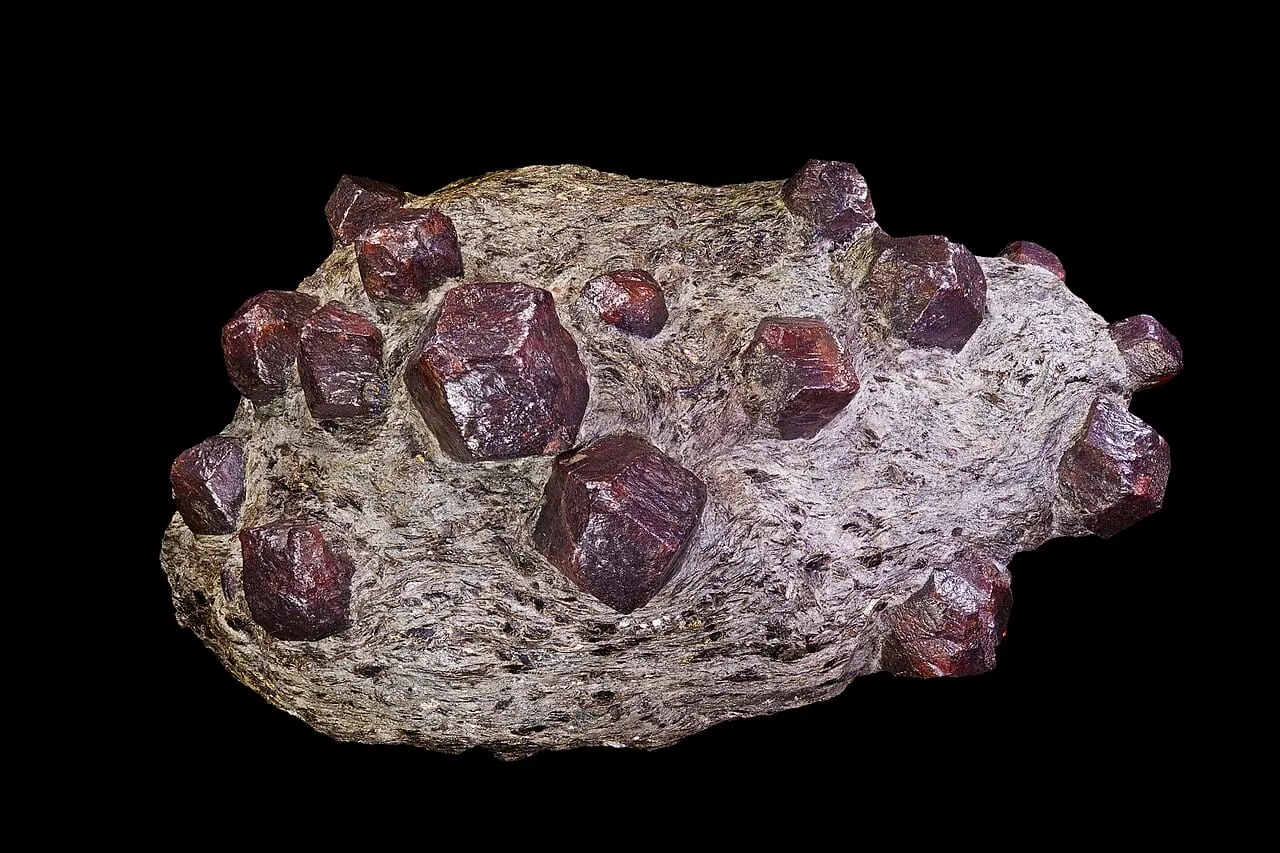
Almandine
The commonest garnet: a deep red, iron-rich stone named after the ancient city of Alabanda in Anatolia, used in jewellery and in sandpaper alike.
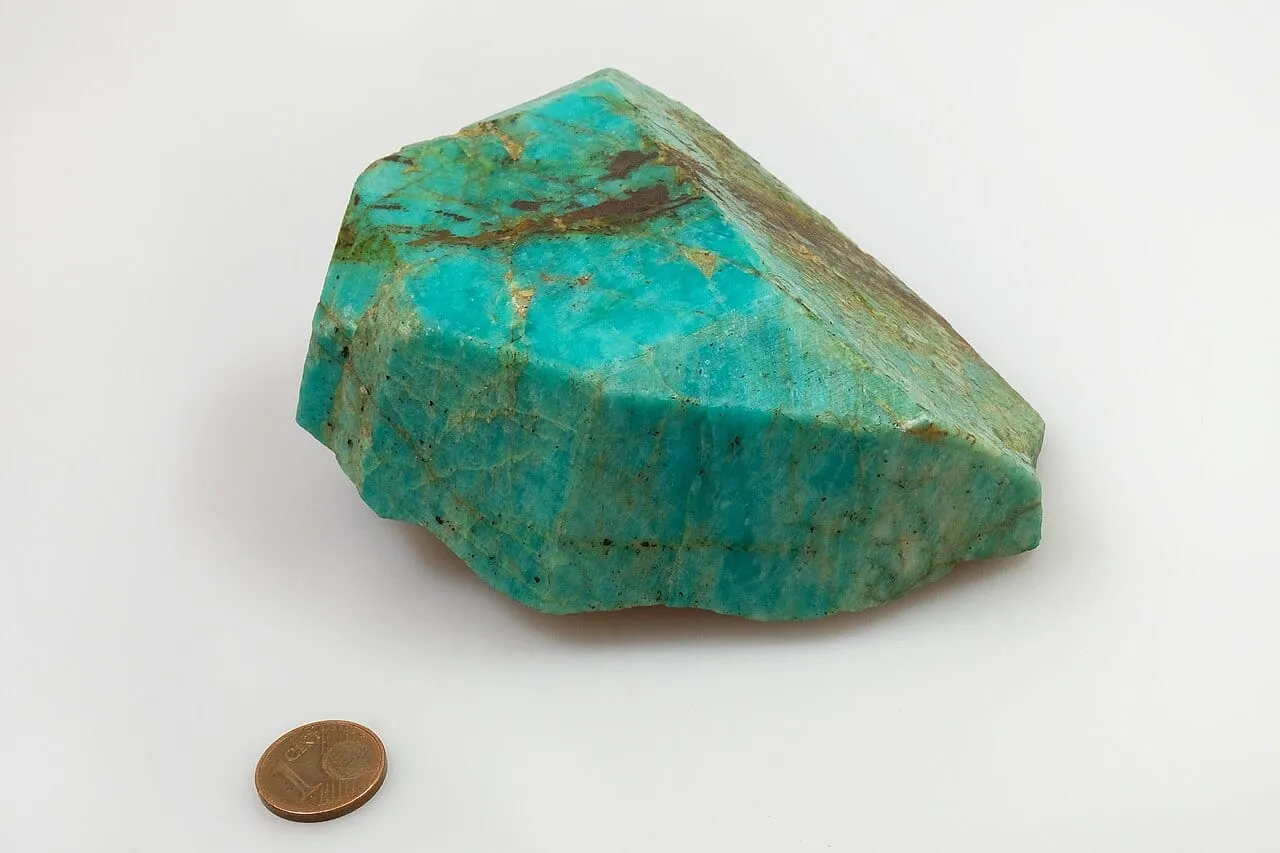
Amazonite
A turquoise-like green-blue feldspar: a variety of microcline worn as jewellery for more than three thousand years, but it can release lead.