Mineral
Lepidolite
K(Li,Al)₃(Si,Al)₄O₁₀(F,OH)₂Lepidolit
A lilac-pink scaly mica: a source of lithium and rubidium; but the lithium in the stone does not pass to people.
Also known as: Lithium mica
- Popularly: Semi-precious stone
- Ornamental
- Ore

In short
Lepidolite is a lilac, pink or purple mica that contains lithium. It usually occurs in granite pegmatites, together with spodumene and tourmaline. It is the most abundant lithium-bearing mineral and a secondary source of lithium, and also an important source of rubidium. Today it is not a separate species recognised by the International Mineralogical Association but a shared name for the lithium micas between polylithionite and trilithionite.
Photos

How does it form?
Lepidolite forms in granite pegmatites, in some high-temperature quartz veins, in greisens and in granites. A pegmatite is a coarse-grained rock that crystallises from the last, water-rich part of a magma, enriched in rare elements such as lithium, rubidium and caesium, as it cools slowly. In these rocks lepidolite often develops by replacing muscovite or biotite (metasomatically), and occurs with spodumene, tourmaline and amblygonite.
What is it used for?
- Lithium ore: As the most abundant lithium-bearing mineral, it is a secondary source of lithium. In 2022 China was reported to have 22 lepidolite mines with valid mining rights, and lithium is also mined in countries such as Zimbabwe. Lithium is one of the key materials of electric-vehicle batteries.
- Source of rubidium: Lepidolite is one of the main sources of rubidium, used in atomic clocks, lasers and fireworks.
- Ornamental stone: Lilac-pink scaly masses are cut and polished into beads and ornaments.
- Collecting and the history of science: The element rubidium was first separated from lepidolite (1861).
What determines its value?
As a lithium ore, the value of lepidolite depends on its lithium content, the size of the deposit, the cost of separating the lithium from the ore and the demand of the battery industry; most of the world's lithium production comes from brines and from other minerals such as spodumene, and lepidolite is a secondary source. As an ornamental stone, a vivid pink-purple colour, evenness of colour and soundness of the mass matter; it is very soft and scratches easily. Collectors look for large plates and specimens that occur with fine companions such as tourmaline.
This information is educational, not buying, selling or investment advice. Value varies enormously with quality and treatment.
How to recognise it
- 1
Thin lilac, pink or purple flakes with a pearly shimmer, or scaly masses; it is very soft (hardness 2.5–3) and splits into leaves even with a fingertip.
- 2
Its flakes are flexible and elastic: they spring back when bent and released.
- 3
In pegmatites it occurs with spodumene, tourmaline (elbaite), amblygonite, quartz and other micas.
- 4
Not every lilac mica is lepidolite; a laboratory analysis showing the lithium content is needed for certain identification.
Safety
Besides lithium, lepidolite also contains fluorine and rubidium. The powder should not be swallowed and no stone water or elixir should be made from it; the fine mica dust released in cutting and grinding should not be inhaled either.
Myths and misconceptions
MythBecause lepidolite contains lithium, holding or carrying the stone balances mood like a lithium medicine.
FactLepidolite does contain lithium (about 3.7–5.4% Li₂O by weight in sample analyses), but the lithium is locked into the atomic structure of the crystal; holding or carrying the stone does not pass lithium into the body. Lithium medicines (such as lithium carbonate) are prescription drugs whose level in the blood is monitored with laboratory tests.
MythLepidolite is a single mineral species.
FactLepidolite is not the name of one species but the shared name of the lithium micas between polylithionite and trilithionite; these micas cannot be told apart by eye.
What is it believed to be good for?
This section reports beliefs; it is not health information. There is no scientific evidence for these claims and no stone replaces medical treatment.
The meanings people give this stone, and who holds them:
- Today crystal-therapy sources present lepidolite as a “peace stone” and claim that, because of the lithium in it, it soothes anxiety and stress and calms the mind.
- The same sources say that the stone relaxes the nervous system, strengthens the immune system and may ease depression and anxiety.
What science says
Lepidolite does contain lithium, but the lithium is locked into the crystal structure and holding or carrying the stone does not pass lithium into the body. The lithium medicines that regulate mood are prescription drugs whose blood level is monitored in a laboratory; a stone cannot take their place. For anxiety, depression or mood problems, see a doctor, and do not stop medication for the sake of a stone. Lepidolite powder should not be swallowed and no stone water should be made from it: besides lithium, the stone contains fluorine and rubidium.
Did you know?
In 1861 Robert Bunsen and Gustav Kirchhoff extracted about 150 kg of lepidolite to obtain a few grams of rubidium salts, and so discovered the element rubidium.
Its name comes from the Greek lepis, “scale”, and points to the mineral's scaly structure.
Where is it found?
Loading map…
- Rožná, near Bystřice nad Pernštejnem, Czechia · Type localityRegarded as the original “lepidolite” type locality
- Pala district, San Diego County, California, USA · Known locality
- Bikita, Masvingo, Zimbabwe · Known localityAn area with a lithium mine; listed as a lepidolite locality in the Handbook of Mineralogy
- Tanco mine, Bernic Lake, Manitoba, Canada · Known locality
- Yichun area, Jiangxi, China · Known localityAn area of intense lepidolite mining in China; the point marks the city of Yichun
- Virgem da Lapa, Minas Gerais, Brazil · Known locality
- Black Hills, South Dakota, USA · Known localityDeposits such as the White Elephant pegmatite
- Mount Mica, near Paris, Maine, USA · Known locality
Locations are approximate to protect sites. Red dots mark places in Türkiye. Open in the big map →
Frequently asked questions
What is lepidolite?
Lepidolite is a lilac, pink or purple mica that contains lithium. It usually occurs in granite pegmatites, together with spodumene and tourmaline. It is the most abundant lithium-bearing mineral and a secondary source of lithium, and also an important source of rubidium. Today it is not a separate species recognised by the International Mineralogical Association but a shared name for the lithium micas between polylithionite and trilithionite.
What is lepidolite used for?
Lithium ore: As the most abundant lithium-bearing mineral, it is a secondary source of lithium. In 2022 China was reported to have 22 lepidolite mines with valid mining rights, and lithium is also mined in countries such as Zimbabwe. Lithium is one of the key materials of electric-vehicle batteries. Source of rubidium: Lepidolite is one of the main sources of rubidium, used in atomic clocks, lasers and fireworks. Ornamental stone: Lilac-pink scaly masses are cut and polished into beads and ornaments.
How hard is lepidolite?
It has a hardness of 2.5–3 on the Mohs scale. A fingernail cannot scratch it, but a steel knife can. Its specific gravity is 2.8–2.9 g/cm³.
Where is lepidolite found?
Its best-known localities: Rožná, near Bystřice nad Pernštejnem, Czechia; Pala district, San Diego County, California, USA; Bikita, Masvingo, Zimbabwe; Tanco mine, Bernic Lake, Manitoba, Canada; Yichun area, Jiangxi, China.
How can you tell if lepidolite is real?
Thin lilac, pink or purple flakes with a pearly shimmer, or scaly masses; it is very soft (hardness 2.5–3) and splits into leaves even with a fingertip. Its flakes are flexible and elastic: they spring back when bent and released. In pegmatites it occurs with spodumene, tourmaline (elbaite), amblygonite, quartz and other micas.
Is lepidolite valuable?
On the “street to diamond” value ladder it sits on step 4 of nine: Fine dimension stone and ore. As a lithium ore, the value of lepidolite depends on its lithium content, the size of the deposit, the cost of separating the lithium from the ore and the demand of the battery industry; most of the world's lithium production comes from brines and from other minerals such as spodumene, and lepidolite is a secondary source. As an ornamental stone, a vivid pink-purple colour, evenness of colour and soundness of the mass matter; it is very soft and scratches easily. Collectors look for large plates and specimens that occur with fine companions such as tourmaline.
What is lepidolite good for?
Today crystal-therapy sources present lepidolite as a “peace stone” and claim that, because of the lithium in it, it soothes anxiety and stress and calms the mind. The same sources say that the stone relaxes the nervous system, strengthens the immune system and may ease depression and anxiety. Lepidolite does contain lithium, but the lithium is locked into the crystal structure and holding or carrying the stone does not pass lithium into the body. The lithium medicines that regulate mood are prescription drugs whose blood level is monitored in a laboratory; a stone cannot take their place. For anxiety, depression or mood problems, see a doctor, and do not stop medication for the sake of a stone. Lepidolite powder should not be swallowed and no stone water should be made from it: besides lithium, the stone contains fluorine and rubidium. This section reports beliefs; it is not health information. There is no scientific evidence for these claims and no stone replaces medical treatment.
Is lepidolite dangerous?
Besides lithium, lepidolite also contains fluorine and rubidium. The powder should not be swallowed and no stone water or elixir should be made from it; the fine mica dust released in cutting and grinding should not be inhaled either.
Sources
- Handbook of Mineralogy: Lepidolite · Mineralogical Society of America
- Lepidolite · Webmineral
- Lepidolite · Wikipedia
- Lepidolit · Wikipedia (Turkish)
- Lithium-rich lepidolite · CSIRO, 2023
- Mineral Commodity Summaries 2026: Lithium · U.S. Geological Survey, 2026
- Chinese lepidolite integral to global lithium supply · Fastmarkets
- Lithium · MedlinePlus (U.S. National Library of Medicine)
- Bikita District · Wikipedia
External links
Draft: awaiting expert reviewReport an error ↗
On the same step
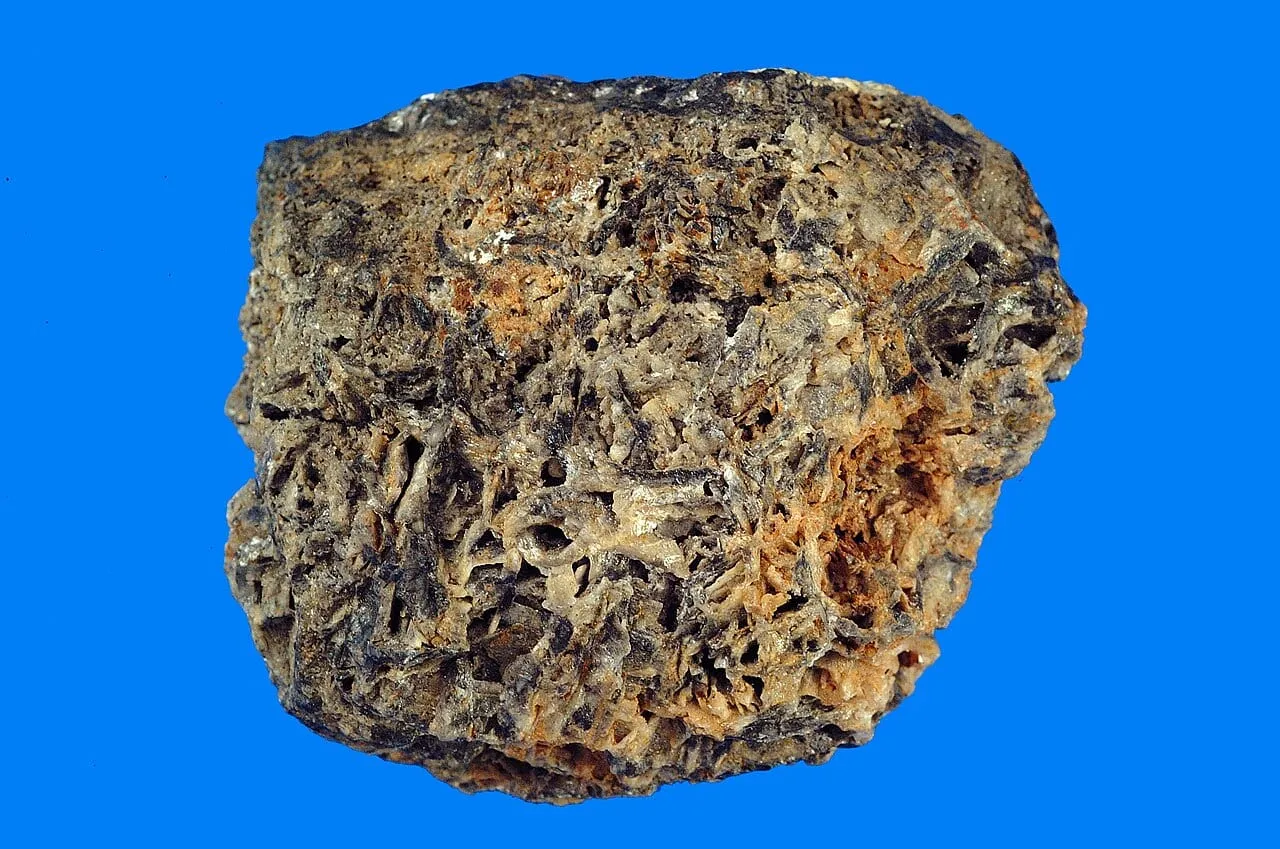
Anglesite
A heavy lead sulfate mineral with a diamond-like shine that grows as a crust around galena; it is named after the island of Anglesey in Wales.
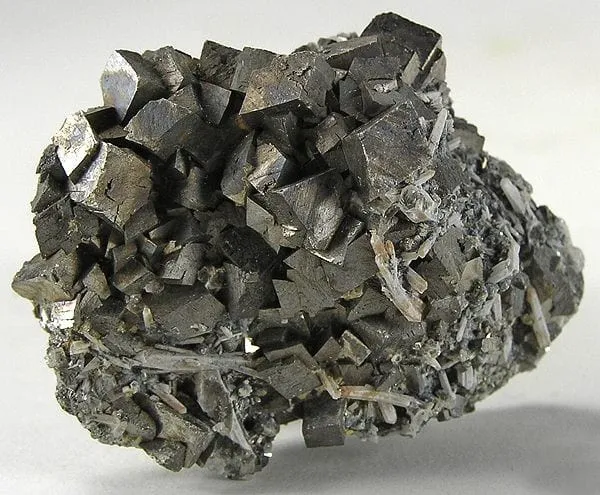
Arsenopyrite
A widespread silvery-grey sulfide containing arsenic: it smells of garlic when struck and is poisonous.
Banded iron formation
An ancient rock of alternating iron-oxide and chert bands: the record of oxygen beginning to build up on Earth, and the main source of iron ore.