Mineral
Kernite
Na₂B₄O₆(OH)₂·3H₂OKernit
A drier, boron-richer cousin of borax: it forms giant fibrous masses in California, and in Türkiye it was found at Kırka as a small nodule.
Also known as: Rasorite (older name)
- Popularly: Ore and raw material
- Ore
- Industrial
- Important in Türkiye

In short
Kernite is a soft, colourless to white boron mineral made of sodium, boron, oxygen and water. It belongs to the same chemical family as borax but holds much less water and much more boron. It splits easily into long, fibrous strips and occurs in giant masses at Boron, California. In Türkiye, among the country’s main borate deposits, kernite is recorded only at Kırka in Eskişehir.
Photos

How does it form?
Like borax, kernite is found in borate deposits formed when salty lakes dried up. According to the Handbook of Mineralogy, in such deposits it either precipitates under warm conditions or forms by metamorphism. In deeply buried deposits such as Kramer in California, kernite is regarded as the result of borax being altered by the heat and pressure of burial. According to Baysal and Ataman, the change between borax and kernite takes place when the activity of water falls, that is, when temperature or pressure rises.
The kernite at Kırka may have formed another way. These two researchers from Hacettepe University point out that the deposit was never buried that deeply, and suggest that the kernite crystallised from warmer solutions that seeped along fine veins from fault cracks into a cavity inside the massive borax.
What is it used for?
- Boron ore: According to the U.S. Geological Survey (USGS), the leading U.S. boron producer makes boric acid from the kernite in its ore, while tincal is the raw material for sodium borate products.
- Glass, ceramics and agriculture: Most boron products go to the glass, ceramics, detergent and fertiliser industries.
- Collecting: Fibrous, clear pieces of kernite are sought by mineral collectors.
In Türkiye
Kırka (Seyitgazi, Eskişehir) is one of the world’s largest tincal (borax) deposits. According to Eti Maden the site was established in 1970 and produces about 3 million tonnes of tincal a year. The deposit’s ore is borax (tincal), not kernite.
Kernite was first found in Türkiye at Kırka. Orhan Baysal and Gürol Ataman of Hacettepe University identified the mineral while studying samples sent from the Etibank Kırka Borax Works, and published their findings in the Bulletin of the Geological Society of Turkey (1975). The kernite lay in an underground gallery, inside massive borax, as a single nodule (ellipsoid) about 60 by 40 centimetres, made of colourless, transparent and partly white needles and bundles. The authors noted that only one nodule had been found so far in the deposit, but that more might appear as mining advanced.
In Helvacı’s (2015) table of the minerals in Türkiye’s borate deposits, too, kernite is recorded only at Kırka, not at Bigadiç, Sultançayır, Kestelek or Emet. Türkiye’s boron output rests on colemanite, ulexite and tincal; kernite is a small detail beside them. Each of these three has its own page: borax, colemanite and ulexite.
What determines its value?
Kernite gets its value as an ore. Its boron oxide (B₂O₃) content is very high (about 51% in theory, against about 36.5% in ten-water borax) and it dissolves very little in cold water, so it is easy to concentrate; even so, the size of the deposit, the cost of mining and processing, and demand for boron from glass, ceramics and agriculture also decide its worth. In Türkiye kernite has been recorded only at Kırka, as a small occurrence; the output there is tincal. Collectors look for large, clear, fibrous specimens whose surface has not turned to white tincalconite.
This information is educational, not buying, selling or investment advice. Value varies enormously with quality and treatment.
How to recognise it
- 1
Colourless and transparent with a glassy to pearly lustre, it forms long, thin needles and fibrous bundles and, when broken, takes on a fibrous, asbestos-like look.
- 2
It is very soft (hardness 2.5–3) and light (specific gravity about 1.9); cleavage fragments are flexible and elastic and can be bent.
- 3
It resembles borax but is denser (borax has a specific gravity of about 1.7) and does not dissolve in cold water as readily; Baysal and Ataman report that it is practically insoluble at 20 °C.
- 4
Its surface can turn over time into a white, chalky coating of tincalconite; specimens with a white surface are common.
Fakes and imitations
What shops usually don’t tell you:
- Kernite has no widely known imitation. Fibrous gypsum (satin spar), fibrous ulexite and borax can look similarly white and silky; telling them apart for certain needs laboratory methods such as X-ray diffraction (Baysal and Ataman likewise confirmed the Kırka specimen by X-ray, chemical and thermal analysis).
Safety
Kernite belongs to the same sodium borate family as borax. Do not swallow it or breathe in its fine dust, and wash your hands after handling it. Borax is classified in the European Union as a substance that may damage fertility or the unborn child; the same caution should apply to kernite, and a specimen should be kept out of the reach of children.
Myths and misconceptions
MythKernite and borax are the same thing; each is just another name for the other.
FactBoth are sodium tetraborates, but they are different minerals: borax is written as “ten-water” (Na₂B₄O₇·10H₂O) and kernite as “four-water” (Na₂B₄O₇·4H₂O). That makes kernite denser, richer in boron and less readily soluble in water than borax. The old name rasorite belongs to kernite, not to borax.
MythKernite is mined at Kırka or at another boron mine in Türkiye.
FactEti Maden’s description of Kırka names only tincal and the borax products made from it. Kernite was identified in Türkiye in the 1970s as a single nodule inside massive borax at Kırka; Boron in California and Tincalayu in Argentina are the places associated with kernite.
Did you know?
It is named after Kern County, California, where it was discovered in 1926; an older name for it is rasorite.
According to Wikipedia, the largest single kernite crystal on record measures about 2.44 × 0.9 × 0.9 metres and weighs about 3.8 tonnes.
Where is it found?
Loading map…
- Boron, Kramer district, Kern County, California, USA · Type localityKernite was found in 1926 in the Kramer borate deposit in the Mojave Desert and named after Kern County. According to Wikipedia the mine here is the world's largest borax mine; according to the USGS, kernite is used in the United States to make boric acid.
- Tincalayu, Salar del Hombre Muerto, Salta, Argentina · Major depositKernite occurs in the Tincalayu borax mine on the northern edge of the salt flat; a scientific paper on kernite from here was published in 1973.
- Kırka, Seyitgazi, Eskişehir, Türkiye · Known localityKernite was first identified in Türkiye here, as a single 60 × 40 cm nodule inside massive borax (Baysal and Ataman). Helvacı (2015) lists Kırka as the only one of Türkiye's five main borate deposits with a kernite record; the deposit is worked for tincal (borax), not for kernite.
Locations are approximate to protect sites. Red dots mark places in Türkiye. Open in the big map →
Frequently asked questions
What is kernite?
Kernite is a soft, colourless to white boron mineral made of sodium, boron, oxygen and water. It belongs to the same chemical family as borax but holds much less water and much more boron. It splits easily into long, fibrous strips and occurs in giant masses at Boron, California. In Türkiye, among the country’s main borate deposits, kernite is recorded only at Kırka in Eskişehir.
What is kernite used for?
Boron ore: According to the U.S. Geological Survey (USGS), the leading U.S. boron producer makes boric acid from the kernite in its ore, while tincal is the raw material for sodium borate products. Glass, ceramics and agriculture: Most boron products go to the glass, ceramics, detergent and fertiliser industries. Collecting: Fibrous, clear pieces of kernite are sought by mineral collectors.
How hard is kernite?
It has a hardness of 2.5–3 on the Mohs scale. A fingernail cannot scratch it, but a steel knife can. Its specific gravity is 1.91–1.91 g/cm³.
Where is kernite found?
Its best-known localities: Boron, Kramer district, Kern County, California, USA; Tincalayu, Salar del Hombre Muerto, Salta, Argentina; Kırka, Seyitgazi, Eskişehir, Türkiye.
Where is kernite found in Türkiye?
Known localities in Türkiye: Kırka, Seyitgazi, Eskişehir, Türkiye.
How can you tell if kernite is real?
Colourless and transparent with a glassy to pearly lustre, it forms long, thin needles and fibrous bundles and, when broken, takes on a fibrous, asbestos-like look. It is very soft (hardness 2.5–3) and light (specific gravity about 1.9); cleavage fragments are flexible and elastic and can be bent. It resembles borax but is denser (borax has a specific gravity of about 1.7) and does not dissolve in cold water as readily; Baysal and Ataman report that it is practically insoluble at 20 °C. Kernite has no widely known imitation. Fibrous gypsum (satin spar), fibrous ulexite and borax can look similarly white and silky; telling them apart for certain needs laboratory methods such as X-ray diffraction (Baysal and Ataman likewise confirmed the Kırka specimen by X-ray, chemical and thermal analysis).
Is kernite valuable?
On the “street to diamond” value ladder it sits on step 4 of nine: Fine dimension stone and ore. Kernite gets its value as an ore. Its boron oxide (B₂O₃) content is very high (about 51% in theory, against about 36.5% in ten-water borax) and it dissolves very little in cold water, so it is easy to concentrate; even so, the size of the deposit, the cost of mining and processing, and demand for boron from glass, ceramics and agriculture also decide its worth. In Türkiye kernite has been recorded only at Kırka, as a small occurrence; the output there is tincal. Collectors look for large, clear, fibrous specimens whose surface has not turned to white tincalconite.
Is kernite dangerous?
Kernite belongs to the same sodium borate family as borax. Do not swallow it or breathe in its fine dust, and wash your hands after handling it. Borax is classified in the European Union as a substance that may damage fertility or the unborn child; the same caution should apply to kernite, and a specimen should be kept out of the reach of children.
Sources
- Handbook of Mineralogy: Kernite · Mineralogical Society of America
- Kernite · Wikipedia
- Türkiye'de Yeni Bir Bor Minerali: Kernit ve Oluşumunun Tartışması (O. Baysal, G. Ataman), Türkiye Jeoloji Kurumu Bülteni 18(1) · Türkiye Jeoloji Kurumu, 1975
- Bor Yataklarının Mineral ve Kimyası Yönünden Genel Değerlendirilmesi ve Gelecek Öngörüsü (C. Helvacı), Madencilik Türkiye, sayı 47 · Madencilik Türkiye, 2015
- Mineral Commodity Summaries 2026: Boron · U.S. Geological Survey, 2026
- Kırka · Eti Maden
- Boron in Turkey · Eti Maden
- Boron, California · Wikipedia
- Salar del Hombre Muerto · Wikipedia
External links
Draft: awaiting expert reviewReport an error ↗
On the same step
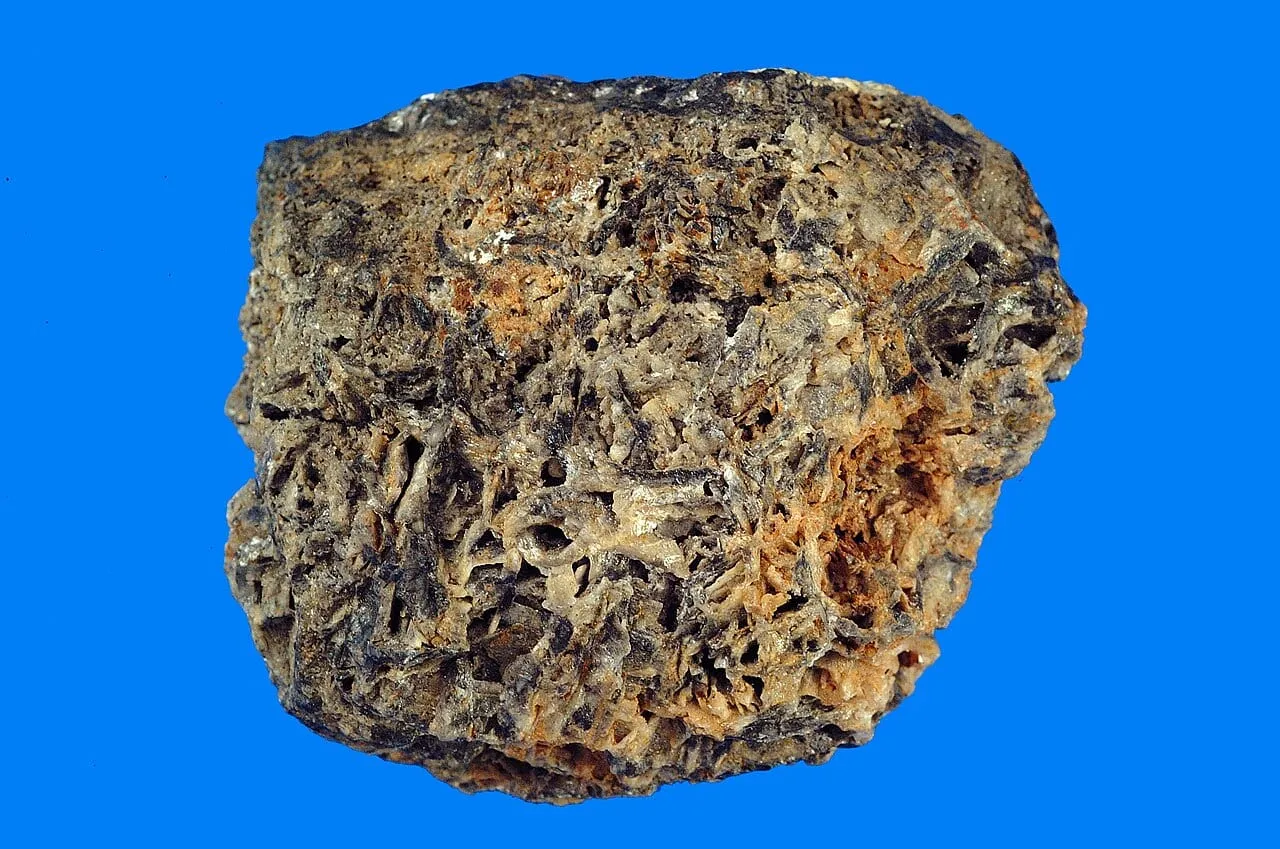
Anglesite
A heavy lead sulfate mineral with a diamond-like shine that grows as a crust around galena; it is named after the island of Anglesey in Wales.
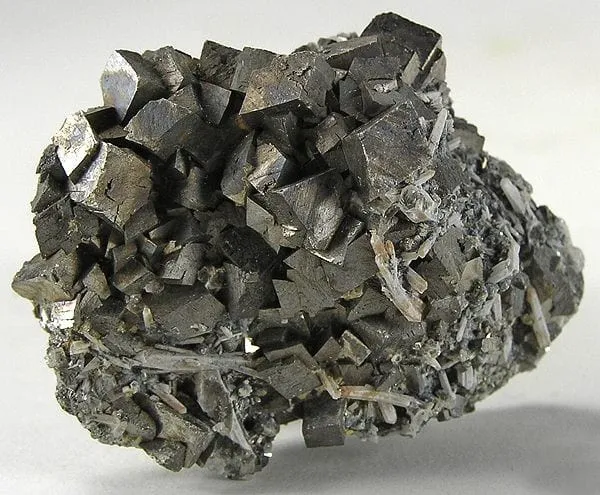
Arsenopyrite
A widespread silvery-grey sulfide containing arsenic: it smells of garlic when struck and is poisonous.
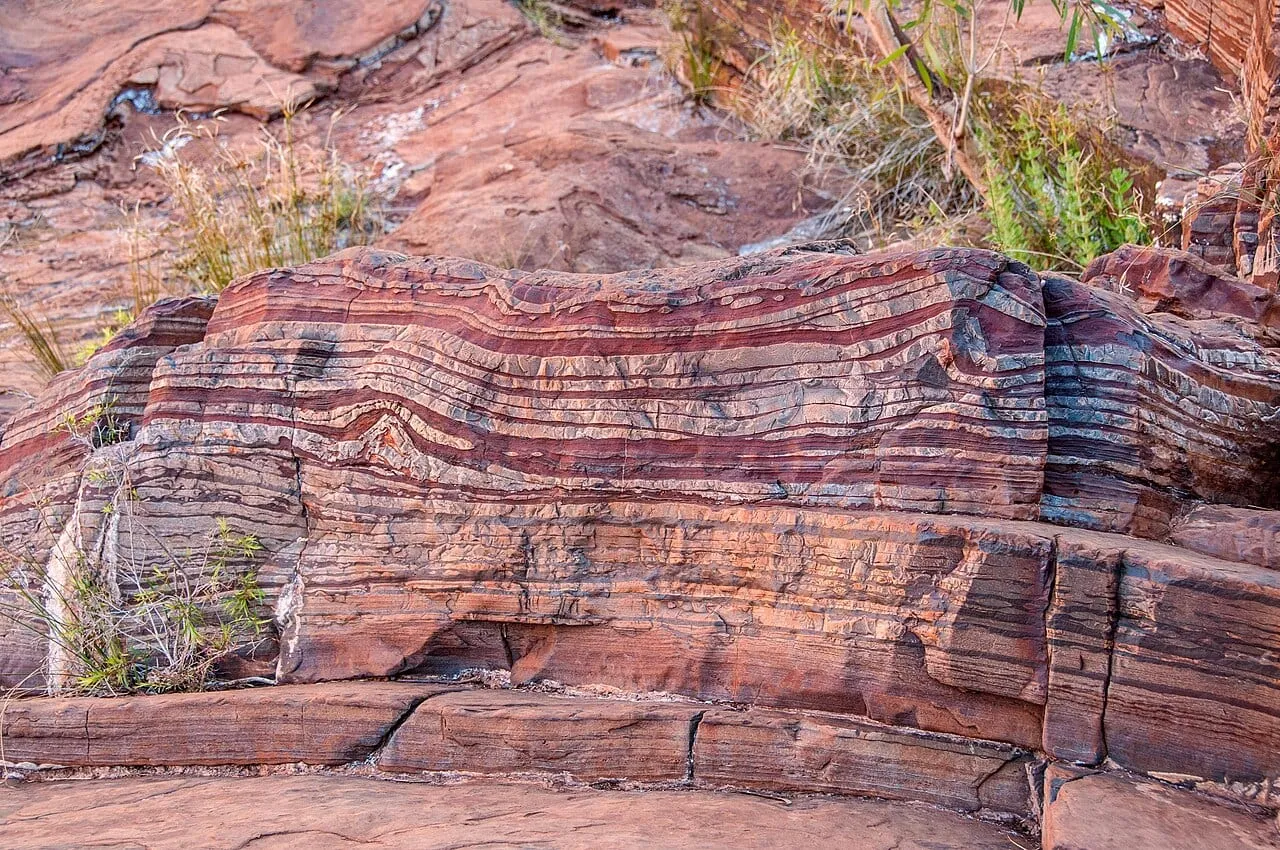
Banded iron formation
An ancient rock of alternating iron-oxide and chert bands: the record of oxygen beginning to build up on Earth, and the main source of iron ore.