Mineral
Colemanite
CaB₃O₄(OH)₃·H₂OKolemanit
The backbone of Türkiye’s boron wealth: a calcium borate used to make heat-resistant glass and glass fibre.
- Ore
- Industrial
- Important in Türkiye

In short
Colemanite is a colourless or white mineral made of calcium, boron, oxygen and water. It formed millions of years ago in salty lakes in volcanic regions. Most of Türkiye’s boron deposits are colemanite, making it one of the country’s most important mineral resources.
How does it form?
Colemanite occurs in evaporite deposits that formed in closed lakes in arid volcanic regions, fed by boron-rich hot springs. The large boron deposits of western Anatolia were also laid down in such lakes, during the Miocene. Colemanite usually occurs as nodules and lenses between layers of clay and limestone.
What is it used for?
Boron minerals have more than 300 applications, but according to the USGS more than three-quarters of world consumption goes into ceramics, detergents, fertilisers and glass. Colemanite is especially favoured for heat-resistant glass and for the glass fibre used in insulation and textiles. Ground colemanite is also used in agriculture.
In Türkiye
According to the USGS, Türkiye has by far the largest reported boron reserves in the world, and about 70% of its deposits are colemanite. Eti Maden puts Türkiye’s share of world boron reserves at about 73%. Colemanite is mined mainly at Emet in Kütahya, Bigadiç in Balıkesir and Kestelek in Bursa; the deposits are worked by the state company Eti Maden.
How to recognise it
- 1
It occurs as glassy, colourless to milky-white short prismatic crystals, or as nodules in clay.
- 2
Its hardness is 4.5, quite hard for a borate: a fingernail cannot scratch it. Borax and ulexite are much softer.
- 3
Unlike borax, it does not dissolve easily in water.
- 4
It can look like calcite, but it does not fizz like calcite when acid is dropped on it.
Fakes and imitations
What shops usually don’t tell you:
- Colemanite has no common imitation. Its colourless crystals can be confused with calcite or quartz: calcite fizzes in acid and is softer (3), while quartz is much harder (7).
- Collector specimens may have repairs, such as broken crystals glued back on; the seller should disclose these.
Did you know?
It is named after William Tell Coleman, one of the pioneers who built the borax industry in 19th-century California.
Some colemanite specimens glow pale yellowish under ultraviolet (UV) light (fluorescence).
Where is it found?
Loading map…
- Furnace Creek, Death Valley, California, USA · Type locality
- Emet, Kütahya, Türkiye · Major depositThe world’s largest colemanite deposit (Hisarcık–Espey), according to Eti Maden
- Bigadiç, Balıkesir, Türkiye · Major depositColemanite and ulexite production
Locations are approximate to protect sites. Red dots mark places in Türkiye. Open in the big map →
Sources
- Handbook of Mineralogy: Colemanite · Mineralogical Society of America
- Mineral Commodity Summaries 2026: Boron · U.S. Geological Survey, 2026
- Boron in Turkey · Eti Maden
- Emet · Eti Maden
External links
Draft: awaiting expert reviewReport an error ↗
On the same step
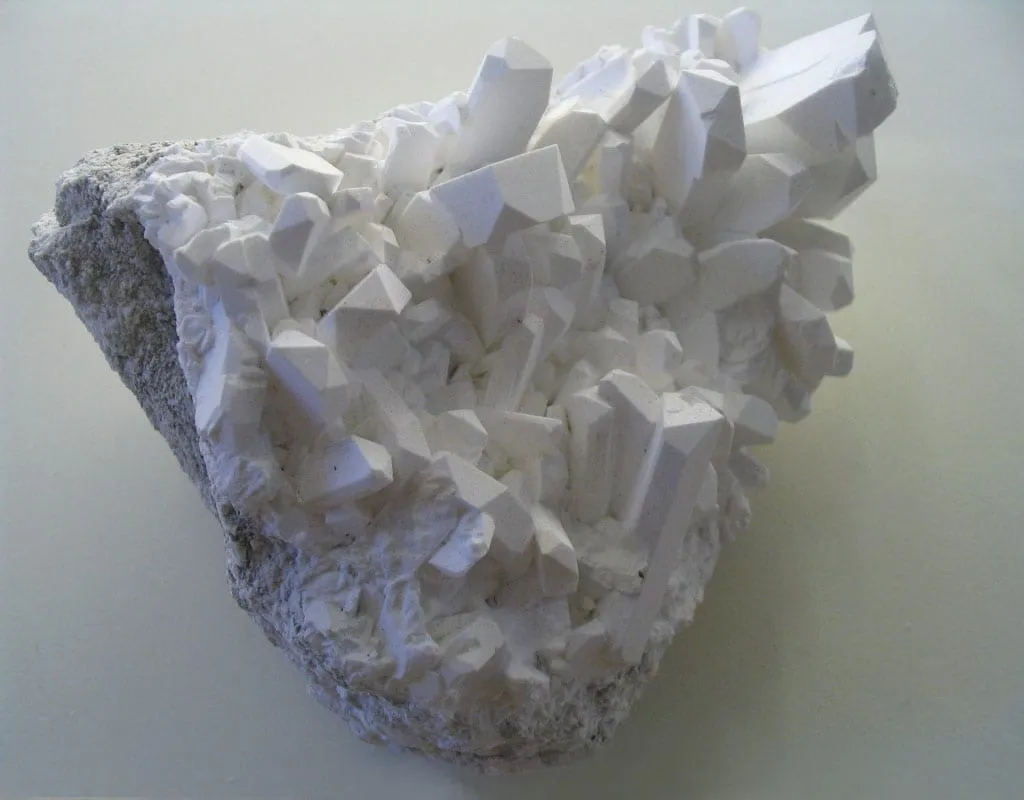
Borax (tincal)
A sodium borate that dissolves in water and crumbles to white powder in dry air; one of the world’s key tincal deposits is at Kırka in Eskişehir.
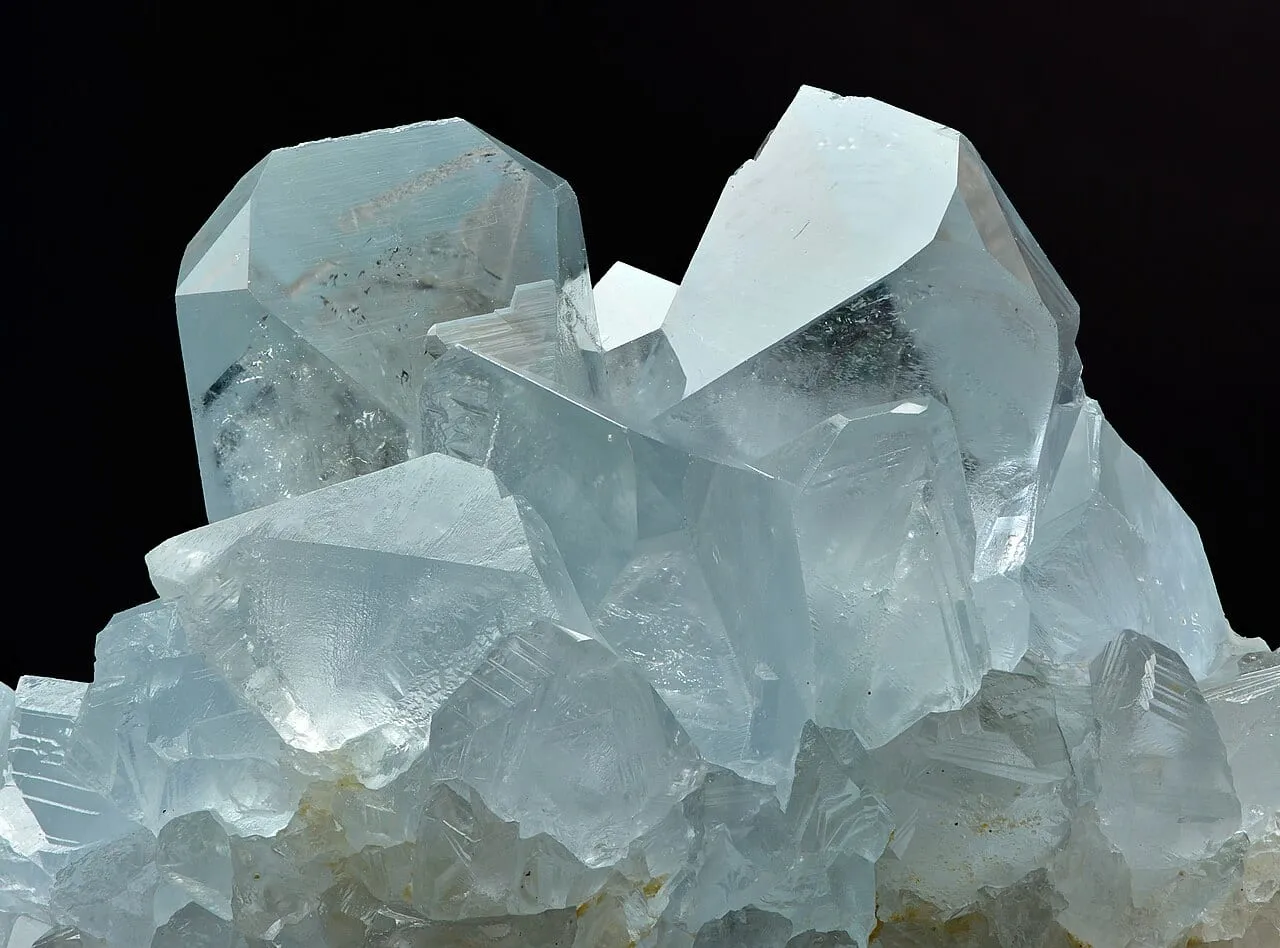
Celestine
A strontium mineral named after the sky, often forming pale blue crystals; the source of the red in fireworks.
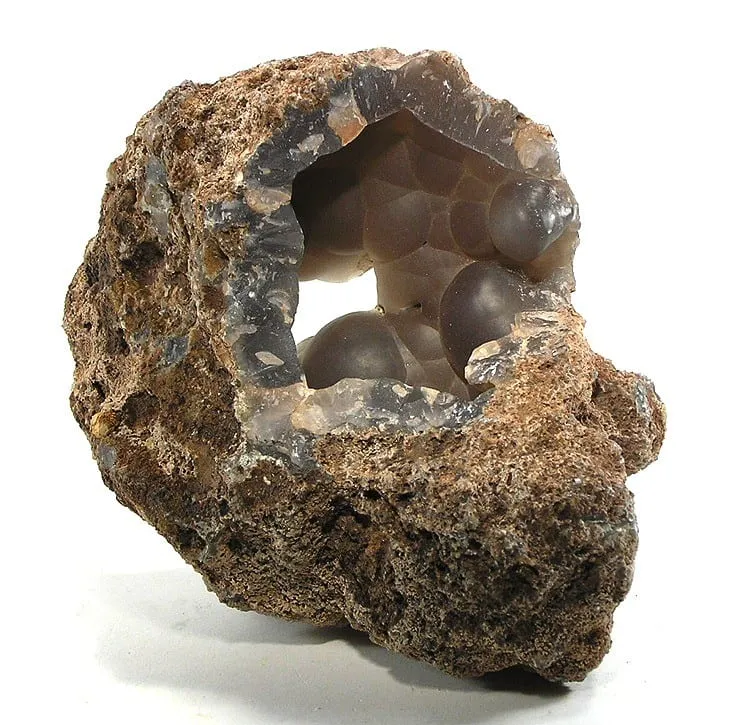
Chalcedony
A waxy-lustred stone made of quartz crystals far too small to see: the family name for agate, onyx and many other ornamental stones.