Meteorite
Howardite
Hovardit
Rubble rock from the surface of asteroid Vesta: a mix of eucrite and diogenite fragments; the first documented fall landed in Bingöl in 2015.
Also known as: HED meteorite (howardite)
- Popularly: Meteorite

In short
Howardites are achondrites from the surface of the large asteroid 4 Vesta, between Mars and Jupiter, and belong to the HED meteorite clan. They are “regolith breccias” made mostly of fragments of eucrite (Vesta's basaltic crust) and diogenite (pyroxenite from deeper in the crust), rocks formed in the layer of dust and rubble on the asteroid's surface. About 200 distinct howardites are known. The Sarıçiçek meteorite, which fell in Bingöl, Türkiye, in 2015, is the first documented howardite fall.
How does it form?
Vesta melted and separated into layers at the start of the Solar System. The upper part of its crust is made of basaltic eucrites, the deeper part of pyroxenitic diogenites. Over billions of years, impacts on Vesta broke these rocks and scattered them over the surface, where a layer of dust and rubble (regolith) built up.
These fragments were buried by later impacts and hardened under the pressure of the layers above into howardites. Later large impacts blasted these rocks into space, and some pieces reached Earth. Mixtures with more than nine parts eucrite to one part diogenite are called “polymict eucrites”.
What is it used for?
- Vesta’s surface: Howardites are samples of Vesta’s surface layer and are compared with observations by NASA’s Dawn spacecraft.
- Source craters: The Sarıçiçek study helped identify the source crater of HED meteorites on Vesta.
- Impact hazard: They are used in assessing the risk of Vesta-family asteroids hitting Earth.
In Türkiye
The first documented howardite fall is in Türkiye: the Sarıçiçek meteorite fell on the night of 2 September 2015 on and around the village of Sarıçiçek in Bingöl. 343 stones were documented, totalling 24.78 kilograms. The international study led by Ozan Ünsalan of Ege University and Peter Jenniskens of the NASA-SETI Institute showed that the meteorite came from Antonia crater on Vesta.
What determines its value?
Howardites are rare meteorites: about 200 distinct specimens are known. Coming from a well-known asteroid like Vesta makes them valuable for science and collecting. A piece's value depends on its mass, freshness, whether its fragmental structure shows in a cut face and above all whether it belongs to an observed fall such as Sarıçiçek.
This information is educational, not buying, selling or investment advice. Value varies enormously with quality and treatment.
How to recognise it
- 1
A black fusion crust outside; light grey inside, with a mixed look of light and dark fragments.
- 2
On a cut face, different rock fragments (eucrite and diogenite clasts) look welded together.
- 3
Only laboratory analysis can show that a stone is a howardite and comes from Vesta.
Myths and misconceptions
MythStones that fall from the sky form in the same way as rocks on Earth.
FactRegolith breccias such as howardites do not form on Earth: they form on the surfaces of airless bodies, in the layer of dust and rubble built up by impacts.
Did you know?
They are named after Edward Howard, a pioneer of meteorite science.
Regolith breccias do not form on Earth, because such a layer of dust and rubble does not build up on bodies with an atmosphere.
The study of Sarıçiçek showed that many HED meteorites were launched from the 16.7-kilometre Antonia crater on Vesta about 22 million years ago.
Where is it found?
Loading map…
- Sarıçiçek village and surroundings, Bingöl · Known localitySarıçiçek, which fell on 2 September 2015, is the first documented howardite fall; 343 stones (24.78 kg) were collected. The point marks the town of Bingöl.
Locations are approximate to protect sites. Red dots mark places in Türkiye. Open in the big map →
Frequently asked questions
What is howardite?
Howardites are achondrites from the surface of the large asteroid 4 Vesta, between Mars and Jupiter, and belong to the HED meteorite clan. They are “regolith breccias” made mostly of fragments of eucrite (Vesta's basaltic crust) and diogenite (pyroxenite from deeper in the crust), rocks formed in the layer of dust and rubble on the asteroid's surface. About 200 distinct howardites are known. The Sarıçiçek meteorite, which fell in Bingöl, Türkiye, in 2015, is the first documented howardite fall.
How do howardites form?
Impacts on Vesta shattered the eucrite and diogenite rocks of its crust and scattered them across the surface. These fragments were buried by later impacts and hardened into stone under the pressure of the layers above. The resulting mixed rock is called howardite.
What is howardite used for?
Vesta's surface: Howardites are samples of Vesta's surface layer and are compared with observations by NASA's Dawn spacecraft. Source craters: The Sarıçiçek study helped identify the source crater of HED meteorites on Vesta. Impact hazard: They are used in assessing the risk of Vesta-family asteroids hitting Earth.
How hard is howardite?
It has a hardness of 5–6.5 on the Mohs scale. It can scratch glass; a steel knife scratches it only with difficulty. Its specific gravity is 2.83–3.21 g/cm³.
Where is howardite found?
Its best-known localities: Sarıçiçek village and surroundings, Bingöl.
Where is howardite found in Türkiye?
Known localities in Türkiye: Sarıçiçek village and surroundings, Bingöl.
How can you tell if howardite is real?
A black fusion crust outside; light grey inside, with a mixed look of light and dark fragments. On a cut face, different rock fragments (eucrite and diogenite clasts) look welded together. Only laboratory analysis can show that a stone is a howardite and comes from Vesta.
Is howardite valuable?
On the “street to diamond” value ladder it sits on step 6 of nine: Fine ornamental and collector stone. Howardites are rare meteorites: about 200 distinct specimens are known. Coming from a well-known asteroid like Vesta makes them valuable for science and collecting. A piece's value depends on its mass, freshness, whether its fragmental structure shows in a cut face and above all whether it belongs to an observed fall such as Sarıçiçek.
Sources
- Howardite · Wikipedia
- The Sariçiçek howardite fall in Turkey: Source crater of HED meteorites on Vesta and impact risk of Vestoids (O. Unsalan et al.), Meteoritics & Planetary Science 54 · The Meteoritical Society, 2019
- Meteorite porosities and densities: a review of trends in the data (D. T. Britt & G. J. Consolmagno), Lunar and Planetary Science XXXV, abstract 2108 · Lunar and Planetary Institute, 2004
- Handbook of Mineralogy: Enstatite · Mineralogical Society of America
External links
Draft: awaiting expert reviewReport an error
On the same step
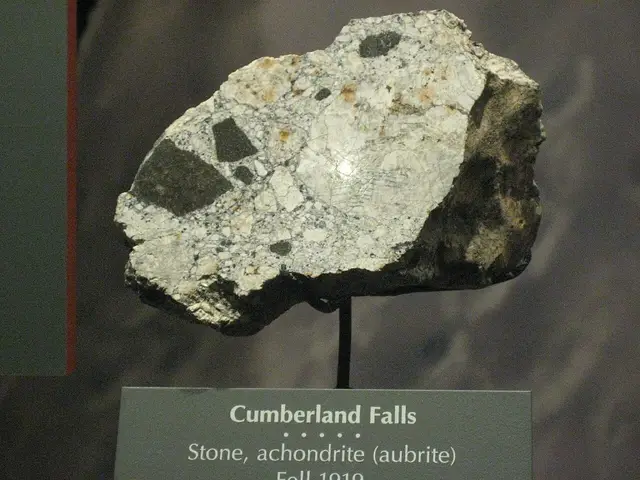
Achondrite
Stony meteorites with no chondrules: rock from melted asteroids, the Moon and Mars, and hard to recognise because they look like Earth rocks.
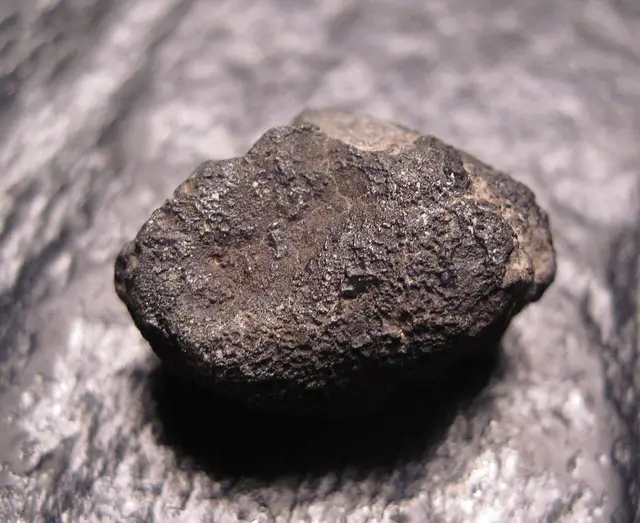
Allende meteorite
The most studied meteorite in history: the largest carbonaceous chondrite, which fell in Mexico in 1969 carrying the first solids of the Solar System.
Amber
Tree resin fossilised over millions of years: a light, warm organic gem that sometimes holds prehistoric insects.