Mineral
Cinnabar
HgSZinober
The main ore of mercury: a blood-red mineral used as paint for thousands of years, but one that demands care because of its mercury.
Also known as: Vermilion (as a pigment)
- Ore
- Handle with care
- Important in Türkiye

In short
Cinnabar is a bright red mineral made of mercury and sulfur. Most of the world’s mercury has been produced from it. Ground to powder it gives a vivid red paint, so it has been used in paintings and decoration since ancient times; but when heated it releases toxic mercury vapour.
How does it form?
Cinnabar forms when relatively low-temperature hydrothermal fluids cool near the Earth’s surface. It is therefore found mostly in areas of young volcanic activity and hot springs, along cracks and faults. It may be accompanied by pyrite, stibnite, realgar, quartz and calcite, and sometimes by small amounts of native liquid mercury.
In Türkiye
Many mercury deposits are known in Türkiye, especially in the Aegean region and Central Anatolia. A study published in the MTA journal describes Karaburun in İzmir as Türkiye’s oldest known mercury mine, and also lists deposits such as Karareis, Halıköy (Beydağ) and Sızma-Ladik in Konya. Etibank’s mercury plant at Halıköy was set up in 1960 and closed in 1994.
What is it used for?
For centuries cinnabar was roasted to produce mercury. Mercury was used in thermometers, measuring instruments and some chemical plants. As the harm mercury does to human health and nature became clear, its use was greatly restricted by international agreements. Powdered cinnabar was also used as the red pigment vermilion; today it has largely been replaced by other pigments.
How to recognise it
- 1
Its streak is bright scarlet. Similar-coloured hematite has a reddish-brown streak, and realgar an orange-yellow one.
- 2
It is very heavy for a non-metallic mineral (specific gravity about 8.1).
- 3
It is soft (hardness 2–2.5) and has an adamantine to dull lustre.
- 4
It usually occurs as crusts, veinlets or small grains on quartz, calcite or other rocks.
Fakes and imitations
What shops usually don’t tell you:
- Most carved red “cinnabar” jewellery and ornaments are not the mineral at all, but red-coloured lacquer or resin.
- Other stones dyed red and red resin fillings may be sold as cinnabar; an unusual streak colour or a light weight should raise suspicion.
- There are look-alike minerals such as realgar (an arsenic sulfide) and cuprite; realgar is toxic too.
Safety
Cinnabar contains mercury. Although briefly handling the mineral poses very little risk, it must never be heated, crushed to powder, sanded or put in the mouth: mercury vapour released on heating can seriously damage the nervous system, lungs and kidneys when inhaled. Wash your hands after touching it, and keep specimens in a closed container out of children’s reach. Some specimens carry droplets of silvery liquid mercury; do not touch them. Never use cinnabar in food, cosmetics or medicines.
Did you know?
The Turkish name “zincifre” and the English “cinnabar” both go back to a Persian word thought to mean “dragon’s blood”, for its red colour.
The mercury mines of Almadén in Spain and Idrija in Slovenia were inscribed together on the UNESCO World Heritage List as the “Heritage of Mercury”.
Where is it found?
Loading map…
- Almadén, Ciudad Real, Spain · Major depositWorked since Roman times, one of the world’s richest mercury regions; a UNESCO World Heritage Site together with Idrija
- Idrija, Slovenia · Historic sourceLarge mercury mine worked for centuries
- Wanshan, Guizhou, China · Known localityLarge, lustrous collector crystals
- Halıköy, Beydağ, İzmir, Türkiye · Historic sourceEtibank’s mercury operation; the plant was set up in 1960 and closed in 1994
- Karaburun, İzmir, Türkiye · Historic sourceOne of Türkiye’s oldest known mercury mines; small amounts of native mercury with the cinnabar
Locations are approximate to protect sites. Red dots mark places in Türkiye. Open in the big map →
Sources
- Handbook of Mineralogy: Cinnabar · Mineralogical Society of America
- Civa (M. Yıldız) · MTA Dergisi
- History · Eti Maden
- Mercury and health (fact sheet) · World Health Organization
External links
Draft: awaiting expert reviewReport an error ↗
On the same step
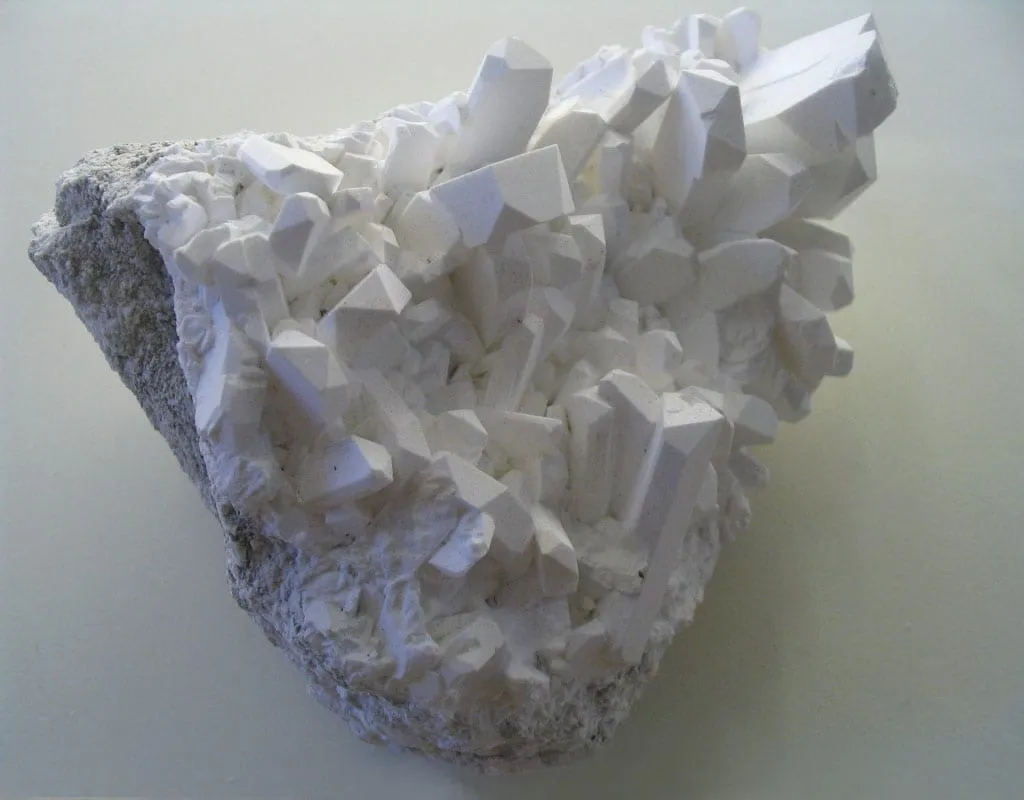
Borax (tincal)
A sodium borate that dissolves in water and crumbles to white powder in dry air; one of the world’s key tincal deposits is at Kırka in Eskişehir.
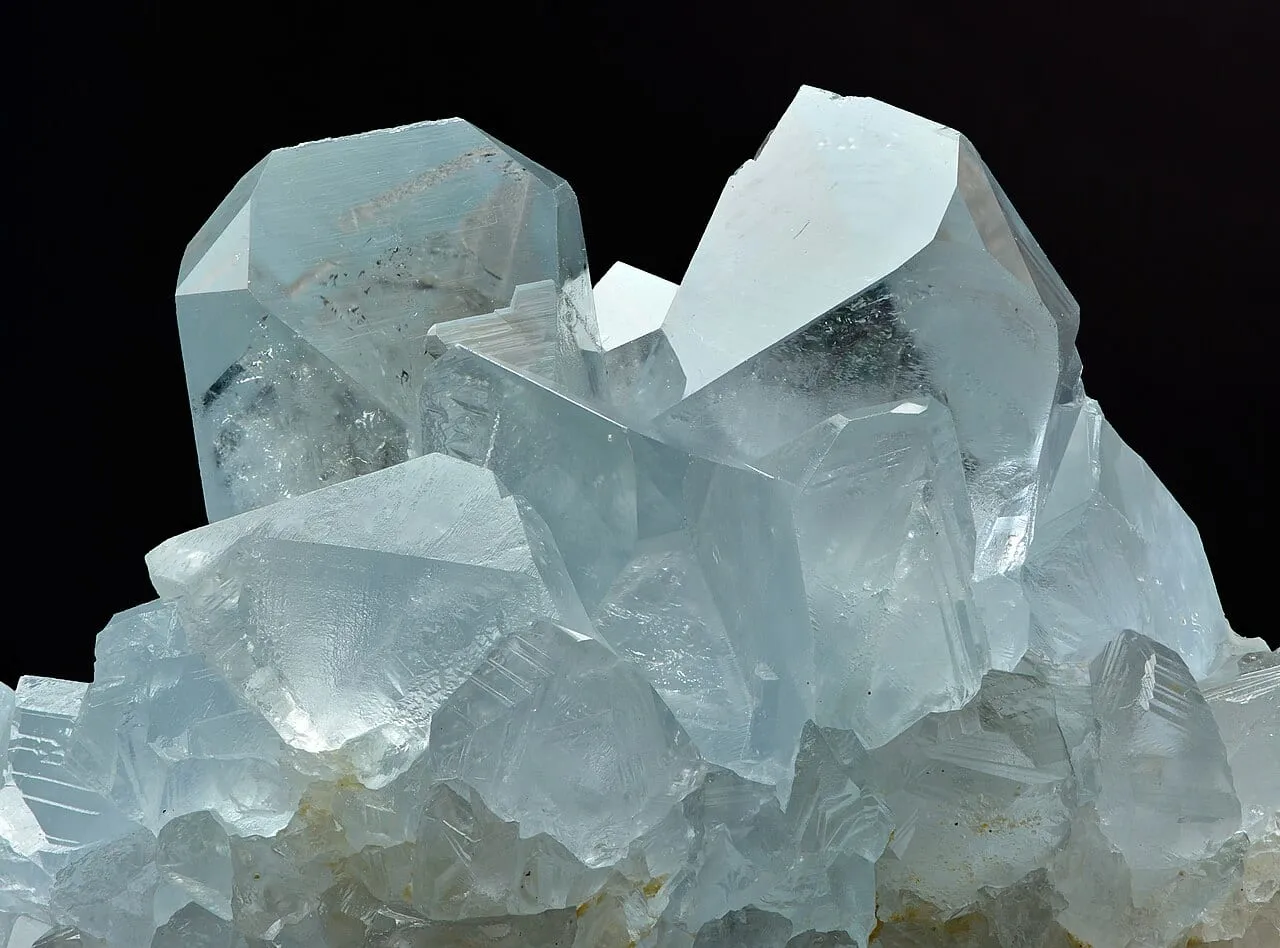
Celestine
A strontium mineral named after the sky, often forming pale blue crystals; the source of the red in fireworks.
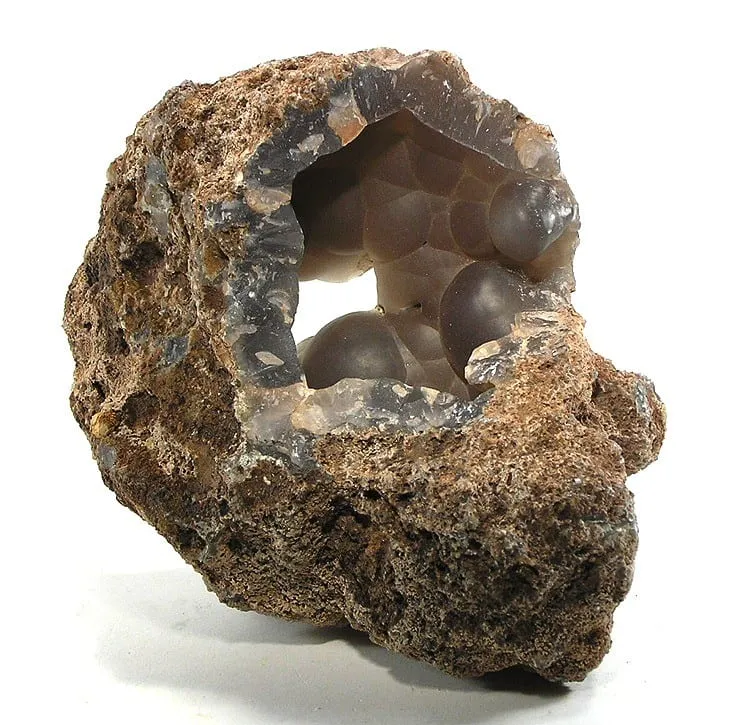
Chalcedony
A waxy-lustred stone made of quartz crystals far too small to see: the family name for agate, onyx and many other ornamental stones.