Rock
Chert and flint
Çakmaktaşı (çört)
The steel of the Stone Age: a hard silica rock that breaks into razor-sharp edges and throws sparks when struck with steel.
Also known as: Flint · Hornstone

In short
Chert is a very hard sedimentary rock made of quartz crystals far too small to see. The dark variety found as lumps in chalk and limestone is called flint. Because it breaks with very sharp edges, people made knives, arrowheads and scrapers from it for hundreds of thousands of years.
How does it form?
Most chert forms on the sea floor. The remains of single-celled organisms with silica skeletons, such as radiolarians and diatoms, and of sponges collect on the bottom. After burial this silica dissolves and is redeposited: either as bedded chert, in thin layers alternating with shale, or as nodules that replace the carbonate in limestone and chalk. The dark nodules in chalk are called flint.
The colour of chert depends on its impurities: organic matter makes flint dark grey to black, while iron oxides give jasper its red and brown shades.
From the Stone Age to today
Flint and chert were the most important toolstones of the Stone Age. At Neolithic mines such as Spiennes in Belgium and Krzemionki in Poland, people dug deep shafts to reach good-quality stone.
In Anatolia, flint chips were set into the underside of wooden threshing sledges (döven); film footage shot in the Eskişehir–Kütahya area in 1967 shows the flints still being knapped by hand. Flint was also used to light fires and to fire flintlock guns. Today chert is crushed as aggregate for roads and concrete, and rounded flint pebbles are used as grinding media in mills.
How to recognise it
- 1
It breaks with curved, shell-like (conchoidal) surfaces and very sharp edges.
- 2
It is very hard: it scratches glass and steel, and a knife cannot scratch it.
- 3
It has a waxy or dull lustre; thin edges of flint look brownish and translucent when held up to the light.
- 4
It does not fizz in acid; nodules from chalk or limestone often have a white outer crust.
Fakes and imitations
What shops usually don’t tell you:
- The “flint” in a cigarette lighter is not flint at all but ferrocerium, a man-made alloy of iron and cerium.
- Some “ancient arrowheads” and “hand axes” on sale are modern copies knapped from flint or glass. Trade in archaeological artefacts is also restricted by law in many countries, including Türkiye.
- Jasper is a variety of chert, but some stones sold as “jasper” in the gem trade are actually other rocks or minerals, and some are dyed.
Safety
Knapped flint produces razor-sharp edges and flakes; wear gloves and safety glasses when working it. The fine dust from knapping and grinding contains crystalline silica, which can cause silicosis when inhaled.
Did you know?
Flint throws sparks when struck with steel. As well as for lighting fires, it was used in the firing mechanism of flintlock guns from the 17th to the early 19th century.
The Rhynie chert in Scotland, about 400 million years old, preserves early land plants in such detail that their individual cells can be seen.
Where is it found?
Loading map…
- Spiennes, Mons, Belgium · Historic sourceOne of the largest and earliest Neolithic flint-mining complexes in Europe; inscribed on the UNESCO World Heritage List in 2000.
- Krzemionki, Poland · Historic sourceSome 4,000 shafts and pits where striped flint, mainly for axes, was mined from about 3900 to 1600 BCE; inscribed on the UNESCO World Heritage List in 2019.
- Grime's Graves, Norfolk, England · Historic sourceHundreds of Neolithic mine shafts dug through chalk to reach a layer of high-quality flint.
- Rhynie, Aberdeenshire, Scotland · Known localityThe Rhynie chert, about 400 million years old (Early Devonian), preserves early land plants and tiny arthropods down to the level of individual cells.
Locations are approximate to protect sites. Red dots mark places in Türkiye. Open in the big map →
Sources
- Chert and flint · Encyclopaedia Britannica
- Neolithic Flint Mines at Spiennes (Mons) · UNESCO World Heritage Centre
- Krzemionki Prehistoric Striped Flint Mining Region · UNESCO World Heritage Centre
- Turkey 1967, Reel 51 of 52 (Eskişehir, Kütahya: chipping flint for threshing sledges) · Penn Museum, 1967
External links
Draft: awaiting expert reviewReport an error ↗
On the same step
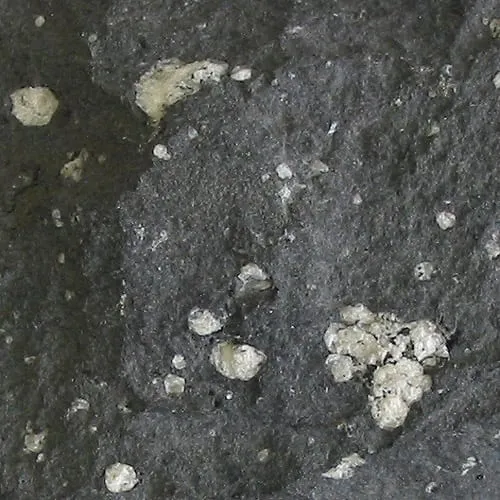
Andesite
The rock of volcanic arcs, named after the Andes — and the pink-grey stone of Ankara Castle.
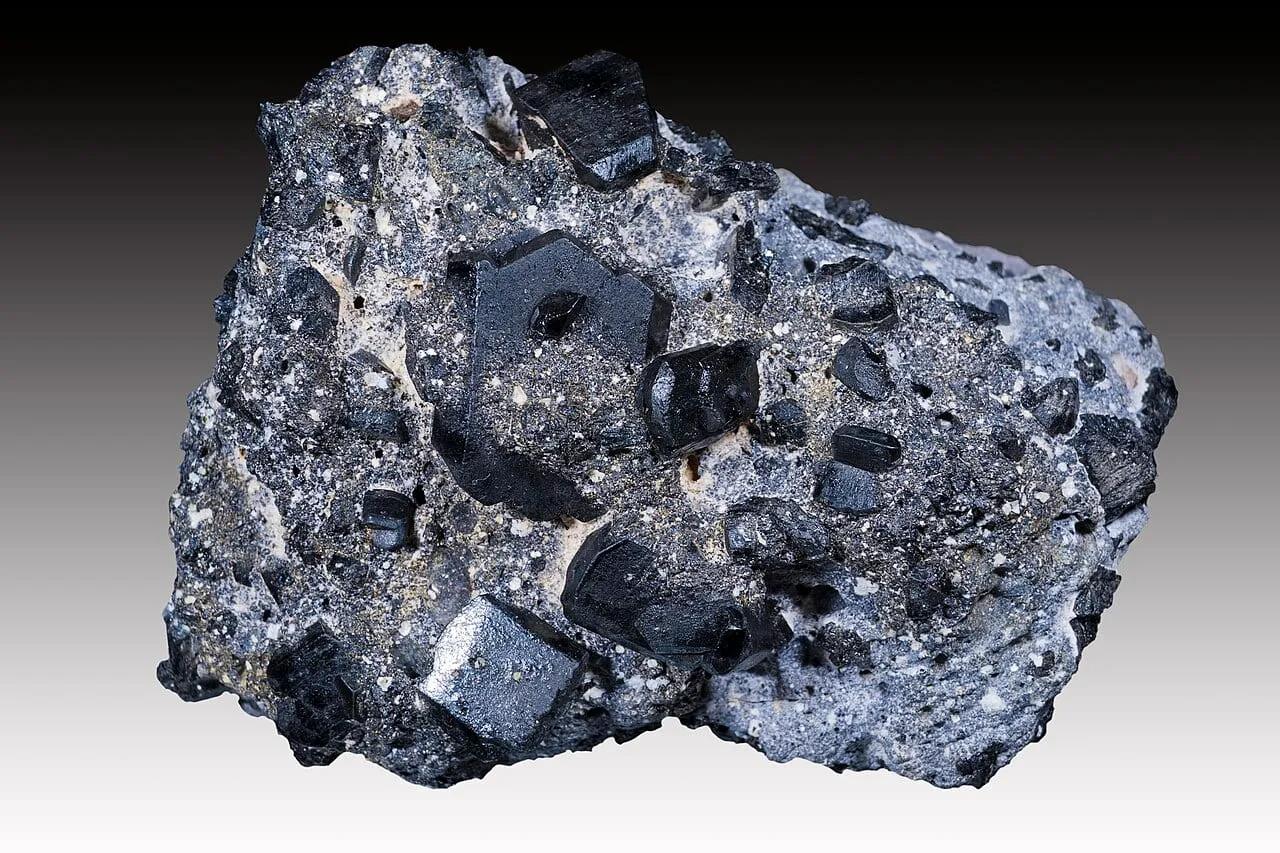
Augite (pyroxene)
The most common pyroxene, which darkens basalt and gabbro: inconspicuous, yet one of the key building blocks of Earth’s crust.
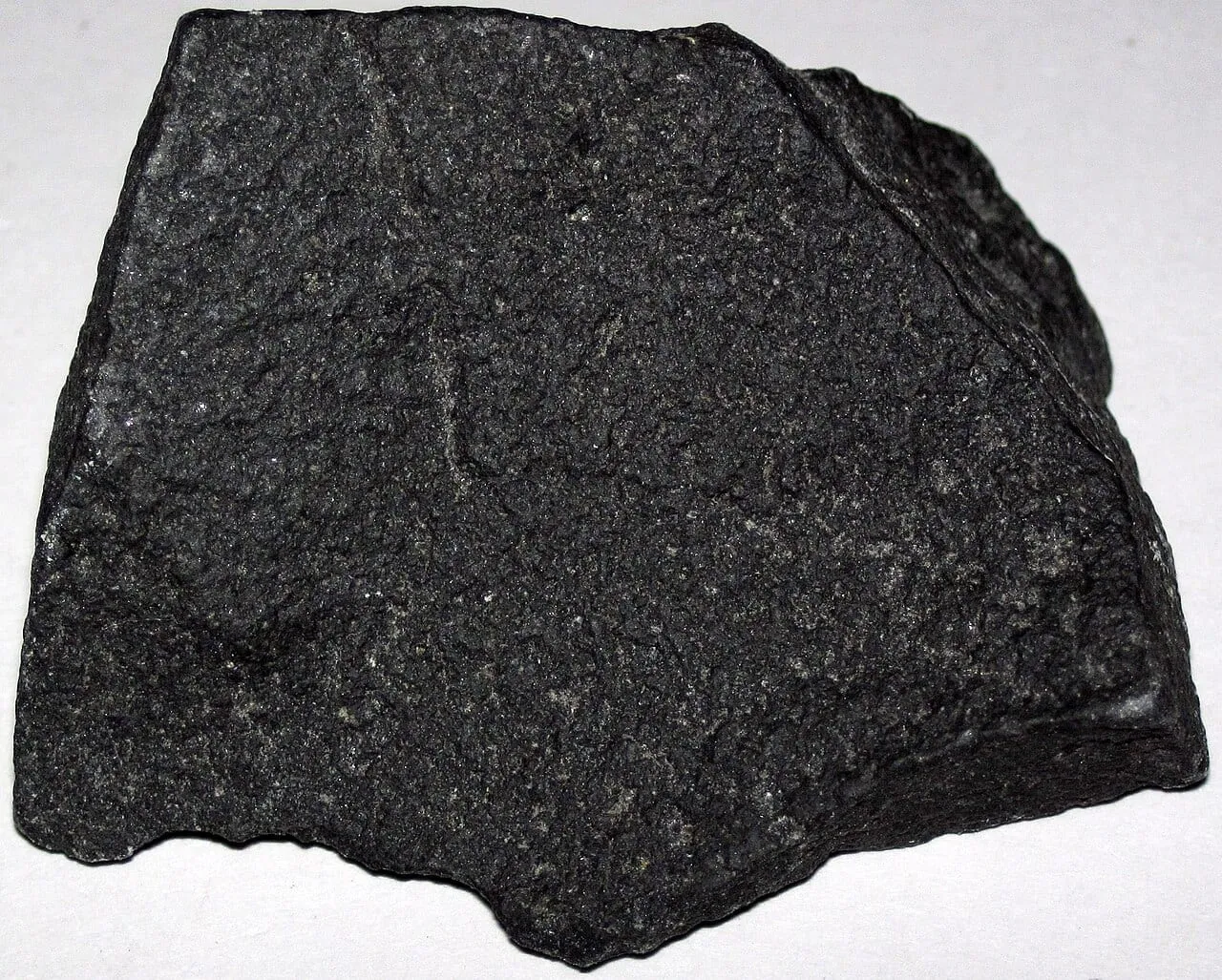
Basalt
The rock of the ocean floors and the Moon’s dark plains — the most common volcanic rock on Earth.