Mineral
Celestine
SrSO₄Sölestin
A strontium mineral named after the sky, often forming pale blue crystals; the source of the red in fireworks.
Also known as: Celestite
- Ore
- Industrial

In short
Celestine is a mineral made of strontium sulfate. Its best-known specimens are pale, sky-blue crystals, but it can also be colourless, white or pinkish. It is the most important source of the element strontium, which gives fireworks their bright red colour.
How does it form?
Celestine forms mostly in sedimentary rocks, especially together with evaporite minerals such as gypsum and anhydrite. Large crystals grow in cavities in limestone and dolomite; the famous geodes of Madagascar are lined with sky-blue celestine crystals. In the sulfur mines of Sicily it occurs side by side with bright yellow sulfur crystals.
What is it used for?
Celestine is the principal source of strontium. According to the U.S. Geological Survey (USGS), the largest use of strontium in the USA is in drilling fluids, followed by ceramic ferrite magnets and by fireworks and signal flares.
In Türkiye
The gypsum-bearing beds of the Sivas Basin, especially around Ulaş, host many celestine deposits. They were mined in the second half of the 20th century, when Türkiye was for a time among the celestine-producing countries. According to USGS records, however, Türkiye produced no celestine in 2015–2019.
How to recognise it
- 1
Pale blue, glassy crystals, usually flat tablets or long prisms.
- 2
It is heavy for a pale mineral (specific gravity about 4.0) but lighter than baryte (about 4.5).
- 3
Its hardness is 3–3.5, so a steel knife scratches it easily. It does not fizz in acid.
- 4
In a flame test strontium colours the flame deep red; baryte gives a green flame.
Fakes and imitations
What shops usually don’t tell you:
- The blue stone sold as “angelite” is not celestine but blue anhydrite; its name misleadingly links it to celestine.
- Blue baryte and celestine look very much alike; certain identification needs a specific-gravity measurement or laboratory analysis.
Did you know?
Its name comes from the Latin word for “heavenly”, after the sky-blue colour of its crystals.
At Put-in-Bay in Ohio, USA, there is a small cave (Crystal Cave) whose walls are lined with celestine crystals.
Where is it found?
Loading map…
- Ulaş, Sivas, Türkiye · Major depositCelestine deposits in the gypsum-bearing beds of the Sivas Basin; mined in the 20th century
- Sakoany, Mahajanga region, Madagascar · Known localityGeodes up to 60 cm lined with sky-blue crystals
- Agrigento, Sicily, Italy · Historic sourceCelestine with sulfur crystals in the sulfur mines
- Put-in-Bay, Ohio, USA · Known locality“Crystal Cave”, lined with celestine crystals
Locations are approximate to protect sites. Red dots mark places in Türkiye. Open in the big map →
Sources
- Handbook of Mineralogy: Celestine · Mineralogical Society of America
- Stratigraphy, Geochemistry and Depositional Environment of the Celestine-bearing Gypsiferous Formations of the Tertiary Ulaş-Sivas Basin, East-Central Anatolia (Turkey) · Turkish Journal of Earth Sciences 10 (1) (E. Tekin), 2001
- Celestine · Australian Museum
- Minerals Yearbook 2019: Strontium · U.S. Geological Survey, 2019
- Mineral Commodity Summaries 2026: Strontium · U.S. Geological Survey, 2026
External links
Draft: awaiting expert reviewReport an error ↗
On the same step
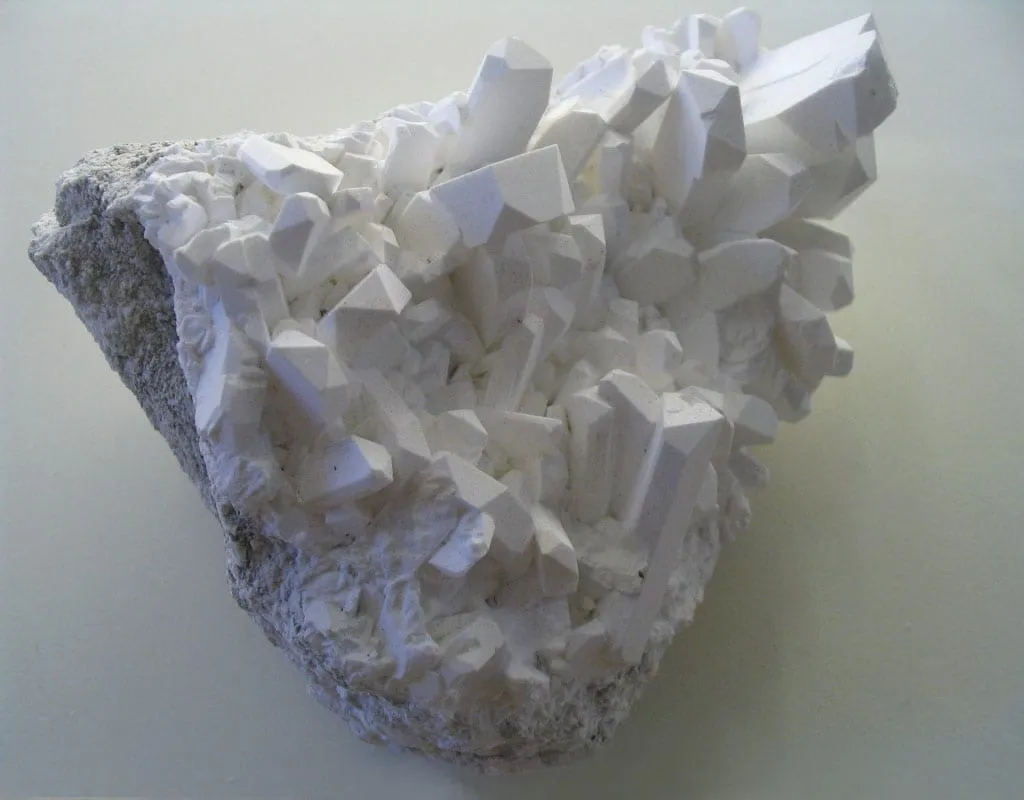
Borax (tincal)
A sodium borate that dissolves in water and crumbles to white powder in dry air; one of the world’s key tincal deposits is at Kırka in Eskişehir.
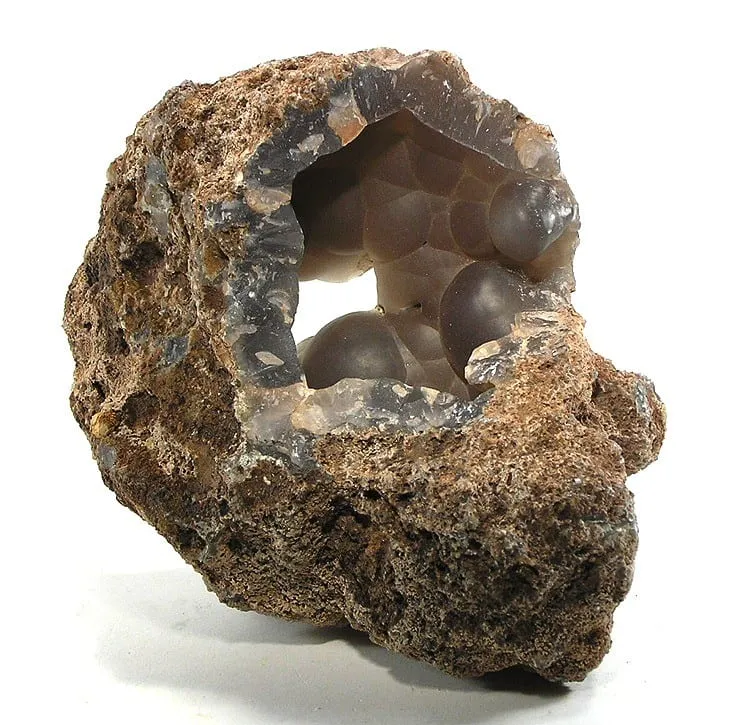
Chalcedony
A waxy-lustred stone made of quartz crystals far too small to see: the family name for agate, onyx and many other ornamental stones.
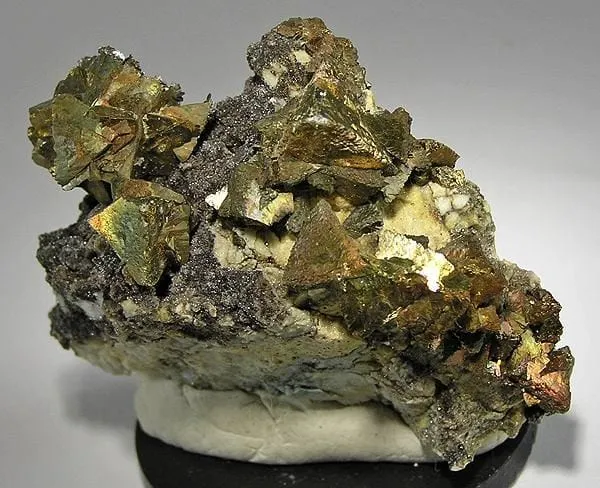
Chalcopyrite
The world’s most important source of copper: a brass-yellow sulfide that resembles gold and often tarnishes to rainbow colours.