Mineral
Cassiterite
SnO₂Kasiterit
The main ore of tin: the heavy, dark mineral that has given us bronze, tinplate and electronic solder since the Bronze Age.
Also known as: Tinstone · Wood tin (botryoidal, fibrous variety)
- Popularly: Ore and raw material
- Ore
- Important in Türkiye

In short
Cassiterite (tinstone) is a black, brown or yellowish mineral made of tin and oxygen (SnO₂). It is known by its diamond-like lustre and its high weight. Cassiterite is the most important source of tin, the metal of bronze and tinplate and today above all of electronic solder.
Photos

How does it form?
Cassiterite mostly forms in association with igneous rocks such as granite. As magma cools, hot tin-rich fluids deposit cassiterite in quartz veins, in the altered zones at the edge of the granite (greisen) and in pegmatites. According to MTA, more than 99% of the world’s primary and secondary tin deposits are linked to granitic rocks.
Because cassiterite resists weathering and is heavy, it concentrates in river and coastal sediments when its source rock is eroded. These placer deposits supply most of the tin ore mined today.
What is it used for?
Cassiterite is smelted to tin metal. Tin is used for:
- Solder and electronics: According to MTA, more than half of tin output in the last ten years went into lead-free solder in the electronics industry.
- Tinplate and coatings: Steel surfaces are coated with tin to stop them rusting (“tin” cans).
- Bronze and alloys: Its alloy with copper, bronze, gave a whole age, the Bronze Age, its name.
- Collecting: Fine crystals are sought by collectors; it is only rarely cut as a gem.
A “conflict mineral”?
Cassiterite is counted with coltan (the ore of tantalum), wolframite (an ore of tungsten) and gold in the group of “3TG” conflict minerals. According to Wikipedia, the United States, the European Union and the OECD have designated tin, tantalum, tungsten and gold connected to the conflict in the Democratic Republic of the Congo as “conflict minerals”; fighting over the cassiterite deposits, particularly around Walikale, is named as a major cause of the war in the east of the country.
The European Union’s Regulation 2017/821 has applied since 1 January 2021: it aims to make sure that EU companies import these minerals and metals from responsible sources only. The issue, in other words, is not all tin but the risk that tin whose source cannot be checked feeds the fighting.
In Türkiye
For a long time it was debated whether Anatolia had any tin at all. As MTA relates, no tin deposit was known earlier, and clay tablets show that part of the tin the Hittites used came through trade with the Assyrians. From the 1970s, ancient tin workings were found in Çamardı district of Niğde around the village of Celaller (Mine damı and Kestel) and near Hisarcık in Kayseri.
According to Wikipedia, Kestel is thought to be a place where tin was mined between 3290 and 1840 BC; the archaeologist K. Aslıhan Yener, surveying with MTA, found cassiterite crystals in a stream bed. Some researchers, however, have criticised this interpretation because no ores with high tin contents were found. MTA says that the tin potential of Türkiye is not yet fully clarified and considers Central Anatolia, with its many granitoid rocks, promising for exploration.
What determines its value?
Cassiterite is an ore, and its value depends first on the tin grade (the proportion of tin in the ore), the size of the deposit and the cost of mining and processing it. Placer deposits in streams and beach sands are often easier to work than veins in rock. Demand from the electronics and plating industries, and whether the ore’s origin can be proven (traceability rules for ore from conflict areas), also matter. For collectors, crystal form (bipyramids and twins), lustre, colour, freedom from damage and well-known localities such as Bolivia or Sichuan count; cut cassiterite is a rare collector’s stone.
This information is educational, not buying, selling or investment advice. Value varies enormously with quality and treatment.
How to recognise it
- 1
It is very heavy: its specific gravity is about 7, so it feels roughly two and a half times heavier than a piece of quartz of the same size.
- 2
Its hardness is 6–7: a steel knife cannot scratch it, and it scratches glass. The lustre is adamantine (diamond-like) and may look greasy on broken surfaces. The streak is white to pale brown.
- 3
Crystals are short prisms with steep double pyramids; “kneed” twins, bent like a knee, are very common. Radiating, fibrous, kidney-shaped masses are called “wood tin”.
- 4
It mostly occurs with quartz, tourmaline, muscovite, topaz, fluorite and wolframite in veins linked to granite, or as dark, heavy grains in river and beach sands.
Fakes and imitations
What shops usually don’t tell you:
- Cassiterite has no widely known imitation; the problem is confusion rather than fakery. Wolframite, also black and heavy, looks similar, but it is much softer (4–4.5), splits perfectly in one direction and has a reddish-brown streak.
- Black tourmaline and garnet are also dark, but they are clearly lighter than cassiterite (tourmaline about 3, garnet 3.5–4.3); the difference is obvious when you weigh a piece in the hand.
Safety
Cassiterite is harmless to handle. Raw specimens may occur with arsenic-bearing minerals such as arsenopyrite, so do not break or crush a raw specimen, do not breathe its dust, do not put it in water and wash your hands after handling.
Myths and misconceptions
MythTin cans are made of pure tin.
FactA “tin” can is steel sheet coated with a thin layer of tin, which protects the steel from rusting. According to Wikipedia, modern cans are about 99.5% steel, and most are now lined with plastic film instead of tin.
MythMost of the world’s tin comes from conflict zones in Congo.
FactAccording to the USGS, in 2025 the largest shares of the roughly 290,000 tonnes of world tin output came from China, Indonesia, Peru and Brazil; the Democratic Republic of the Congo produced about 27,000 tonnes, around 9%. The European Union’s conflict-minerals regulation, moreover, covers imports of tin, tantalum, tungsten and gold from anywhere in the world, not only Congo.
What is it believed to be good for?
This section reports beliefs; it is not health information. There is no scientific evidence for these claims and no stone replaces medical treatment.
The meanings people give this stone, and who holds them:
- Crystal-therapy websites and stone sellers claim that cassiterite is a “grounding” stone linked to the root chakra, and that it helps overcome childhood trauma and feelings of rejection.
- The same websites say cassiterite helps with digestive problems, hormonal imbalance and rheumatoid arthritis.
What science says
No study shows that cassiterite affects trauma, digestion, hormone balance or joint disease, and “chakra” claims cannot be measured. A doctor should be consulted for these complaints. Because raw cassiterite specimens can occur with arsenic-bearing minerals such as arsenopyrite, putting the stone in water and drinking it is not advisable.
Did you know?
The name comes from the Greek kassiteros, “tin”; the word’s ultimate origin may be Elamite or linked to the Kassites.
Because cassiterite resists weathering and is heavy, it collects in stream and beach sands when its source rock breaks down. Most cassiterite mined today comes from these “placer” deposits.
Some cassiterite workings in Cornwall and Devon are about 4,500 years old.
Where is it found?
Loading map…
- Bangka Island, Indonesia · Major depositBangka and Belitung (Billiton) are known for economically important placer (stream-deposited) cassiterite; Indonesia is one of the world’s largest tin producers
- San Rafael mine, Puno, Peru · Major depositAccording to Wikipedia, the mine is the world’s third-largest tin producer
- Pitinga mine, Amazonas, Brazil · Known localityCassiterite was found in tributaries of the Pitinga River in 1976; according to Wikipedia one of the world’s largest undeveloped tin deposits
- Huanuni, Oruro, Bolivia · Known localityIn Bolivia’s tin belt; also known for fine cassiterite crystals
- Walikale, North Kivu, Democratic Republic of the Congo · Known localityAccording to Wikipedia, fighting over the cassiterite deposits is a major cause of the conflict in eastern DR Congo
- Xuebaoding, Pingwu, Sichuan, China · Known localityKnown in collections for lustrous bipyramidal cassiterite crystals
- Jos Plateau, Nigeria · Known localityThe Handbook of Mineralogy lists the Jos district among the important localities
- Kinta Valley, Perak, Malaysia · Known localityThe placer tin deposits of Perak state are listed as economically important in the Handbook of Mineralogy
- Dolcoath, Camborne, Cornwall, England · Historic sourceOne of Cornwall’s famous tin mines; some workings in Cornwall and Devon are about 4,500 years old
- Altenberg, Saxony, Germany · Historic sourceA tin district of the Ore Mountains (Erzgebirge) worked for centuries; usually named together with Cínovec (Zinnwald) across the border
- Mount Bischoff, Waratah, Tasmania, Australia · Historic sourceA former tin mine known for plates of cassiterite crystals on quartz
- Kestel and Celaller, Çamardı, Niğde, Türkiye · Historic sourceAn ancient tin mine in the Bolkar range; cassiterite is thought to have been mined here between 3290 and 1840 BC, though this is debated
Locations are approximate to protect sites. Red dots mark places in Türkiye. Open in the big map →
Frequently asked questions
What is cassiterite?
Cassiterite (tinstone) is a black, brown or yellowish mineral made of tin and oxygen (SnO₂). It is known by its diamond-like lustre and its high weight. Cassiterite is the most important source of tin, the metal of bronze and tinplate and today above all of electronic solder.
What is cassiterite used for?
Cassiterite is smelted to tin metal. Tin is used for: Solder and electronics: According to MTA, more than half of tin output in the last ten years went into lead-free solder in the electronics industry. Tinplate and coatings: Steel surfaces are coated with tin to stop them rusting (“tin” cans). Bronze and alloys: Its alloy with copper, bronze, gave a whole age, the Bronze Age, its name. Collecting: Fine crystals are sought by collectors; it is only rarely cut as a gem.
How hard is cassiterite?
It has a hardness of 6–7 on the Mohs scale. It can scratch glass; a steel knife scratches it only with difficulty. Its specific gravity is 6.98–7.1 g/cm³.
Where is cassiterite found?
Its best-known localities: Bangka Island, Indonesia; San Rafael mine, Puno, Peru; Dolcoath, Camborne, Cornwall, England; Altenberg, Saxony, Germany; Mount Bischoff, Waratah, Tasmania, Australia.
Where is cassiterite found in Türkiye?
Known localities in Türkiye: Kestel and Celaller, Çamardı, Niğde, Türkiye.
How can you tell if cassiterite is real?
It is very heavy: its specific gravity is about 7, so it feels roughly two and a half times heavier than a piece of quartz of the same size. Its hardness is 6–7: a steel knife cannot scratch it, and it scratches glass. The lustre is adamantine (diamond-like) and may look greasy on broken surfaces. The streak is white to pale brown. Crystals are short prisms with steep double pyramids; “kneed” twins, bent like a knee, are very common. Radiating, fibrous, kidney-shaped masses are called “wood tin”. Cassiterite has no widely known imitation; the problem is confusion rather than fakery. Wolframite, also black and heavy, looks similar, but it is much softer (4–4.5), splits perfectly in one direction and has a reddish-brown streak.
Is cassiterite valuable?
On the “street to diamond” value ladder it sits on step 4 of nine: Fine dimension stone and ore. Cassiterite is an ore, and its value depends first on the tin grade (the proportion of tin in the ore), the size of the deposit and the cost of mining and processing it. Placer deposits in streams and beach sands are often easier to work than veins in rock. Demand from the electronics and plating industries, and whether the ore’s origin can be proven (traceability rules for ore from conflict areas), also matter. For collectors, crystal form (bipyramids and twins), lustre, colour, freedom from damage and well-known localities such as Bolivia or Sichuan count; cut cassiterite is a rare collector’s stone.
What is cassiterite good for?
Crystal-therapy websites and stone sellers claim that cassiterite is a “grounding” stone linked to the root chakra, and that it helps overcome childhood trauma and feelings of rejection. The same websites say cassiterite helps with digestive problems, hormonal imbalance and rheumatoid arthritis. No study shows that cassiterite affects trauma, digestion, hormone balance or joint disease, and “chakra” claims cannot be measured. A doctor should be consulted for these complaints. Because raw cassiterite specimens can occur with arsenic-bearing minerals such as arsenopyrite, putting the stone in water and drinking it is not advisable. This section reports beliefs; it is not health information. There is no scientific evidence for these claims and no stone replaces medical treatment.
Is cassiterite dangerous?
Cassiterite is harmless to handle. Raw specimens may occur with arsenic-bearing minerals such as arsenopyrite, so do not break or crush a raw specimen, do not breathe its dust, do not put it in water and wash your hands after handling.
Sources
- Cassiterite · Wikipedia
- Handbook of Mineralogy: Cassiterite · Mineralogical Society of America
- Cassiterite (Webmineral) · Webmineral
- Mineral Commodity Summaries 2026: Tin · U.S. Geological Survey, 2026
- Kalay oluşumu, önemi ve ülkemizdeki kalay yataklarının aranmasında yeni umutlar (MTA Doğal Kaynaklar ve Ekonomi Bülteni 32) · MTA Genel Müdürlüğü, 2021
- Kestel (archaeological site) · Wikipedia
- Conflict minerals regulation · European Commission
- Tin can · Wikipedia
- San Rafael mine · Wikipedia
- Pitinga mine · Wikipedia
External links
Draft: awaiting expert reviewReport an error ↗
On the same step
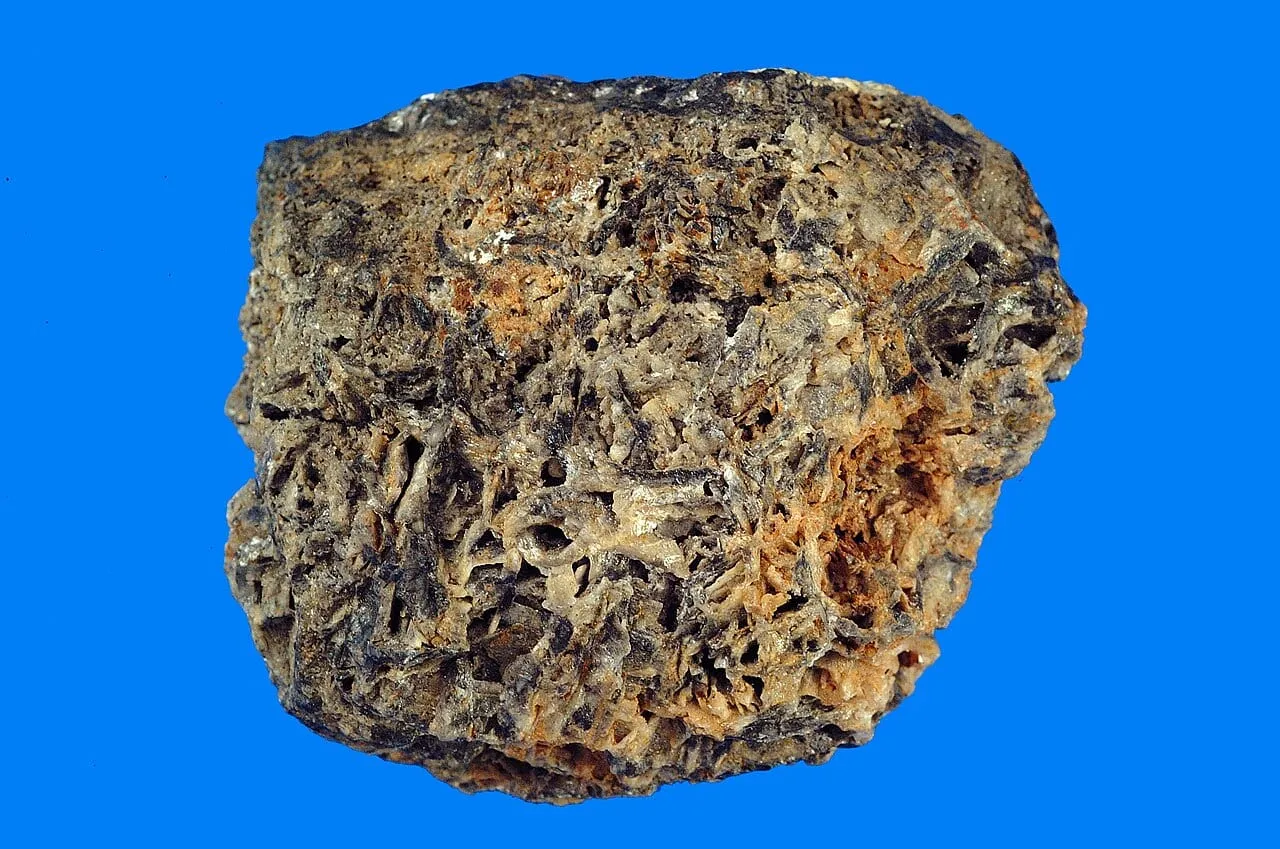
Anglesite
A heavy lead sulfate mineral with a diamond-like shine that grows as a crust around galena; it is named after the island of Anglesey in Wales.
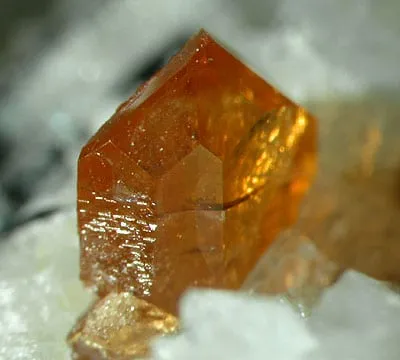
Bastnäsite
One of the main ore minerals of the “rare earth” elements such as cerium, lanthanum and neodymium; a raw material for magnets and electronics.
Borax (tincal)
A sodium borate that dissolves in water and crumbles to white powder in dry air; one of the world’s key tincal deposits is at Kırka in Eskişehir.