Meteorite
Cape York meteorite
Cape York meteoriti
The meteorite that was Greenland's Inuit iron source for centuries: its largest piece, the 31-tonne Ahnighito, is the heaviest meteorite ever moved.
Also known as: Innaanganeq meteorite · Saviksue (Great Irons) · Ahnighito · Agpalilik
- Popularly: Meteorite

In short
The Cape York meteorite (Innaanganeq), found in northwest Greenland, is one of the largest known iron meteorites. Besides many small fragments, at least eight large pieces with a total mass of 58 tonnes have been recovered; the largest, the 31-tonne Ahnighito, is displayed at the American Museum of Natural History in New York and is the heaviest meteorite ever relocated. The local Inughuit (Inuit) used these iron masses for centuries to make tools and harpoons.
Photos

How does it form?
Cape York is an iron meteorite of group IIIAB. Meteorites like this come from the metal cores of small planets (asteroids) that melted early in the Solar System. The fragments probably fell to Earth within the last few thousand years; some estimates say 10,000 years ago. No one saw the fall.
All the fragments were found at the surface, partly buried. There are two main views: either the meteorite fell somewhere unknown in Greenland and glaciers carried the pieces to where they lie today, or the pieces fell straight to where they were found after the glaciers had retreated.
What is it used for?
- Iron source for native peoples: For centuries the Inughuit made tools and harpoon tips from these masses. The iron spread through the Thule culture’s trade network across the Arctic and to the North American mainland.
- Museums and science: Ahnighito, “the Woman” and “the Dog” are at the American Museum of Natural History in New York; the 20-tonne Agpalilik (“the Man”) is at the Geological Museum of the University of Copenhagen. The pieces are used to study the structure and chemistry of iron meteorites.
History
In 1818 John Ross’s British expedition met Inuit on Melville Bay who said they had settled there to use a nearby source of iron. Ross correctly guessed the iron was meteoritic but could not reach it. Only in 1894 did Robert Peary reach the meteorite with the help of an Inuit guide, and in 1895 and 1897 he took three pieces to New York. During the expedition Peary brought six Inughuit to the United States to be studied; four died within months, and Peary has been heavily criticised for his treatment of the Inuit. Savik I was found in 1913, Thule in 1955, Agpalilik in 1963 and Tunorput in 1984.
What determines its value?
The large pieces are kept in museums and are not for sale; their value is scientific and cultural. Cape York also holds a unique place in the history of Arctic peoples, as an iron source spread through a wide trade network before contact with Europeans. The value of small pieces depends on mass, the pattern in section and documented origin.
This information is educational, not buying, selling or investment advice. Value varies enormously with quality and treatment.
How to recognise it
- 1
Very heavy metal masses with a dark brown or blackish outer surface; being almost entirely iron–nickel, they strongly attract a magnet.
- 2
Cut and etched with acid, they show a medium Widmanstätten pattern with dark, elongated troilite nodules.
- 3
Only documentation and laboratory analysis can show that a piece really comes from Cape York.
Myths and misconceptions
MythThe Cape York meteorite fell 58 million years ago.
FactA museum placard beside the Agpalilik piece in Copenhagen gives this date, but archaeological and historical estimates put the fall within the last 1,000–10,000 years, and published terrestrial-age estimates at 1–2 million years. The placard may confuse the time the meteoroid spent in space (a cosmic-ray exposure age of about 93 million years) with the time since it fell.
MythAll the large iron masses found in Greenland are meteorites.
FactIn 1870 Nordenskiöld found large iron masses at Ovifak on Disko Island; they soon turned out to be of terrestrial origin. Cape York, by contrast, is a true meteorite.
What is it believed to be good for?
This section reports beliefs; it is not health information. There is no scientific evidence for these claims and no stone replaces medical treatment.
The meanings people give this stone, and who holds them:
- According to an Inuit legend told to Robert Peary, the three most important pieces were a sewing woman, her tent and her curled-up dog, all hurled from heaven by the evil spirit Tornarsuk.
What science says
This is a folk legend. Scientifically, the pieces are fragments of a single iron meteorite that fell on Greenland within the last few thousand years; no one saw the fall. Whether they stayed where they fell or were carried by glaciers is still debated.
Did you know?
The Inuit worked the meteoritic iron by cold forging, hammering it with stones. An arrowhead made of this iron was found at a medieval Norse farm near today's Nuuk.
Ahnighito measures 3.4 × 2.1 × 1.7 metres; the supports of its display stand reach down to the bedrock beneath the museum.
The Tunorput mass, found in 1984 by a hunter on the shore of Meteorite Island, exposed at low tide, is probably the first meteorite ever found in the sea.
Where is it found?
Loading map…
- Cape York and Meteorite Island, Melville Bay, northwest Greenland · Type localityWhere the first fragments were found. “The Woman”, “the Dog” and the largest piece, “the Tent” (Ahnighito), were taken to New York by Robert Peary in 1895 and 1897. The Tunorput mass, found in 1984, is probably the first meteorite ever found in the sea.
- Near Thule (Pituffik), northwest Greenland · Known localityThe area where glaciologists found the 48.6 kg “Thule” piece, shaped like a resting goose, in 1955. The point marks Pituffik Space Base.
Locations are approximate to protect sites. Red dots mark places in Türkiye. Open in the big map →
Frequently asked questions
What is cape York meteorite?
The Cape York meteorite (Innaanganeq), found in northwest Greenland, is one of the largest known iron meteorites. Besides many small fragments, at least eight large pieces with a total mass of 58 tonnes have been recovered; the largest, the 31-tonne Ahnighito, is displayed at the American Museum of Natural History in New York and is the heaviest meteorite ever relocated. The local Inughuit (Inuit) used these iron masses for centuries to make tools and harpoons.
How did the Inuit use the Cape York meteorite?
The Inughuit broke pieces off the masses with stones and cold-forged them into tools, knives and harpoon tips. Through the Thule culture's trade network this iron reached the Arctic Archipelago and the North American mainland; pieces of Cape York iron dating from before 1450 have been found across this wide area.
What is cape York meteorite used for?
Iron source for native peoples: For centuries the Inughuit made tools and harpoon tips from these masses. The iron spread through the Thule culture's trade network across the Arctic and to the North American mainland. Museums and science: Ahnighito, "the Woman" and "the Dog" are at the American Museum of Natural History in New York; the 20-tonne Agpalilik ("the Man") is at the Geological Museum of the University of Copenhagen. The pieces are used to study the structure and chemistry of iron meteorites.
How hard is cape York meteorite?
It has a hardness of 4–5.5 on the Mohs scale. A fingernail cannot scratch it, but a steel knife can. Its specific gravity is 7–8 g/cm³.
Where is cape York meteorite found?
Its best-known localities: Cape York and Meteorite Island, Melville Bay, northwest Greenland; Near Thule (Pituffik), northwest Greenland.
How can you tell if cape York meteorite is real?
Very heavy metal masses with a dark brown or blackish outer surface; being almost entirely iron–nickel, they strongly attract a magnet. Cut and etched with acid, they show a medium Widmanstätten pattern with dark, elongated troilite nodules. Only documentation and laboratory analysis can show that a piece really comes from Cape York.
Is cape York meteorite valuable?
On the “street to diamond” value ladder it sits on step 6 of nine: Fine ornamental and collector stone. The large pieces are kept in museums and are not for sale; their value is scientific and cultural. Cape York also holds a unique place in the history of Arctic peoples, as an iron source spread through a wide trade network before contact with Europeans. The value of small pieces depends on mass, the pattern in section and documented origin.
What is cape York meteorite good for?
According to an Inuit legend told to Robert Peary, the three most important pieces were a sewing woman, her tent and her curled-up dog, all hurled from heaven by the evil spirit Tornarsuk. This is a folk legend. Scientifically, the pieces are fragments of a single iron meteorite that fell on Greenland within the last few thousand years; no one saw the fall. Whether they stayed where they fell or were carried by glaciers is still debated. This section reports beliefs; it is not health information. There is no scientific evidence for these claims and no stone replaces medical treatment.
Sources
- Cape York meteorite · Wikipedia
- Pituffik Space Base · Wikipedia
- Kamacite Mineral Data · Webmineral.com
- Taenite Mineral Data · Webmineral.com
- Density and specific gravity (R. L. Korotev) · Washington University in St. Louis, Some Meteorite Information
External links
Draft: awaiting expert reviewReport an error
On the same step
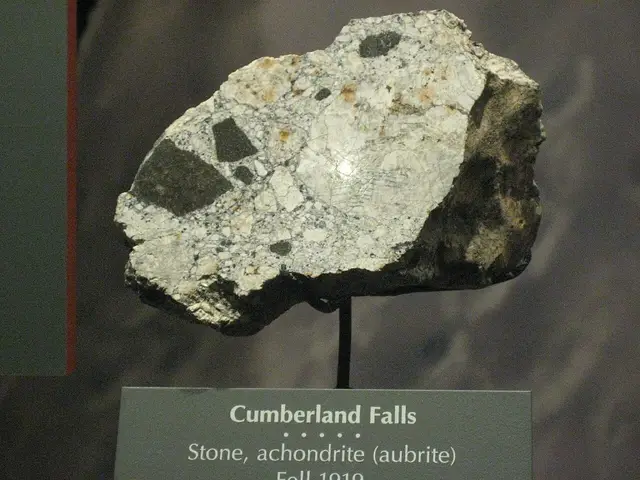
Achondrite
Stony meteorites with no chondrules: rock from melted asteroids, the Moon and Mars, and hard to recognise because they look like Earth rocks.
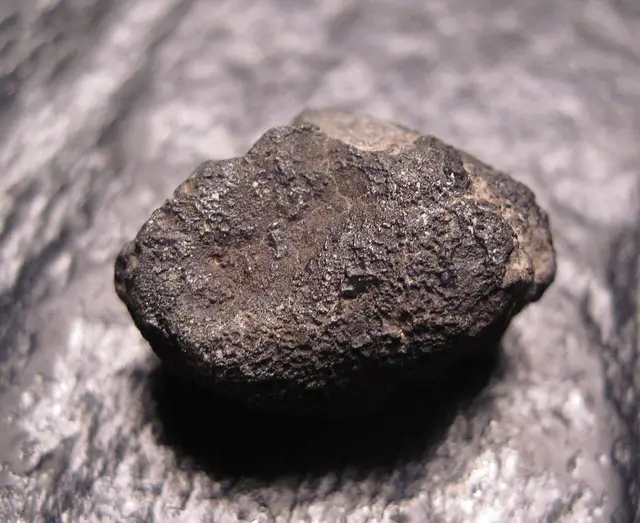
Allende meteorite
The most studied meteorite in history: the largest carbonaceous chondrite, which fell in Mexico in 1969 carrying the first solids of the Solar System.
Amber
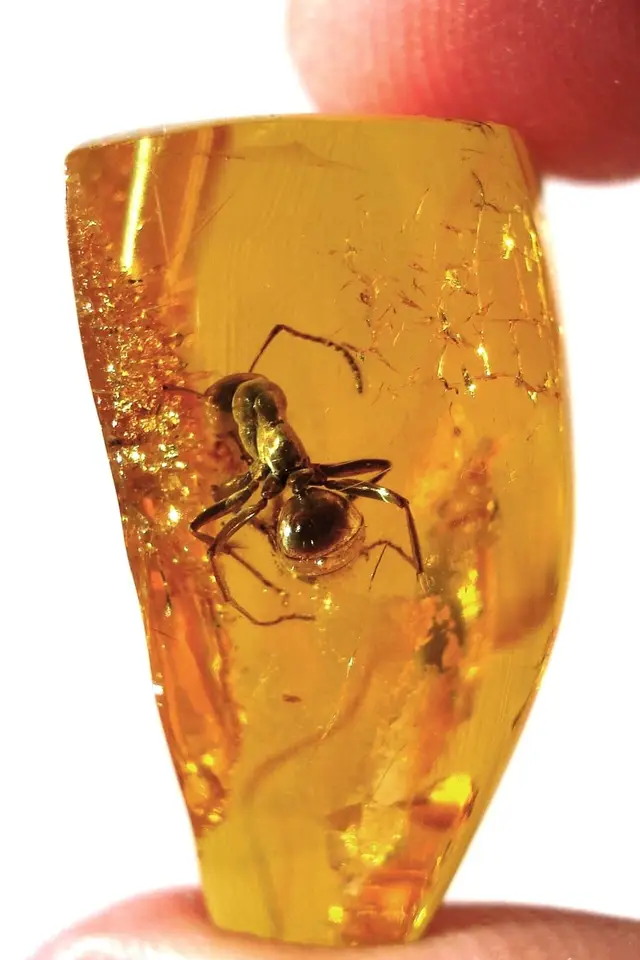
Tree resin fossilised over millions of years: a light, warm organic gem that sometimes holds prehistoric insects.