Mineral
Tremolite
Ca₂Mg₅Si₈O₂₂(OH)₂Tremolit
One of the main minerals of nephrite jade; its fibrous form is one of the asbestos types that cause cancer when inhaled.
Also known as: Tremolite asbestos (fibrous form)
- Popularly: Common stone
- Handle with care
- Important in Türkiye

In short
Tremolite is an amphibole (double-chain silicate) containing calcium and magnesium. It usually forms white, grey or pale green, long bladed crystals and fibrous or columnar masses. Its tough, massive form, made of finely interlocked fibres, is nephrite jade; its form that splits into silky fine fibres is asbestos. The asbestos in the “white soil” (“ak toprak”) once used to plaster and whitewash houses in some Turkish villages is mostly tremolite.
Photos

How does it form?
Tremolite forms when sedimentary rocks rich in dolomite and quartz are transformed by the heat of a magma or by regional metamorphism, which is why it is common in dolomitic marbles. It also appears in the low-grade metamorphism of magnesium-rich ultramafic and magnesium-carbonate rocks (the greenschist facies). Its crystals can reach 20 cm in length, and fibrous, columnar and granular masses are common. With actinolite, its iron-richer relative, it forms a complete series.
What is it used for?
- Jade (nephrite): Nephrite, the tough rock made of tightly interlocked tremolite–actinolite fibres, is one of the two kinds of jade; it is carved into figurines, jewellery and ornaments (see the Jade page).
- Collecting: Long bladed or wedge-shaped crystals and lavender-pink specimens find a place in mineral collections.
- As asbestos: Its fibrous form counts as asbestos, though most commercial asbestos was chrysotile. Today tremolite is less a raw material than a contaminant: fibrous tremolite can turn up in talc, vermiculite and chrysotile deposits.
In Türkiye: the danger of “white soil”
In some rural parts of Anatolia, white soils (“ak toprak”) that naturally contain asbestos were used for generations to plaster and whitewash houses. According to research, the asbestos most often found in white soils in Türkiye is tremolite, with chrysotile in some places. At Güzelyurt in Malatya, tremolite and chrysotile fibres were found in river-bed, white-soil and plaster samples, and 9.2% of the 920 people examined had asbestos-related radiological findings. Another study, in 15 villages exposed to tremolite or to mixtures of tremolite, actinolite and chrysotile, found that the risk of lung cancer rose independently of smoking. Ending the use of asbestos-bearing soil, having old plaster removed safely by specialists and regular health screening of people at risk are ways to reduce these diseases.
Apart from asbestos, tremolite also occurs in the skarn deposits of the Gümüşhane area on the Black Sea (Camiboğazı), together with actinolite, garnet, epidote and magnetite.
What determines its value?
Tremolite is a very common rock-forming mineral and has almost no commercial value on its own. Collectors look for long, well-formed, undamaged crystals, especially from well-known localities such as the type locality, Campolungo. The value of nephrite worked as jade depends on its colour, toughness, translucency and origin. Fibrous (asbestos) specimens are not recommended even for collections because of the health risk.
This information is educational, not buying, selling or investment advice. Value varies enormously with quality and treatment.
How to recognise it
- 1
It forms long, bladed or wedge-shaped crystals in white, grey or pale green, and also occurs in fibrous, columnar or granular masses. Some specimens run to lavender and pink.
- 2
Its hardness is 5–6: a steel knife scratches it only with difficulty, and it cannot scratch quartz. It has two perfect cleavages; a broken crystal shows planes that meet at about 56° and 124°.
- 3
It is found in dolomitic marbles and other rocks made from limestone, together with calcite, dolomite and diopside.
- 4
It forms a complete series with actinolite: as iron increases, the white-grey colour turns dark green. The boundary between tremolite and actinolite is set by chemical analysis; it cannot be drawn by eye.
Fakes and imitations
What shops usually don’t tell you:
- Fibrous tremolite can be told from chrysotile (white asbestos) by its fibres: tremolite fibres are straight and stiff, chrysotile fibres are curly and flexible. This difference can only be seen reliably under a microscope; both are classed as carcinogenic in the same way.
- Some pale green stones sold as ornaments are not nephrite but much softer serpentine. Real nephrite is very tough because its fine fibres are tightly interlocked.
Safety
The fibrous form of tremolite (tremolite asbestos) is, like all types of asbestos, carcinogenic to humans (IARC Group 1). When airborne fibres are inhaled they can cause lung cancer, mesothelioma (cancer of the lining of the lungs or abdomen) and asbestosis, often only decades later. Fibrous tremolite is also sometimes found as a contaminant in other materials such as talc, vermiculite and chrysotile. If you see fine, silky fibres in a rock, do not break, cut or sand it and do not breathe its dust; for suspect plaster, soil or building material, contact an accredited laboratory. Collection specimens should be kept in a sealed, labelled container and should not be handled or broken. In Türkiye the production, placing on the market and use of asbestos and asbestos-containing products has been banned since 31 December 2010.
Myths and misconceptions
MythAsbestos is a single mineral, chrysotile.
FactAsbestos is not the name of one mineral but the shared name of six fibrous mineral types: chrysotile, amosite, crocidolite, tremolite, actinolite and anthophyllite (IARC). Chrysotile belongs to the serpentine group; all the others are amphibole minerals, and tremolite asbestos is one of them.
MythThe natural “white soil” that our ancestors used for generations is harmless.
FactThe white soil used to plaster houses in some Anatolian villages mostly contains tremolite asbestos. Epidemics of mesothelioma have been reported in such areas; in a study of 27 villages, lung cancer in men was found at about 135 per 100,000 per year in the asbestos-exposed villages, against about 60 in the comparison villages.
Did you know?
Its name comes from the Tremola Valley in Switzerland; the mineral was first described in 1789 at Campolungo in Ticino.
The fine, interlocked fibres of the tremolite–actinolite series make up nephrite jade: the same mineral as splittable asbestos, but with a very different texture.
Where is it found?
Loading map…
- Campolungo, Piumogna Valley, Leventina, Ticino, Switzerland · Type localityType locality: the mineral was first described here in 1789; its name comes from the nearby Tremola Valley
- Saint-Marcel, Aosta Valley, Italy · Known locality
- Gouverneur, St. Lawrence County, New York, USA · Known locality
- Franklin, Sussex County, New Jersey, USA · Known locality
- Wilberforce, Ontario, Canada · Known locality
- Brumado, Bahia, Brazil · Known locality
- Bílina, Ústí Region, Czechia · Known locality
- Güzelyurt, Hekimhan, Malatya, Türkiye · Known localityA settlement where tremolite and chrysotile asbestos were found in river-bed, white-soil and plaster samples, its houses having been plastered with asbestos-bearing soil
- Camiboğazı skarn deposit, Gümüşhane, Türkiye · Known localityOccurs with actinolite in the skarn deposits of the Black Sea region; the point marks the Gümüşhane area
Locations are approximate to protect sites. Red dots mark places in Türkiye. Open in the big map →
Frequently asked questions
What is tremolite?
Tremolite is an amphibole (double-chain silicate) containing calcium and magnesium. It usually forms white, grey or pale green, long bladed crystals and fibrous or columnar masses. Its tough, massive form, made of finely interlocked fibres, is nephrite jade; its form that splits into silky fine fibres is asbestos. The asbestos in the “white soil” (“ak toprak”) once used to plaster and whitewash houses in some Turkish villages is mostly tremolite.
What is tremolite used for?
Jade (nephrite): Nephrite, the tough rock made of tightly interlocked tremolite–actinolite fibres, is one of the two kinds of jade; it is carved into figurines, jewellery and ornaments (see the Jade page). Collecting: Long bladed or wedge-shaped crystals and lavender-pink specimens find a place in mineral collections. As asbestos: Its fibrous form counts as asbestos, though most commercial asbestos was chrysotile. Today tremolite is less a raw material than a contaminant: fibrous tremolite can turn up in talc, vermiculite and chrysotile deposits.
How hard is tremolite?
It has a hardness of 5–6 on the Mohs scale. It can scratch glass; a steel knife scratches it only with difficulty. Its specific gravity is 2.99–3.03 g/cm³.
Where is tremolite found?
Its best-known localities: Campolungo, Piumogna Valley, Leventina, Ticino, Switzerland; Saint-Marcel, Aosta Valley, Italy; Gouverneur, St. Lawrence County, New York, USA; Franklin, Sussex County, New Jersey, USA; Wilberforce, Ontario, Canada.
Where is tremolite found in Türkiye?
Known localities in Türkiye: Güzelyurt, Hekimhan, Malatya, Türkiye; Camiboğazı skarn deposit, Gümüşhane, Türkiye.
How can you tell if tremolite is real?
It forms long, bladed or wedge-shaped crystals in white, grey or pale green, and also occurs in fibrous, columnar or granular masses. Some specimens run to lavender and pink. Its hardness is 5–6: a steel knife scratches it only with difficulty, and it cannot scratch quartz. It has two perfect cleavages; a broken crystal shows planes that meet at about 56° and 124°. It is found in dolomitic marbles and other rocks made from limestone, together with calcite, dolomite and diopside. Fibrous tremolite can be told from chrysotile (white asbestos) by its fibres: tremolite fibres are straight and stiff, chrysotile fibres are curly and flexible. This difference can only be seen reliably under a microscope; both are classed as carcinogenic in the same way.
Is tremolite valuable?
On the “street to diamond” value ladder it sits on step 2 of nine: Raw material by the tonne. Tremolite is a very common rock-forming mineral and has almost no commercial value on its own. Collectors look for long, well-formed, undamaged crystals, especially from well-known localities such as the type locality, Campolungo. The value of nephrite worked as jade depends on its colour, toughness, translucency and origin. Fibrous (asbestos) specimens are not recommended even for collections because of the health risk.
Is tremolite dangerous?
The fibrous form of tremolite (tremolite asbestos) is, like all types of asbestos, carcinogenic to humans (IARC Group 1). When airborne fibres are inhaled they can cause lung cancer, mesothelioma (cancer of the lining of the lungs or abdomen) and asbestosis, often only decades later. Fibrous tremolite is also sometimes found as a contaminant in other materials such as talc, vermiculite and chrysotile. If you see fine, silky fibres in a rock, do not break, cut or sand it and do not breathe its dust; for suspect plaster, soil or building material, contact an accredited laboratory. Collection specimens should be kept in a sealed, labelled container and should not be handled or broken. In Türkiye the production, placing on the market and use of asbestos and asbestos-containing products has been banned since 31 December 2010.
Sources
- Handbook of Mineralogy: Tremolite · Mineralogical Society of America
- Tremolite · Webmineral
- Tremolite · Wikipedia
- IARC Monographs Volume 100C: Arsenic, Metals, Fibres, and Dusts (Asbestos) · International Agency for Research on Cancer (WHO), 2012
- Asbestos Ban in Turkey! (Kazan-Allen) · International Ban Asbestos Secretariat, 2010
- Environmental exposure to asbestos in eastern Turkey (Hasanoğlu et al.), Archives of Environmental Health 58: 144–150 · PubMed, 2003
- Observations on environmental asbestos exposure in a high risk area (Şahin et al.), Respirology 14: 579–582 · PubMed, 2009
- Environmental asbestos exposure in rural Turkey and risk of lung cancer (Metintaş et al.), International Journal of Environmental Health Research 22: 468–479 · PubMed, 2012
- Environmental mesothelioma associated with tremolite asbestos: lessons from the experiences of Turkey, Greece, Corsica, New Caledonia and Cyprus (Constantopoulos), Regulatory Toxicology and Pharmacology 52: S110–S115 · PubMed, 2008
- Formation of skarns at Gümüşhane (Northeastern Turkey) (Sipahi), Neues Jahrbuch für Mineralogie – Abhandlungen 188(2) · E. Schweizerbart, 2011
- Güzelyurt, Hekimhan · Wikipedia (Turkish)
External links
Draft: awaiting expert reviewReport an error ↗
On the same step
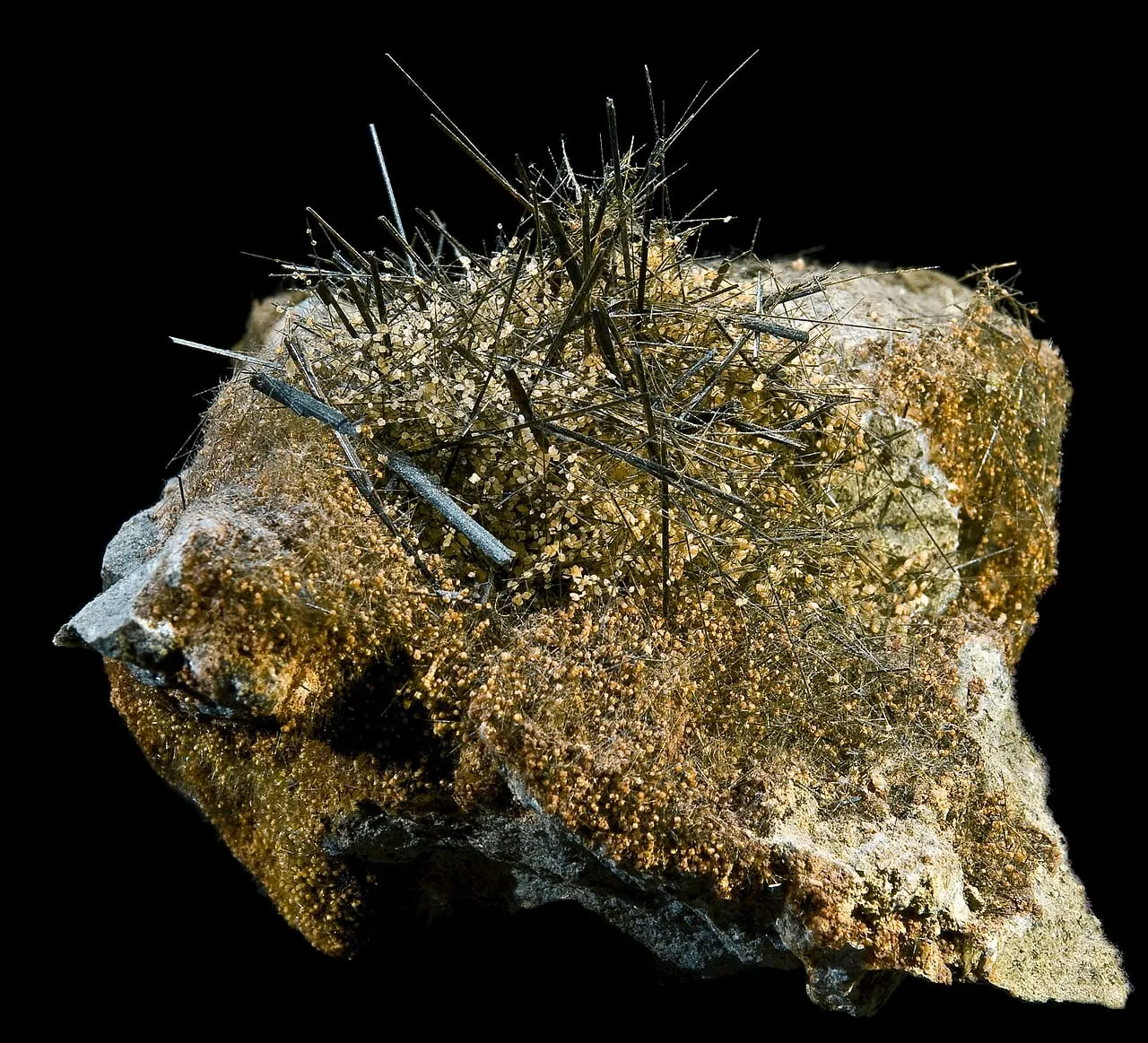
Actinolite
A green amphibole that grows like rays: a raw material of nephrite jade and cat's-eye stones; its fibrous form is asbestos.
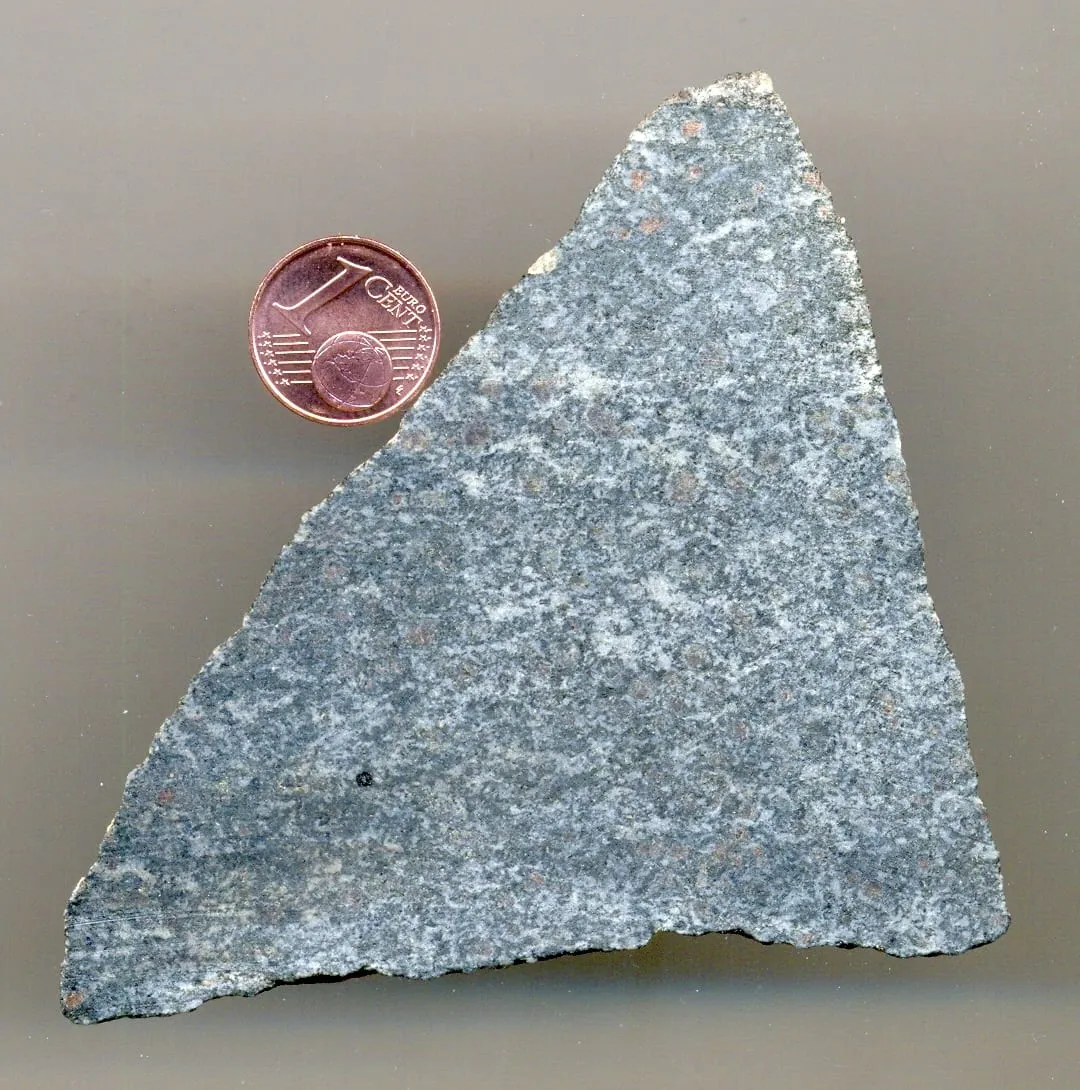
Amphibolite
A dark, heavy, salt-and-pepper metamorphic rock: basalt or gabbro transformed at depth; the stone of Neolithic axes.
Andesite
The rock of volcanic arcs, named after the Andes — and the pink-grey stone of Ankara Castle.