Mineral
Sylvite
KClSilvin
A mineral that looks like table salt but contains potassium; the main source of the potash used as fertilizer.
Also known as: Potassium chloride (as a mineral) · Sylvinite (the ore: a mix of sylvite and halite)
- Popularly: Ore and raw material
- Industrial
.jpg)
In short
Sylvite is a mineral made of potassium and chlorine (potassium chloride, KCl). It looks very much like halite, the mineral form of table salt: it forms cube-shaped crystals, is soft, dissolves in water and tastes salty, but with a slightly bitter edge. It is one of the last salt minerals to settle out as sea or lake water evaporates in closed basins. Its real importance is as the main ore of potash, the potassium fertilizer.
Photos

How does it form?
Sylvite is an evaporite mineral. When sea or salt-lake water dries up in closed or partly closed basins and the salts settle out, gypsum and halite come out first; sylvite is one of the last minerals to settle and forms only in extremely dry, salty settings. That is why it is usually found within or above thick beds of halite, together with other salts such as kainite, carnallite and polyhalite. The deposits of Saskatchewan are left over from a sea that dried up in the Devonian. Sylvite can also form in small amounts around volcanic vents (fumaroles) and as a product of burning coal.
What is it used for?
- Fertilizer: The potash obtained from sylvite is the main source of potassium, one of the three basic plant nutrients. In the USA the fertilizer industry uses about 85% of potash sales; the rest goes to chemical and industrial uses (USGS). There is no substitute for potassium as a plant nutrient.
- Production: According to the 2025 estimates in the USGS 2026 report, more than half of world potash production (about 49 million tonnes of K₂O) comes from two countries: Canada (about 15 million tonnes) and Russia (about 10 million tonnes). Belarus produces about 6 million tonnes and China about 6.3 million.
- Salt substitute: Potassium chloride is used in low-sodium salt blends; the World Health Organization recommends potassium-based salt substitutes that cut sodium for people without kidney problems.
- Optics: Together with quartz, fluorite and halite, sylvite has been used to make prisms and lenses for spectroscopes.
Where does the name come from?
Sylvite is named after François Sylvius de le Boë (1614–1672), a Dutch physician and chemist who lived in Leiden. The old alchemical name was sal digestivus Sylvii, “the digestive salt of Sylvius”. The mineral was described in 1832 at Mount Vesuvius.
In Türkiye
No sylvite or potash deposit is known in Türkiye. A publication of the General Directorate of Mineral Research and Exploration (MTA) notes that although evaporite settings formed in every geological period in the country, no potash deposit has been found so far; it lists the Tuz Gölü (Salt Lake), Sivas, Southeast Anatolian and East Anatolian basins as the leading areas to search for salt and potash. According to an article published by Habertürk in 2023, all of Türkiye’s potash fertilizer needs are met from abroad.
What determines its value?
Sylvite’s value comes not from beauty, as with a gem, but from its potassium content as an ore: the grade of the deposit (K₂O), the thickness and depth of the bed, whether the ore is dug from underground or dissolved with hot water and pumped up, the cost of separating it from halite and other salts, and the distance to farmland and ports. Potash used in agriculture is expected to be at least 95% potassium chloride (USGS). For collectors, clear, sharp-edged or red, undamaged crystals and specimens from famous places such as Carlsbad and Esterhazy are sought; because it dissolves in water and reacts to moisture, it is hard to keep.
This information is educational, not buying, selling or investment advice. Value varies enormously with quality and treatment.
How to recognise it
- 1
Like halite, it forms cubes and octahedra and has perfect cleavage in three directions at right angles. It is usually colourless, white or pale grey-blue; inclusions of iron oxide (hematite) can colour it yellowish red to red.
- 2
It is very soft (hardness 2), dissolves in water and tastes salty, but with a bitter note as well. Never try to identify unknown minerals by tasting them, because some minerals are toxic.
- 3
Because it looks so much like halite, telling them apart by eye is hard. Sylvite is a little lighter (specific gravity about 2.0 against about 2.2 for halite) and bends light a little less (refractive index 1.49 against 1.54 in halite).
- 4
In deposits it usually occurs intergrown with halite; this mixed ore is called sylvinite.
Fakes and imitations
What shops usually don’t tell you:
- The mineral it is most often confused with is halite (table salt). A chemical test or laboratory measurement is needed to tell the two apart for certain.
Safety
Sylvite is harmless to handle but must not be eaten: if too much potassium chloride is taken in, the potassium in the blood rises to a dangerous level (hyperkalaemia) and can disturb the heartbeat. Never taste mineral specimens or put them in drinking water. Because it dissolves in water, keep specimens somewhere dry.
Myths and misconceptions
MythSylvite is salt too; it is the same thing as table salt.
FactTable salt is sodium chloride (halite); sylvite is potassium chloride. The two look alike and occur in the same deposits, but they are different minerals. Sylvite tastes more bitter and has a different chemical composition.
MythPotash is made from plant ashes.
FactThe name comes from plant and wood ashes soaked in water in a pot (“pot ash”). Today, however, most of the world’s potash is not made from ashes but mined from sylvite-bearing beds in old salt basins.
What is it believed to be good for?
This section reports beliefs; it is not health information. There is no scientific evidence for these claims and no stone replaces medical treatment.
The meanings people give this stone, and who holds them:
- In the 17th century the potassium chloride studied by the Dutch physician Franciscus Sylvius was known as “Sylvius’s digestive salt” and “Sylvius’s fever-reducing salt”; these names show that the salt was believed to help digestion and fever.
What science says
There is no evidence that sylvite or potassium chloride improves digestion or lowers fever; the mineral’s name merely preserves a trace of this old terminology. Potassium chloride is today a genuine medicine, used under medical supervision for a lack of potassium in the blood, but too much of it is dangerous enough to stop the heart. Sylvite specimens should therefore never be eaten or soaked in drinking water.
Did you know?
Sylvite is the official mineral of the Canadian province of Saskatchewan, which holds the world’s largest potash deposits.
The world’s first potash mines were founded in 1861 at Staßfurt in Germany; industrial potash production began there.
Sylvite crystals can grow up to 15 centimetres across. The mineral is brittle, yet under low strain it can change shape without breaking (it shows ductility).
In 2025 the United States added potash to its updated list of critical minerals (USGS).
Where is it found?
Loading map…
- Mount Vesuvius, Campania, Italy · Type localityWhere the mineral was first described, in 1832; it appears as a deposit left by volcanic fumes
- Esterhazy area, Saskatchewan, Canada · Major depositOne of the main mining centres of Saskatchewan, which holds the world’s largest potash deposits
- Carlsbad potash district, Eddy County, New Mexico, USA · Major depositThe potash district in the Permian salt basin; the Handbook of Mineralogy cites large crystals from here
- Verkhnekamsk deposit (Solikamsk–Berezniki), Perm region, Russia · Major depositA Urals region the Handbook of Mineralogy names as a sylvite deposit; according to Wikipedia, one of the main potash-producing centres
- Salihorsk (Soligorsk), Minsk region, Belarus · Major depositAccording to Wikipedia, one of the main potash-producing centres
- Staßfurt, Saxony-Anhalt, Germany · Historic sourceSite of the first potash mines, founded in 1861; industrial potash production began here
- Hallein, Salzburg, Austria · Known localityThe Austrian locality named by the Handbook of Mineralogy
- Kalush, Ivano-Frankivsk region, Ukraine · Known localityThe Ukrainian locality named by the Handbook of Mineralogy
- Aislaby, near Whitby, Yorkshire, England · Known localityThe English locality named by the Handbook of Mineralogy
Locations are approximate to protect sites. Red dots mark places in Türkiye. Open in the big map →
Frequently asked questions
What is sylvite?
Sylvite is a mineral made of potassium and chlorine (potassium chloride, KCl). It looks very much like halite, the mineral form of table salt: it forms cube-shaped crystals, is soft, dissolves in water and tastes salty, but with a slightly bitter edge. It is one of the last salt minerals to settle out as sea or lake water evaporates in closed basins. Its real importance is as the main ore of potash, the potassium fertilizer.
What is sylvite used for?
Fertilizer: The potash obtained from sylvite is the main source of potassium, one of the three basic plant nutrients. In the USA the fertilizer industry uses about 85% of potash sales; the rest goes to chemical and industrial uses (USGS). There is no substitute for potassium as a plant nutrient. Production: According to the 2025 estimates in the USGS 2026 report, more than half of world potash production (about 49 million tonnes of K₂O) comes from two countries: Canada (about 15 million tonnes) and Russia (about 10 million tonnes).
How hard is sylvite?
It has a hardness of 2 on the Mohs scale. It is soft enough to scratch with a fingernail. Its specific gravity is 1.99 g/cm³.
Where is sylvite found?
Its best-known localities: Mount Vesuvius, Campania, Italy; Esterhazy area, Saskatchewan, Canada; Carlsbad potash district, Eddy County, New Mexico, USA; Verkhnekamsk deposit (Solikamsk–Berezniki), Perm region, Russia; Salihorsk (Soligorsk), Minsk region, Belarus.
How can you tell if sylvite is real?
Like halite, it forms cubes and octahedra and has perfect cleavage in three directions at right angles. It is usually colourless, white or pale grey-blue; inclusions of iron oxide (hematite) can colour it yellowish red to red. It is very soft (hardness 2), dissolves in water and tastes salty, but with a bitter note as well. Never try to identify unknown minerals by tasting them, because some minerals are toxic. Because it looks so much like halite, telling them apart by eye is hard. Sylvite is a little lighter (specific gravity about 2.0 against about 2.2 for halite) and bends light a little less (refractive index 1.49 against 1.54 in halite). The mineral it is most often confused with is halite (table salt). A chemical test or laboratory measurement is needed to tell the two apart for certain.
Is sylvite valuable?
On the “street to diamond” value ladder it sits on step 3 of nine: Building and industrial stone. Sylvite’s value comes not from beauty, as with a gem, but from its potassium content as an ore: the grade of the deposit (K₂O), the thickness and depth of the bed, whether the ore is dug from underground or dissolved with hot water and pumped up, the cost of separating it from halite and other salts, and the distance to farmland and ports. Potash used in agriculture is expected to be at least 95% potassium chloride (USGS). For collectors, clear, sharp-edged or red, undamaged crystals and specimens from famous places such as Carlsbad and Esterhazy are sought; because it dissolves in water and reacts to moisture, it is hard to keep.
What is sylvite good for?
In the 17th century the potassium chloride studied by the Dutch physician Franciscus Sylvius was known as “Sylvius’s digestive salt” and “Sylvius’s fever-reducing salt”; these names show that the salt was believed to help digestion and fever. There is no evidence that sylvite or potassium chloride improves digestion or lowers fever; the mineral’s name merely preserves a trace of this old terminology. Potassium chloride is today a genuine medicine, used under medical supervision for a lack of potassium in the blood, but too much of it is dangerous enough to stop the heart. Sylvite specimens should therefore never be eaten or soaked in drinking water. This section reports beliefs; it is not health information. There is no scientific evidence for these claims and no stone replaces medical treatment.
Is sylvite dangerous?
Sylvite is harmless to handle but must not be eaten: if too much potassium chloride is taken in, the potassium in the blood rises to a dangerous level (hyperkalaemia) and can disturb the heartbeat. Never taste mineral specimens or put them in drinking water. Because it dissolves in water, keep specimens somewhere dry.
Sources
- Sylvite · Wikipedia
- Handbook of Mineralogy: Sylvite · Mineralogical Society of America
- Sylvite · Webmineral
- Mineral Commodity Summaries 2026: Potash · U.S. Geological Survey, 2026
- Potash · Wikipedia
- Potassium chloride · Wikipedia
- Türkiye potas tuzu (silvin, karnalit) yataklanmaları (D. İ. Önenç) · MTA Genel Müdürlüğü
- Potas nedir, nerelerde kullanılır ve özellikleri neler? Potas Türkiye'de nereden çıkarılır? · Habertürk, 2023
- Esterhazy, Saskatchewan · Wikipedia
- Carlsbad, New Mexico · Wikipedia
- Solikamsk · Wikipedia
- Berezniki · Wikipedia
- Salihorsk · Wikipedia
- Staßfurt · Wikipedia
- Mount Vesuvius · Wikipedia
- Hallein · Wikipedia
- Kalush, Ukraine · Wikipedia
- Aislaby, Scarborough · Wikipedia
External links
Draft: awaiting expert reviewReport an error ↗
On the same step
Albite
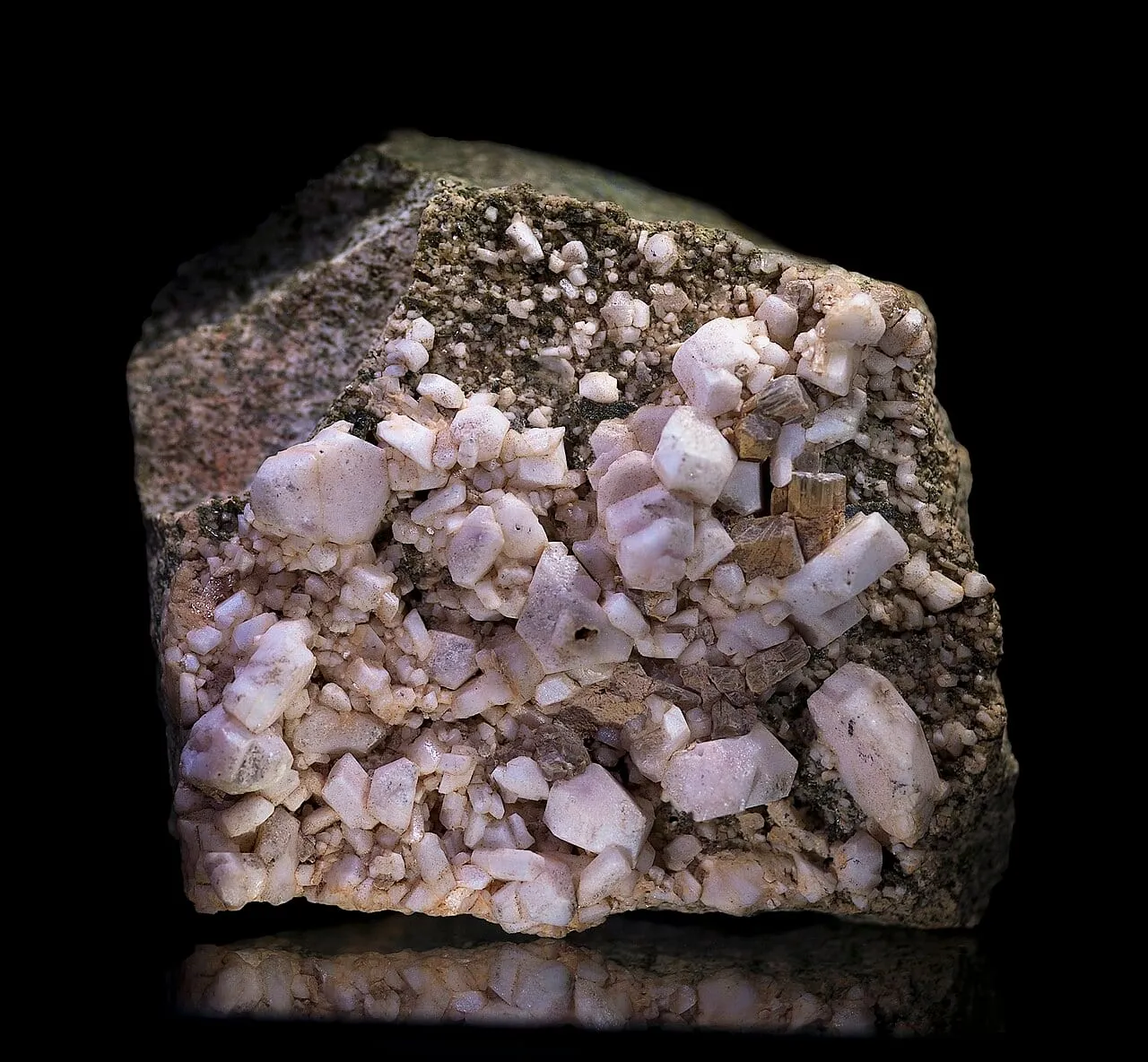
The white, sodium end of the feldspars: with its deposits at Çine–Milas, a glass and ceramics raw material that makes Türkiye one of the world’s main feldspar producers.
Alunite
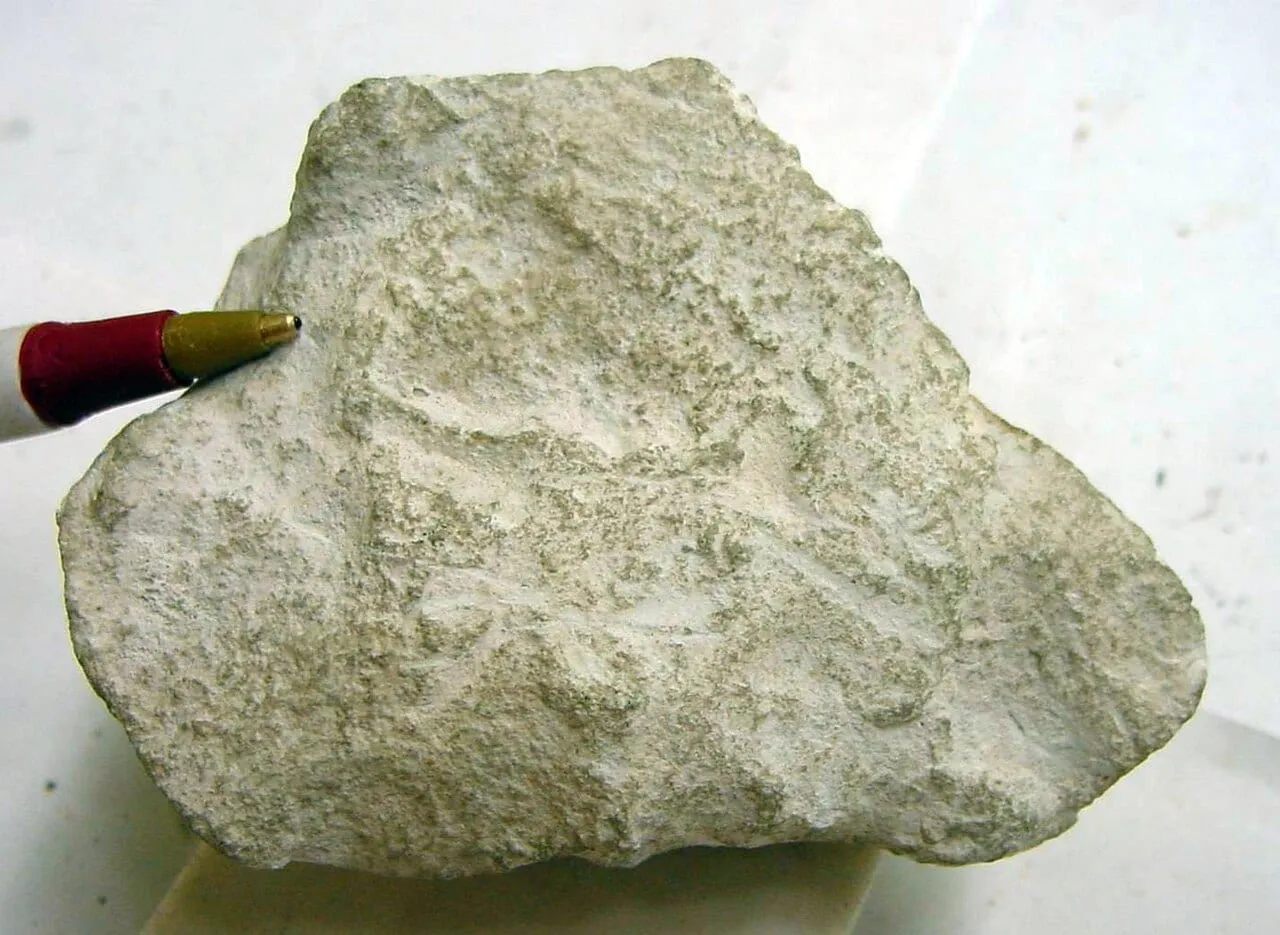
The “alum stone” from which alum was made for centuries. Foça, Şaphane in Kütahya and Şebinkarahisar are Türkiye's old alum homelands.
Anhydrite
Gypsum without its water: a calcium sulfate mineral, whose blue-grey Peruvian form is sold as “angelite”.