Mineral
Siderite
FeCO₃Siderit
A brown carbonate mineral named from the Greek word for “iron”, used as an iron ore in making steel.
- Popularly: Ore and raw material
- Ore
- Important in Türkiye
.jpg)
In short
Siderite is a carbonate mineral made of iron and carbon (iron carbonate). It usually appears as yellowish-brown, glassy crystals with curved faces, or as masses. Pure siderite is about half iron by weight, so it is known both as an iron ore and as a collector’s mineral. It looks like calcite but is much heavier.
Photos

How does it form?
Siderite is an iron carbonate that forms where there is little oxygen. In sedimentary rocks such as shale and sandstone it forms during burial from carbonate and iron in the rock; sometimes it grows as nodules (concretions) that enclose fossils and preserve them in three dimensions. It is a common component of bedded sedimentary iron ores and of metamorphic iron deposits. In hydrothermal veins, left in rock cracks by hot waters, it occurs with quartz, baryte, fluorite and pyrite; it is also found in rare rocks such as carbonatites.
What is it used for?
- Iron ore: Pure siderite is about 48% iron. It is usually roasted before being turned into iron; roasting converts siderite to hematite.
- Steel: Because it contains no sulfur or phosphorus it has been sought after for steel making. In the Bessemer era, siderite was used to make spiegeleisen, the iron–manganese alloy added to steel.
- Collecting: Its lustrous brown crystals and specimens with quartz or cryolite interest mineral collectors. It is soft and cleaves perfectly, so it is not used in jewellery.
In Türkiye
In Türkiye, siderite is known from the Hekimhan–Hasançelebi iron district in the Hekimhan district of Malatya. According to the district report of the U.S. Geological Survey (USGS), the Deveci mine, about 10 km north-northeast of Hekimhan, holds a large mass of siderite that replaces carbonate beds next to serpentinised igneous rock. The upper part of the mass has weathered to iron and manganese oxides of direct-shipping grade.
What determines its value?
As an ore, the value of siderite depends on its iron content (about 48% in pure siderite), the scarcity of harmful impurities such as sulfur and phosphorus, the size of the deposit and the cost of processing. Carbonate ores usually occur as small lenses along steeply dipping beds, so they cannot be worked in open pits and cost more to mine than hematite deposits; they also need roasting before iron is made. For collectors, large, lustrous, undamaged crystals, attractive associations with quartz or other minerals, and well-known localities such as Mont Saint-Hilaire or Ivittuut are sought after.
This information is educational, not buying, selling or investment advice. Value varies enormously with quality and treatment.
How to recognise it
- 1
Yellowish brown, brown or grey, with a glassy, sometimes silky or pearly lustre, in crystals with slanting (rhombohedral) faces or in masses.
- 2
Its hardness is about 4: a steel knife scratches it. It is a little harder than calcite (3).
- 3
The streak (powder colour) is white; despite its brown look this tells it apart from hematite, which leaves a reddish streak.
- 4
Its specific gravity is about 3.96: it feels clearly heavier in the hand than a pale carbonate mineral that looks like calcite.
- 5
At the surface it weathers to brown-black iron and manganese oxides.
Fakes and imitations
What shops usually don’t tell you:
- Siderite can be confused with similarly coloured carbonate minerals such as calcite, dolomite and ankerite. It is hard to tell them apart by eye; measuring specific gravity or a laboratory analysis is needed.
Myths and misconceptions
MythSiderite means a meteorite (an iron meteorite).
FactThe mineral siderite is iron carbonate (FeCO₃) formed in Earth’s crust. Because iron meteorites were also once called “siderites”, the two names get mixed up, but the mineral and the iron–nickel metal that falls from space are entirely different things.
MythSiderite is the richest iron ore because it contains iron.
FactPure siderite is about 48% iron by weight; hematite and magnetite, at about 70% and 72% iron, are richer ores. Siderite is used because it carries no sulfur or phosphorus and turns into hematite when roasted.
Did you know?
Its name comes from the Greek word sidēros, “iron”.
Siderite contains no sulfur or phosphorus, so it has been valued as a steel-making ore. In the Bessemer steel era of the 19th century, “spathic” siderite ores were used to make spiegeleisen, an iron–manganese alloy.
Finds of siderite on Mars are interpreted as a possible sign that plenty of water was present early in the planet’s history.
Where is it found?
Loading map…
- Erzberg, Eisenerz, Styria, Austria · Historic sourceA famous iron mine listed by the Handbook of Mineralogy for siderite; mines around Eisenerz are documented as worked since the 12th century
- Hüttenberg, Carinthia, Austria · Known localityA Carinthian mining district listed by the Handbook of Mineralogy for siderite
- Redruth, Cornwall, England · Historic sourceSiderite from the metal mines of Cornwall; one of the places Wikipedia names for siderite
- Morro Velho gold mine, Nova Lima, Minas Gerais, Brazil · Known localityA gold mine listed by the Handbook of Mineralogy for siderite; specimens of siderite with quartz are found in collections
- Ivittuut (Ivigtut), southwest Greenland · Known localityA large cryolite deposit, now exhausted; siderite occurs together with cryolite
- Mont Saint-Hilaire, Quebec, Canada · Known localityAn alkaline rock complex known for very large siderite crystals
- Gilman, Eagle County, Colorado, USA · Known localityOne of the places Wikipedia names for siderite; the Harvard Museum of Natural History displays siderite from Gilman
- Hekimhan (Deveci deposit), Malatya, Türkiye · Known localityIn the Hekimhan–Hasançelebi iron district, the Deveci mine, about 10 km north-northeast of Hekimhan, holds a large mass of siderite
Locations are approximate to protect sites. Red dots mark places in Türkiye. Open in the big map →
Frequently asked questions
What is siderite?
Siderite is a carbonate mineral made of iron and carbon (iron carbonate). It usually appears as yellowish-brown, glassy crystals with curved faces, or as masses. Pure siderite is about half iron by weight, so it is known both as an iron ore and as a collector’s mineral. It looks like calcite but is much heavier.
What is siderite used for?
Iron ore: Pure siderite is about 48% iron. It is usually roasted before being turned into iron; roasting converts siderite to hematite. Steel: Because it contains no sulfur or phosphorus it has been sought after for steel making. In the Bessemer era, siderite was used to make spiegeleisen, the iron–manganese alloy added to steel. Collecting: Its lustrous brown crystals and specimens with quartz or cryolite interest mineral collectors. It is soft and cleaves perfectly, so it is not used in jewellery.
How hard is siderite?
It has a hardness of 3.8–4.3 on the Mohs scale. A fingernail cannot scratch it, but a steel knife can. Its specific gravity is 3.93–3.96 g/cm³.
Where is siderite found?
Its best-known localities: Erzberg, Eisenerz, Styria, Austria; Redruth, Cornwall, England; Hüttenberg, Carinthia, Austria; Morro Velho gold mine, Nova Lima, Minas Gerais, Brazil; Ivittuut (Ivigtut), southwest Greenland.
Where is siderite found in Türkiye?
Known localities in Türkiye: Hekimhan (Deveci deposit), Malatya, Türkiye.
How can you tell if siderite is real?
Yellowish brown, brown or grey, with a glassy, sometimes silky or pearly lustre, in crystals with slanting (rhombohedral) faces or in masses. Its hardness is about 4: a steel knife scratches it. It is a little harder than calcite (3). The streak (powder colour) is white; despite its brown look this tells it apart from hematite, which leaves a reddish streak. Siderite can be confused with similarly coloured carbonate minerals such as calcite, dolomite and ankerite. It is hard to tell them apart by eye; measuring specific gravity or a laboratory analysis is needed.
Is siderite valuable?
On the “street to diamond” value ladder it sits on step 4 of nine: Fine dimension stone and ore. As an ore, the value of siderite depends on its iron content (about 48% in pure siderite), the scarcity of harmful impurities such as sulfur and phosphorus, the size of the deposit and the cost of processing. Carbonate ores usually occur as small lenses along steeply dipping beds, so they cannot be worked in open pits and cost more to mine than hematite deposits; they also need roasting before iron is made. For collectors, large, lustrous, undamaged crystals, attractive associations with quartz or other minerals, and well-known localities such as Mont Saint-Hilaire or Ivittuut are sought after.
Sources
- Siderite · Wikipedia
- Handbook of Mineralogy: Siderite · Mineralogical Society of America
- Geology and mineral deposits of the Hekimhan-Hasancelebi iron district, Turkey (Open-File Report 72-186) · U.S. Geological Survey, 1972
- Iron meteorite · Wikipedia
- Eisenerz · Wikipedia
External links
Draft: awaiting expert reviewReport an error ↗
On the same step
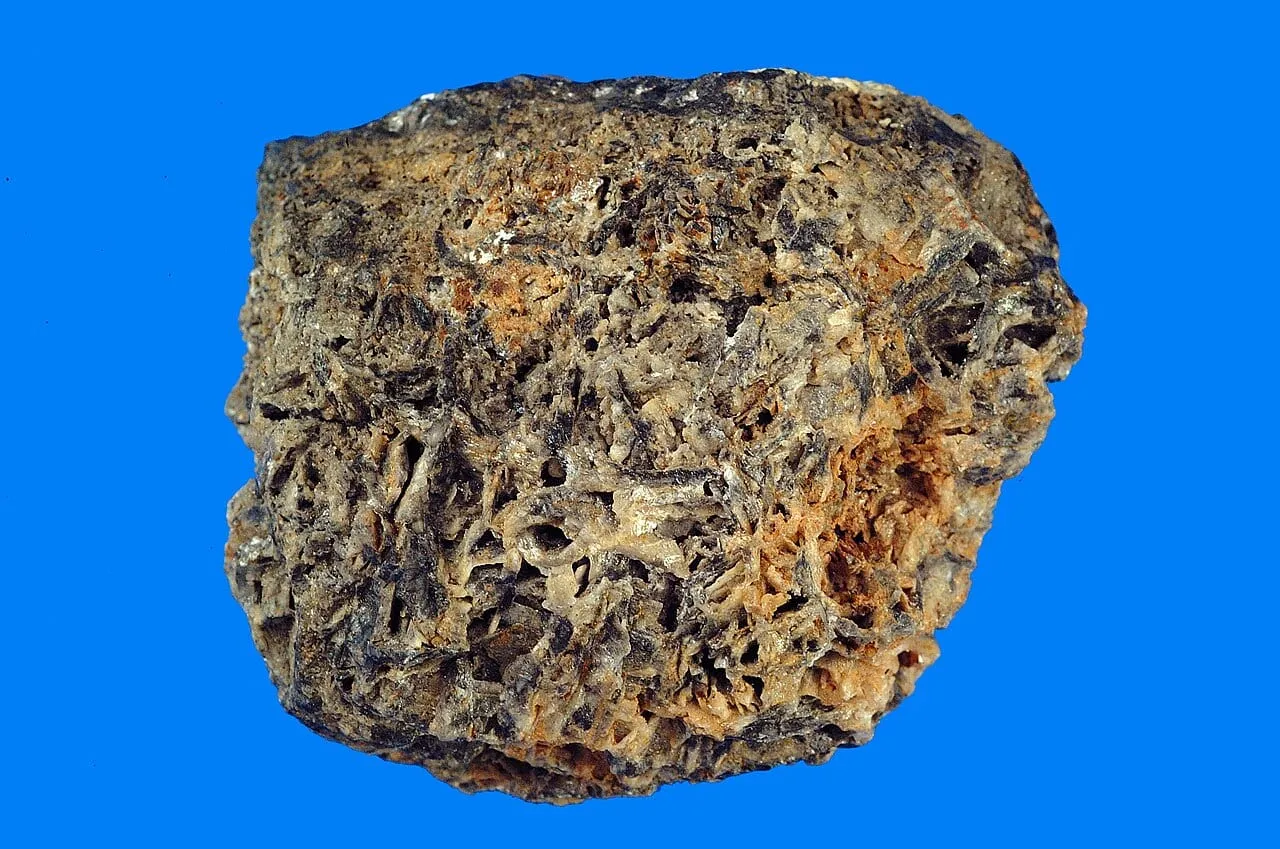
Anglesite
A heavy lead sulfate mineral with a diamond-like shine that grows as a crust around galena; it is named after the island of Anglesey in Wales.
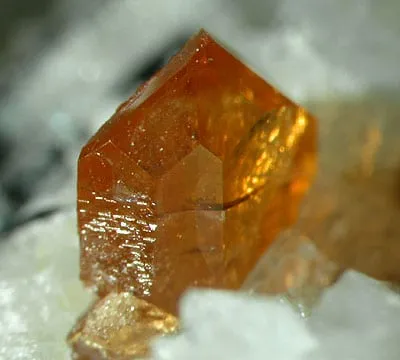
Bastnäsite
One of the main ore minerals of the “rare earth” elements such as cerium, lanthanum and neodymium; a raw material for magnets and electronics.
Borax (tincal)
A sodium borate that dissolves in water and crumbles to white powder in dry air; one of the world’s key tincal deposits is at Kırka in Eskişehir.