Rock
Ruin marble
Harabe mermeri
Florence's famous “landscape stone”, whose polished face shows the skyline of a ruined city: not a marble at all, but a clayey limestone.
Also known as: Pietra paesina · Florentine marble
- Popularly: Natural stone (building and decor)

In short
Ruin marble is a fine-grained, clayey limestone. Cut and polished, its grey, beige and brown bands line up like towers, crumbling walls or a mountain landscape. The best-known pieces come from around Florence, where it is called “pietra paesina” (landscape stone). Since the Renaissance it has been used in luxury furniture, inlay work and small slabs that artists painted on.
Photos
_abc6_pietra_paesina.jpg)
How does it form?
The story of ruin marble begins on a calm, deep sea floor. The Florentine stones come from limy muds of what geologists call the Alberese Formation, laid down between the Cretaceous and the Eocene. The mud is made largely of microscopic algal plates called coccoliths and the shells of tiny single-celled animals (foraminifera), with some clay. As it was buried and hardened, colourless iron salts became evenly spread through it.
Later, burial and earth movements broke the rock along many thin cracks, which slowly filled with white calcite and divided it into small blocks. In a Slovak example, this calcite is estimated to have crystallised at a depth of about 4–6.5 kilometres, at around 130 °C.
The actual pattern appears much later, when the rock comes close to the surface and begins to weather. Oxygen-rich rainwater seeps through the pores, turns the iron salts into brown iron oxyhydroxides and deposits them in bands at regular intervals. This rhythmic precipitation produces what are called Liesegang rings. Because the calcite veins stop the water from crossing sideways, the bands advance at a different speed in each block, and the row of blocks ends up looking like the stepped skyline of a ruined city.
What is it used for?
- Inlay and luxury furniture: Called “pietra paesina” in Tuscany, the stone decorated cabinets, chests and table tops from the Renaissance to Art Nouveau times. The Opificio delle Pietre Dure, the stone workshop founded in Florence in 1588 by Ferdinando I de’ Medici, also worked it.
- Stone pictures: Artists of the 16th to 18th centuries painted human figures and other motifs onto the natural patterns of thin slabs to make small, dreamlike pictures, and such slabs also decorated precious furniture.
- Crafts: In Austria around 1800 it was used for stone boxes, vases, brooches, inlays and table tops.
- Science: It is studied to understand how water moves along cracks in rocks and how patterns form on their own.
Where is it found?
The most famous ruin marbles come from around Florence in Italy, particularly the Arno valley (Valdarno) south-east of the city; loose blocks of the stone lying in the soil have been collected and made into decorative objects for centuries. In Italy it is also known from the Tolfa Mountains north of Civitavecchia and the Monterano area in Lazio. Other known occurrences are Klosterneuburg and Waidhofen an der Ybbs in the flysch rocks of the Vienna Woods in Austria, and the area around the village of Horná Breznica in the Western Carpathians of Slovakia.
What determines its value?
Ruin marble is valued by the slab and the piece, not by the tonne. What matters is how striking the pattern is (the impression of a city, a castle or a landscape), the colour contrast, the size of the slab and whether it is free of cracks; because the rock is brittle, large sound slabs are scarce. Historic inlay work, painted slabs and pieces from famous collections are valued as works of art, more for their craftsmanship and history than for the stone itself.
This information is educational, not buying, selling or investment advice. Value varies enormously with quality and treatment.
How to recognise it
- 1
A polished face shows angular compartments separated by thin white calcite veins, each filled with parallel beige, brown and grey bands; together they look like a stepped city skyline.
- 2
The bands jump up or down from one compartment to the next: a line stops at a crack and carries on at a different height on the other side.
- 3
Near the edges there may be black, fern-like manganese oxide marks (dendrites).
- 4
Being a limestone, it fizzes in dilute hydrochloric acid and a steel knife scratches it easily.
Fakes and imitations
What shops usually don’t tell you:
- Cotham Marble from around Bristol in England is also called “landscape marble”, but its tree- and hedge-like pattern comes from layered structures built by microorganisms (stromatolites); the compartmented, stepped pattern of ruin marble is the result of chemical precipitation.
- Limestones with plant- or tree-like dendrites on their surfaces can also be mistaken for landscape stones; there the pattern is made by manganese oxides seeping along crack surfaces, and there are none of the compartmented colour bands of ruin marble.
Myths and misconceptions
MythRuin marble is a true marble.
FactDespite its name it is not a marble. Marble is a metamorphic rock recrystallised by heat and pressure; ruin marble is an unaltered, fine-grained, clayey (marly) limestone. Calling it “marble” is an old trade habit for any decorative stone that takes a polish.
MythThe stepped offsets in the stone are small faults cutting the rock.
FactThey look like faults, but they were not made by movement. Studies found no sign of slip along the cracks and showed that the colour bands grew after the cracks had formed, with water advancing at a different speed in each block.
Did you know?
The 19th-century Corsi collection of decorative stones at the Oxford University Museum of Natural History has a section of its own for “ruin marbles”; most of its specimens come from the Arno valley south-east of Florence.
Slovak researchers reproduced the stepped bands of ruin marble in the laboratory by dropping silver nitrate solution onto gelatine.
In Austria, ruin marbles from Klosterneuburg and Waidhofen an der Ybbs were much in demand around 1800 for stone boxes, vases, brooches and table tops.
Where is it found?
Loading map…
- Florence area and Valdarno, Tuscany, Italy · Type localityThe classic area, where the stone is called “pietra paesina” (landscape stone). It comes from marly limestones of the Cretaceous–Eocene Alberese Formation; most specimens in the Corsi collection in Oxford are thought to come from the Arno valley (Valdarno) south-east of Florence.
- Tolfa Mountains, near Civitavecchia, Lazio, Italy · Known localityThe “Civitavecchia landscape stone” in the Corsi collection most probably comes from these hills north of Civitavecchia, an occurrence described by Civitelli in 1970. It has also been found in the nearby Monterano nature reserve.
- Klosterneuburg, Lower Austria, Austria · Known localityThe “Klosterneuburg ruin marble” found in the flysch rocks of the Vienna Woods: a brittle marly limestone ranging from pale beige to violet-brown.
- Waidhofen an der Ybbs, Lower Austria, Austria · Historic sourceKnown, together with Klosterneuburg, for particularly fine ruin marbles used in crafts around 1800.
- Horná Breznica, near Púchov, Slovakia · Known localityBlocks lying in the soil cover, derived from thin limestone beds in Maastrichtian–Palaeocene flysch of the Outer Flysch Belt of the Western Carpathians; studied in detail in 2003.
Locations are approximate to protect sites. Red dots mark places in Türkiye. Open in the big map →
Frequently asked questions
What is ruin marble?
Ruin marble is a fine-grained, clayey limestone. Cut and polished, its grey, beige and brown bands line up like towers, crumbling walls or a mountain landscape. The best-known pieces come from around Florence, where it is called “pietra paesina” (landscape stone). Since the Renaissance it has been used in luxury furniture, inlay work and small slabs that artists painted on.
How does the city picture in ruin marble form?
The rock is first split into small blocks by thin cracks that fill with calcite. Later, near the surface, oxygen-rich rainwater soaks into the stone and turns iron salts into bands of brown iron oxides. Because the calcite veins stop the water from crossing sideways, the bands advance differently in each block, and side by side they look like a stepped city skyline.
What is ruin marble used for?
Inlay and luxury furniture: Called “pietra paesina” in Tuscany, the stone decorated cabinets, chests and table tops from the Renaissance to Art Nouveau times. The Opificio delle Pietre Dure, the stone workshop founded in Florence in 1588 by Ferdinando I de' Medici, also worked it. Stone pictures: Artists of the 16th to 18th centuries painted human figures and other motifs onto the natural patterns of thin slabs to make small, dreamlike pictures, and such slabs also decorated precious furniture. Crafts: In Austria around 1800 it was used for stone boxes, vases, brooches, inlays and table tops.
How hard is ruin marble?
It has a hardness of 3 on the Mohs scale. A fingernail cannot scratch it, but a steel knife can. Its specific gravity is 2.7–2.8 g/cm³.
Where is ruin marble found?
Its best-known localities: Florence area and Valdarno, Tuscany, Italy; Waidhofen an der Ybbs, Lower Austria, Austria; Tolfa Mountains, near Civitavecchia, Lazio, Italy; Klosterneuburg, Lower Austria, Austria; Horná Breznica, near Púchov, Slovakia.
How can you tell if ruin marble is real?
A polished face shows angular compartments separated by thin white calcite veins, each filled with parallel beige, brown and grey bands; together they look like a stepped city skyline. The bands jump up or down from one compartment to the next: a line stops at a crack and carries on at a different height on the other side. Near the edges there may be black, fern-like manganese oxide marks (dendrites). Cotham Marble from around Bristol in England is also called “landscape marble”, but its tree- and hedge-like pattern comes from layered structures built by microorganisms (stromatolites); the compartmented, stepped pattern of ruin marble is the result of chemical precipitation.
Is ruin marble valuable?
On the “street to diamond” value ladder it sits on step 5 of nine: Ornamental stone. Ruin marble is valued by the slab and the piece, not by the tonne. What matters is how striking the pattern is (the impression of a city, a castle or a landscape), the colour contrast, the size of the slab and whether it is free of cracks; because the rock is brittle, large sound slabs are scarce. Historic inlay work, painted slabs and pieces from famous collections are valued as works of art, more for their craftsmanship and history than for the stone itself.
Sources
- Ruin marble · Wikipedia
- Pietra paesina · Wikipedia (Italiano)
- Ruin marble: a record of fracture-controlled fluid flow and precipitation (F. Marko, D. Pivko, V. Hurai), Geological Quarterly 47(3): 241–252 · Polish Geological Institute, 2003
- Corsi Collection of Decorative Stones: Pietra paesina, Valdarno (no. 529) · Oxford University Museum of Natural History
- Corsi Collection of Decorative Stones: Pietra paesina, Civitavecchia (no. 960) · Oxford University Museum of Natural History
- Der so genannte „Klosterneuburger Ruinenmarmor“ (W. Kitlitschka), Denkmalpflege in Niederösterreich 22, S. 45 · Amt der NÖ Landesregierung / Bundesdenkmalamt
- Denkmalpflege in Niederösterreich 22, S. 37–40 (Bausteine; Ruinenmarmor aus Klosterneuburg und Waidhofen/Ybbs) · Amt der NÖ Landesregierung / Bundesdenkmalamt
- Ruine marmor, Klosterneuburg near Wien (specimen 069990) · Tohoku University Museum
- Opificio delle pietre dure · Wikipedia
- Cotham Marble · Wikipedia
- Tolfa Mountains · Wikipedia
- Horná Breznica · Wikipedia
- Limestone · Geology.com
External links
Draft: awaiting expert reviewReport an error
On the same step
Agate
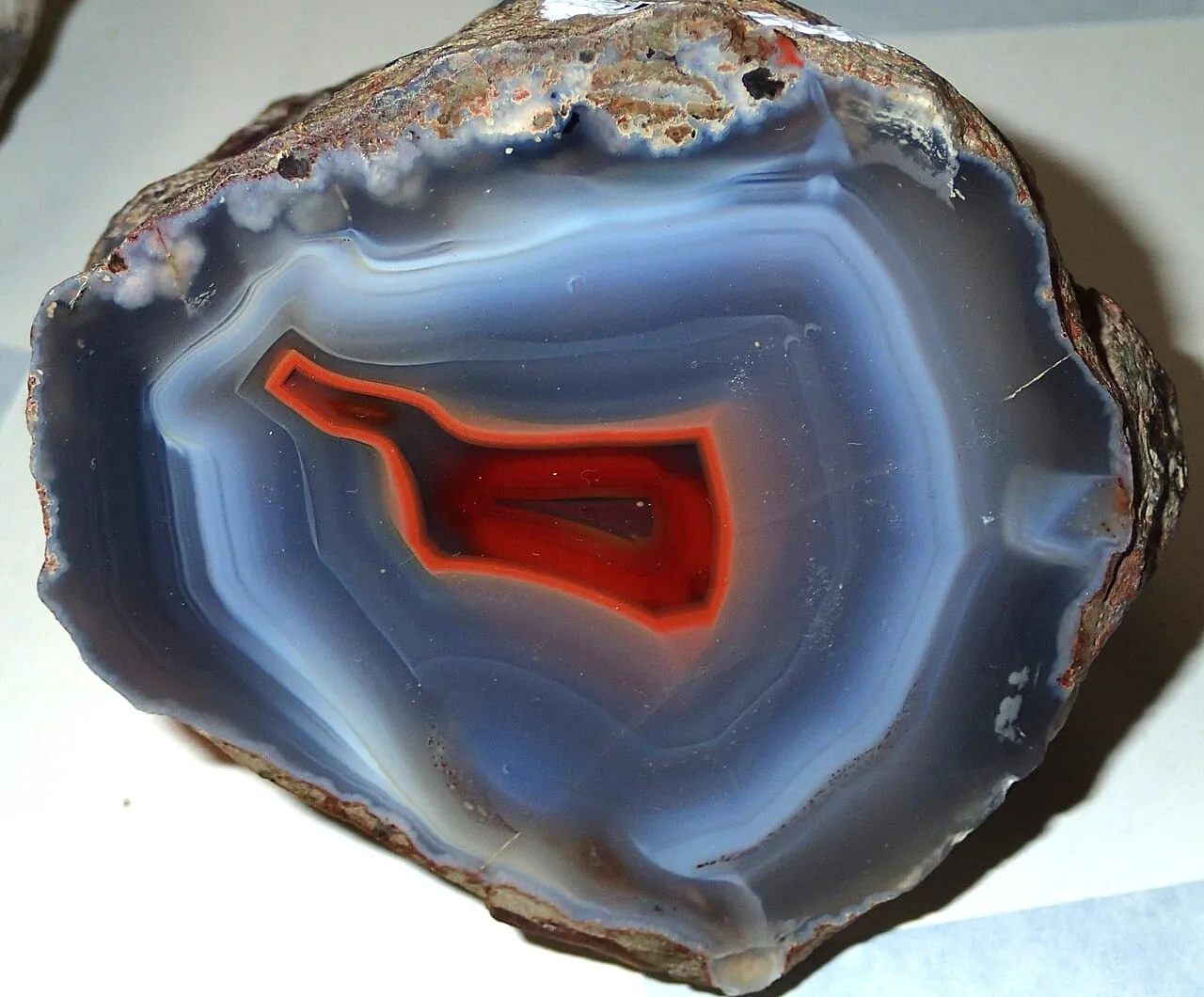
The banded variety of chalcedony: it grows layer by layer in hollows in volcanic rock and shows a new pattern every time it is cut.

Almandine
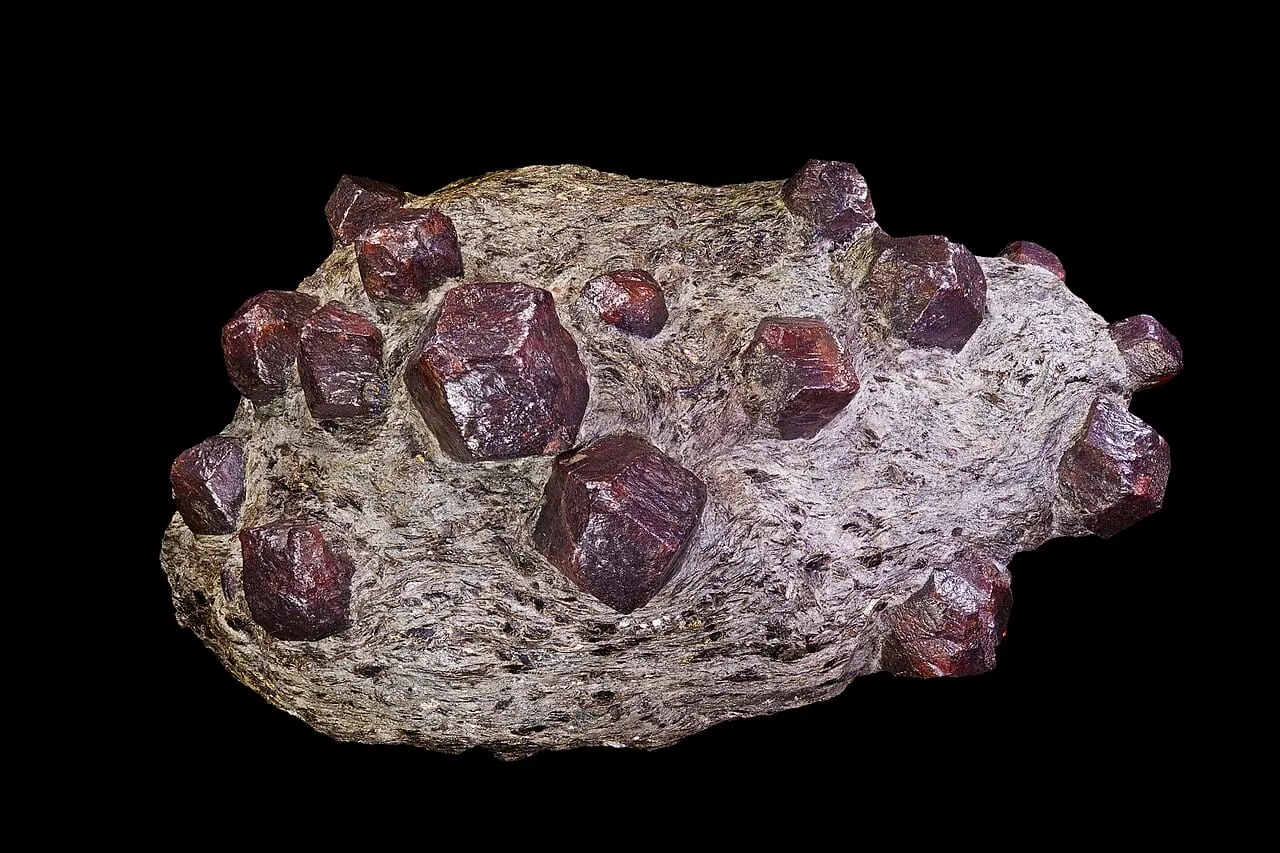
The commonest garnet: a deep red, iron-rich stone named after the ancient city of Alabanda in Anatolia, used in jewellery and in sandpaper alike.

Amazonite
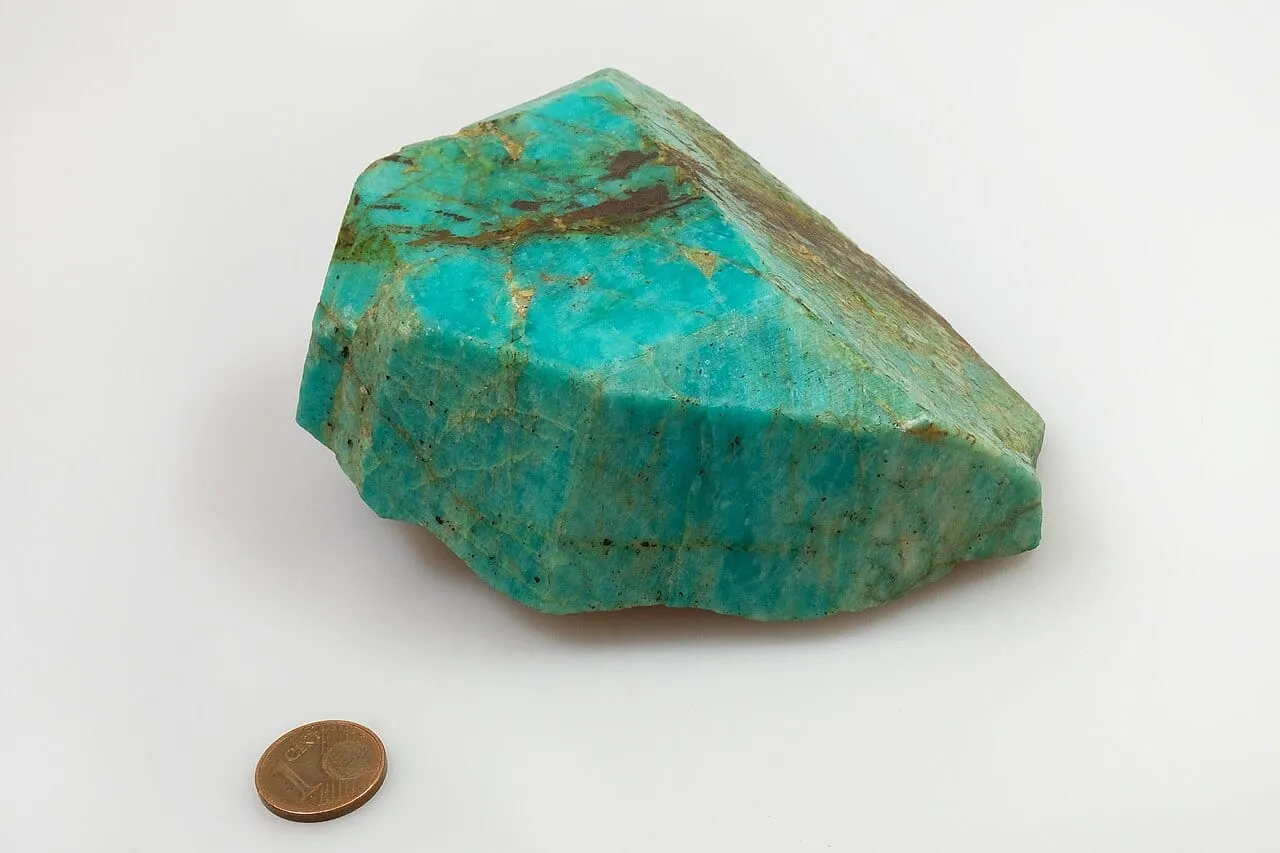
A turquoise-like green-blue feldspar: a variety of microcline worn as jewellery for more than three thousand years, but it can release lead.