Mineral
Pyrargyrite
Ag₃SbS₃Pirarjirit
Proustite's dark red twin: an important silver ore whose name comes from the Greek for “fire” and “silver”.
Also known as: Dark red silver ore · Ruby silver · Ruby blende
- Popularly: Ore and raw material
.jpg)
In short
Pyrargyrite is a mineral made of silver, antimony and sulfur (Ag₃SbS₃). Because of its deep red, adamantine crystals it is also called “dark red silver ore” or “ruby silver”. It is an important silver ore. It has the same structure as proustite; the difference is that proustite contains arsenic and pyrargyrite antimony. E. F. Glocker named it in 1831 from the Greek for “fire” and “silver”, after its colour and composition.
Photos
.jpg)
How does it form?
Pyrargyrite is a primary mineral formed late and at low temperature in veins left by hot water solutions (hydrothermal fluids) moving through cracks; it can also form by secondary processes. It occurs with native silver, acanthite, tetrahedrite and other silver sulfosalts, together with calcite, dolomite and quartz. Its composition can grade into that of proustite.
According to the Handbook of Mineralogy, its known localities include Sankt Andreasberg and Freiberg in Germany, Hiendelaencina in Spain, Jáchymov and Příbram in Czechia, the Comstock Lode in the USA, Colquechaca in Bolivia, Fresnillo and Guanajuato in Mexico, Chañarcillo in Chile and Broken Hill in Australia.
What is it used for?
- Silver ore: It is an important source of silver; silver sulfide minerals are concentrated by flotation.
- Collecting: Its deep red, lustrous crystals are sought by collectors.
What determines its value?
Pyrargyrite is an important silver ore: about 60% of the weight of pure pyrargyrite is silver. It is not uncommon in oxidised silver deposits but rare as fine specimens. Collectors look for deep red, lustrous, sharp and undarkened crystals; because it darkens in light, it is stored in the dark.
This information is educational, not buying, selling or investment advice. Value varies enormously with quality and treatment.
How to recognise it
- 1
Deep red, adamantine and translucent; its crystals are often striated.
- 2
Its streak is purplish red, an easy way to tell it from proustite, which leaves a scarlet streak.
- 3
Soft (Mohs 2.5) and heavy (specific gravity about 5.8).
- 4
It darkens on exposure to light.
- 5
Usually found with native silver, acanthite, tetrahedrite, calcite and quartz.
Fakes and imitations
What shops usually don’t tell you:
- Proustite (light red silver ore) is very similar; proustite, however, leaves a scarlet streak and pyrargyrite a purplish-red one.
- Cinnabar is also red and leaves a red streak, but it is a mercury mineral, not a silver one. A certain identification takes analysis.
Myths and misconceptions
MythPyrargyrite is named for melting in fire.
FactThe name comes from the Greek for “fire” and “silver”, but it refers not to melting in fire but to the mineral's fiery red colour and the silver it contains.
Did you know?
Its name comes from the Greek pyr (fire) and argyros (silver), referring to both its colour and the silver it contains.
Acanthite, proustite and pyrargyrite are among the few silver minerals that can contain enough silver to be mined.
Its crystals can grow up to 6 cm.
Where is it found?
Loading map…
- Sankt Andreasberg, Harz Mountains, Germany · Historic sourceOne of the main classic sources of well-formed crystals
- Himmelsfürst mine, Brand-Erbisdorf (near Freiberg), Saxony, Germany · Historic sourceA famous mine of the Freiberg silver district
- Hiendelaencina, Guadalajara, Spain · Known localitySpanish silver mines that yielded fine specimens
- Guanajuato, Mexico · Major depositOne of the main sources of well-formed crystals; Fresnillo in Mexico is also known
- Příbram, Central Bohemia, Czechia · Historic sourceSilver-bearing lead mines worked for centuries
Locations are approximate to protect sites. Red dots mark places in Türkiye. Open in the big map →
Frequently asked questions
What is pyrargyrite?
Pyrargyrite is a mineral made of silver, antimony and sulfur (Ag₃SbS₃). Because of its deep red, adamantine crystals it is also called “dark red silver ore” or “ruby silver”. It is an important silver ore. It has the same structure as proustite; the difference is that proustite contains arsenic and pyrargyrite antimony. E. F. Glocker named it in 1831 from the Greek for “fire” and “silver”, after its colour and composition.
How can proustite and pyrargyrite be told apart?
Both are red silver minerals of the same structure, known as “ruby silver”. The easiest difference is the streak: on unglazed porcelain proustite leaves a scarlet streak and pyrargyrite a purplish-red one. In composition, proustite contains arsenic and pyrargyrite antimony.
What is pyrargyrite used for?
Silver ore: It is an important source of silver; silver sulfide minerals are concentrated by flotation. Collecting: Its deep red, lustrous crystals are sought by collectors.
How hard is pyrargyrite?
It has a hardness of 2.5 on the Mohs scale. It is soft enough to scratch with a fingernail. Its specific gravity is 5.82–5.86 g/cm³.
Where is pyrargyrite found?
Its best-known localities: Guanajuato, Mexico; Sankt Andreasberg, Harz Mountains, Germany; Himmelsfürst mine, Brand-Erbisdorf (near Freiberg), Saxony, Germany; Příbram, Central Bohemia, Czechia; Hiendelaencina, Guadalajara, Spain.
How can you tell if pyrargyrite is real?
Deep red, adamantine and translucent; its crystals are often striated. Its streak is purplish red, an easy way to tell it from proustite, which leaves a scarlet streak. Soft (Mohs 2.5) and heavy (specific gravity about 5.8). Proustite (light red silver ore) is very similar; proustite, however, leaves a scarlet streak and pyrargyrite a purplish-red one.
Is pyrargyrite valuable?
On the “street to diamond” value ladder it sits on step 4 of nine: Fine dimension stone and ore. Pyrargyrite is an important silver ore: about 60% of the weight of pure pyrargyrite is silver. It is not uncommon in oxidised silver deposits but rare as fine specimens. Collectors look for deep red, lustrous, sharp and undarkened crystals; because it darkens in light, it is stored in the dark.
Sources
- Pyrargyrite · Wikipedia
- Handbook of Mineralogy: Pyrargyrite · Mineralogical Society of America
- Dünyada ve Türkiye'de Gümüş (Maden Serisi) · MTA Genel Müdürlüğü
External links
ReviewedLast checked: 4 October 2026
On the same step
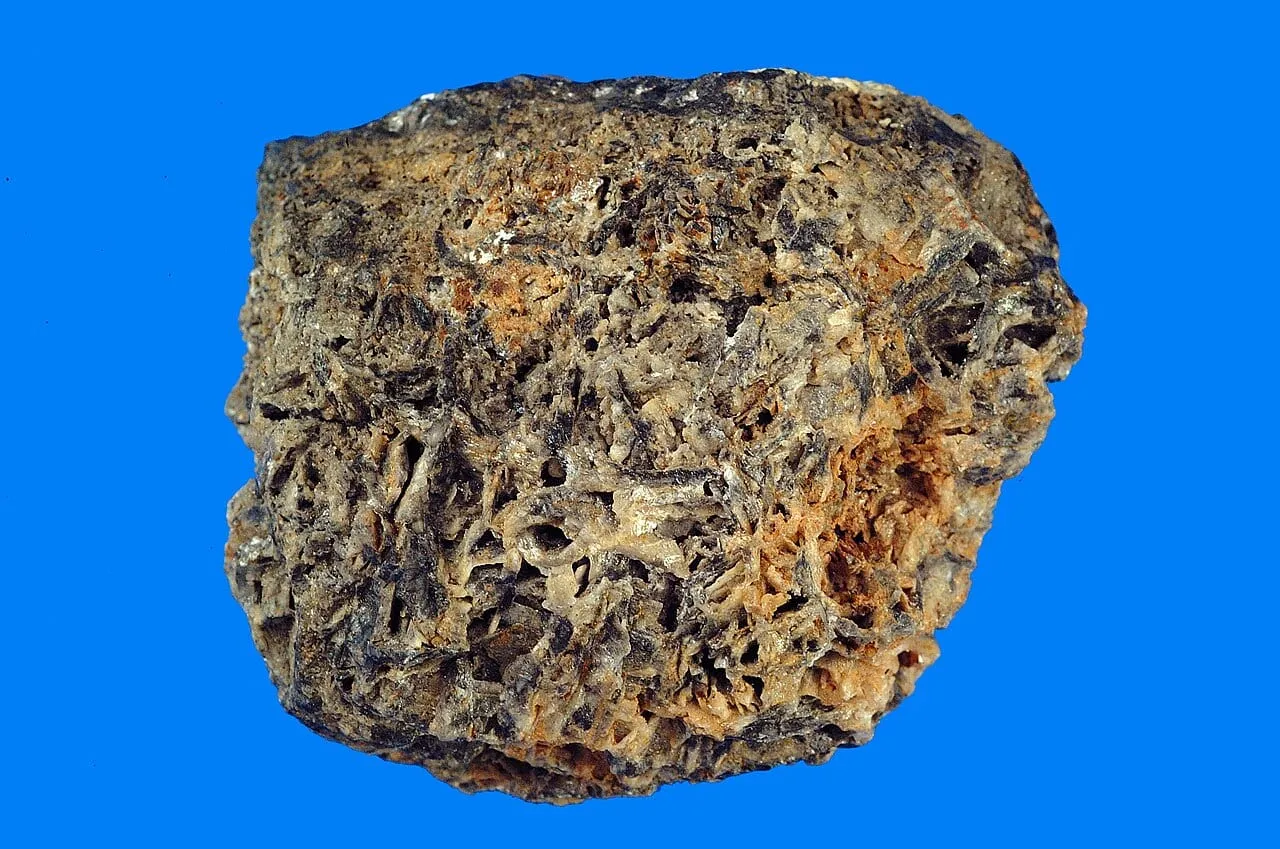
Anglesite
A heavy lead sulfate mineral with a diamond-like shine that grows as a crust around galena; it is named after the island of Anglesey in Wales.
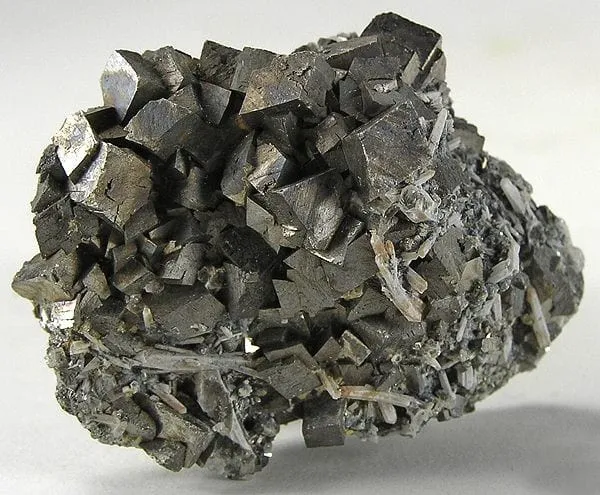
Arsenopyrite
A widespread silvery-grey sulfide containing arsenic: it smells of garlic when struck and is poisonous.
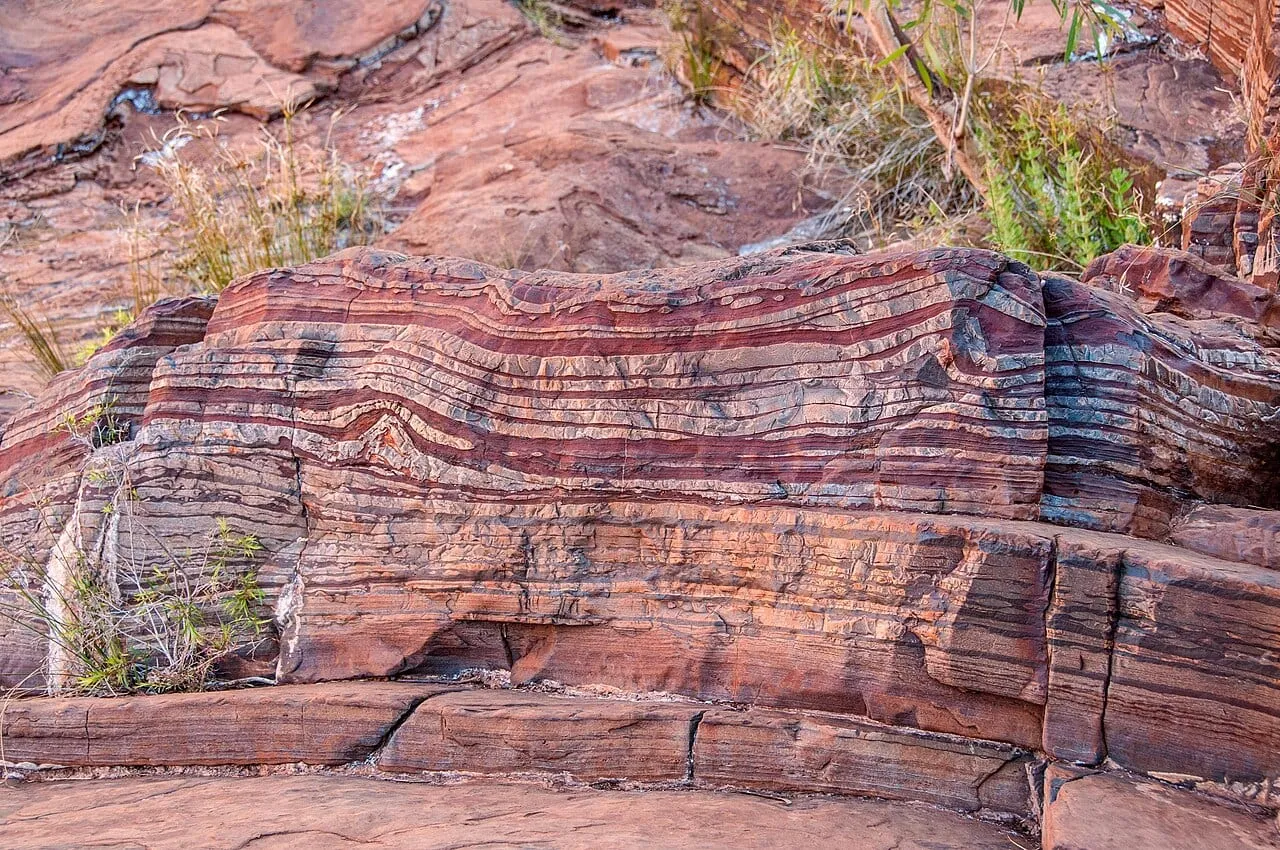
Banded iron formation
An ancient rock of alternating iron-oxide and chert bands: the record of oxygen beginning to build up on Earth, and the main source of iron ore.