Mineral
Platinum
PtPlatin
The “little silver” Spanish colonists threw away for spoiling their gold: today it cleans car exhaust and shines in jewellery.
Also known as: Native platinum · Platina (old Spanish name)
- Popularly: Precious metal
_1_(17151301829).jpg)
In short
Platinum is a silvery grey element found in nature mostly as the pure metal or as an alloy with iron. It is far rarer than gold in the Earth’s crust and hardly corrodes or tarnishes at all. Native platinum is usually found as small grains and flakes in river sands; today most of it is mined from rocks in South Africa.
Photos
_(Granite_Creek,_southern_British_Columbia,_Canada)_(17125947987).jpg)
How does it form?
Platinum collects mainly in mafic and ultramafic igneous rocks: rocks formed when magmas rich in iron and magnesium rose from deep in the Earth, cooled and set. In South Africa’s Bushveld Complex, thin layers such as the Merensky Reef and the UG2 chromitite hold most of the world’s platinum resources. At Norilsk in Russia and Sudbury in Canada it occurs as a by-product in nickel-copper ores.
When these rocks wear away, rivers carry off the heavy, durable platinum grains and drop them among sand and gravel. These placer (alluvial) deposits were the first historical source of platinum; the Chocó region of Colombia and Russia’s Ural Mountains are the most famous. Native platinum is almost never pure: in the analyses given by the Handbook of Mineralogy it holds about 5–17% iron by weight, with small amounts of iridium, rhodium and palladium.
What is it used for?
- Exhaust catalysts: The largest share of platinum sold (about 45% in 2014) goes into catalytic converters that clean car exhaust.
- Jewellery: The second-largest use (about 34% in 2014). Its resistance to corrosion even at high temperatures, and the fact that it does not tarnish, are prized in jewellery.
- Chemical and petroleum industries: It is used as a catalyst in making petrol and chemicals.
- Electrical: A smaller share (about 2.7% in 2014) goes into electrical applications.
- Medicine: Cisplatin, a platinum compound, is a chemotherapy drug used against many cancers, including testicular, ovarian, bladder and lung cancer, and is on the World Health Organization’s List of Essential Medicines.
What determines its value?
Platinum is a precious metal, but this site does not give prices. The value of a platinum ore depends on its grade, the size and depth of the deposit, and whether platinum is recovered together with palladium, rhodium, nickel and copper. Most demand comes from car exhaust catalysts and jewellery, so changes in the car industry directly affect demand. In jewellery, value depends on the purity hallmark and the workmanship. Native platinum nuggets and well-formed crystals are rare, so collectors may value them above the worth of the metal they contain.
This information is educational, not buying, selling or investment advice. Value varies enormously with quality and treatment.
How to recognise it
- 1
A silvery steel-grey or dark grey metal that does not tarnish or rust.
- 2
Very heavy: native platinum has a specific gravity of 14–19 and the pure metal about 21.5, so it is five to eight times heavier than an ordinary pebble of the same size.
- 3
Malleable and ductile: a hammer blow flattens it rather than breaking it, and a broken surface is rough and hooked (hackly).
- 4
Usually found as small grains and flakes in river sand; iron-rich grains can be distinctly attracted to a magnet.
Fakes and imitations
What shops usually don’t tell you:
- White gold is not platinum: it is gold alloyed with nickel or palladium and is usually brightened with a thin rhodium plating. The plating can wear off over time; check the hallmark.
- Silvery, heavy grains in river sand may be other metals; telling platinum apart needs a laboratory analysis.
Safety
No evidence has been found that metallic platinum in medical implants is toxic. The platinum salts used in industry, however, irritate the eyes, nose and throat when inhaled and can cause respiratory and skin allergies in workers exposed to them for long periods.
Myths and misconceptions
MythWhite gold is really platinum.
FactWhite gold is gold alloyed with a white metal such as nickel or palladium and usually contains no platinum. Its bright white look often comes from a thin rhodium plating; as it wears, a slightly yellowish colour can show through. The nickel in some white gold alloys can cause an allergy in about one person in eight.
MythPlatinum is a worthless “fake silver”.
FactThat is what Spanish colonists thought in the 18th century, when they threw it away. In fact platinum is far rarer than gold in the Earth’s crust, and today it is essential in fields from exhaust catalysts to the cancer drug cisplatin.
Did you know?
The name comes from the Spanish platina, “little silver”. Spanish colonists first treated the metal as an impurity that spoiled gold, often threw it away and banned mixing it into gold.
From 1889 to 1960 the metre, and until 2019 the kilogram, were defined internationally by prototypes made of a platinum-iridium alloy.
Pre-Columbian peoples on the coast of Esmeraldas, in today’s Ecuador, made objects by heating gold and platinum powders together until they fused.
Where is it found?
Loading map…
- Chocó, Colombia (Pinto River) · Type localityAccording to the Handbook, the type locality is the Pinto River near Papayan; the Spaniards called the silvery grains found there “platina del Pinto”
- Bushveld Complex, South Africa · Major depositAccording to Wikipedia about 75% of the world's platinum resources lie here; the Merensky Reef and the UG2 chromitite layer are the main ore horizons. According to the USGS, South Africa produces about 70% of the world's platinum
- Norilsk, Krasnoyarsk, Russia · Major depositThe city sits above the largest known nickel-copper-palladium deposits in the world; according to Wikipedia, Norilsk Nickel produces about 25% of the world's platinum
- Nizhny Tagil area, Ural Mountains, Russia · Historic sourceAccording to the Handbook, a large district around Nizhny Tagil in the Urals is known for native platinum
- Sudbury Basin, Ontario, Canada · Known localityThe nickel and copper ores also contain platinum, palladium, rhodium, iridium and ruthenium; Canada appears in the USGS platinum table
- Great Dyke, Zimbabwe · Major depositA layered ultramafic intrusion about 550 km long; platinum-group metals are mined at Ngezi, Unki and Mimosa. According to the USGS, Zimbabwe is the world's third-largest platinum producer (location given regionally, along the dyke)
- Goodnews Bay, Alaska, USA · Known localityPlatinum was discovered in the region in 1926 and mined by the Goodnews Bay Mining Company until 1979
- Esmeraldas, Ecuador · Historic sourceAccording to Wikipedia, pre-Columbian peoples here sintered gold and platinum powders into an alloy and worked it
Locations are approximate to protect sites. Red dots mark places in Türkiye. Open in the big map →
Frequently asked questions
What is platinum?
Platinum is a silvery grey element found in nature mostly as the pure metal or as an alloy with iron. It is far rarer than gold in the Earth’s crust and hardly corrodes or tarnishes at all. Native platinum is usually found as small grains and flakes in river sands; today most of it is mined from rocks in South Africa.
What is platinum used for?
Exhaust catalysts: The largest share of platinum sold (about 45% in 2014) goes into catalytic converters that clean car exhaust. Jewellery: The second-largest use (about 34% in 2014). Its resistance to corrosion even at high temperatures, and the fact that it does not tarnish, are prized in jewellery. Chemical and petroleum industries: It is used as a catalyst in making petrol and chemicals. Electrical: A smaller share (about 2.7% in 2014) goes into electrical applications.
How hard is platinum?
It has a hardness of 4–4.5 on the Mohs scale. A fingernail cannot scratch it, but a steel knife can. Its specific gravity is 14–21.5 g/cm³.
Where is platinum found?
Its best-known localities: Chocó, Colombia (Pinto River); Bushveld Complex, South Africa; Norilsk, Krasnoyarsk, Russia; Great Dyke, Zimbabwe; Nizhny Tagil area, Ural Mountains, Russia.
How can you tell if platinum is real?
A silvery steel-grey or dark grey metal that does not tarnish or rust. Very heavy: native platinum has a specific gravity of 14–19 and the pure metal about 21.5, so it is five to eight times heavier than an ordinary pebble of the same size. Malleable and ductile: a hammer blow flattens it rather than breaking it, and a broken surface is rough and hooked (hackly). White gold is not platinum: it is gold alloyed with nickel or palladium and is usually brightened with a thin rhodium plating. The plating can wear off over time; check the hallmark.
Is platinum valuable?
On the “street to diamond” value ladder it sits on step 7 of nine: Precious stone. Platinum is a precious metal, but this site does not give prices. The value of a platinum ore depends on its grade, the size and depth of the deposit, and whether platinum is recovered together with palladium, rhodium, nickel and copper. Most demand comes from car exhaust catalysts and jewellery, so changes in the car industry directly affect demand. In jewellery, value depends on the purity hallmark and the workmanship. Native platinum nuggets and well-formed crystals are rare, so collectors may value them above the worth of the metal they contain.
Is platinum dangerous?
No evidence has been found that metallic platinum in medical implants is toxic. The platinum salts used in industry, however, irritate the eyes, nose and throat when inhaled and can cause respiratory and skin allergies in workers exposed to them for long periods.
Sources
- Handbook of Mineralogy: Platinum · Mineralogical Society of America
- Platinum · Wikipedia
- Platinum (Webmineral) · Webmineral
- Mineral Commodity Summaries 2026: Platinum-Group Metals · U.S. Geological Survey, 2026
- 78. Platinum - Elementymology & Elements Multidict · Peter van der Krogt
- White gold · Wikipedia
- Cisplatin · Wikipedia
- Chocó Department · Wikipedia
- Bushveld Igneous Complex · Wikipedia
- Norilsk · Wikipedia
- Nizhny Tagil · Wikipedia
- Sudbury Basin · Wikipedia
- Great Dyke · Wikipedia
- Goodnews Bay, Alaska · Wikipedia
- Esmeraldas Province · Wikipedia
External links
Draft: awaiting expert reviewReport an error ↗
On the same step

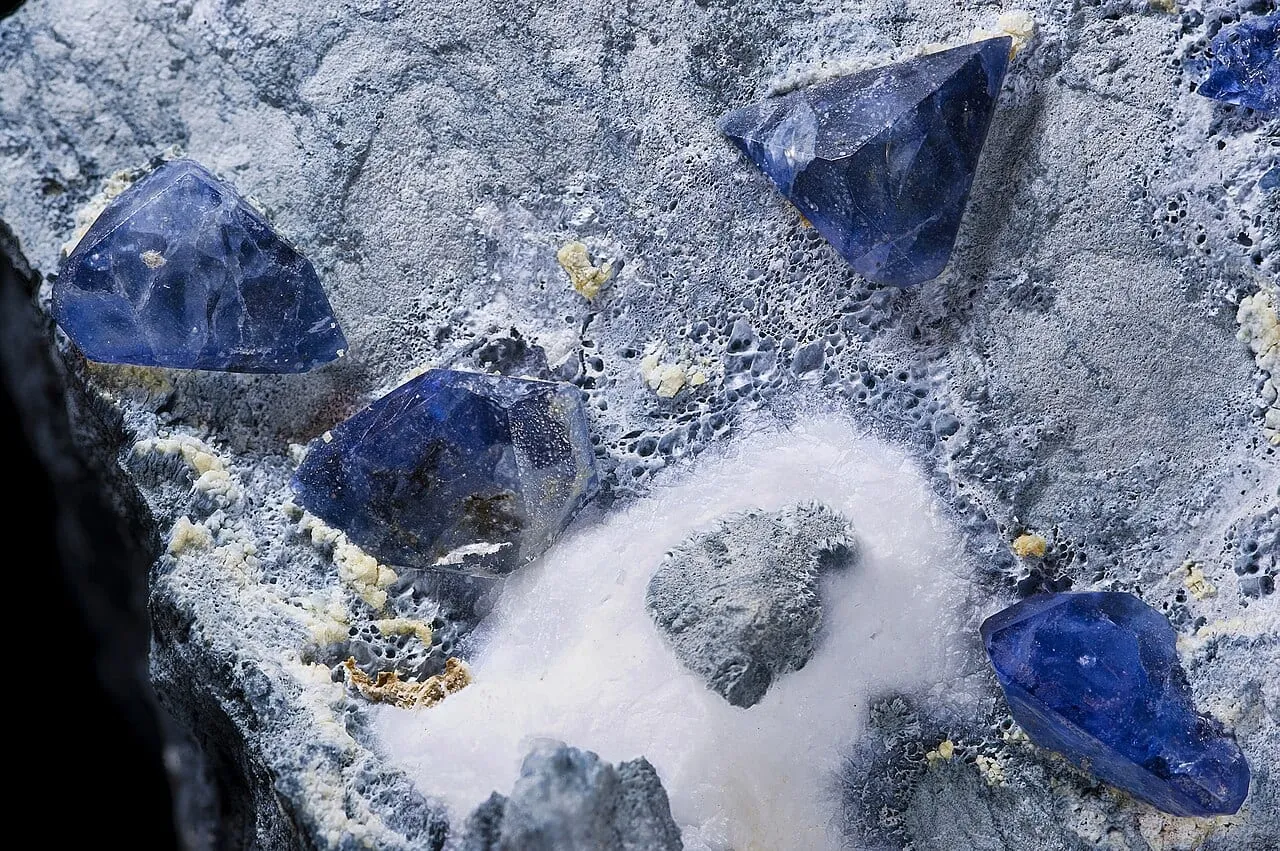
Benitoite
A sapphire-like blue stone whose gem crystals come from a single mine in the world: the official state gem of California.
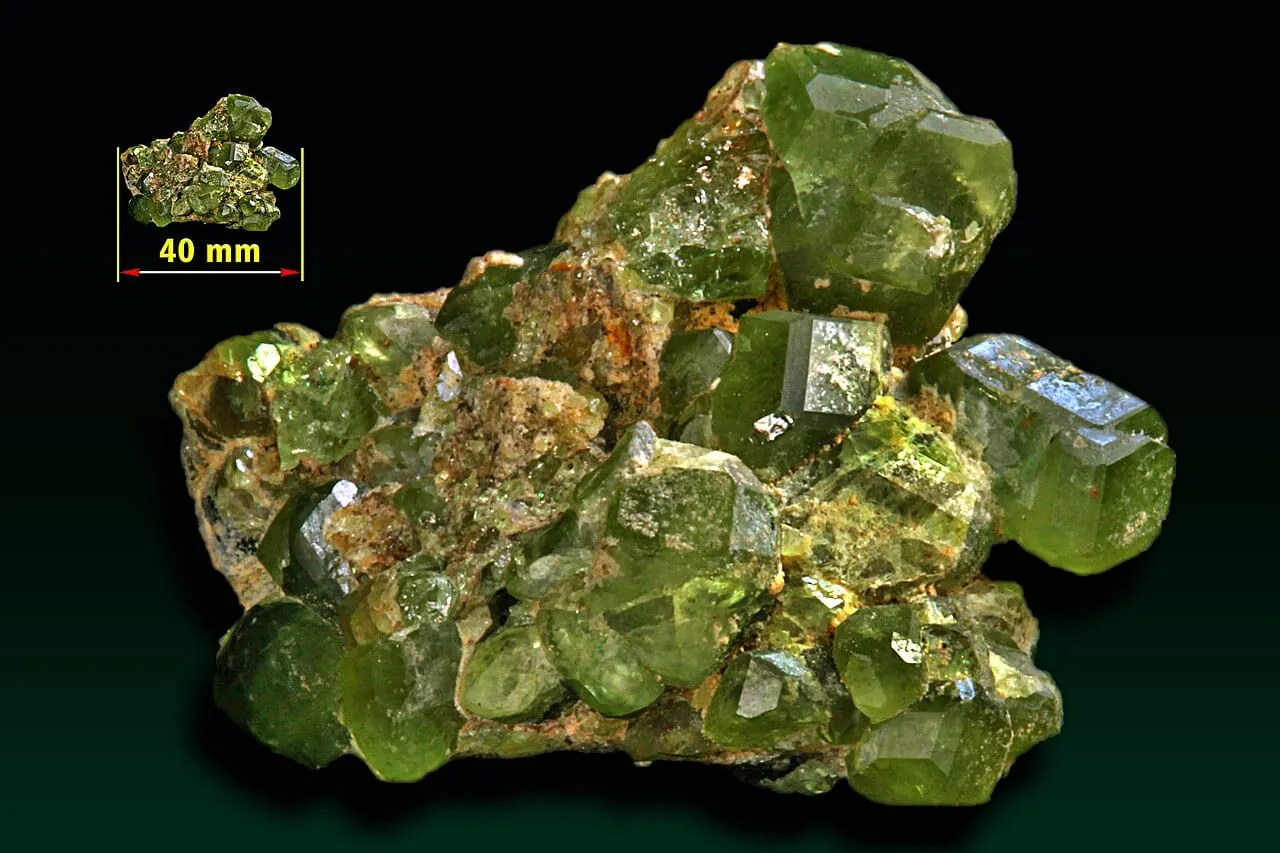
Demantoid
Its name means “diamond-like”: an emerald-green garnet that splits light more than diamond does, known since the 1850s from the Urals; a rare and valuable stone.
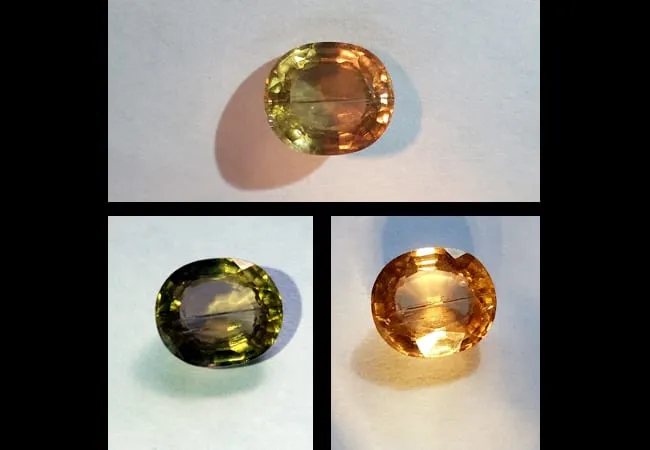
Diaspore
A rare mineral that looks greenish in daylight and pinkish under incandescent light; gem-quality material comes almost only from Muğla.