Mineral
Plagioclase
NaAlSi₃O₈ – CaAl₂Si₂O₈Plajiyoklaz
One of the most abundant minerals in Earth's crust: the albite–anorthite feldspar series, known by the fine parallel lines on its cleavage faces.
Also known as: Plagioclase feldspar · Soda-lime feldspar
- Everyday
- Industrial
- Important in Türkiye
In short
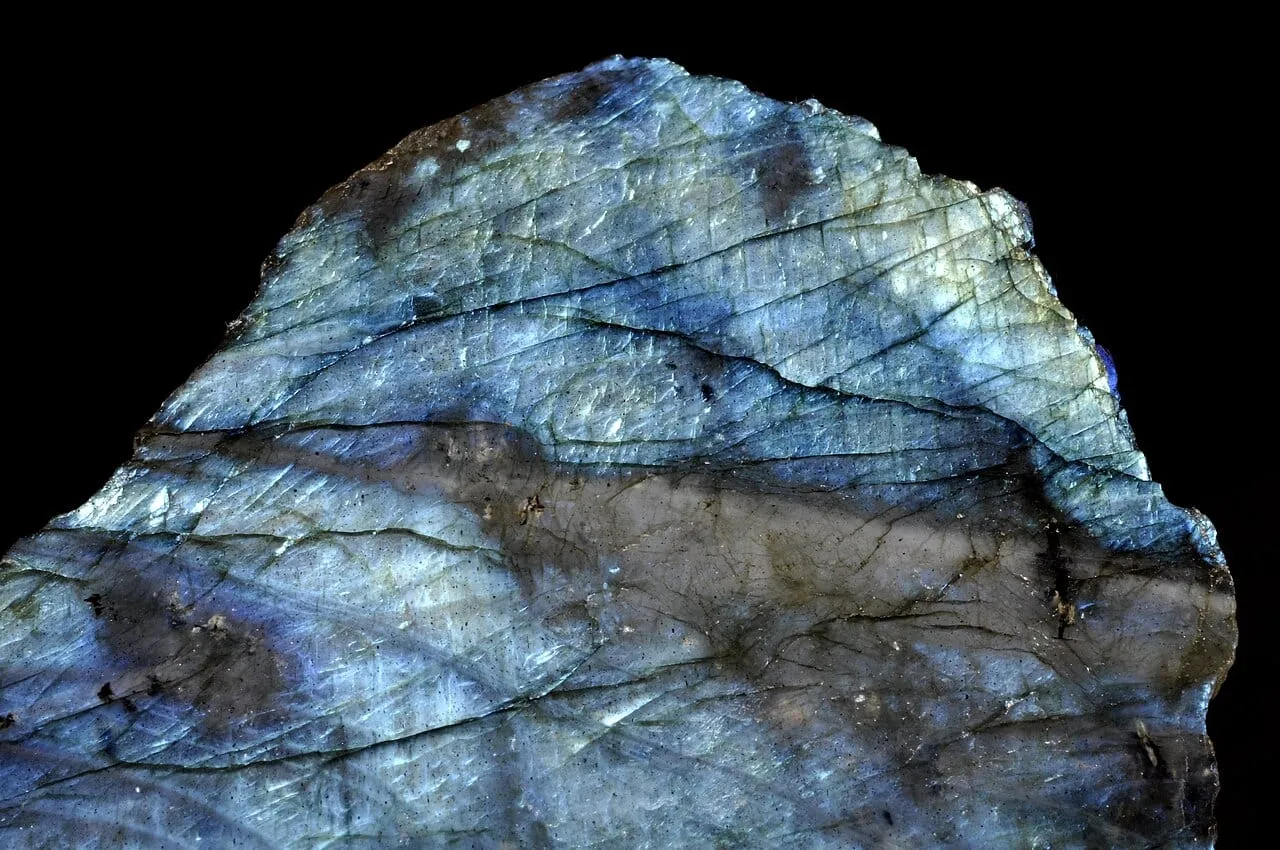
Plagioclase is not a single mineral but a feldspar series running from sodium-rich albite to calcium-rich anorthite; sodium and calcium can take each other's place in its crystal structure. It is a main mineral of many rocks, from basalt to granite. Labradorite, which flashes blue and green in the light, belongs to this family.
How does it form?
Plagioclase is one of the most important minerals of igneous rocks. As magma cools, calcium-rich plagioclase crystallises first; as the temperature falls, the composition of the crystals shifts towards sodium. That is why dark rocks such as basalt and gabbro contain calcium-rich plagioclase, while pale rocks such as granite contain sodium-rich plagioclase. Plagioclase is also common in metamorphic and sedimentary rocks. The fine parallel lines on its crystals come from many thin twin layers grown side by side (polysynthetic twinning).
What is it used for?
Albite, the sodium-rich end of the series, is used in the glass and ceramics industries as a flux that lowers the melting temperature; it is a raw material for ceramic tiles and sanitaryware. Varieties with a play of light, such as labradorite and sunstone, are worked as ornamental stones.
In Türkiye
About 250 albite occurrences are known in the Çine area (Aydın–Muğla) at the southern tip of the Menderes Massif. According to a study published in the MTA Journal, mining began in the late 1960s for the glass industry and from the 1980s spread around Çine, Milas, Söke, Yatağan and Karpuzlu. These albite deposits made Türkiye one of the world’s leading feldspar producers.
How to recognise it
- 1
Its cleavage faces show fine, parallel lines like the grooves of a vinyl record; they are easiest to see when you turn the specimen in the light. Orthoclase lacks these lines.
- 2
It scratches glass, and a steel knife scratches it only with difficulty (hardness 6–6.5).
- 3
It is usually white or grey; some kinds, such as labradorite, flash blue, green or orange colours in the light.
- 4
Finding out which part of the series a specimen belongs to needs a microscope or chemical analysis. The names oligoclase, andesine, labradorite and bytownite, used for intermediate compositions, are no longer separate mineral species but are still used to describe composition ranges.
Fakes and imitations
What shops usually don’t tell you:
- Gem laboratories have shown that some red and green stones sold as “andesine” are pale feldspars coloured by heat treatment with copper (diffusion). Such treatments should be disclosed by the seller.
- Natural stones sold as “sunstone” may be oligoclase, labradorite or orthoclase. “Goldstone”, which glitters with copper flakes, is not a natural stone but a man-made glass.
- The stone sold as “rainbow moonstone” is not moonstone of orthoclase origin but a white labradorite.
Did you know?
Its name comes from the Greek for “oblique fracture”: its two cleavage planes do not meet at a right angle but at about 86 degrees.
Anorthosite, the rock that makes up the Moon's pale highlands, consists largely of calcium-rich plagioclase.
Where is it found?
Loading map…
- Çine–Milas area, Aydın–Muğla, Türkiye · Major depositAbout 250 albite occurrences at the southern tip of the Menderes Massif; the sodium feldspar deposits that made Türkiye one of the world's leading feldspar producers
- Nain, Labrador, Canada · Historic sourceLabradorite is named after the Labrador region
- Ylämaa, Finland · Known localityStrongly iridescent labradorite known by the trade name “spectrolite”
- Amelia, Virginia, USA · Known localityFine albite crystals in pegmatites
- Miyakejima, Tokyo, Japan · Known localityAnorthite crystals in volcanic rocks
Locations are approximate to protect sites. Red dots mark places in Türkiye. Open in the big map →
Varieties

Sources
- Handbook of Mineralogy: Albite · Mineralogical Society of America
- Handbook of Mineralogy: Anorthite · Mineralogical Society of America
- Çine asmasifi (GB-Anadolu) albit yataklarının jeolojisi ve kökeni (Uygun & Gümüşçü), MTA Dergisi 122: 25–32 · MTA Genel Müdürlüğü, 2000
- Mineral Commodity Summaries 2026: Feldspar and Nepheline Syenite · U.S. Geological Survey, 2026
External links
Draft: awaiting expert reviewReport an error ↗
On the same step
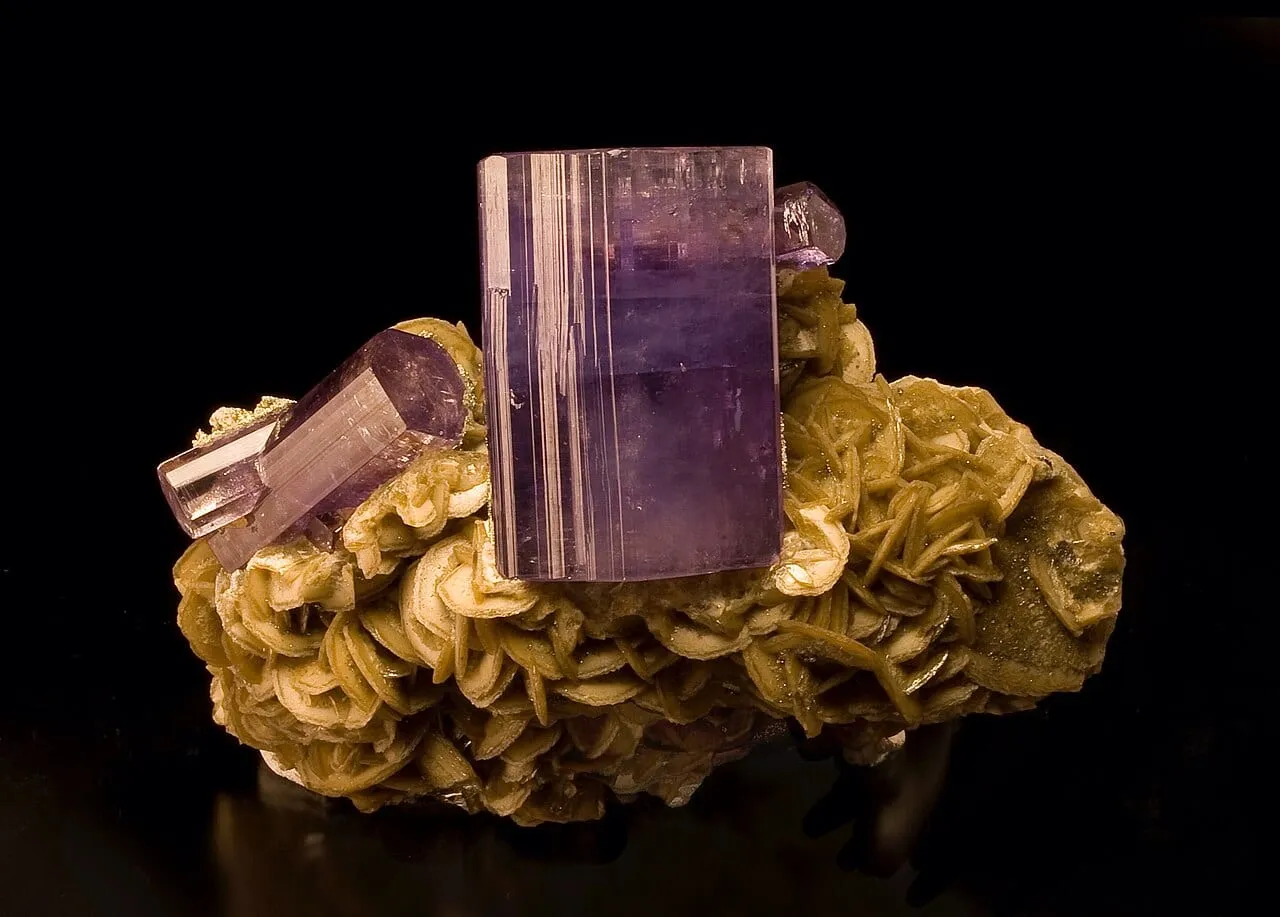
Apatite
A mineral cousin of our teeth and bones, the source of the phosphorus in fertilisers, and number 5 on the Mohs scale.
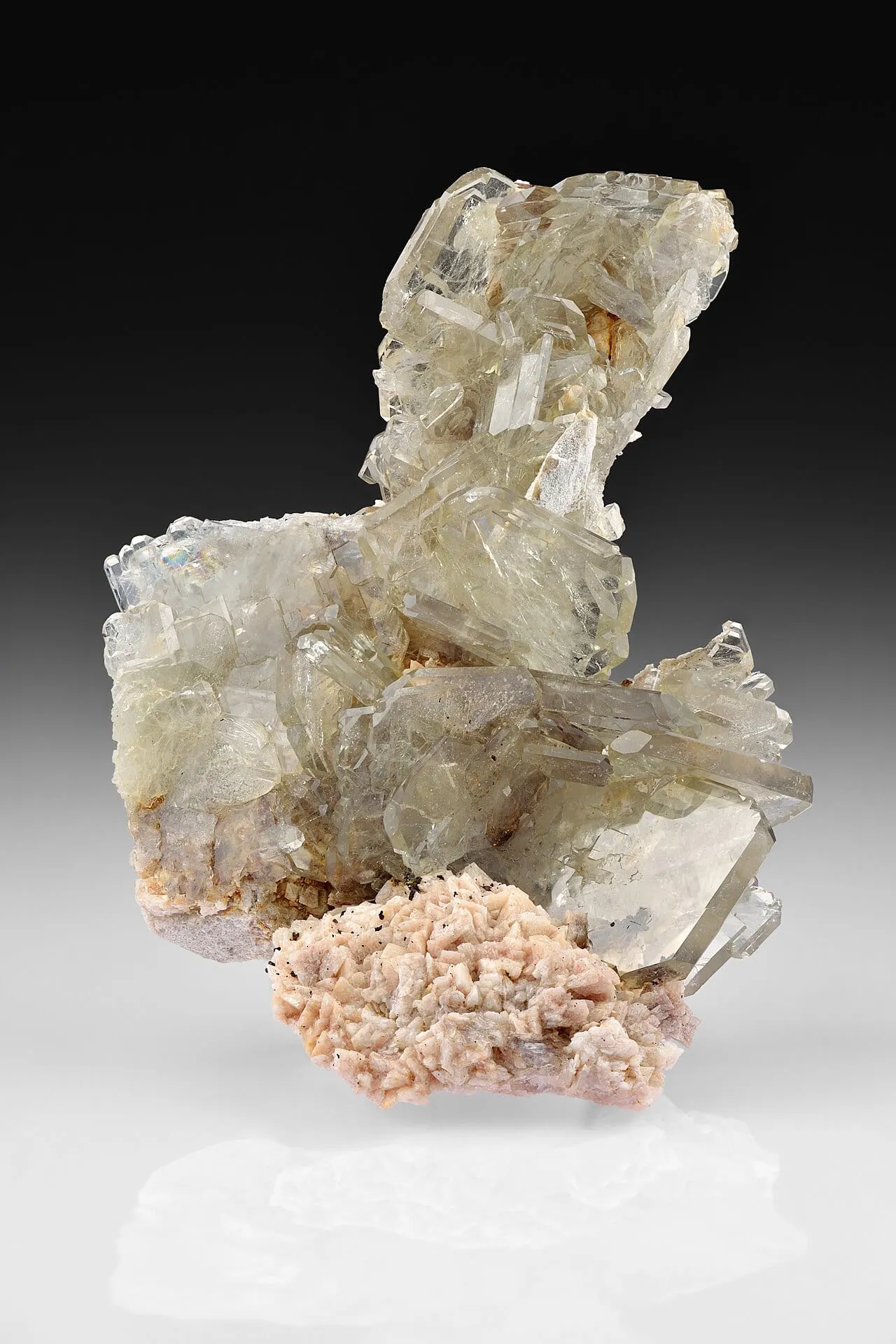
Baryte
A pale barium mineral that feels surprisingly heavy in the hand; even its name comes from the Greek word for heavy.
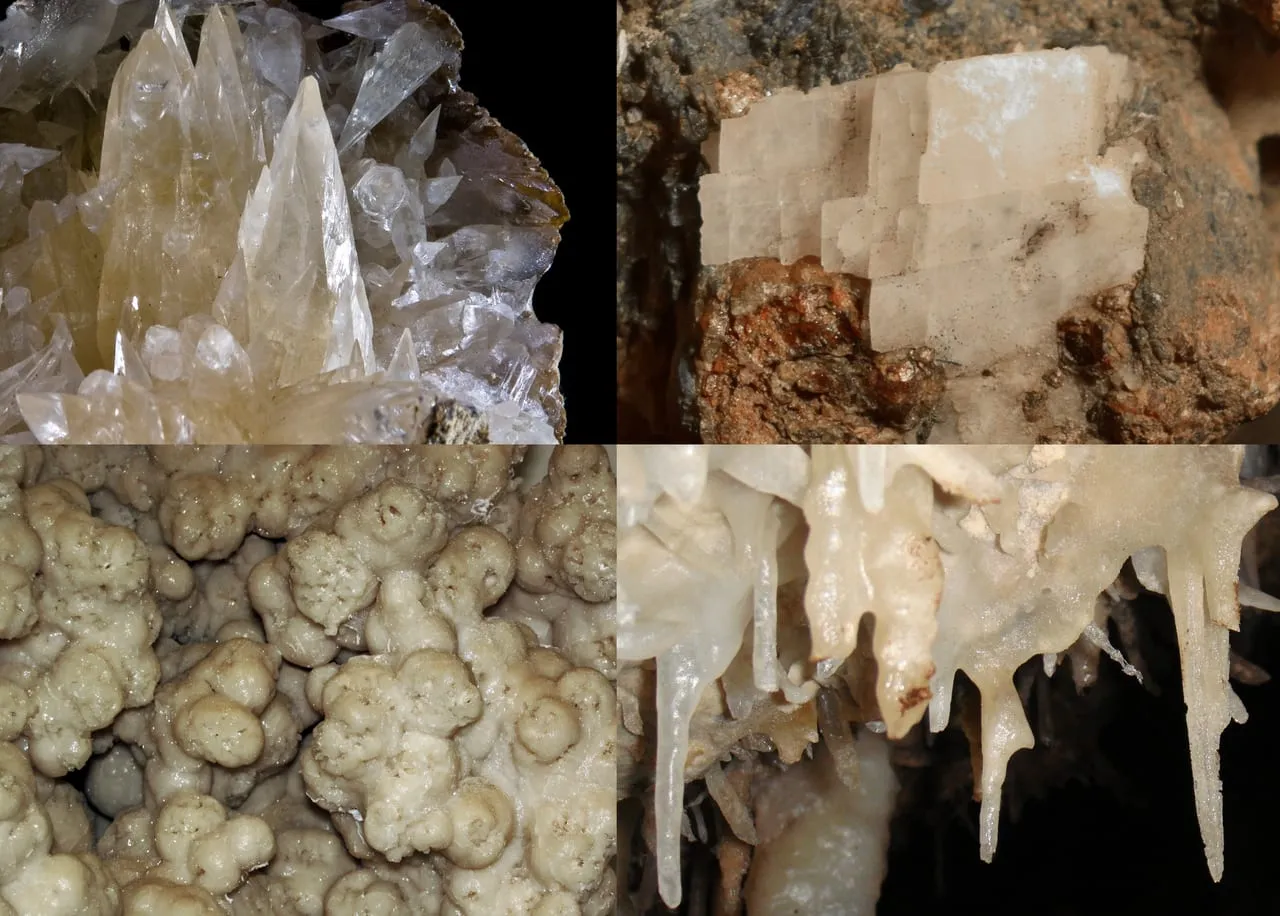
Calcite
The main mineral of limestone, marble and cave stalactites: it fizzes in acid, and its clear crystals show everything double.