Rock
Porphyry
Porfir
Large crystals in a fine-grained groundmass: the purple stone Roman emperors kept for themselves, and the stone of Istanbul’s Çemberlitaş column.
Also known as: Imperial porphyry (the Egyptian purple variety)
- Popularly: Natural stone (building and decor)
_4_(29980457784).jpg)
In short
Porphyry is the name given to igneous rocks with large crystals, visible to the eye, set in a fine-grained groundmass; it names a texture more than one kind of rock. Its name comes from the Ancient Greek porphyra, “purple”. The purple-red imperial porphyry quarried in Egypt’s Eastern Desert was a monopoly of the Roman emperors, used for monuments and sarcophagi. The Column of Constantine (Çemberlitaş) in Istanbul is made of this stone.
How does it form?
Porphyry forms from magma that cools in two stages. First the molten rock cools slowly deep in the crust, and some minerals grow into large, well-shaped crystals (phenocrysts). Then the partly crystallised magma erupts at the surface as lava or is intruded at shallow depth; the remaining liquid cools quickly around the large crystals and forms a fine-grained groundmass. The large crystals end up looking as if they are “floating” in a fine background.
What is it used for?
- The emperors’ stone: The purple porphyry of Egypt’s Mons Porphyrites quarries was used in Rome and Constantinople for monuments and especially imperial sarcophagi; the Roman emperors held a monopoly on it.
- Building and decorative stone: Hard and durable, it is still used today as a building and decorative stone.
- Copper: Porphyry copper deposits form from hot fluids rising from large magma chambers below porphyritic intrusions, and today they are the largest source of copper ore.
In Türkiye
The Column of Constantine (Çemberlitaş) on Istanbul’s historic peninsula was built by stacking huge drums of imperial porphyry brought from Egypt on a white marble pedestal. The top of the column stands 34.8 metres above today’s ground level. As for porphyry copper deposits, the region taking in eastern Türkiye is counted among the areas of the world where these deposits are concentrated.
What determines its value?
Today porphyry is mostly used as a building and decorative stone; its value depends on its colour, how attractively its crystals are spread, the size of crack-free blocks and how well it polishes. Imperial porphyry, whose quarries closed in antiquity, comes only from old works; such pieces have historical and archaeological value. In porphyry copper deposits, what sets the value is not the stone itself but the copper in it.
This information is educational, not buying, selling or investment advice. Value varies enormously with quality and treatment.
How to recognise it
- 1
Large, well-shaped crystals visible to the naked eye (usually pale feldspar or quartz) look sprinkled through a fine-grained groundmass whose crystals cannot be made out.
- 2
Imperial porphyry shows pale pink or white specks in a deep purple-red groundmass.
- 3
Hard and durable (hardness 6–7); it takes a shine when polished.
- 4
How it differs from granite: in granite all the crystals are large and of similar size; in porphyry the spaces between the large crystals are filled with fine-grained groundmass.
Fakes and imitations
What shops usually don’t tell you:
- Other purple-red speckled stones and dyed artificial stones can look like porphyry; porphyry with value as an antiquity needs an expert examination.
Myths and misconceptions
MythPorphyry is one particular kind of rock.
FactPorphyry is the name of a texture: any igneous rock with large crystals in a fine-grained groundmass can be porphyritic. That is why names such as granite porphyry, rhyolite porphyry or andesite porphyry are used.
MythAll porphyry is purple.
FactAlthough its name means “purple”, porphyry can also be grey, green, red or brown. The famous purple colour belongs to imperial porphyry from the Mons Porphyrites quarries in Egypt.
Did you know?
The phrase “born in the purple” (porphyrogennetos) comes from the Porphyra, the room in the Great Palace of Constantinople where imperial births took place.
The Column of Constantine (Çemberlitaş) was raised in AD 330 for the founding of Constantinople. It is made of between 7 and 11 huge porphyry drums brought from Egypt; its Turkish name, “hooped stone”, comes from the iron hoops fitted around it in Ottoman times (about 1515) to strengthen it.
Utah’s Bingham Canyon Mine was dug into a copper deposit that formed around a porphyry intrusion, and it is the deepest open-pit mine in the world.
Where is it found?
Loading map…
- Mons Porphyrites (Gabal Abu Dukhan), Eastern Desert, Egypt · Historic sourceThe ancient quarries that were the only source of imperial porphyry, worked between the 1st and 5th centuries AD. The rock here in the Red Sea Mountains is about 593–602 million years old.
- Bingham Canyon Mine, Utah, USA · Known localityA porphyry copper deposit formed by a quartz monzonite porphyry intruded into sedimentary rocks; the deepest open-pit mine in the world (more than 1,210 m deep and 4 km wide).
Locations are approximate to protect sites. Red dots mark places in Türkiye. Open in the big map →
Frequently asked questions
What is porphyry?
Porphyry is the name given to igneous rocks with large crystals, visible to the eye, set in a fine-grained groundmass; it names a texture more than one kind of rock. Its name comes from the Ancient Greek porphyra, “purple”. The purple-red imperial porphyry quarried in Egypt’s Eastern Desert was a monopoly of the Roman emperors, used for monuments and sarcophagi. The Column of Constantine (Çemberlitaş) in Istanbul is made of this stone.
What is porphyry used for?
The emperors’ stone: The purple porphyry of Egypt’s Mons Porphyrites quarries was used in Rome and Constantinople for monuments and especially imperial sarcophagi; the Roman emperors held a monopoly on it. Building and decorative stone: Hard and durable, it is still used today as a building and decorative stone. Copper: Porphyry copper deposits form from hot fluids rising from large magma chambers below porphyritic intrusions, and today they are the largest source of copper ore.
How hard is porphyry?
It has a hardness of 6–7 on the Mohs scale. It can scratch glass; a steel knife scratches it only with difficulty. Its specific gravity is 2.6–2.9 g/cm³.
Where is porphyry found?
Its best-known localities: Mons Porphyrites (Gabal Abu Dukhan), Eastern Desert, Egypt; Bingham Canyon Mine, Utah, USA.
How can you tell if porphyry is real?
Large, well-shaped crystals visible to the naked eye (usually pale feldspar or quartz) look sprinkled through a fine-grained groundmass whose crystals cannot be made out. Imperial porphyry shows pale pink or white specks in a deep purple-red groundmass. Hard and durable (hardness 6–7); it takes a shine when polished. Other purple-red speckled stones and dyed artificial stones can look like porphyry; porphyry with value as an antiquity needs an expert examination.
Is porphyry valuable?
On the “street to diamond” value ladder it sits on step 3 of nine: Building and industrial stone. Today porphyry is mostly used as a building and decorative stone; its value depends on its colour, how attractively its crystals are spread, the size of crack-free blocks and how well it polishes. Imperial porphyry, whose quarries closed in antiquity, comes only from old works; such pieces have historical and archaeological value. In porphyry copper deposits, what sets the value is not the stone itself but the copper in it.
Sources
- Porphyry (geology) · Wikipedia
- Mons Porphyrites · Wikipedia
- Column of Constantine · Wikipedia
- Porphyry copper deposit · Wikipedia
- Bingham Canyon Mine · Wikipedia
- Density of Solids · The Engineering ToolBox
External links
Draft: awaiting expert reviewReport an error ↗
On the same step
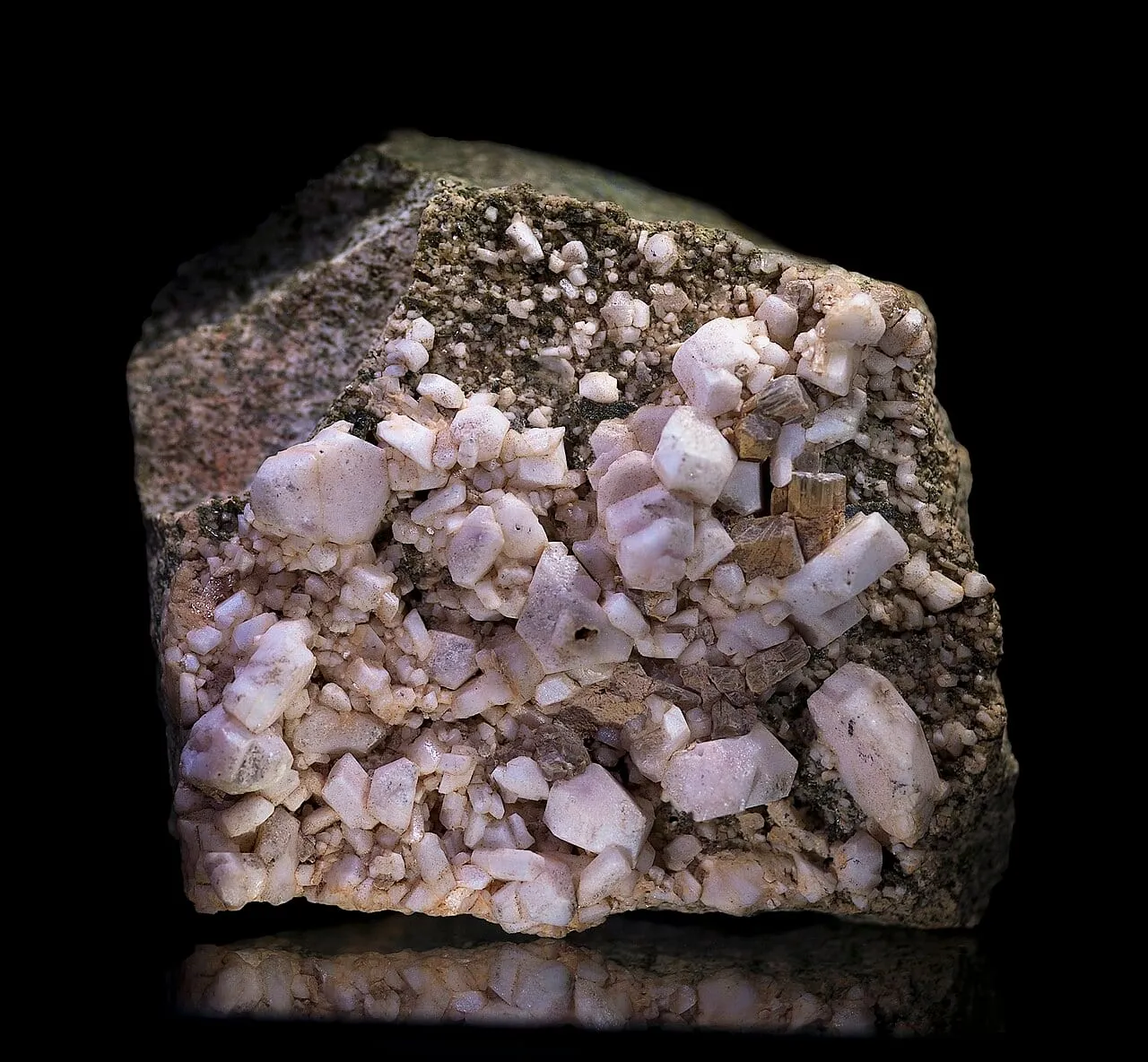
Albite
The white, sodium end of the feldspars: with its deposits at Çine–Milas, a glass and ceramics raw material that makes Türkiye one of the world’s main feldspar producers.
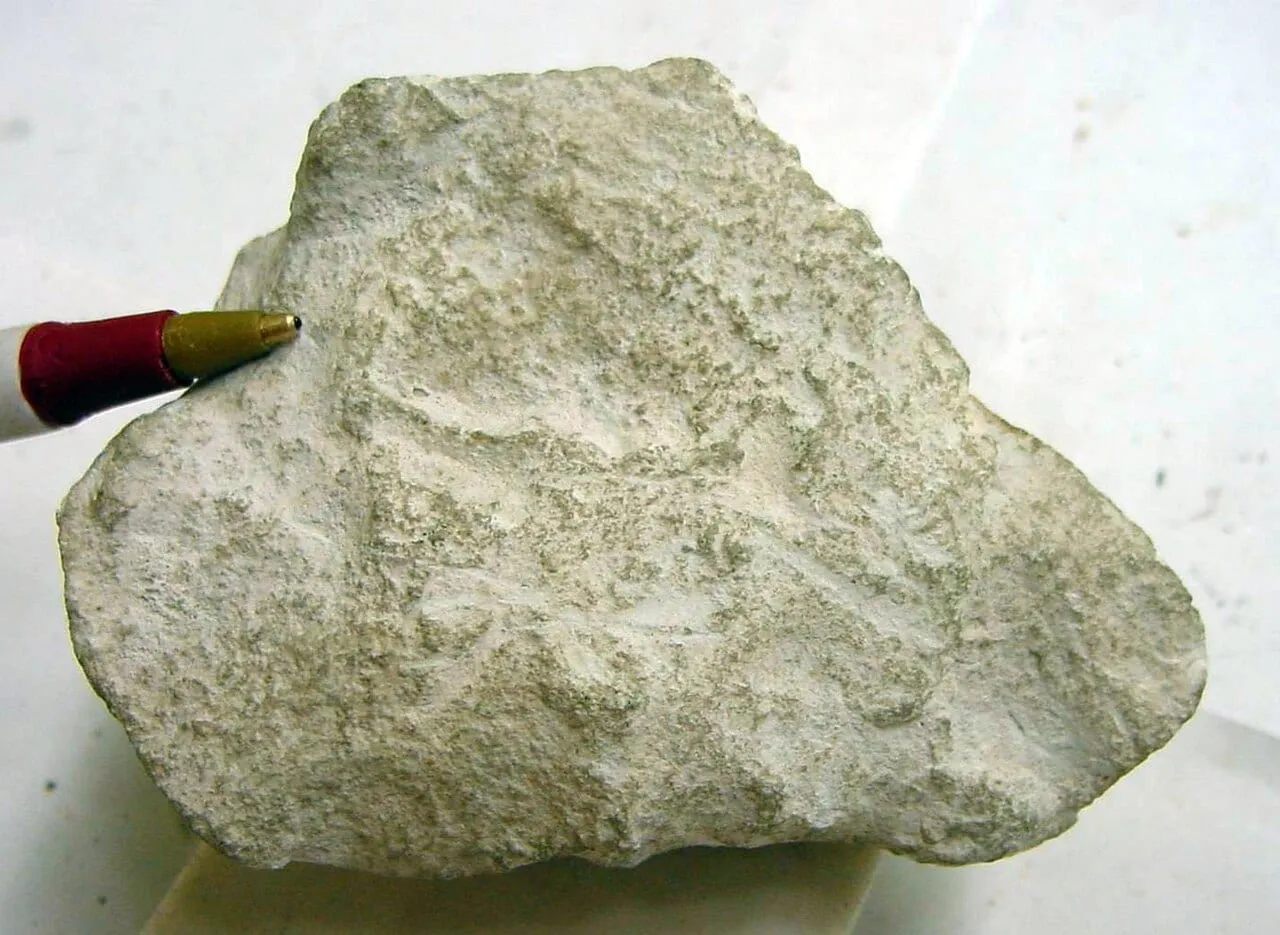
Alunite
The “alum stone” from which alum was made for centuries. Foça, Şaphane in Kütahya and Şebinkarahisar are Türkiye's old alum homelands.
Anhydrite
Gypsum without its water: a calcium sulfate mineral, whose blue-grey Peruvian form is sold as “angelite”.