Mineral
Olivenite
Cu₂(AsO₄)(OH)Olivenit
A copper arsenate named for its olive-green colour: its fibrous kind is called “wood copper”.
Also known as: Wood copper (fibrous kind)
- Popularly: Common stone
.jpg)
In short
Olivenite is a mineral made of copper, arsenic, oxygen and hydrogen (Cu₂(AsO₄)(OH)). It is named for its most characteristic feature, its olive-green colour; the name comes from the German Olivenerz of A. G. Werner, 1789. It forms by the oxidation of copper ores and arsenopyrite, and it is the most common secondary copper arsenate in the oxidised zone of hydrothermal copper deposits. It has the same structure as its zinc counterpart, adamite.
Photos

How does it form?
Olivenite is a secondary mineral: it forms by the oxidation of copper ores and arsenopyrite in the part of hydrothermal copper deposits near the surface, exposed to air and water. In this setting it is the most common secondary copper arsenate. It occurs with minerals such as conichalcite, clinoclase, scorodite, pharmacosiderite, brochantite, malachite, azurite and chrysocolla.
According to the Handbook of Mineralogy, known localities include the mines of the Gwennap area in Cornwall, England, the Cap Garonne mine in France, the Clara mine in Germany’s Black Forest, Lavrio in Greece, the Touissit mine in Morocco and the Tintic district in Utah, USA; Tsumeb in Namibia has yielded large crystals.
What is it used for?
- Collecting: Its olive-green crystals and silky fibrous kinds are sought by collectors.
- Prospecting: As the most common copper arsenate in the oxidised zone of copper deposits, it is one of the surface signs of such deposits.
What determines its value?
Olivenite is valued not as an ore but as a collector's mineral. Collectors look for lustrous, sharp crystals, silky fibrous “wood copper” specimens and pieces from famous localities such as Cornwall or Tsumeb.
This information is educational, not buying, selling or investment advice. Value varies enormously with quality and treatment.
How to recognise it
- 1
Olive green, greenish brown or brown; fibrous kinds can be greyish white or straw yellow.
- 2
Its streak is olive green to brown.
- 3
Its crystals are small (up to 2.5 cm); it usually occurs as fibrous, globular, kidney-shaped or earthy masses.
- 4
Crystals have an adamantine to vitreous lustre; fibrous kinds are silky.
- 5
Hardness 3; a knife scratches it easily.
Fakes and imitations
What shops usually don’t tell you:
- Green adamite can look very similar to olivenite; the two share the same structure, and copper and zinc can replace each other. A certain distinction takes chemical analysis.
- Malachite is also a green copper mineral, but it is a brighter green, usually banded, and fizzes in dilute acid.
Safety
Olivenite contains arsenic. According to the World Health Organization, inorganic arsenic causes cancer in humans, and long-term exposure leads to serious health problems. Do not put olivenite in your mouth, grind, sand or heat it, breathe its dust or put it in drinking water. Wash your hands after handling it and keep specimens out of reach of children.
Myths and misconceptions
MythOlivenite is a kind of olivine (peridot).
FactDespite their similar names, they are completely different minerals. Olivenite is a copper arsenate; olivine is a magnesium–iron silicate. All they share is their olive-green colour.
Did you know?
Its soft, fibrous kind is called “wood copper”; its colour ranges from blackish green in crystals to almost white in the finely fibrous kind.
Adamite is olivenite's zinc counterpart; intermediate compositions are given names such as zincolivenite or cuproadamite.
The copper mines of St Day and Redruth in Cornwall, England, are historic localities for olivenite.
Where is it found?
Loading map…
- St Day and Gwennap, Cornwall, England · Historic sourceThe Cornish copper mines where olivenite was historically known (Carharrack and others)
- Tsumeb, Oshikoto, Namibia · Known localityYields large crystals, according to the Handbook of Mineralogy
- Tintic district, Eureka, Utah, USA · Known localityA US mining district that has yielded fine examples
- Lavrio (Laurium), Attica, Greece · Known localityThe Kamariza mine; olivenite occurs here too
Locations are approximate to protect sites. Red dots mark places in Türkiye. Open in the big map →
Frequently asked questions
What is olivenite?
Olivenite is a mineral made of copper, arsenic, oxygen and hydrogen (Cu₂(AsO₄)(OH)). It is named for its most characteristic feature, its olive-green colour; the name comes from the German Olivenerz of A. G. Werner, 1789. It forms by the oxidation of copper ores and arsenopyrite, and it is the most common secondary copper arsenate in the oxidised zone of hydrothermal copper deposits. It has the same structure as its zinc counterpart, adamite.
Are olivenite and peridot (olivine) the same thing?
No. Both are named after their olive-green colour, but olivenite is a mineral containing copper and arsenic, while olivine is a magnesium–iron silicate whose gem kind is called peridot. Olivenite is toxic and much softer (Mohs 3).
What is olivenite used for?
Collecting: Its olive-green crystals and silky fibrous kinds are sought by collectors. Prospecting: As the most common copper arsenate in the oxidised zone of copper deposits, it is one of the surface signs of such deposits.
How hard is olivenite?
It has a hardness of 3 on the Mohs scale. A fingernail cannot scratch it, but a steel knife can. Its specific gravity is 4.45–4.46 g/cm³.
Where is olivenite found?
Its best-known localities: St Day and Gwennap, Cornwall, England; Tsumeb, Oshikoto, Namibia; Tintic district, Eureka, Utah, USA; Lavrio (Laurium), Attica, Greece.
How can you tell if olivenite is real?
Olive green, greenish brown or brown; fibrous kinds can be greyish white or straw yellow. Its streak is olive green to brown. Its crystals are small (up to 2.5 cm); it usually occurs as fibrous, globular, kidney-shaped or earthy masses. Green adamite can look very similar to olivenite; the two share the same structure, and copper and zinc can replace each other. A certain distinction takes chemical analysis.
Is olivenite valuable?
On the “street to diamond” value ladder it sits on step 2 of nine: Raw material by the tonne. Olivenite is valued not as an ore but as a collector's mineral. Collectors look for lustrous, sharp crystals, silky fibrous “wood copper” specimens and pieces from famous localities such as Cornwall or Tsumeb.
Is olivenite dangerous?
Olivenite contains arsenic. According to the World Health Organization, inorganic arsenic causes cancer in humans, and long-term exposure leads to serious health problems. Do not put olivenite in your mouth, grind, sand or heat it, breathe its dust or put it in drinking water. Wash your hands after handling it and keep specimens out of reach of children.
Sources
- Olivenite · Wikipedia
- Handbook of Mineralogy: Olivenite · Mineralogical Society of America
- Arsenic (fact sheet) · World Health Organization
External links
ReviewedLast checked: 4 October 2026
On the same step
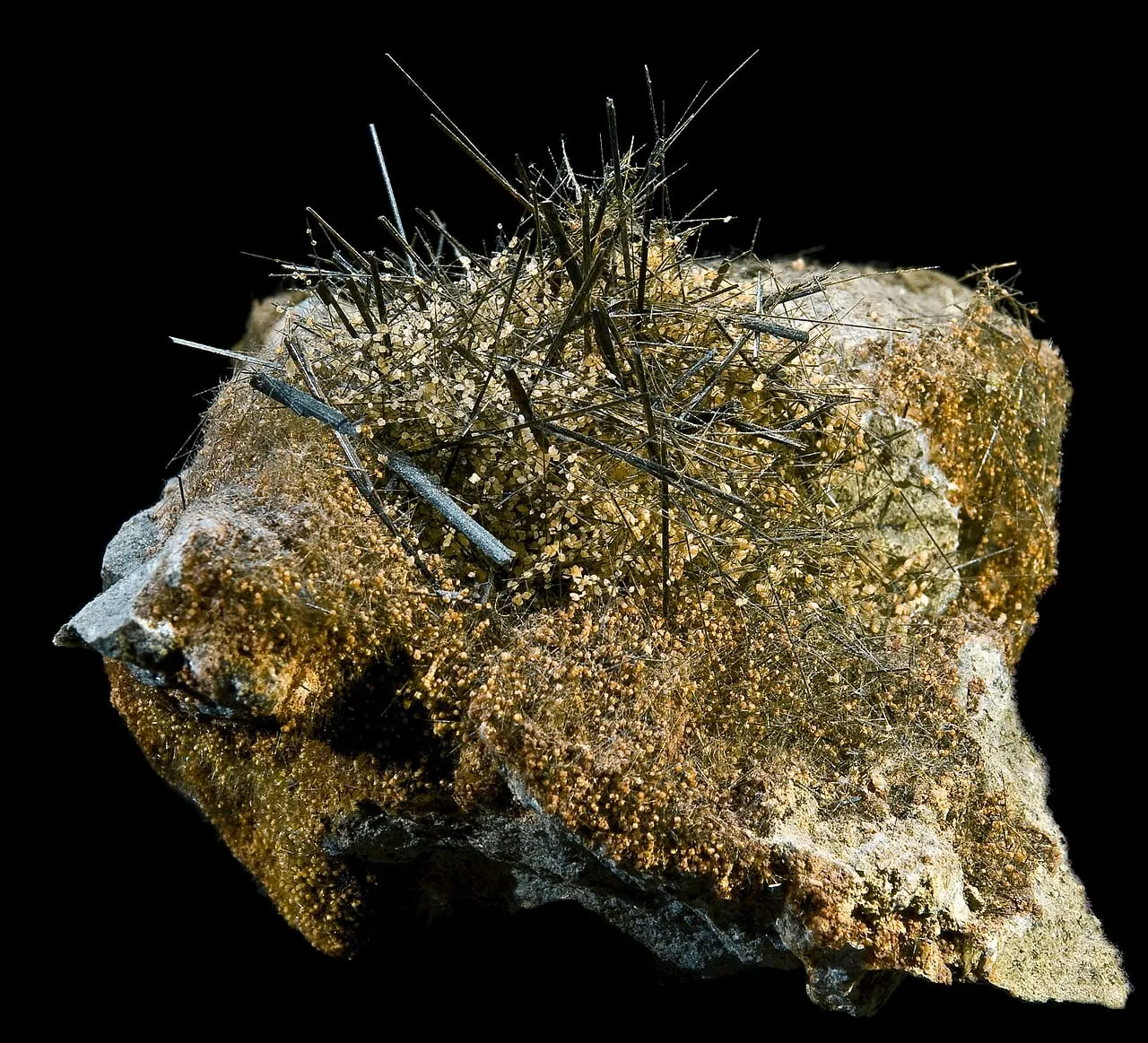
Actinolite
A green amphibole that grows like rays: a raw material of nephrite jade and cat's-eye stones; its fibrous form is asbestos.
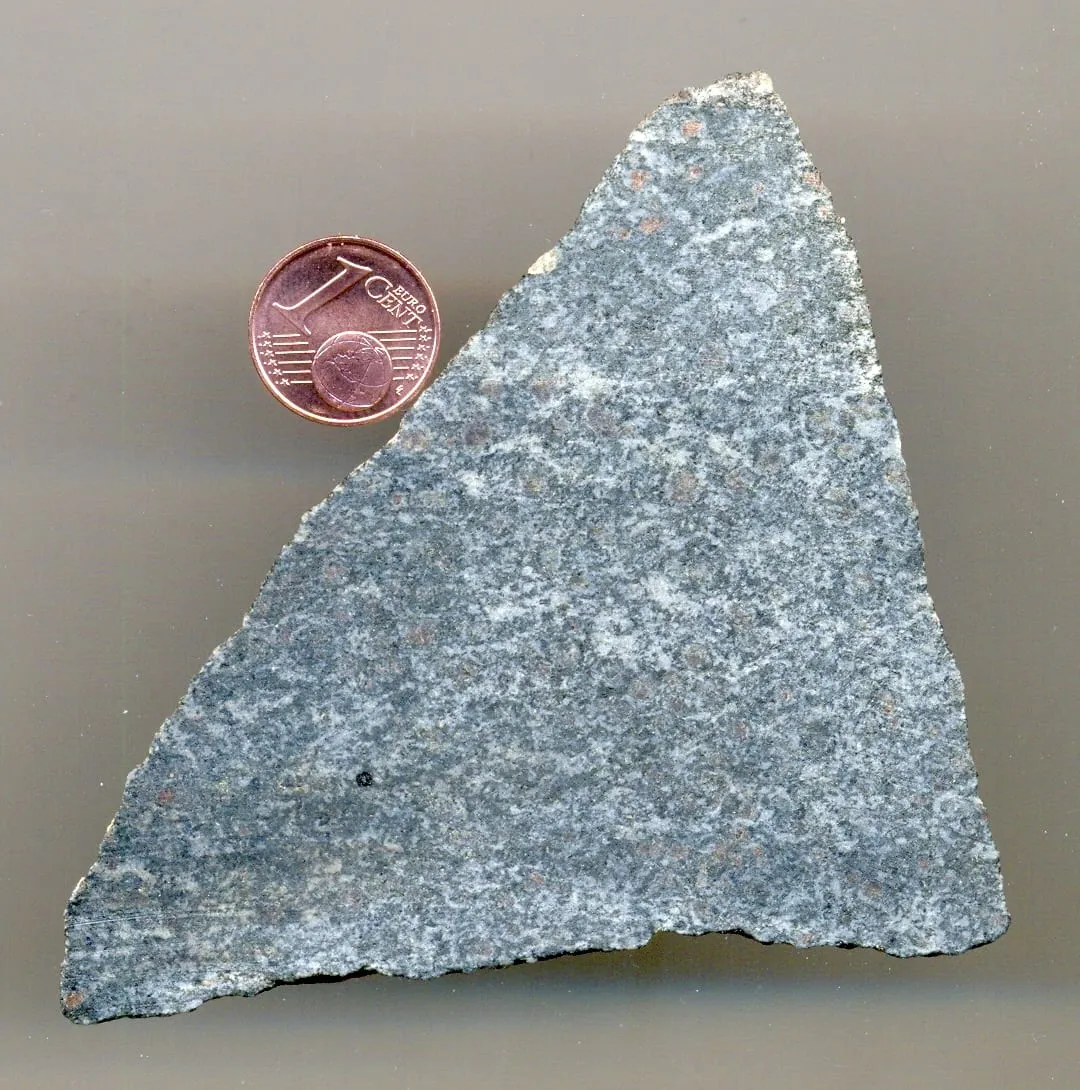
Amphibolite
A dark, heavy, salt-and-pepper metamorphic rock: basalt or gabbro transformed at depth; the stone of Neolithic axes.
Anatase
Rutile's sibling in titanium dioxide: its sharp, stretched double pyramids turn into rutile when heated.