Rock
Oil shale
Bitümlü şeyl
A shale that holds organic matter not yet turned into oil: heated, it yields oil; in Estonia it makes electricity.
Also known as: Bituminous shale
- Popularly: Ore and raw material
- Industrial
.jpg)
In short
Oil shale is a fine-grained sedimentary rock that contains kerogen, a solid organic matter. The kerogen has not yet turned into petroleum; when the rock is heated to 450–500 °C without oxygen it breaks down into oil, gas and a solid residue. Rich types can be burned directly. It is not the same as the “tight oil” shales, whose pores already hold liquid petroleum.
Photos

How does it form?
Oil shale forms in lakes, lagoons, swamps and shallow seas, where mud rich in algae, spores, pollen and plant remains settles in still water and is buried and preserved quickly. On a bottom without oxygen this organic matter does not rot; in the compacting mud it turns into kerogen.
Heat and pressure have not yet been enough to turn the kerogen into petroleum, which is what makes the rock an “immature” source of oil. Had the same mud been buried much deeper and heated, it could have produced oil and natural gas.
What is it used for?
- Fuel and electricity: Rich types can be burned directly. Estonia is the main country that generates electricity from oil shale.
- Shale oil: The rock is crushed and heated without oxygen (retorting) to give an oil-like liquid and gas. This is done above ground; methods for heating the rock in place are mostly still experimental.
- Cement and chemicals: It is used in cement making and in the chemical industry, including special products such as carbon fibre, phenols and resins.
- Medicine: A skin ointment called Ichthyol is made from sulfur-rich oil shale.
Why is it controversial?
Mining and processing oil shale puts a heavy load on the environment: acid drainage and metals can leach from pits and waste heaps into water, between one and five barrels of water may be needed for each barrel of shale oil, and greenhouse gas emissions are higher than for conventional oil. Production fell sharply from its 1980 peak when crude oil became cheap, and Estonia has announced that it will stop using oil shale for electricity.
Oil shale in Türkiye
MTA’s oil shale research began in 1935, the year it was founded. Surveys have been carried out at Beypazarı (Ankara), Seyitömer (Kütahya), Hatıldağ, Himmetoğlu and Mengen (Bolu), Ulukışla (Niğde), Bahçecik (Kocaeli), Burhaniye (Balıkesir), Beydili (Ankara), Dodurga (Çorum) and Çeltek (Amasya), and 1.64 billion tonnes of oil shale reserves have been identified so far; but this potential has not yet been used enough. Attempts, together with Germany, to produce oil from the shales around Bolu were never completed.
The Himmetoğlu shale at Göynük is described as the best-quality oil shale deposit in Türkiye. About one billion tonnes of reserves have been reported at Seyitömer, but its calorific value is very low. In the Ereğli (Konya)–Bor (Niğde) basin, newly identified by MTA, a potential reserve of about 8 billion tonnes has been calculated; a 2,500 m well drilled there by TPAO in 2008 found no economic oil.
What determines its value?
What matters most for oil shale is the kerogen content, that is how much oil it can yield and how much heat it gives when burned; the thickness and depth of the seam and the cost of mining and heating it matter too. Environmental burdens such as water use, acid drainage and greenhouse gas emissions add to the cost. When crude oil is plentiful and cheap, many projects have stopped and output has fallen, so its value follows the oil market. Beds that hold fossils (such as Messel) carry scientific and collector value as well.
This information is educational, not buying, selling or investment advice. Value varies enormously with quality and treatment.
How to recognise it
- 1
It ranges in colour from brown through grey to black, is finely layered with a dull surface, and splits into sheets.
- 2
It gives off an oily, tarry smell when scratched or heated, and a knife scratches it easily.
- 3
It often does not fizz in vinegar or dilute acid, which can tell it apart from limestone.
- 4
It is lighter than ordinary shale of the same size; the more organic matter it holds, the lower its density.
Fakes and imitations
What shops usually don’t tell you:
- Not every dark shale is oil shale: a black shale with little organic matter will not give a useful amount of oil when heated.
- Lignite can also be brown and layered; but lignite is mostly organic matter, whereas most of an oil shale is mineral and leaves a lot of ash when burned.
Myths and misconceptions
MythOil shale contains liquid oil that is pumped out by drilling.
FactOil shale holds not liquid oil but a solid organic matter called kerogen; oil appears only when the rock is heated to 450–500 °C. The oil carried in the pores of some shales is called tight oil.
MythBituminous schist is a kind of schist.
FactDespite the name it is not a schist changed by heat and pressure, but a sedimentary shale rich in organic matter. In Türkiye “bitümlü şist”, “bitümlü şeyl” and “petrollü şeyl” are names of the same rock.
Did you know?
In Estonia in 2020 more than 40% of electricity came from oil shale, with a further share from oil shale gas; the two power stations at Narva are the largest oil-shale-fired plants in the world.
In 1913 Scotland mined 3.3 million tonnes of oil shale, and the oil from it made up about 2% of world petroleum production.
The ointment ingredient known as Ichthyol (ammonium bituminosulfonate), used for skin problems such as eczema, psoriasis and acne, is made from sulfur-rich oil shale.
Where is it found?
Loading map…
- Green River Formation, Piceance Basin, Colorado, USA · Major depositEocene lake deposits spread across Colorado, Utah and Wyoming and make up the world's largest oil shale deposit. The Colony project near Parachute was cancelled in 1982.
- Ida-Viru County, north-east Estonia · Major depositThe Ordovician kukersite is mined here; mining began in 1916 and shale oil production started at Kohtla-Järve in 1921. The Narva power stations are the world's two largest oil-shale-fired plants.
- Fushun, Liaoning, China · Known localityCommercial-scale shale oil production from oil shale began in 1928; “Fushun-type” retorts became an industry standard.
- Irati Formation, Paraná Basin, Brazil · Known localityAn Early Permian black shale; in Brazil oil is produced from oil shale by the Petrosix process. The same beds are also famous for their Mesosaurus fossils.
- Autun, Burgundy, France · Historic sourceCommercial oil shale mining began in the area in 1837, regarded as the start of the modern oil shale industry.
- Messel Pit, Hesse, Germany · Known localityA former pit mined for brown coal and then oil shale from 1859 to 1971; more than 1,400 kinds of plants, fungi and animals have been documented in its Middle Eocene shale. A UNESCO World Heritage Site since 1995.
- Kimmeridge Bay, Dorset, England · Known localityThe Late Jurassic Kimmeridge Clay is the main source rock of the North Sea oil fields; its oily beds are said to have been burned as fuel in the past.
- Göynük (Himmetoğlu and Hatıldağ fields), Bolu, Türkiye · Major depositThe Himmetoğlu oil shale is Neogene in age and is described as the best-quality oil shale deposit in Türkiye; the Hatıldağ field is in the same district. Attempts, together with Germany, to produce oil from the oil shales around Bolu were never completed.
- Beypazarı, Ankara, Türkiye · Known localityOne of the fields where MTA has surveyed oil shale.
- Seyitömer, Kütahya, Türkiye · Known localityA reserve of about one billion tonnes of oil shale has been reported; its calorific value is very low (150–3,000 kcal/kg) and its mineral content high, which makes it hard to burn.
- Ereğli (Konya)–Bor (Niğde) basin, Türkiye · Known localityMTA drilling cut oil shale beds averaging 40 m thick in Neogene lake deposits, and a potential reserve of about 8 billion tonnes has been calculated. TPAO's 2,500 m well found no economic oil.
Locations are approximate to protect sites. Red dots mark places in Türkiye. Open in the big map →
Frequently asked questions
What is oil shale?
Oil shale is a fine-grained sedimentary rock that contains kerogen, a solid organic matter. The kerogen has not yet turned into petroleum; when the rock is heated to 450–500 °C without oxygen it breaks down into oil, gas and a solid residue. Rich types can be burned directly. It is not the same as the “tight oil” shales, whose pores already hold liquid petroleum.
What is oil shale used for?
Fuel and electricity: Rich types can be burned directly. Estonia is the main country that generates electricity from oil shale. Shale oil: The rock is crushed and heated without oxygen (retorting) to give an oil-like liquid and gas. This is done above ground; methods for heating the rock in place are mostly still experimental. Cement and chemicals: It is used in cement making and in the chemical industry, including special products such as carbon fibre, phenols and resins. Medicine: A skin ointment called Ichthyol is made from sulfur-rich oil shale.
How hard is oil shale?
It has a hardness of 2–3 on the Mohs scale. A fingernail cannot scratch it, but a steel knife can. Its specific gravity is 1.4–2.6 g/cm³.
Where is oil shale found?
Its best-known localities: Green River Formation, Piceance Basin, Colorado, USA; Ida-Viru County, north-east Estonia; Göynük (Himmetoğlu and Hatıldağ fields), Bolu, Türkiye; Autun, Burgundy, France; Fushun, Liaoning, China.
Where is oil shale found in Türkiye?
Known localities in Türkiye: Göynük (Himmetoğlu and Hatıldağ fields), Bolu, Türkiye; Beypazarı, Ankara, Türkiye; Seyitömer, Kütahya, Türkiye; Ereğli (Konya)–Bor (Niğde) basin, Türkiye.
How can you tell if oil shale is real?
It ranges in colour from brown through grey to black, is finely layered with a dull surface, and splits into sheets. It gives off an oily, tarry smell when scratched or heated, and a knife scratches it easily. It often does not fizz in vinegar or dilute acid, which can tell it apart from limestone. Not every dark shale is oil shale: a black shale with little organic matter will not give a useful amount of oil when heated.
Is oil shale valuable?
On the “street to diamond” value ladder it sits on step 2 of nine: Raw material by the tonne. What matters most for oil shale is the kerogen content, that is how much oil it can yield and how much heat it gives when burned; the thickness and depth of the seam and the cost of mining and heating it matter too. Environmental burdens such as water use, acid drainage and greenhouse gas emissions add to the cost. When crude oil is plentiful and cheap, many projects have stopped and output has fallen, so its value follows the oil market. Beds that hold fossils (such as Messel) carry scientific and collector value as well.
Sources
- Oil shale · Wikipedia
- Petrollü şeyl · Vikipedi
- Ülkemizde Yeni Belirlenen Petrollü Şeyl Potansiyel Rezerv ve Yerinde Şeyl Petrolü Üretiminin Araştırılması (A. Murat) · MTA Doğal Kaynaklar ve Ekonomi Bülteni
- Seyitömer Bitümlü Şistlerinin Mineral Asit Ekstraksiyonu ile Zenginleştirilmesi (R. Gözoğul, E. Pütün, M. Tolay, E. Ekinci)
- Himmetoglu oil shale deposit · Wikipedia
- Oil Shale · Rockhounding.org
- Theoretical Relationship Between Density and Oil Yield for Oil Shales (J. W. Smith, RI 7248) · U.S. Bureau of Mines, 1969
- Green River Formation · Wikipedia
- Kukersite · Wikipedia
- Oil shale in Estonia · Wikipedia
- Fushun · Wikipedia
- Irati Formation · Wikipedia
- Autun · Wikipedia
- Messel pit · Wikipedia
- Kimmeridge Clay · Wikipedia
- Ammonium bituminosulfonate (Ichthyol) · Wikipedia
External links
Draft: awaiting expert reviewReport an error ↗
On the same step

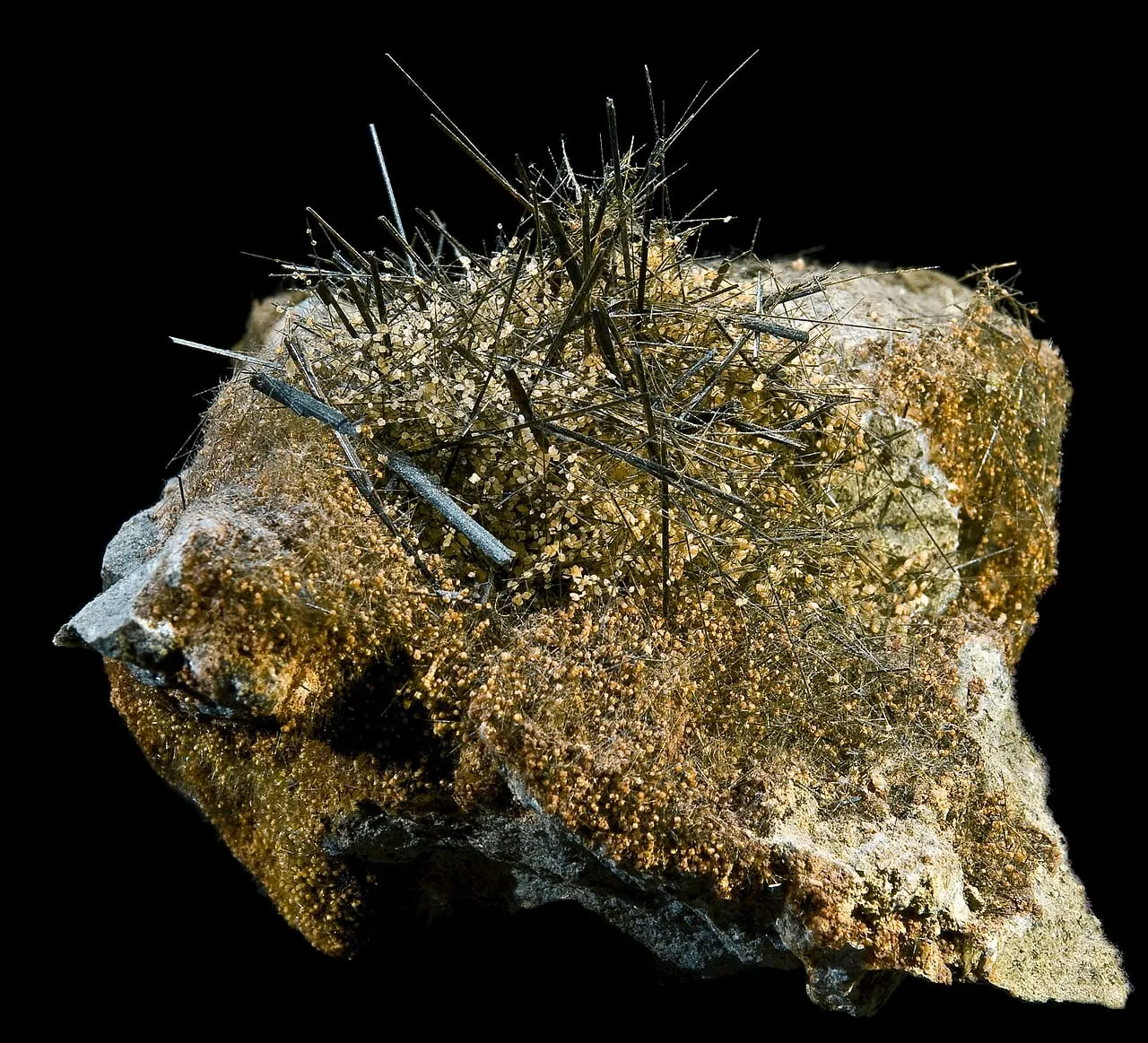
Actinolite
A green amphibole that grows like rays: a raw material of nephrite jade and cat's-eye stones; its fibrous form is asbestos.

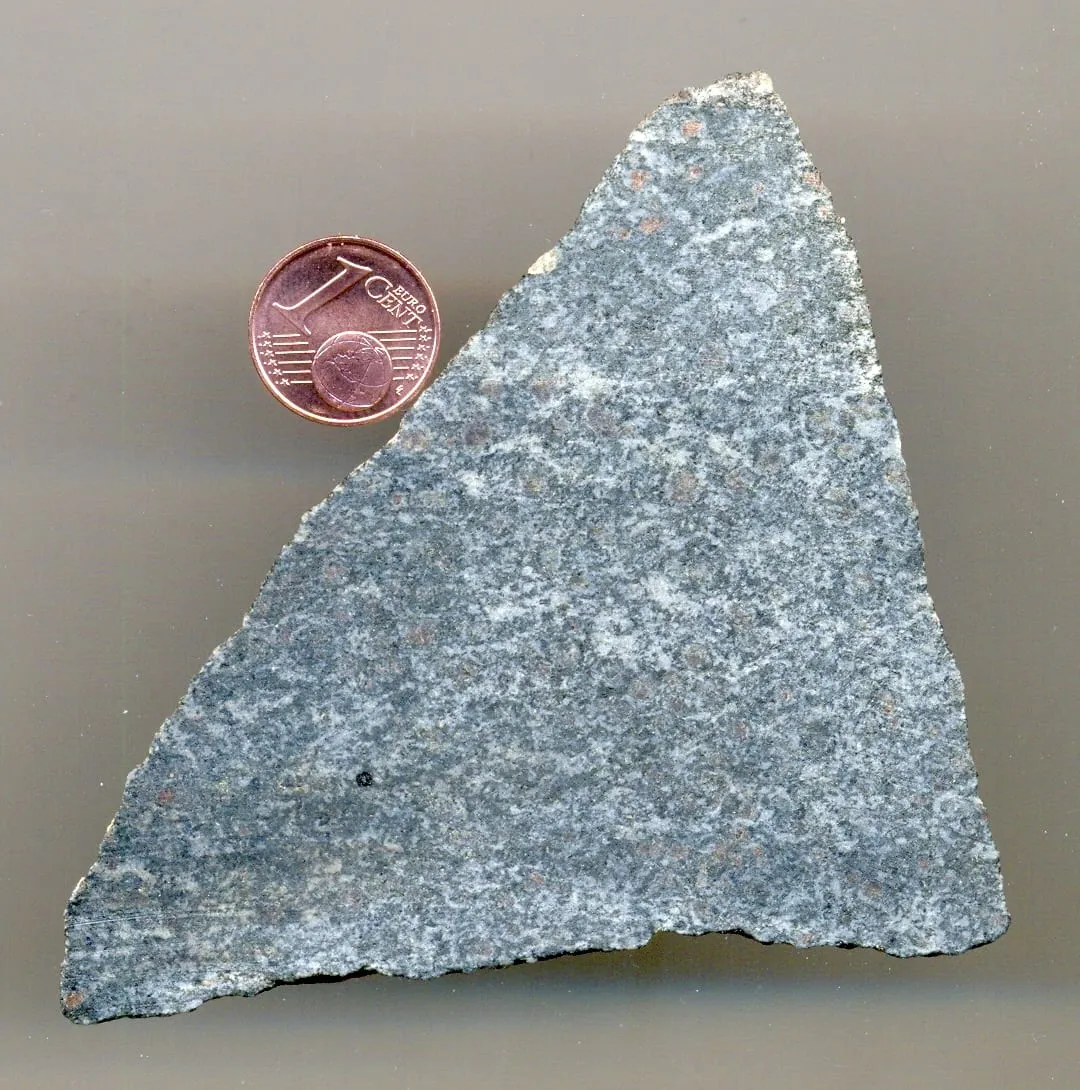
Amphibolite
A dark, heavy, salt-and-pepper metamorphic rock: basalt or gabbro transformed at depth; the stone of Neolithic axes.

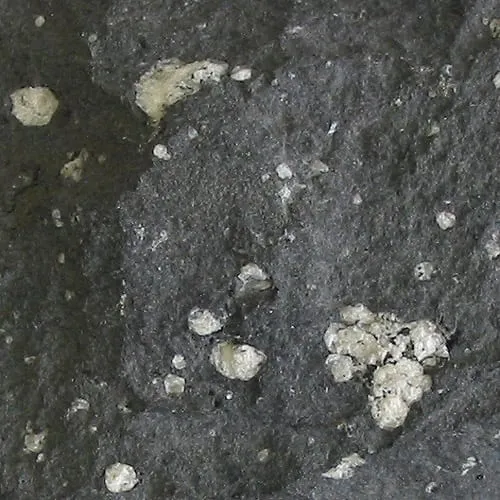
Andesite
The rock of volcanic arcs, named after the Andes — and the pink-grey stone of Ankara Castle.